
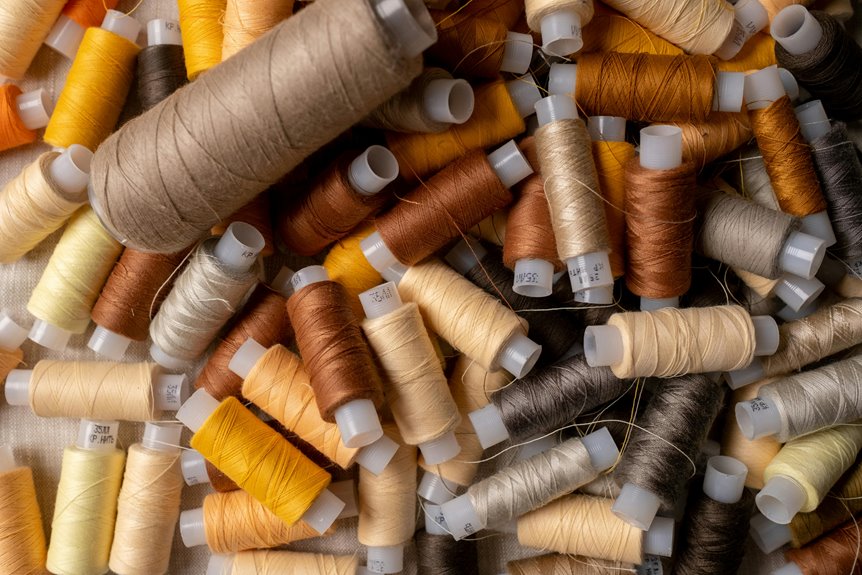
You probably use nylon daily without realizing it’s a common type of polyamide, a synthetic polymer made from repeating amide links that give it strength and flexibility. Nylon comes in variants like Nylon 6 and Nylon 6,6, each offering unique durability and heat resistance. Its versatility spans from clothing to automotive parts. While nylon’s molecular structure makes it tough, understanding its history, environmental impact, and future innovations reveals why it remains essential in modern materials.
Key Takeaways
- Nylon is a synthetic polyamide polymer made of repeating amide (-CONH-) linkages formed from diamine and dicarboxylic acid monomers.
- It was first synthesized in the 1930s by Wallace Carothers and introduced as a fiber by DuPont in 1938.
- Nylon’s strong amide bonds provide high tensile strength, elasticity, and chemical resistance for versatile uses like textiles and industrial parts.
- Common types include Nylon 6 and Nylon 6,6, differing in molecular structure and mechanical properties such as strength and thermal resistance.
- Nylon’s production has environmental impacts, but recycling and bio-based alternatives are advancing sustainable polyamide development.
The Chemical Composition of Nylon
Although you mightn’t see it, nylon is a synthetic polymer made by linking repeating units called monomers through a process called polymerization.
These monomers contain specific chemical groups—amine and carboxylic acid—that react to form strong bonds known as amide links. When you combine these monomers, you create long chains with repeating amide bonds, giving nylon its characteristic strength and durability.
Nylon’s strength comes from amine and carboxylic acid groups forming durable amide bonds in long chains.
The typical monomers used are hexamethylenediamine and adipic acid, which connect to form nylon 6,6. Each chain’s structure includes both carbon and nitrogen atoms, essential for nylon’s properties.
Understanding this chemical makeup helps you grasp why nylon behaves as it does, offering resilience and flexibility in countless applications, from textiles to industrial uses.
Understanding Polyamides: What Defines Them
You’ll find that polyamides share a unique chemical structure featuring repeating amide groups.
Understanding this structure helps you recognize the different types of polyamides, including the most common ones like Nylon 6 and Nylon 6,6.
Let’s explore what sets these materials apart and why it matters.
Polyamide Chemical Structure
When you examine polyamides closely, you’ll notice their defining feature is the presence of repeating amide linkages (-CONH-) in their backbone. These amide bonds connect carbonyl groups (C=O) to nitrogen atoms (N-H), forming a strong, stable chain. This structure gives polyamides their unique strength and durability.
Three key aspects shape the chemical structure of polyamides:
- Monomer Types: They arise from diamines and dicarboxylic acids or amino acids, which influence polymer properties.
- Chain Length: The number of repeating units determines molecular weight and impacts mechanical behavior.
- Hydrogen Bonding: Amide groups form intermolecular hydrogen bonds, enhancing rigidity and thermal resistance.
Understanding these features helps you grasp what makes polyamides distinct in the polymer world.
Common Polyamide Types
Because polyamides come in various forms, knowing the common types helps you understand their specific uses and properties. You’ll often hear about Nylon 6 and Nylon 6,6, the most popular polyamides. Nylon 6 is valued for its flexibility and impact resistance, while Nylon 6,6 offers higher strength and thermal resistance. Other types like Nylon 11 and Nylon 12 provide greater chemical resistance and lower moisture absorption, perfect for specialized applications. Here’s a quick look to guide you:
| Polyamide Type | Key Feature |
|---|---|
| Nylon 6 | Flexible, impact-resistant |
| Nylon 6,6 | Strong, heat-resistant |
| Nylon 11 | Chemical-resistant, low moisture |
| Nylon 12 | Flexible, durable |
| Nylon 4,6 | High stiffness, heat stable |
Knowing these helps you choose the right material for your needs.
The History and Development of Nylon
The story of nylon begins in the 1930s, when chemist Wallace Carothers and his team at DuPont developed the first synthetic fiber that could rival natural materials like silk.
You’ll find nylon’s invention was a breakthrough in polymer chemistry and industrial manufacturing. It quickly gained popularity due to its strength, elasticity, and resistance to wear.
Here are three key milestones in nylon’s history and development:
- 1938: Nylon was first synthesized and demonstrated as a fiber.
- 1939: Nylon stockings were introduced to the public, sparking widespread consumer interest.
- World War II: Nylon was used extensively for military applications like parachutes and ropes, proving its versatility.
Understanding these points helps you appreciate nylon’s impact on textiles and technology.
How Nylon Is Synthesized in the Laboratory
Appreciating nylon’s historical significance sets the stage for understanding how it’s made in the lab. You start by combining a diamine and a dicarboxylic acid or its derivative in a condensation reaction. This reaction creates amide bonds, forming the polymer chain known as nylon. The process typically occurs under controlled heat and pressure to guarantee proper polymerization.
Here’s a simple overview:
| Step | Reactants | Outcome |
|---|---|---|
| 1 | Hexamethylenediamine | Prepares diamine units |
| 2 | Adipic acid | Provides acid units |
| 3 | Combine reactants | Begins polymerization |
| 4 | Apply heat & pressure | Chains form |
| 5 | Cool & solidify | Nylon fibers are ready |
This lab synthesis mirrors industrial methods closely.
Key Properties That Make Nylon Popular
When you look at nylon, you’ll notice it combines strength and flexibility in a way few materials do. This unique balance is what makes nylon so popular across various industries.
You’ll appreciate how durable it is, resisting wear and tear even under stress. Its lightweight nature means you won’t be weighed down when using nylon-based products.
Plus, nylon’s resistance to chemicals and moisture guarantees it holds up in challenging environments.
Here are three key properties that make nylon stand out:
- High tensile strength – nylon can withstand significant force without breaking.
- Elasticity – it stretches and returns to shape, providing flexibility.
- Chemical resistance – it resists oils, solvents, and moisture, enhancing durability.
These traits guarantee nylon remains a top choice for many applications.
Common Uses of Nylon in Everyday Life
You probably wear nylon without even realizing it, from your clothes to your sports gear.
Nylon’s strength and flexibility make it a favorite in industries like automotive and construction, too.
Plus, many household items like kitchen utensils and furniture rely on nylon for durability.
Clothing and Textiles
Nylon’s durability and flexibility make it a popular choice in clothing and textiles. When you pick out your everyday wardrobe, nylon often plays a key role in keeping your clothes comfortable and long-lasting.
Here are three common ways nylon enhances your clothing experience:
- Activewear: Nylon’s moisture-wicking and quick-drying properties keep you cool and dry during workouts.
- Outerwear: Its resistance to abrasion and water makes it ideal for jackets and raincoats.
- Lingerie and hosiery: Nylon’s smooth texture and elasticity guarantee a snug fit and lasting comfort.
Industrial Applications
Beyond clothing, nylon finds a wide range of uses in various industries thanks to its strength, flexibility, and chemical resistance.
When you handle automotive parts like gears, bearings, or fuel lines, there’s a good chance nylon is involved because it withstands heat and friction well.
In aerospace, nylon helps create lightweight components that maintain durability under stress.
You’ll also find nylon in electrical industries, where it insulates wires and protects cables from wear and tear.
If you work around machinery, nylon’s impact resistance and low friction make it perfect for conveyor belts or machine parts.
Its versatility means industries rely on nylon to improve product longevity and performance, making it an essential material beyond just textiles you wear every day.
Household Items
Kitchen utensils, toothbrushes, and even fishing lines often contain nylon due to its durability and resistance to moisture.
When you pick up everyday household items, nylon is likely playing an essential role in their function and longevity.
You’ll find nylon in:
- Clothing and textiles – Nylon fibers enhance stretch and strength in socks, underwear, and activewear.
- Furniture and carpeting – Its resilience helps maintain shape and resist wear in upholstery and rugs.
- Storage solutions – Containers and organizers often use nylon components for flexibility and toughness.
Comparing Nylon to Other Synthetic Polymers
When you compare nylon to other synthetic polymers, you’ll find it stands out for its strength and elasticity. Unlike polyester, which is more rigid, nylon offers better flexibility, making it ideal for applications like textiles and ropes.
Compared to polyethylene, nylon has higher abrasion resistance and can withstand more wear and tear. While polypropylene is lightweight and resistant to chemicals, nylon surpasses it in toughness and heat resistance.
You’ll also notice nylon absorbs more moisture than materials like acrylic, affecting its comfort in clothing. With regard to melting points, nylon generally handles higher temperatures than many synthetic polymers, adding to its versatility.
Environmental Impact and Sustainability of Nylon
You should know that nylon production releases significant emissions, impacting the environment.
While nylon isn’t biodegradable, recycling efforts can help reduce waste and resource use.
Let’s explore how these factors affect nylon’s sustainability.
Nylon Production Emissions
Although nylon offers many practical benefits, its production releases significant emissions that impact the environment.
When you consider manufacturing nylon, you need to understand these key emission sources:
- Greenhouse gases: Producing nylon emits nitrous oxide (N2O), a gas with a global warming potential nearly 300 times that of CO2, contributing heavily to climate change.
- Energy consumption: Nylon manufacturing demands high energy input, often from fossil fuels, increasing carbon dioxide emissions.
- Chemical byproducts: The process generates hazardous substances like volatile organic compounds (VOCs), which can pollute air and water if not managed properly.
Recycling and Biodegradability
Since nylon doesn’t break down easily in nature, recycling plays an essential role in reducing its environmental footprint. When you recycle nylon, you help keep waste out of landfills and lower the demand for new raw materials, which cuts down energy use and emissions.
You’ll find recycled nylon in products like clothing, carpets, and even automotive parts. While nylon isn’t naturally biodegradable, researchers are exploring ways to make it more eco-friendly, including developing bio-based nylons that break down more readily.
Innovations and Future Trends in Nylon Production
As the demand for sustainable materials grows, nylon production is evolving rapidly to meet environmental and performance challenges.
You’ll notice manufacturers are investing in innovative methods to reduce energy use, emissions, and reliance on fossil fuels.
Here are three key trends shaping nylon’s future:
- Bio-based Nylon: Companies are developing nylons derived from renewable resources like castor oil, cutting carbon footprints considerably.
- Advanced Recycling Techniques: Chemical recycling processes are improving, allowing you to turn nylon waste back into high-quality raw materials repeatedly.
- Enhanced Functionalities: Innovations in additives and copolymers are enabling nylon to perform better in durability, UV resistance, and moisture management.
How Nylon’s Molecular Structure Affects Its Performance
When you understand nylon’s molecular structure, you’ll see why it performs so well in various applications.
Nylon consists of long chains of repeating amide groups, creating strong hydrogen bonds between molecules. These bonds give nylon its remarkable strength and durability. The arrangement of these chains also allows nylon to be flexible yet resistant to wear and tear.
Because of its semi-crystalline nature, nylon can absorb impacts without breaking, making it ideal for textiles, automotive parts, and industrial uses. Additionally, nylon’s molecular structure resists chemicals and moisture, so it maintains performance even in harsh environments.
Knowing this helps you appreciate why nylon balances toughness, elasticity, and resistance, which is why it’s a go-to material across many industries.
Frequently Asked Questions
Can Nylon Be Recycled at Home?
You can’t easily recycle nylon at home because it requires specialized processing. Instead, you should check for local recycling programs that accept nylon or consider repurposing old nylon items to reduce waste effectively and sustainably.
How Does Nylon React to Fire?
When nylon catches fire, it melts and burns, releasing a faintly sweet smell. You should avoid inhaling the fumes since they can be toxic. Always handle burning nylon with caution and extinguish flames promptly.
Is Nylon Hypoallergenic for Sensitive Skin?
Nylon is generally hypoallergenic, so you shouldn’t have issues if you have sensitive skin. However, some people might experience irritation due to dyes or finishes, so it’s good to test a small area first.
What Are Common Nylon Care Instructions?
You’ll wash nylon in cold water, dry it low, and avoid bleach. You’ll iron it carefully, use gentle detergents, and store it away from direct sunlight. Following these steps keeps your nylon looking great longer.
Can Nylon Be Dyed Different Colors Easily?
Yes, you can dye nylon easily because it absorbs dyes well. Just choose the right dye type, like acid or disperse dyes, and follow instructions carefully to get vibrant, long-lasting colors on your nylon fabric.