
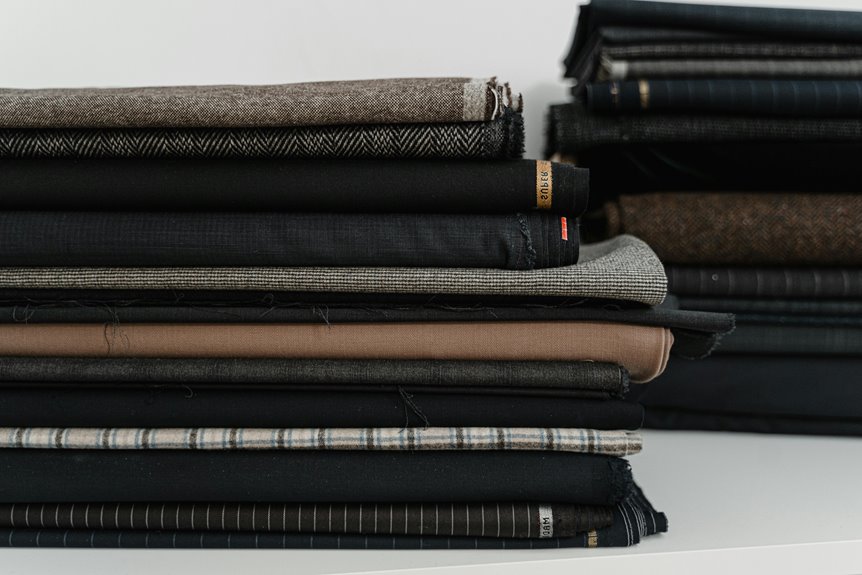
When choosing a high-quality wool herringbone suit, focus on fine, long wool fibers like merino for softness and durability. Check the fabric weight—lighter for warm weather, heavier for cool months—and guarantee the herringbone pattern is crisp, not coarse. Feel the fabric hand; it should be smooth yet substantial, with neat stitching and strong construction. Color should be consistent, and the suit must breathe comfortably while holding its shape. Explore further to find the perfect balance of style, fit, and function.
Key Takeaways
- Choose fine merino wool with smooth, soft fibers for durability, comfort, and a luxurious finish in herringbone suits.
- Select fabric weight based on climate: lighter (8-10 oz) for warm weather, heavier (12 oz+) for cooler seasons.
- Ensure the herringbone pattern adds texture without roughness, maintaining a smooth fabric hand for natural drape and comfort.
- Look for neat, even stitching and canvassed construction for durability, shape retention, and overall craftsmanship quality.
- Opt for well-tailored fits and classic colors like charcoal or navy for formal occasions, balancing style and seasonality.
Understanding the Herringbone Weave Pattern
The herringbone weave pattern stands out for its distinctive V-shaped design that resembles the bones of a herring fish.
The herringbone weave features a unique V-shaped pattern inspired by herring fish bones.
When you look closely, you’ll notice the fabric’s diagonal lines alternate direction, creating a zigzag effect. This pattern isn’t just about style—it adds texture and depth to the wool, making your suit visually interesting without overwhelming it.
As you feel the fabric, you’ll sense the tightness of the weave, which contributes to durability and a smooth finish. The alternating direction also helps the material drape better, giving your suit a refined shape.
Understanding the herringbone pattern helps you appreciate why this classic weave remains popular and why it elevates the overall look and feel of high-quality wool suiting.
Assessing Wool Fiber Quality
While the herringbone pattern adds visual appeal and texture, the true quality of your suit starts with the wool fibers themselves.
You want fibers that feel smooth and soft, not coarse or scratchy. Fine, long fibers typically mean better durability and a more luxurious finish. Check for consistent fiber thickness—uneven fibers can lead to a rougher texture and less resilience.
Merino wool is often preferred because of its fine, high-quality fibers that drape well and resist wrinkles. Avoid blends with excessive synthetic materials if you want natural breathability and comfort.
Evaluating Fabric Weight and Thickness
When choosing a high-quality wool herringbone suit, you’ll want to pay close attention to fabric weight and thickness, as these factors directly influence comfort and durability. Here’s what to take into account:
- Suit Purpose: Lighter fabrics (around 8-10 oz) work best for warmer climates or year-round wear, while heavier fabrics (12 oz and above) offer warmth and structure for cooler months.
- Drape and Movement: Thicker fabrics tend to hold shape better but might restrict movement, so find a balance that suits your activity level.
- Durability: Heavier, denser weaves generally last longer and resist wear, making them a smart investment for frequent use.
The Importance of Fabric Hand and Texture
Fabric hand and texture play a crucial role in how your wool herringbone suit feels and looks. When you run your fingers over the fabric, you should sense a smooth yet substantial feel—this indicates quality wool and skilled weaving.
The texture, defined by the classic herringbone pattern, should be distinct but not rough or scratchy. A good fabric hand means the suit will drape naturally on your body, enhancing comfort and silhouette.
You’ll notice that high-quality wool feels soft and breathable, allowing you to wear the suit for extended periods without irritation. Avoid fabrics that feel stiff or overly coarse, as they often signal lower craftsmanship.
Paying attention to these tactile details guarantees you select a suit that’s both elegant and comfortable.
Checking for Color Consistency and Dye Quality
Two key factors to examine in a wool herringbone suit are color consistency and dye quality.
Color consistency and dye quality are essential for assessing a wool herringbone suit’s fabric excellence.
You want a fabric that looks uniform throughout without unexpected patches or fading. High-quality dye guarantees the suit maintains its rich hue over time, resisting wear and sunlight.
Here’s what to check:
- Uniformity: Look closely to see if the color stays even across the entire fabric, especially in different lighting.
- Vibrancy: A deep, rich color usually means better dye penetration, which helps the suit last longer.
- Bleeding: Lightly rub a damp white cloth on the fabric’s edge; no color should transfer if the dye quality is good.
Inspecting Stitching and Suit Construction
Although the exterior appearance of a wool herringbone suit can catch your eye, it’s the stitching and overall construction that truly reveal its quality.
When inspecting, check for neat, even stitches without loose threads or gaps. High-quality suits use hand-stitched or finely executed machine stitching, guaranteeing durability and a clean finish.
Look inside the jacket: canvassed construction, where the fabric is fused or sewn with a canvas layer, offers better shape and longevity compared to glued suits.
Examine seams and edges for precision; they should lie flat and feel sturdy. Pay attention to buttonholes—they should be hand-stitched and tight.
Considering Breathability and Comfort
Beyond stitching and construction, how a suit feels throughout the day matters just as much as how it looks. When choosing a high-quality wool herringbone suit, you should consider breathability and comfort to make certain you stay fresh and confident.
Here’s what to focus on:
- Fabric Weight: Lighter wool suits allow better airflow, keeping you cooler in warm conditions without sacrificing style.
- Weave Tightness: A looser weave improves ventilation, reducing sweat buildup and enhancing comfort.
- Suit Lining: Opt for breathable linings like Bemberg or silk rather than synthetic ones to prevent overheating and irritation.
Paying attention to these factors guarantees your suit won’t just look sharp but will also keep you comfortable during long days or events.
Determining Suit Durability and Longevity
You’ll want to check the fabric strength and weight to gauge how well the suit will hold up over time.
Pay close attention to the stitching quality and density, as these directly impact durability.
Also, consider how resistant the material is to wear and tear for long-lasting use.
Fabric Strength and Weight
Fabric strength and weight play crucial roles in determining a suit’s durability and how long it will maintain its shape and appearance.
When choosing a high-quality wool herringbone suit, consider these factors:
- Fabric Weight: Heavier fabrics (measured in grams per square meter) generally offer greater durability but may reduce breathability. Aim for a balance that suits your climate and usage.
- Fiber Quality: Strong, long-staple wool fibers resist wear and pilling better, ensuring the fabric stays crisp and intact over time.
- Weave Density: A tighter weave enhances fabric strength, making the suit more resistant to stretching and tearing without compromising flexibility.
Stitching Quality and Density
Although the choice of material sets the foundation, the suit’s stitching quality and density ultimately determine how well it holds up over time.
When inspecting a wool herringbone suit, check the stitches closely. You want tight, even stitches that run consistently without gaps or loose threads. High stitch density means more stitches per inch, which enhances the suit’s structure and prevents seams from unraveling.
Avoid suits with sparse or uneven stitching, as they’re prone to damage and won’t maintain their shape. Also, pay attention to key stress points like the shoulders and armholes—reinforced stitching here adds to durability.
Resistance to Wear and Tear
Stitching quality plays a big role in how a suit withstands daily use, but your wool herringbone suit’s resistance to wear and tear depends on more than just seams.
To guarantee your suit lasts, pay attention to these key factors:
- Fabric Weight and Tightness: Heavier wool with a tight weave resists abrasion better, making it less prone to pilling and thinning over time.
- Reinforced Stress Points: Look for reinforced areas at elbows, shoulders, and pockets; these spots take the most strain and need extra durability.
- Proper Finishing Techniques: High-quality suits often feature treatments like mothproofing or water resistance, which protect the fabric from environmental damage.
Matching Suiting to Seasonal Wear and Occasion
When choosing a high-quality wool herringbone suit, you’ll want to take into account both the season and the occasion to guarantee you look sharp and feel comfortable.
For cooler months, opt for heavier wool with a denser weave to provide warmth without sacrificing breathability. In spring or early fall, a medium-weight fabric balances comfort and style.
During formal events, stick to classic, darker shades like charcoal or navy with subtle herringbone patterns to maintain sophistication. For casual or daytime occasions, lighter colors and more pronounced textures work well.
Frequently Asked Questions
How Should a Wool Herringbone Suit Be Properly Cared For?
Think of your wool herringbone suit like a classic novel—handle it with care. You should dry clean sparingly, brush off dirt, air it out, and store it on a wooden hanger to keep it sharp and lasting.
Can a Wool Herringbone Suit Be Tailored for Different Body Types?
Yes, you can tailor a wool herringbone suit to fit different body types. Tailors adjust the shoulders, waist, and sleeves, ensuring your suit complements your shape perfectly while maintaining the fabric’s texture and pattern.
What Are Common Brands Known for Quality Wool Herringbone Suits?
You’ll find quality wool herringbone suits from brands like Brooks Brothers, Ralph Lauren, and J.Crew. They’re known for craftsmanship and classic styles, so you can trust their suits to fit well and last long.
How Does a Wool Herringbone Suit Compare to Other Suit Fabrics?
You’ll find wool herringbone suits offer durability, breathability, and classic texture, standing out from smoother fabrics like worsted wool or cotton. They balance warmth and style, making them versatile for many seasons and occasions.
Are There Eco-Friendly Options for Wool Herringbone Suiting?
You can find eco-friendly wool herringbone suiting made from sustainably sourced wool or recycled fibers. Look for certifications like GOTS or OEKO-TEX to guarantee ethical production, so you’re choosing a greener, stylish option.