
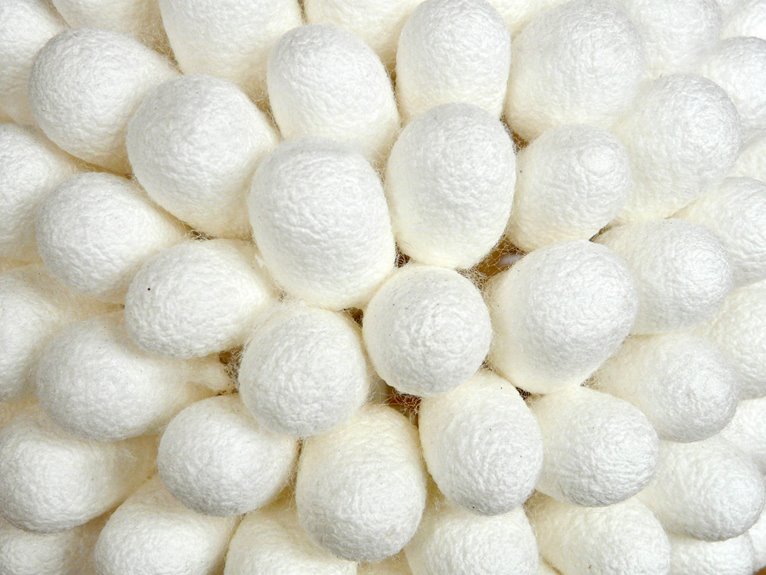
You’ll find organic mulberry silk sustainable because it’s grown without harmful chemicals, protecting soil health and local ecosystems. The farming uses less water and natural pest controls, conserving resources and biodiversity. Plus, it treats silkworms ethically and produces durable, biodegradable fabric that breaks down naturally without polluting. Choosing organic silk also supports small farmers and fair practices. Keep exploring, and you’ll discover even more ways it benefits both you and the planet.
Key Takeaways
- Organic mulberry silk is produced without synthetic pesticides or fertilizers, protecting soil health and reducing chemical pollution.
- It uses significantly less water through efficient irrigation and rainwater harvesting, minimizing environmental impact.
- Organic farming supports biodiversity by fostering beneficial insects and maintaining diverse ecosystems around mulberry trees.
- Ethical, non-violent silkworm harvesting ensures animal welfare and produces durable, high-quality silk.
- The fabric biodegrades naturally within months, reducing landfill waste and supporting local farmers with fair, sustainable practices.
The Origins of Mulberry Silk
Although mulberry silk has become popular for its luxurious feel, its origins date back thousands of years in ancient China. You might be surprised to learn that silk production began as early as 2700 BCE when legends say Empress Leizu discovered the silkworm’s secret.
From there, mulberry silk quickly became a symbol of wealth and status, treasured for its strength, smoothness, and natural sheen. As you explore this fabric, you’ll appreciate how sericulture—the cultivation of silkworms feeding exclusively on mulberry leaves—has been perfected over centuries.
This ancient practice laid the foundation for the high-quality silk you enjoy today, connecting rich cultural history with modern textile innovation. Understanding its origins helps you see why mulberry silk remains unmatched in luxury and durability.
Organic Farming Practices in Silk Production
You’ll find that organic mulberry silk comes from farms that avoid harmful chemicals, protecting both the environment and your skin.
These growers use natural methods to keep the soil healthy and maintain a balanced ecosystem.
Chemical-Free Cultivation Methods
When you choose organic mulberry silk, you support farming methods that avoid synthetic chemicals and pesticides. Instead, farmers rely on natural alternatives to protect mulberry trees and silkworms.
They use organic compost and natural pest control techniques like introducing beneficial insects, crop rotation, and manual removal of pests. These chemical-free practices reduce pollution and prevent harmful residues from entering the silk production chain.
By avoiding synthetic inputs, the entire cultivation process stays cleaner and safer for farmers, consumers, and the environment. You’re also encouraging a system that values biodiversity and soil health without resorting to harmful substances.
Choosing organic mulberry silk means you’re investing in a fabric that’s not only luxurious but also cultivated with respect for nature and human health.
Soil and Ecosystem Health
Because organic farming prioritizes soil and ecosystem health, it creates a balanced environment that benefits both mulberry trees and silkworms. You’ll find that healthy soil boosts nutrient availability, supports beneficial microbes, and reduces pests naturally. This means the mulberry leaves you feed silkworms are richer and safer, leading to higher-quality silk without harmful chemicals.
Check out how organic practices impact key factors:
| Factor | Organic Impact | Benefit to Silk Production |
|---|---|---|
| Soil Fertility | Enhanced through compost and crop rotation | Healthier mulberry trees |
| Biodiversity | Increased by avoiding pesticides | Natural pest control |
| Water Retention | Improved with organic matter | Consistent mulberry growth |
Minimizing Chemical Use in Organic Silk Cultivation
Although cultivating silk traditionally involves heavy chemical use, organic silk farming minimizes these substances to protect both the environment and your health.
When you choose organic mulberry silk, you’re supporting farmers who avoid synthetic pesticides, herbicides, and fertilizers. Instead, they rely on natural pest control methods and organic compost to nurture the mulberry trees, where silkworms feed.
Choosing organic mulberry silk supports farmers using natural pest control and organic compost to grow mulberry trees.
This approach reduces chemical runoff into nearby ecosystems and prevents toxic residues from contaminating the silk fibers you wear. By steering clear of harsh chemicals, organic silk cultivation also safeguards the delicate silkworms, ensuring a healthier production cycle.
When you opt for organic mulberry silk, you’re making a conscious choice that supports sustainable practices, reduces chemical exposure, and promotes a cleaner, safer environment for everyone involved.
Water Conservation in Organic Mulberry Silk Farming
You’ll find that organic mulberry silk farming uses considerably less water than conventional methods.
By harvesting rainwater and applying efficient irrigation techniques, farmers keep water waste to a minimum.
These practices help you support a fabric choice that’s kinder to our planet’s precious resources.
Reduced Water Usage
When you choose organic mulberry silk, you support farming practices that use considerably less water than conventional fabric production.
Mulberry trees, the sole diet of silkworms, thrive with minimal irrigation thanks to their natural resilience. Unlike cotton or synthetic fibers, organic mulberry silk farming avoids excessive water consumption, reducing strain on local water sources.
Additionally, organic methods eliminate water pollution caused by chemical runoff, preserving ecosystems. You’ll find that careful soil management and crop rotation in organic mulberry cultivation enhance moisture retention, further decreasing water needs.
Rainwater Harvesting Practices
Building on the reduced water usage in organic mulberry silk farming, rainwater harvesting plays a key role in conserving water resources. You can capture and store rainwater to irrigate mulberry trees, reducing reliance on groundwater. This method not only saves water but also lowers energy consumption and cuts costs. Here’s a quick look at how rainwater harvesting benefits you in mulberry silk farming:
| Practice | Benefit | Result |
|---|---|---|
| Roof catchment | Collects clean rainwater | Reduces water bills |
| Storage tanks | Stores water for dry periods | Guarantees steady irrigation |
| Filtration systems | Removes debris and impurities | Protects plant health |
| Overflow channels | Prevents flooding | Maintains soil integrity |
| Regular maintenance | Keeps system efficient | Maximizes water savings |
Efficient Irrigation Techniques
Although mulberry trees require consistent watering, you can conserve water by adopting efficient irrigation techniques.
Drip irrigation, for example, delivers water directly to the roots, minimizing evaporation and runoff. This targeted approach guarantees your mulberry trees get just the right amount of water without waste.
You might also consider using soil moisture sensors to monitor conditions and irrigate only when necessary. Scheduling irrigation during cooler parts of the day, like early morning or late evening, further reduces water loss.
By implementing these methods, you not only save water but also promote healthier tree growth, which benefits silk quality.
Efficient irrigation is a smart, sustainable choice that supports organic mulberry silk farming while preserving precious water resources.
Biodiversity Benefits of Organic Silk Farming
Because organic silk farming avoids harmful chemicals, it supports the health of local ecosystems and promotes biodiversity. When you choose organic mulberry silk, you help maintain soil health and protect beneficial insects, birds, and microorganisms that thrive without pesticides.
This natural balance encourages pollinators and predators of pests to flourish, reducing the need for artificial interventions. Additionally, organic practices foster diverse plant life around mulberry trees, creating habitats for various species.
By supporting organic silk, you contribute to preserving these interconnected ecosystems, ensuring long-term environmental resilience. This biodiversity not only sustains the farm but also benefits surrounding communities by maintaining clean air, water, and fertile land.
Your choice directly impacts the health of the environment, making organic mulberry silk a genuinely sustainable fabric option.
Ethical Treatment of Silkworms in Organic Production
You’ll appreciate how organic mulberry silk producers prioritize silkworm welfare by using non-violent harvesting methods.
These practices guarantee the silkworms aren’t harmed during the silk extraction process.
Understanding these ethical steps helps you make a more compassionate fabric choice.
Silkworm Welfare Practices
When choosing organic mulberry silk, you support silkworm welfare practices that prioritize ethical treatment throughout production.
You guarantee silkworms are raised on pesticide-free mulberry leaves, providing a natural and healthy environment. Producers avoid harmful chemicals that can stress or harm the worms, promoting their well-being from start to finish.
You also encourage careful handling during cocoon harvesting to minimize unnecessary distress. The organic approach respects the life cycle of silkworms by maintaining clean, toxin-free rearing conditions, which helps reduce disease and promotes natural growth.
By opting for organic silk, you back transparent practices that value silkworm health, fostering sustainability and ethical responsibility in the fabric industry.
Your choice contributes directly to a more humane and eco-friendly silk production process.
Non-violent Harvesting Methods
Building on the commitment to silkworm welfare, organic mulberry silk production embraces non-violent harvesting methods that prioritize the ethical treatment of silkworms.
Instead of killing the pupae inside the cocoons through boiling, you’ll find producers carefully allowing the moths to emerge naturally. This humane approach means the silk fibers break, resulting in shorter strands, but it respects the life cycle of the silkworms.
By choosing this method, you support a process that values life, reduces harm, and aligns with sustainable principles. Non-violent harvesting guarantees you’re not just buying fabric but also endorsing compassion.
When you opt for organic mulberry silk produced this way, you’re making a conscious choice that benefits both the environment and the creatures involved in its creation.
Carbon Footprint of Organic Versus Conventional Silk
Although both organic and conventional silk production contribute to greenhouse gas emissions, organic mulberry silk generally has a lower carbon footprint due to its sustainable farming practices and reduced reliance on synthetic inputs. When you choose organic silk, you’re supporting methods that use less energy and avoid harmful chemicals, which means fewer emissions during cultivation and processing.
| Aspect | Organic Mulberry Silk |
|---|---|
| Fertilizers | Natural compost and manure |
| Pest Control | Biological or mechanical |
| Energy Use | Lower due to eco-friendly tech |
| Chemical Inputs | None or minimal |
| Emission Reduction | Significant compared to conventional |
Durability and Longevity of Organic Mulberry Silk Fabrics
Because organic mulberry silk is cultivated with careful attention to quality and environmental impact, its durability often surpasses that of conventional silk.
When you choose organic mulberry silk fabrics, you’re investing in a material that resists wear and tear better, thanks to the meticulous rearing of silkworms and the absence of harsh chemicals.
This means your silk garments and home textiles maintain their strength, softness, and vibrant appearance longer, reducing the need for frequent replacements.
You’ll also find that organic production methods preserve the natural protein structure of the silk fibers, enhancing their resilience.
Biodegradability and Environmental Impact of Silk Waste
When you dispose of organic mulberry silk, it breaks down naturally without leaving harmful residues, unlike many synthetic fabrics. This means you reduce landfill waste and avoid releasing toxins into the environment. Silk waste biodegrades efficiently, supporting healthier soil and reducing pollution. Understanding the environmental impact helps you make informed choices.
| Aspect | Environmental Impact |
|---|---|
| Biodegradability | Breaks down naturally within months |
| Chemical Use | Minimal pesticides in organic mulberry silk |
| Waste Volume | Reduced due to recycling potential |
| Energy Consumption | Lower in production compared to synthetics |
| Pollution | Negligible toxic runoff during degradation |
Choosing organic mulberry silk means you’re supporting a fabric that responsibly returns to the earth.
Supporting Small-Scale and Local Silk Farmers
Supporting small-scale and local silk farmers helps preserve traditional practices while promoting economic stability in rural communities.
Backing local silk farmers preserves traditions and boosts rural economic growth.
When you choose organic mulberry silk sourced from these farmers, you directly support their livelihoods and encourage sustainable farming methods passed down through generations.
These farmers often use eco-friendly techniques that minimize chemical use and protect biodiversity.
By buying from them, you help maintain cultural heritage and reduce environmental harm linked to industrial silk production.
Your choice also empowers communities to thrive independently, fostering fair wages and better working conditions.
Supporting these artisans means you’re investing in a supply chain that values quality, sustainability, and social responsibility.
The Role of Certification in Organic Silk Sustainability
Although organic mulberry silk offers numerous environmental and social benefits, its true sustainability depends heavily on reliable certification.
When you choose certified organic silk, you guarantee the fabric meets strict standards that limit chemical use, promote biodiversity, and assure fair labor practices. Certifications like GOTS (Global Organic Textile Standard) or OEKO-TEX verify that the entire production process aligns with eco-friendly and ethical principles.
Without these certifications, it’s difficult to confirm if the silk was produced sustainably or if harmful pesticides and exploitative labor were involved.
Consumer Benefits of Choosing Organic Mulberry Silk
Choosing organic mulberry silk offers you a range of benefits that go beyond sustainability. You get a fabric that’s gentle on your skin, hypoallergenic, and naturally breathable, keeping you comfortable year-round. Plus, it’s incredibly durable, so your investment lasts longer. Organic production means fewer chemicals, reducing your exposure to toxins. Here’s how these benefits stack up:
| Benefit | What It Means for You |
|---|---|
| Skin-Friendly | Soft, non-irritating, hypoallergenic |
| Breathability | Keeps you cool and dry |
| Durability | Long-lasting, resists wear |
| Chemical-Free | No harmful toxins in contact |
| Eco-Conscious Choice | Supports sustainable farming |
Frequently Asked Questions
How Does Organic Mulberry Silk Compare in Cost to Conventional Silk?
You’ll find organic mulberry silk usually costs more than conventional silk because of eco-friendly farming and ethical labor practices. However, its superior quality and sustainability often justify the higher price, making it a smart investment.
Can Organic Mulberry Silk Be Dyed With Natural Colors?
You might wonder if organic Mulberry silk can be dyed with natural colors. It absolutely can! You’ll enjoy vibrant, eco-friendly hues since this silk readily absorbs plant-based dyes, making it perfect for sustainable, beautiful fabrics.
What Are Common Uses of Organic Mulberry Silk in Fashion?
You’ll find organic mulberry silk used in luxurious scarves, elegant dresses, and soft blouses. It’s perfect for lingerie and high-end ties too, offering a smooth, breathable fabric that feels great against your skin all day.
How Should I Care for Organic Mulberry Silk Garments?
You should hand wash organic mulberry silk in cold water with mild detergent, avoid wringing, and air dry away from direct sunlight. Iron on low heat if needed, and store it in a cool, dry place to maintain its quality.
Is Organic Mulberry Silk Hypoallergenic for Sensitive Skin?
Imagine sleeping on a cloud free from irritants—that’s what organic mulberry silk feels like. Since it resists dust mites and allergens naturally, you’ll find it hypoallergenic, perfect if you have sensitive skin or allergies.