
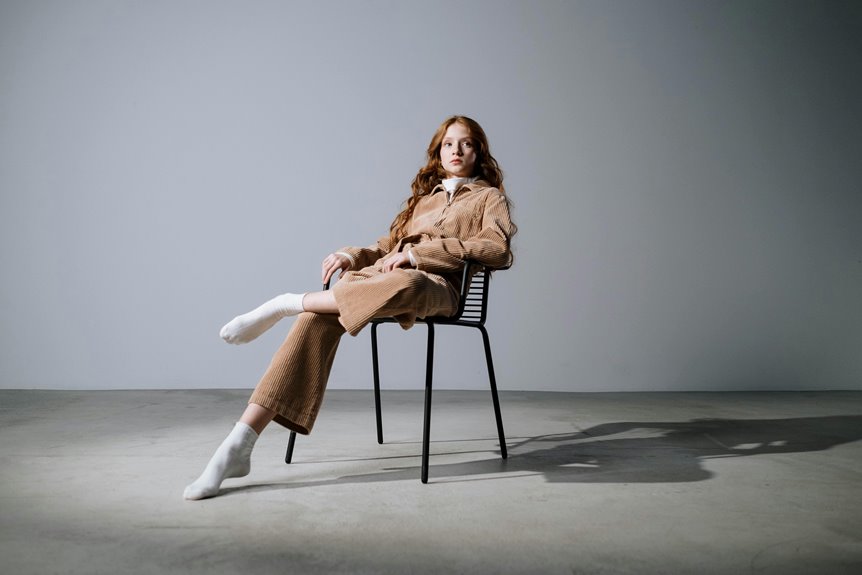
Uncut corduroy is a type of fabric where the raised pile yarns remain intact, unlike standard corduroy, which is cut to create defined ridges known as wales. You’ll notice uncut corduroy by its softer, fluffier surface and longer pile, giving it a more textured, plush feel and subtle shine. It’s great for casual and layering styles and lasts well with proper care. If you want to know how to style and maintain it, there’s more to explore.
Key Takeaways
- Uncut corduroy retains its pile yarns uncut, resulting in a softer, fluffier surface compared to standard corduroy’s sliced ridges.
- Standard corduroy features cut pile threads creating distinct, velvety wales, while uncut corduroy has longer, less defined ridges.
- Uncut corduroy has a subtle shine and color variation, offering a richer tactile texture than the typical velvety finish of standard corduroy.
- The manufacturing process differs as uncut corduroy skips the cutting step, preserving the fabric’s natural pile and softness.
- Uncut corduroy is often used for durability and softness in upholstery and outerwear, distinguishing it from standard corduroy’s common clothing uses.
What Defines Corduroy Fabric?
Corduroy fabric stands out because of its distinctive ridged texture, created by twisted fibers that form parallel lines called wales. When you touch corduroy, you feel these raised ridges, which give it a unique softness and durability.
The number of wales per inch can vary, affecting the fabric’s appearance and feel — finer wales create a smoother surface, while wider ones offer a chunkier look.
You’ll often find corduroy in clothing like pants, jackets, and skirts because it holds warmth well and resists wear. The fabric’s combination of strength and comfort makes it a favorite for both casual and more polished styles.
Understanding these defining features helps you appreciate why corduroy remains a classic textile choice.
The Manufacturing Process of Corduroy
Although it might seem complex, the manufacturing process of corduroy follows a clear sequence of steps that transform raw fibers into the fabric you know and love.
First, cotton or a cotton blend is spun into yarn. Then, the yarn is woven on a loom, creating a base fabric with raised threads called wales.
Cotton fibers are spun into yarn, then woven into fabric featuring distinctive raised threads known as wales.
Next, the fabric undergoes a cutting process where special machines slice the raised threads to create the soft, velvety texture characteristic of corduroy.
After cutting, the fabric is brushed to lift the pile, enhancing its softness and appearance.
Finally, it’s treated with dyes and finishes to add color and durability, preparing the corduroy for use in clothing and upholstery.
This process guarantees you get that distinctive ribbed texture in every yard.
What Does ‘Uncut Corduroy’ Mean?
The cutting process plays a key role in defining corduroy’s texture, but sometimes the fabric skips this step, resulting in what’s called uncut corduroy.
When you hear “uncut,” it means the pile yarns aren’t sliced after weaving. Instead, the loops remain intact, creating a different surface.
You get a fabric where the raised ribs, or wales, are formed by these uncut loops, giving it a softer, less defined look compared to the traditional cut version.
Uncut corduroy retains the looped pile structure, which affects its appearance and feel.
Differences in Texture Between Uncut and Standard Corduroy
When you run your hand over uncut corduroy, you’ll notice a softer, more velvety texture compared to the crisp, defined ribs of standard corduroy.
Uncut corduroy hasn’t had its pile trimmed, so the fabric feels plusher and more cushioned under your fingers.
Standard corduroy, with its cut pile, offers a more structured feel thanks to the clear, raised ribs or wales.
This difference affects how the fabric moves and wears; uncut corduroy feels more flexible and gentle, while standard corduroy has a firmer hand and can feel slightly rougher.
If you value softness and a cozy touch, uncut corduroy stands out, but if you prefer tactile definition and resilience, standard corduroy might be more your style.
Visual Characteristics of Uncut Corduroy
When you look at uncut corduroy, you’ll notice its unique texture and taller pile height compared to standard corduroy.
This difference gives it a distinct appearance, with deeper ridges and a softer feel.
You’ll also see subtle variations in color and shine that set it apart visually.
Texture and Appearance
Uncut corduroy fabric boasts a distinctive texture that sets it apart from other textiles. When you run your hand over it, you’ll notice a soft, velvety feel created by its untrimmed loops.
Unlike standard corduroy, which has cut and flattened fibers, uncut corduroy retains its plush, rounded surface. This gives it a richer, more tactile quality that invites touch.
Visually, uncut corduroy appears thicker and more textured, with a subtle shine that catches the light differently across its surface. The uncut loops create a gentle, three-dimensional effect, making the fabric look fuller and more inviting.
If you’re seeking a fabric with both visual depth and a cozy hand, uncut corduroy delivers a unique combination that stands out.
Pile Height Differences
Although pile height might seem like a minor detail, it plays an essential role in defining the visual character of corduroy fabric.
When you look closely at uncut corduroy, you’ll notice its pile height is generally longer than that of standard corduroy. This longer pile creates a softer, fluffier surface, giving the fabric a more plush and cozy feel.
In contrast, standard corduroy usually has shorter, denser pile, resulting in a firmer texture and more defined ribs. The difference in pile height also affects how the light interacts with the fabric’s surface, influencing the depth and dimension you perceive.
Color and Shine
Because it reflects light differently than standard corduroy, uncut corduroy offers a unique color depth and subtle shine that catches your eye.
Unlike traditional corduroy, its uncut pile creates a smoother surface, allowing light to glide across the fabric more evenly. This results in a soft sheen that enhances the richness of the colors, making them appear more vibrant and dynamic.
When you run your hand over uncut corduroy, you’ll notice how its gentle luster shifts with movement, adding a lively dimension to the material.
The combination of pile texture and light reflection gives uncut corduroy a distinct visual appeal, setting it apart from the matte finish you usually see on standard corduroy fabrics.
Common Uses for Uncut Corduroy
Corduroy fabric offers a versatile foundation for many creative projects, and its uncut form is especially prized for its durability and texture. You’ll find uncut corduroy often used in upholstery, outerwear, and accessories, where its unique feel stands out. It’s also great for crafting items that need to hold their shape and resist wear.
| Use Case | Why Choose Uncut Corduroy | Typical Items |
|---|---|---|
| Upholstery | Durable, textured surface | Sofas, chairs |
| Outerwear | Warmth and ruggedness | Jackets, coats |
| Accessories | Sturdy yet stylish | Bags, hats |
| Home Decor | Adds texture, easy to maintain | Pillows, curtains |
This fabric’s versatility lets you explore numerous creative options with confidence.
Durability and Care for Uncut Corduroy
When you choose uncut corduroy for your projects, understanding how to maintain its durability guarantees your items stay looking great over time. Uncut corduroy is naturally sturdy due to its thick, plush pile, but it requires gentle care to preserve its texture.
Avoid harsh washing cycles; instead, opt for cold water and a delicate setting. Air drying is best since high heat can damage the fabric’s fibers. When ironing, use a low heat setting and press on the reverse side to prevent flattening the pile.
Also, avoid excessive friction to keep the ribs intact. By following these simple care tips, you make sure your uncut corduroy remains resilient and visually appealing, extending the life of your garments or furnishings without sacrificing comfort or style.
Styling Tips for Wearing Uncut Corduroy
You can easily pair uncut corduroy with casual attire for a relaxed, stylish look.
Try layering it with sweaters or jackets to stay warm without sacrificing comfort.
Don’t forget to accessorize thoughtfully to complete your outfit and highlight the fabric’s unique texture.
Pairing With Casual Attire
Although uncut corduroy’s texture might seem bold, it pairs effortlessly with casual attire to add depth and interest to your look.
You can match uncut corduroy pants or jackets with simple tees or lightweight sweaters for a laid-back vibe. Opt for neutral or muted colors to let the fabric’s unique texture stand out without overwhelming your outfit. Sneakers, loafers, or ankle boots complement the relaxed feel perfectly.
When wearing uncut corduroy shirts, throw on your favorite jeans or chinos to balance comfort with style. Keep accessories minimal to maintain a clean and approachable look.
Layering Techniques for Warmth
Since uncut corduroy is inherently thick and textured, layering it smartly can boost both warmth and style during colder months.
You want to balance bulk and comfort without losing the fabric’s unique appeal. Here’s how you can do it:
- Start with a slim-fitting base like a thermal or lightweight turtleneck to trap heat without adding bulk.
- Add your uncut corduroy piece—a jacket or pants—over this base. Its dense texture serves as excellent insulation.
- Top off with a tailored wool coat or a sleek overcoat that complements the corduroy’s rugged look while blocking wind.
This approach keeps you cozy, highlights uncut corduroy’s texture, and lets you move freely without feeling overwhelmed by layers.
Accessorizing Uncut Corduroy Looks
When styling uncut corduroy, choosing the right accessories can elevate your look without overshadowing the fabric’s rich texture.
Opt for simple, clean lines in your jewelry—think minimalistic gold or silver pieces that complement rather than compete. Leather belts and boots add a classic touch, enhancing the fabric’s vintage vibe.
Avoid overly flashy or shiny accessories that might clash with corduroy’s matte finish. Scarves in soft, neutral tones or subtle patterns work well, adding warmth and dimension.
When carrying bags, choose structured styles in natural materials like leather or canvas to maintain balance.
Where to Purchase Uncut Corduroy Fabric
Looking for uncut corduroy fabric? You’ve got some great options to explore.
Whether you want to craft a unique garment or add texture to your home decor, sourcing the right fabric is key. Here’s where you can find uncut corduroy:
- Specialty Fabric Stores – These shops often carry unique and high-quality textiles, including uncut corduroy, allowing you to feel and inspect the fabric before buying.
- Online Retailers – Websites like Etsy or fabric-specific e-commerce sites provide a wide range of uncut corduroy options with detailed descriptions and customer reviews.
- Wholesale Suppliers – If you’re planning a larger project, buying from wholesalers can save you money and offer bulk purchasing flexibility.
Check these places out, and you’ll be well on your way to working with uncut corduroy!
Frequently Asked Questions
Can Uncut Corduroy Be Used for Upholstery Projects?
You can use uncut corduroy for upholstery, but you’ll want to contemplate its texture and durability. It’s softer and less structured than standard fabric, so it works best for light-use or decorative pieces.
Is Uncut Corduroy Eco-Friendly or Sustainable?
You might think uncut corduroy screams eco-friendly, but it depends. If it’s made from organic fibers and produced responsibly, you’re in luck. Otherwise, it’s just fabric with a fancy name—not always sustainable.
How Does Uncut Corduroy Perform in Different Climates?
You’ll find uncut corduroy performs well in cooler climates due to its thickness and warmth. However, it might feel heavy and less breathable in hot, humid weather, so consider layering or lighter fabrics for comfort.
Are There Any Historical Uses of Uncut Corduroy?
You’ll find uncut corduroy used historically in workwear and upholstery, prized for durability. Its unique texture offered extra warmth and resilience, making it popular in rugged clothing and furniture during the 19th and early 20th centuries.
Can Uncut Corduroy Be Dyed After Manufacturing?
Imagine painting on a velvet canvas—uncut corduroy soaks up dye beautifully after manufacturing. You’ll find it accepts colors deeply, letting you customize its rich texture and create vibrant, lasting shades with ease.