
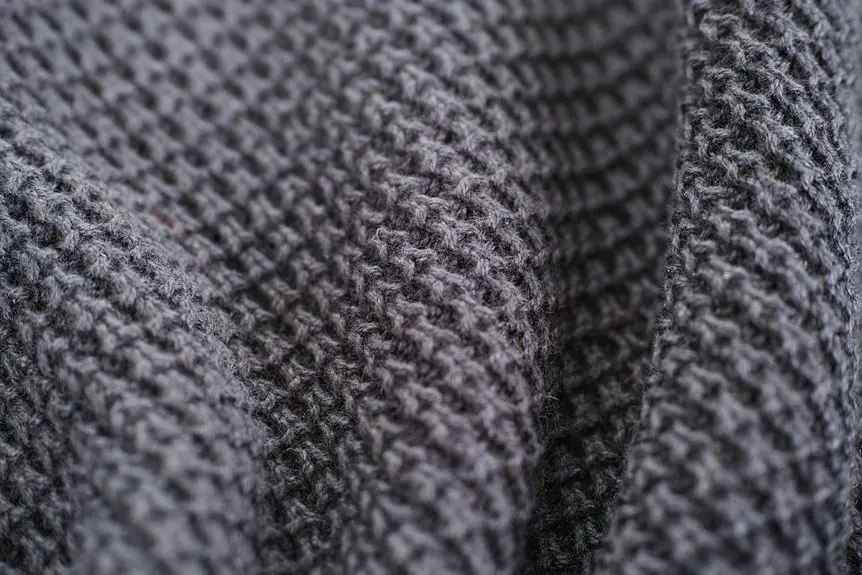
You stay warmer in corduroy because its unique fabric has raised, parallel ribs made from pile yarns that trap air, creating natural insulation. This ribbed texture forms tiny air pockets that keep heat close to your body, unlike twill or canvas, which have flatter weaves and don’t trap heat as well. Corduroy’s bulk and textured surface also block cold air better. Discover how these fabric differences boost warmth and comfort in chilly weather.
Key Takeaways
- Corduroy’s raised wales create air-trapping ridges that provide superior insulation compared to flat weaves like twill and canvas.
- The cut pile yarn loops in corduroy form tiny air pockets that retain body heat close to the skin.
- Corduroy’s three-dimensional ribbed texture increases surface area, enhancing warmth retention and reducing heat loss.
- Twill and canvas have flatter weaves, offering less air trapping and insulation than corduroy’s plush ribbed structure.
- The dense pile fibers in corduroy minimize airflow and slow heat transfer, giving it a natural insulation advantage.
Understanding Corduroy’s Unique Fabric Construction
Corduroy’s warmth comes largely from its distinctive fabric construction. When you look closely, you’ll see it’s woven with extra yarns that form raised ridges called wales.
These wales are created by weaving a base fabric and then cutting the loops of pile yarns, giving corduroy its signature ribbed texture. This structure traps air between the ridges, creating natural insulation.
Unlike twill or canvas, which have flatter weaves, corduroy’s three-dimensional design adds bulk without extra weight. This bulk acts as a barrier against cold, making you feel warmer.
The Role of Pile Surface in Heat Retention
You’ll notice that the pile surface of corduroy plays a key role in keeping you warm.
Its textured ridges trap air, creating an insulating layer that holds heat close to your body.
This natural air pocket is what makes corduroy so effective at retaining warmth.
Pile Texture and Insulation
Although many fabrics rely on thickness alone to keep you warm, corduroy’s pile texture plays a unique role in trapping heat.
The raised vertical ribs, or wales, create a soft, fuzzy surface that adds an extra layer of insulation. When you wear corduroy, this pile texture helps slow the escape of your body heat by increasing the fabric’s surface area and providing more material to retain warmth.
Unlike flat weaves like twill or canvas, the pile fibers in corduroy stand upright, giving you that cozy feeling. This structural difference means you don’t just get warmth from fabric density but from how its texture interacts with your body heat, making corduroy a naturally warmer choice without added bulk.
Air Trapping Mechanism
The pile surface of corduroy traps air pockets that act as natural insulators, keeping you warm by reducing heat loss.
These tiny air pockets create a buffer between your body and the cold outside, making corduroy feel cozier than twill or canvas.
Here’s how the air trapping mechanism works:
- The raised pile fibers create small, enclosed spaces.
- These spaces trap warm air generated by your body.
- Trapped air slows down the transfer of heat.
- The dense pile minimizes airflow that could cool you.
- This insulation effect is more effective than flat weaves.
Comparing the Weave Patterns of Corduroy, Twill, and Canvas
When you examine the weave patterns of corduroy, twill, and canvas, you’ll notice distinct structural differences that affect their texture and warmth.
Corduroy features raised, parallel ribs formed by extra sets of yarn, creating a plush surface. In contrast, twill has a diagonal weave pattern, producing a smooth yet sturdy fabric with less surface texture.
Canvas uses a plain weave, interlacing warp and weft yarns evenly, resulting in a dense but flat fabric. These differences mean corduroy traps more air within its ribbed structure, while twill and canvas lay flatter, offering less insulation.
Understanding these patterns helps you see why corduroy feels warmer—you’re dealing with more surface area and spaces that hold heat, unlike the tighter, less textured twill and canvas weaves.
How Ribbed Textures Enhance Insulation
You’ve seen how corduroy’s ribbed weave traps more air compared to twill and canvas. This trapped air acts as an insulating barrier, keeping you warmer.
The ribs create tiny pockets that reduce heat loss, making corduroy a smart choice for chillier days. Here’s how ribbed textures enhance insulation:
- Air pockets between ribs slow down heat escape
- Raised cords reduce direct skin contact with cold surfaces
- Ribbed surfaces disrupt wind flow, minimizing chill
- The texture increases fabric thickness without extra weight
- Ribs create a soft cushion, improving warmth retention
The Impact of Fabric Thickness on Warmth
Fabric thickness plays an essential role in how well corduroy keeps you warm. When you wear corduroy, its thicker fabric acts as a stronger barrier against cold air compared to thinner materials like twill or canvas.
This added bulk reduces heat loss from your body, helping maintain your warmth throughout the day. Because corduroy is generally made with denser yarns and piled ribs, it naturally creates a more substantial fabric.
When you choose clothing, thicker fabric means less cold air penetrates, and your body heat stays trapped closer to your skin. So, the thickness of corduroy isn’t just about durability or feel—it directly contributes to its superior insulation qualities, making it a smarter choice for chilly weather than thinner fabrics.
Air Trapping Mechanisms in Corduroy vs. Other Fabrics
You’ll notice corduroy’s pile fibers create tiny pockets that trap warm air close to your body.
Its distinct surface texture adds extra layers for insulation compared to smoother fabrics.
Understanding these air trapping features helps explain why corduroy keeps you warmer.
Pile Fiber Insulation
Air trapped within the pile fibers plays an essential role in corduroy’s warmth by creating an insulating barrier that slows heat loss.
When you wear corduroy, the raised fibers trap pockets of air, which act as a buffer against the cold. This mechanism differs considerably from twill or canvas, which have flatter, denser weaves.
Here’s how pile fiber insulation works in corduroy:
- Raised pile creates multiple tiny air pockets
- Air pockets reduce heat transfer by convection
- Fibers trap warmth close to your skin
- Denser weaves like twill lack these air pockets
- Canvas’s smooth surface offers minimal insulation
These trapped air pockets give corduroy a natural advantage in retaining heat, making it warmer than fabrics with less textured surfaces.
Fabric Surface Texture
Although many fabrics aim to keep you warm, corduroy’s surface texture uniquely traps air more effectively than others. The raised ribs, or wales, create tiny pockets of still air that act as insulators. When you wear corduroy, these pockets reduce heat loss by limiting airflow close to your skin. In contrast, twill and canvas have flatter surfaces, allowing more air to circulate and escape heat.
| Fabric | Air Trapping Mechanism |
|---|---|
| Corduroy | Raised ribs trap still air pockets |
| Twill | Diagonal weave, less surface depth |
| Canvas | Flat, dense weave with minimal gaps |
| Fleece | Looped fibers trap air internally |
This structure makes corduroy warmer by effectively holding heat near your body.
Thermal Properties of Different Fiber Arrangements
Fiber arrangements play an essential role in how corduroy traps heat and keeps you warm. Unlike twill or canvas, corduroy’s unique fiber layout creates tiny air pockets that act as insulators. When you wear corduroy, these pockets trap your body heat, reducing heat loss.
Here’s how different fiber arrangements affect thermal properties:
- Looped or raised fibers in corduroy create more air pockets.
- Twill’s diagonal weave is tighter, allowing less air retention.
- Canvas’s plain weave is dense but flat, offering minimal insulation.
- The pile in corduroy increases surface area, enhancing warmth.
- Fiber density and orientation influence heat retention efficiency.
Practical Benefits of Corduroy’s Structure for Cold Weather Wear
The unique structure of corduroy offers several practical advantages when you face cold weather. Its raised ridges, or wales, trap pockets of air that act as natural insulation, keeping your body heat close. This means you stay warmer without heavy layering.
The texture also blocks wind better than smooth fabrics like twill or canvas, reducing cold drafts. Plus, corduroy’s thickness provides extra durability and comfort, making it ideal for outdoor activities in chilly conditions.
You’ll notice it feels cozy against your skin, thanks to the soft pile surface, which adds to the warmth. When you choose corduroy, you get a fabric that combines insulation, wind resistance, and comfort, making it a smart, stylish choice for cold weather wear.
Frequently Asked Questions
Can Corduroy Be Waterproofed for Rainy Conditions?
You can waterproof corduroy using sprays or wax treatments, but keep in mind it’s naturally absorbent. Waterproofing helps in rainy conditions, but it won’t be as effective as materials designed specifically for water resistance.
How Does Corduroy React to Washing and Drying?
You might think washing ruins corduroy, but it actually softens with care. Use cold water, gentle cycle, and air dry to maintain its texture and avoid shrinkage. Avoid high heat to keep it looking great.
Is Corduroy Suitable for Summer Clothing?
Corduroy isn’t the best choice for summer since it’s heavier and traps heat. You’ll feel warmer wearing lighter, breathable fabrics like cotton or linen instead. Save corduroy for cooler seasons when warmth matters more.
What Are the Best Care Tips to Maintain Corduroy Fabric?
You should wash corduroy inside out on a gentle cycle, avoid high heat when drying, and iron on low. Spot clean stains quickly and store it folded to keep those soft ridges intact and looking great.
Are There Eco-Friendly Alternatives to Traditional Corduroy Fabrics?
Looking for eco-friendly corduroy alternatives? Why not choose organic cotton or recycled polyester blends? You’ll reduce environmental impact while still enjoying that cozy texture. Don’t you want fashion that feels good and does good?