
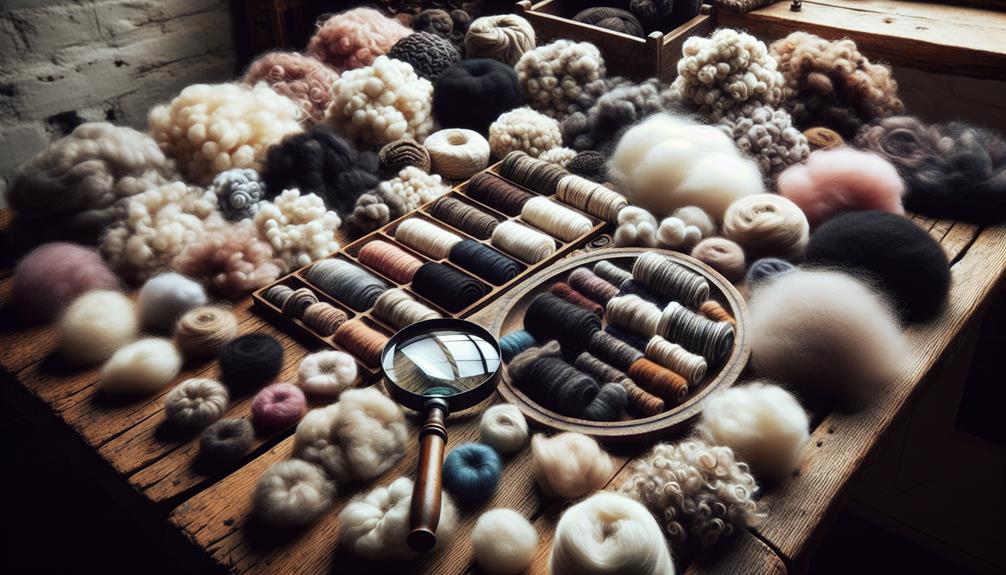
I'd say Merino wool is the most common type. It's soft, regulates temperature well, and comes from Merino sheep in Australia. Its fine fibers are great for clothing. If you want to know more about different wool types and their unique qualities, there's a lot to discover!
Key Takeaways
- Merino wool is the most common type due to its fine fibers and soft texture.
- Shetland wool is popular for its natural earthy tones and excellent warmth.
- Lambswool, from young sheep, is ideal for sensitive skin and high-quality knitwear.
- Cashmere wool, graded A-C, is renowned for its water-repellent and insulating properties.
- Alpaca wool, softer and stronger than sheep's wool, is hypoallergenic and durable.
Merino Wool
Merino wool, originating from the merino breed of sheep, stands out for its fine fibers and soft texture. These sheep, primarily found in Australia, produce wool known for its exceptional quality. The wool fibers from Merino sheep are highly prized for their softness, making them ideal for various clothing items. Unlike other wool types, Merino wool has a lower yield but compensates with its luxurious feel and excellent temperature-regulating properties.
To guarantee the wool meets high standards, it undergoes a scouring process that removes fatty greases, ensuring cleanliness and quality. This meticulous process is vital in maintaining the premium characteristics of Merino wool. When compared to coarser wool varieties, Merino wool emerges as a top choice for those seeking comfort and sophistication in their garments. Its reputation for being both fine and soft makes it a sought-after wool type in the textile industry.
Shetland Wool
Why is Shetland wool a popular choice for winter garments?
Shetland wool originates from the Shetland Islands of Scotland, where the Shetland sheep thrive in the harsh environment, known for their hardy nature and the production of quality wool. This type of wool stands out for being thicker and coarser than merino wool, making it an ideal option for crafting sturdy winter garments.
One of the distinctive features of Shetland wool is its natural coloring, offering a range of earthy tones that mirror the surroundings of the sheep. Additionally, due to the cold climate of the Shetland Isles, Shetland wool provides excellent warmth and insulation, making it perfect for cold weather wear. Its durability and classic appeal have made it a popular choice for traditional knitwear like Fair Isle sweaters.
When seeking a wool type that combines quality, warmth, and a touch of rustic charm, Shetland wool emerges as a top contender.
Lambswool
Shetland wool, recognized for its durability and rustic charm, shifts to the next wool type, Lambswool, which comes from the initial shearing of young sheep. Lambswool is derived from sheep that are typically around seven months old, providing extremely smooth, soft, and fine wool that is gentle on sensitive skin. Due to its hypoallergenic properties, Lambswool is a favored choice for individuals with allergies. Often referred to as virgin wool because of its purity and exceptional softness, Lambswool is widely used in crafting high-quality knitwear appreciated for its warmth and comfort.
| Property | Description |
|---|---|
| Source | First shearing of young sheep |
| Texture | Smooth, soft, and fine wool |
| Benefits | Ideal for sensitive skin, hypoallergenic |
Lambswool's luxurious feel and insulating qualities make it a sought-after material in the creation of cozy and stylish garments, ensuring both comfort and elegance for the wearer.
Cashmere Wool
Cashmere wool, known for its luxurious feel and exceptional quality, is sourced from cashmere and pashmina goats, with younger goats producing the highly coveted baby cashmere. This exclusive wool is water-repellent, providing protection from the elements, and thermally insulating, offering warmth without bulkiness.
Grades A-C classify cashmere wool, with Grade A representing the highest quality fibers. The softness and insulating properties of cashmere wool make it a popular choice for high-end clothing items, accessories, and cozy blankets. Its fine texture and comfort are comparable to ultrafine merino wool, making it a preferred material for those seeking premium quality.
When shopping for cashmere products, look for Grade A cashmere for the most luxurious experience. Whether you're looking for a sophisticated sweater or a soft scarf, cashmere wool is sure to provide both elegance and comfort in your wardrobe.
Alpaca Wool
Alpaca wool, softer and stronger than sheep's wool, is a medium-weight fiber commonly used in coats, blankets, and outerwear. Alpaca wool is sourced from two main alpaca breeds: Suri and Huacaya. Suri alpacas provide long, luxurious fibers ideal for woven materials, while Huacaya alpacas produce shorter fibers perfect for knit fabrics. This versatile wool is renowned for being softer and more durable than traditional sheep's wool, making it a preferred choice for various applications. Additionally, alpaca wool is hypoallergenic, making it suitable for those with sensitive skin. One of its standout features is its excellent insulation properties, attributed to the hollow structure of the fibers. These hollow hairs trap heat effectively, providing lightweight warmth without the bulk. Alpaca wool truly combines luxury with functionality, offering a unique blend of comfort, strength, and performance.
| Alpaca Wool Facts | Details |
|---|---|
| Weight | Medium-weight |
| Breeds | Suri, Huacaya |
| Qualities | Softer, Stronger |
Frequently Asked Questions
What Is the Most Common Sheep Wool?
Virgin Wool, sourced from the first shearing of sheep, is the most common type. Known for its softness, it's often called lambswool. Ideal for clothing and textiles, it's hypoallergenic and widely used in the industry.
What Are the Three Main Types of Wool?
Merino, Cashmere, and Shetland are the three main types of wool. Each type has unique qualities catering to different needs. Merino is soft, Cashmere is luxurious, and Shetland is coarser. These wools offer various benefits in clothing and textiles.
Which Type of Wool Is Common in Market?
Merino wool stands out as a top choice in the market due to its fine fibers, soft feel, and temperature control. It's versatile for various clothing items and accessories, making it a popular option for many.
What Is the Most Common Source of Wool?
Sheep wool, the most prevalent wool source, is renowned for its versatility and insulating properties. It originates from various sheep breeds, with Merino wool being a popular choice due to its softness and fine fibers.