
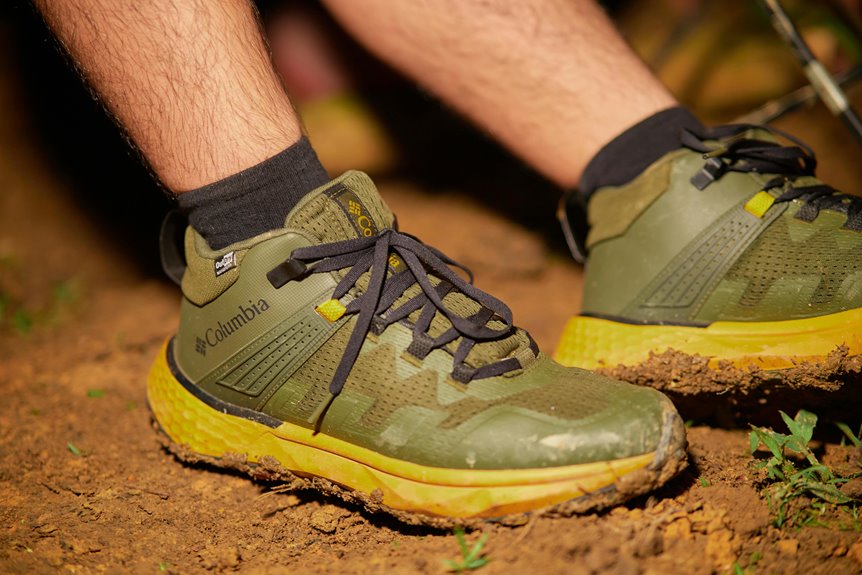
You can expect your Gore-Tex shoes to last between one and three years, depending on how often you use them and how well you maintain them. Frequent use on rough or wet terrain will wear them down faster, while proper cleaning and waterproofing treatments help extend their life. Watch for worn soles, leaks, or lost support as signs you need a replacement. If you want to know how to spot wear and keep your shoes performing longer, keep exploring.
Key Takeaways
- Gore-Tex shoes typically last between one to two years with regular use and proper maintenance.
- Frequent exposure to rough terrain, moisture, and harsh weather accelerates wear and reduces lifespan.
- Signs like worn soles, diminished waterproofing, and seam damage indicate the need for replacement.
- Proper cleaning, drying, and waterproof spray application can extend Gore-Tex shoe longevity.
- Lifespan may reach up to three years with light use and careful upkeep.
Factors Influencing the Durability of Gore-Tex Shoes
Several key factors influence how long your Gore-Tex shoes will last.
First, how often you wear them plays a big role—daily use naturally causes more wear and tear than occasional use.
The conditions you expose them to matter, too; rough terrain, mud, or water-heavy environments challenge their durability.
Proper care and maintenance extend their life, so cleaning off dirt and drying them correctly after use helps preserve the materials.
Your walking or running style also affects shoe lifespan; uneven pressure can cause specific areas to degrade faster.
Finally, the quality of the Gore-Tex membrane and overall shoe construction impacts durability.
Typical Lifespan of Gore-Tex Footwear Under Normal Use
You can expect your Gore-Tex shoes to last around one to two years with regular use, depending on how often and where you wear them.
Factors like terrain, weather, and maintenance play a big role in how long they hold up.
Keep an eye out for signs of wear such as worn soles, compromised waterproofing, or damaged seams to know when it’s time for a replacement.
Average Durability Timeline
Gore-Tex shoes typically last between one to three years with regular use, depending on factors like activity type and care.
If you wear them daily for walking or light hiking, you can expect closer to the three-year mark. However, frequent use in rugged terrain or extreme weather may shorten their durability.
The waterproof membrane inside Gore-Tex shoes maintains breathability and protection for a significant portion of their lifespan, but over time, it can degrade.
You’ll notice the soles wearing down before the membrane fails, signaling it’s time for replacement.
By paying attention to how your shoes perform and feel, you’ll know when they’ve reached the end of their useful life.
With proper use, Gore-Tex footwear offers reliable performance over a solid average timeline.
Factors Affecting Longevity
Understanding what influences how long your Gore-Tex shoes last can help you get the most out of them. Several factors determine their typical lifespan under normal use. Your walking habits, maintenance routine, and the environments you frequent all play critical roles. For example, regular cleaning and proper drying extend durability, while harsh terrains might wear them faster.
| Factor | Impact on Longevity | Tips for Care |
|---|---|---|
| Usage Frequency | More use = faster wear | Rotate shoes, limit daily use |
| Terrain Type | Rough terrains cause wear | Choose terrain-appropriate models |
| Maintenance | Good upkeep extends life | Clean, dry, and store properly |
| Climate Exposure | Extreme conditions weaken | Use waterproof sprays, avoid excess moisture |
Signs of Wear
Although these shoes are designed for durability, signs of wear typically appear after consistent use over time.
You might notice the outer fabric starting to fray or develop small tears, especially around high-flex areas like the toe box and heel. The Gore-Tex membrane itself can begin to lose its waterproofing ability, leading to damp feet during wet conditions.
Sole degradation is another common sign; the tread may wear down, reducing grip and stability. Seams can loosen or separate, compromising the shoe’s integrity.
If you start feeling less support or notice increased water seepage, it’s a clear indication your Gore-Tex shoes are nearing the end of their effective lifespan.
Regular checks help you decide when it’s time to replace them for peak performance.
Impact of Outdoor Conditions on Gore-Tex Shoe Longevity
You’ll notice that harsh weather like heavy rain or intense sun can wear down Gore-Tex shoes faster than mild conditions.
The type of terrain you tackle also plays a big role in how quickly your shoes show signs of wear.
Understanding these factors helps you take better care of your Gore-Tex footwear and extend its lifespan.
Weather Effects on Durability
When you expose Gore-Tex shoes to harsh weather conditions like heavy rain, snow, or intense sun, their materials face different challenges that can shorten their lifespan.
Constant moisture can weaken stitching and adhesives, while freezing temperatures may cause the shoe’s components to become brittle and crack over time.
On the other hand, prolonged exposure to UV rays from intense sun can degrade the waterproof membrane and outer fabric, reducing breathability and water resistance.
You’ll also notice that repeated wet-dry cycles can cause the shoe’s materials to lose flexibility, making them less comfortable and more prone to damage.
To extend your Gore-Tex shoes’ durability, it’s best to dry them properly after wet conditions and avoid leaving them in direct sunlight for extended periods.
Terrain Influence on Wear
Harsh weather conditions definitely take a toll on your Gore-Tex shoes, but the type of terrain you tackle also plays a big role in how long they last. Rocky or uneven surfaces cause more abrasion and stress on the sole and upper materials, speeding up wear. Muddy or wet trails can degrade the shoe’s waterproof membrane if not cleaned properly. Smooth, flat paths generally extend the lifespan since they cause less friction and damage.
| Terrain Type | Impact on Sole | Effect on Gore-Tex Membrane |
|---|---|---|
| Rocky Trails | High abrasion | Potential punctures |
| Muddy Paths | Moderate abrasion | Possible membrane clogging |
| Flat Surfaces | Low abrasion | Minimal impact |
Choose terrain wisely to maximize your Gore-Tex shoes’ durability.
Signs Your Gore-Tex Shoes Need Replacement
Although Gore-Tex shoes are built to last, certain signs indicate it’s time to replace them. If you notice persistent leaks despite drying, the waterproof membrane has likely worn out.
Pay attention to worn-out soles; if the tread is smooth or uneven, your grip and stability suffer.
Check for significant tears or holes in the upper material—these compromise protection and comfort.
If the shoe’s cushioning feels flat or your feet ache after walks, the midsole might’ve degraded.
Also, if you spot loose stitching or detached parts, it’s a clear warning.
Finally, if your shoes no longer fit snugly due to material stretching or deformation, they won’t support you properly.
Recognizing these signs helps you avoid discomfort and injury on your next adventure.
How Proper Maintenance Can Extend Gore-Tex Shoe Life
Noticing signs of wear on your Gore-Tex shoes means it’s time to think about how you care for them. Proper maintenance can greatly extend their lifespan.
Always clean your shoes after use, removing dirt and debris with a soft brush or damp cloth. Avoid machine washing, which can damage the waterproof membrane.
After cleaning, let them dry naturally; never use direct heat sources like radiators or hairdryers. Applying a Gore-Tex-approved waterproof spray or treatment restores water repellency and breathability.
Also, store your shoes in a cool, dry place away from direct sunlight to prevent material breakdown.
Regular maintenance keeps the Gore-Tex membrane functioning, protects the shoe’s structure, and guarantees your footwear remains comfortable and effective for many adventures ahead.
Comparing Lifespan: Gore-Tex Shoes vs. Non-Gore-Tex Shoes
When you compare Gore-Tex shoes to non-Gore-Tex shoes, you’ll find that the advanced waterproof membrane considerably influences their durability.
Gore-Tex shoes typically last longer because they protect your feet from moisture while allowing breathability, reducing wear caused by damp conditions. Non-Gore-Tex shoes, lacking this membrane, often deteriorate faster when exposed to water and mud, which can break down materials quicker.
However, the lifespan difference also depends on factors like shoe construction, materials, and how often you use them in harsh environments. If you frequently hike or run in wet conditions, Gore-Tex shoes generally maintain their performance and structure better over time.
Still, proper care plays a big role for both types, so choosing Gore-Tex doesn’t mean you can skip maintenance.
Repairing Gore-Tex Shoes to Prolong Their Use
While Gore-Tex shoes tend to outlast non-Gore-Tex ones thanks to their protective membrane, their lifespan isn’t unlimited.
You can extend their use by repairing common issues like sole wear, damaged seams, or minor tears. Start by cleaning your shoes thoroughly and drying them completely before any repair.
For sole damage, use durable adhesive or seek professional resoling services. Small tears or seam separations can be fixed with specialized shoe glue or waterproof seam tape to maintain the membrane’s integrity.
Avoid using regular adhesives that might clog the Gore-Tex membrane. Regularly check your shoes for early signs of damage and address them promptly to prevent worsening.
With proper care and timely repairs, you’ll keep your Gore-Tex shoes performing well for many more adventures.
When to Invest in a New Pair of Gore-Tex Shoes
Even with diligent care and repairs, there comes a point when your Gore-Tex shoes no longer provide the protection and comfort you need.
You should consider investing in a new pair if you notice persistent leaks, worn-out soles, or compromised waterproofing that can’t be restored. If your shoes feel less supportive or cause discomfort during extended use, it’s time to upgrade.
Additionally, visible damage to the Gore-Tex membrane or significant material degradation means your shoes won’t keep you dry and comfortable anymore.
Don’t wait for complete failure—replacing them proactively saves you from discomfort and potential injury.
Ultimately, when repairs no longer uphold performance or safety, investing in a new pair guarantees you stay protected on every adventure.
Frequently Asked Questions
Are Gore-Tex Shoes Waterproof in Heavy Rain?
Imagine stepping through a waterfall—Gore-Tex shoes keep you dry like a shield. You’ll stay waterproof in heavy rain because their membrane blocks water but lets sweat escape, so you won’t feel soggy or trapped inside.
Can Gore-Tex Shoes Be Machine Washed?
You can machine wash Gore-Tex shoes, but use a gentle cycle with cold water and mild detergent. Avoid fabric softeners and bleach. Always air dry them away from direct heat to maintain their waterproof membrane and durability.
Do Gore-Tex Shoes Require Special Drying Methods?
Oh, absolutely—just toss your Gore-Tex shoes into a fiery dragon’s breath for drying! But seriously, you shouldn’t use direct heat; let them air dry naturally, away from radiators or sunlight, so they stay waterproof and comfy.
Are Gore-Tex Shoes Suitable for Running?
You’ll find Gore-Tex shoes great for running in wet or cold conditions since they keep water out while letting sweat escape. However, they might feel less breathable and heavier than regular running shoes during hot, dry runs.
How Breathable Are Gore-Tex Shoes Compared to Regular Shoes?
Breathability in Gore-Tex shoes is like a window cracked open on a stuffy day—they let moisture escape while blocking water. You’ll notice they’re more breathable than regular waterproof shoes but slightly less than mesh sneakers.