
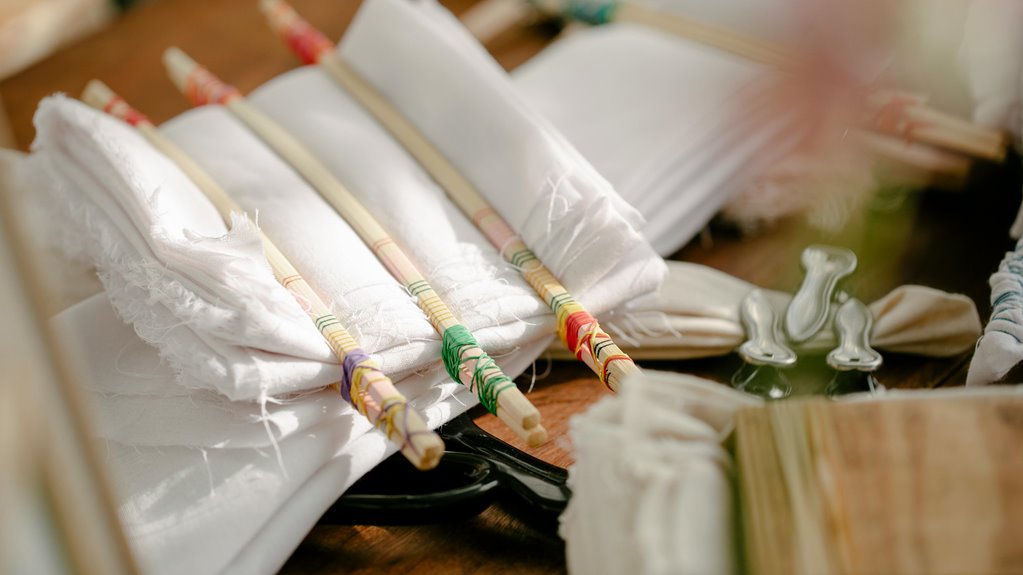
The dip dye technique lets you create beautiful color gradients by gradually submerging fabric into dye baths. You control the shading by adjusting how deep and how long you dip the material. It’s simple and forgiving, so perfect for beginners wanting artistic effects with natural fades or bold contrasts. Proper fabric prep and gentle handling make all the difference in vibrant results. Keep exploring and you’ll find tips and tricks to master every step for stunning designs.
Key Takeaways
- Dip dyeing creates color gradients by partially submerging fabric in dye baths for varied saturation.
- The technique controls fades by adjusting fabric immersion depth and timing.
- Imperfections and color variations enhance the charm of dip dyed fabrics.
- It requires fiber-reactive dye, clean fabric, and careful workspace protection.
- Gradual dipping, slow movement, and consistent depth ensure smooth color transitions.
Understanding the Basics of Dip Dyeing
Dip dyeing is a simple yet creative way to add color gradients to fabric or hair. When you dip your chosen material into a dye bath, the color gradually saturates from the submerged end, creating a smooth shift from deep hues to lighter shades.
You control the gradient by adjusting how long and how deeply you immerse the item. This technique embraces imperfection, so slight color variations add charm rather than detract. You can create either bold, sharp contrasts or subtle fades by varying the dipping time and angle.
The process is straightforward, making it accessible whether you’re a beginner or experienced. By understanding how the dye interacts with the fibers, you’ll achieve beautiful, personalized gradients that reflect your unique style.
Materials Needed for Dip Dye Projects
Gathering the right materials is essential to achieve vibrant and smooth color gradients in your dyeing project.
You’ll need fiber-reactive fabric dye, which works best on natural fibers like cotton or linen. Prepare a large container or bucket to hold the dye solution and enough water for soaking.
Protect your workspace with plastic sheets or newspapers to avoid stains. Wear rubber gloves to keep your hands clean and safe. Have a stirring stick or spoon on hand to mix the dye evenly.
Keep some old towels or rags nearby for quick cleanups. Finally, make sure you have access to a sink or hose for rinsing your fabric after dyeing.
With these materials ready, you’re set to create stunning dip dye effects.
Step-by-Step Guide to Dip Dyeing Fabric
Before you start dip dyeing, make sure your fabric is clean and ready to absorb the dye evenly.
You’ll also need to mix your dye solutions carefully for the best color results.
Once everything’s prepared, follow the dipping techniques step by step to achieve your desired look.
Preparing Fabric Properly
Properly preparing your fabric sets the foundation for vibrant and even dye results. Before you begin, make certain your fabric is clean and ready to absorb the dye effectively.
Follow these essential steps:
- Wash the Fabric: Remove any sizing, dirt, or oils by washing your fabric in warm water with mild detergent. This guarantees the dye adheres properly.
- Dry Completely: Let the fabric air dry or use a dryer. Dyeing damp fabric can cause uneven color absorption.
- Protect Your Workspace: Lay down plastic or old towels to catch drips, and wear gloves to keep your hands clean and safe.
Mixing Dye Solutions
Start by measuring the right amount of dye powder and water to create a vibrant solution that will bring your fabric to life. Use a plastic container or bucket, and follow the dye manufacturer’s instructions for the exact ratio.
Stir the mixture thoroughly to dissolve all the dye powder, ensuring an even color. If you want a lighter shade, add more water; for a deeper color, concentrate the solution by using less water.
Make sure to wear gloves to protect your hands and work in a well-ventilated area. Once mixed, let the dye sit for a few minutes to fully activate.
Avoid mixing more dye than you need, as it can lose potency over time. Now, you’re ready with a perfectly blended dye solution.
Dipping Techniques Explained
How long you dip your fabric can dramatically change the final look of your dip dye project. To get the best results, follow these simple steps.
First, prepare your dye bath according to the instructions and wear gloves to protect your hands.
Second, dip the portion of fabric you want to color slowly into the dye, holding it there for the desired time—longer dips produce deeper colors.
Third, gradually lift the fabric out to create a smooth gradient effect.
Remember, you can repeat dipping for a bolder look or dip different sections for a multi-colored design. Experiment with timing to find your perfect style!
- Slowly immerse fabric for even dye absorption
- Hold fabric in dye for varied color intensity
- Lift fabric gradually to achieve gradient effects
Tips for Achieving Smooth Color Gradients
When you want to create smooth color gradients in dip dyeing, controlling the shift between shades is key.
Start by gradually dipping your fabric into the dye, pausing briefly at each depth to allow the color to settle. Move slowly to prevent harsh lines and create a natural fade.
Use a light hand when lifting the fabric out of the dye, letting excess liquid drip away to avoid blotchy spots. Blending colors can be easier if you rinse the fabric lightly between dips or use diluted dye at the change points.
Also, keep your fabric taut to guarantee even absorption.
Finally, practice patience—allow the fabric to dry slightly before the next dip to maintain control over the gradient’s smoothness.
Creative Ideas for Using Dip Dye on Different Fabrics
You can create stunning effects by dip dyeing different fabrics like cotton, silk, and denim.
Each fabric reacts uniquely, so experimenting with cotton’s absorbency, silk’s sheen, or denim’s texture will give you amazing results.
Let’s explore some creative ideas to make the most of these materials.
Cotton Fabric Dip Dye
Cotton fabric offers a versatile canvas for dip dyeing, allowing you to create vibrant, lasting patterns with ease.
Because cotton absorbs dye well, you’ll get bold colors that won’t fade quickly. Plus, it’s easy to manipulate the fabric to achieve unique gradient effects.
When dip dyeing cotton, consider these creative ideas:
- Layered Dips: Dip different sections of your cotton fabric at varying depths for a beautiful ombré effect.
- Twist and Dip: Twist the fabric before dipping to create spiral patterns that add dimension to your design.
- Multiple Colors: Use several dye baths to dip different parts of the fabric in various colors, creating striking contrasts.
With cotton, you can experiment freely and enjoy vibrant results every time.
Silk Dip Dye Effects
Silk’s smooth texture and natural sheen make it a fantastic fabric for dip dyeing, offering a unique way to achieve luminous, flowing color shifts.
When you dip dye silk, the dye spreads softly, creating beautiful gradients and subtle blends that highlight silk’s delicate nature. You can experiment with partial dips to create ombré effects or multiple dips for layered colors.
Remember to use acid dyes specifically designed for silk to guarantee vibrant, long-lasting results. Since silk absorbs dye differently than cotton, you’ll notice more intense hues and a glossy finish.
Whether you’re revitalizing a scarf or customizing a blouse, dip dyeing silk adds an elegant, artistic touch that’s hard to replicate with other fabrics.
Give it a try to transform your pieces into wearable art.
Denim Dip Dye Styles
Denim offers a sturdy and versatile canvas that reacts uniquely to dip dye techniques, making it perfect for bold, creative styles.
When you dip dye denim, you can transform ordinary jeans, jackets, or skirts into eye-catching statement pieces.
Here are three denim dip dye styles you can try:
- Ombre Fade – Dip the bottom of your denim item gradually, creating a smooth color shift from dark to light.
- Two-Tone Contrast – Dip half of your denim in one color and leave the other half natural for a striking split design.
- Color Block – Dip different sections of your denim in varying colors, adding a playful and modern twist.
These styles let you personalize your denim with unique color effects that stand out.
Common Mistakes to Avoid When Dip Dyeing
Although dip dyeing can create stunning color effects, many beginners make avoidable mistakes that compromise the final look.
One common error isn’t preparing the fabric properly; skipping washing or using fabric softener can prevent dye absorption. You should also avoid dipping the fabric unevenly or for inconsistent times, as this causes blotchy or uneven colors.
Rushing the process without allowing the dye to set leads to fading or bleeding. Don’t forget to protect your workspace and wear gloves to avoid stains.
Finally, using the wrong type of dye for your fabric can result in poor color retention. By steering clear of these mistakes, you’ll achieve vibrant, smooth gradients that showcase dip dye’s full potential.
Caring for Your Dip Dyed Fabric
Once you’ve created your dip dyed fabric, proper care will keep those vibrant colors from fading quickly.
To maintain your fabric’s beauty, follow these simple steps:
To keep your dip dyed fabric vibrant, follow these easy care tips for lasting beauty.
- Wash Gently: Use cold water and mild detergent to hand wash your fabric. Avoid harsh chemicals that can strip the color.
- Avoid Sun Exposure: Prolonged sunlight can fade your dip dye. Dry your fabric in the shade or indoors.
- Store Properly: Keep your fabric in a cool, dry place away from direct light to preserve the dye intensity.
Frequently Asked Questions
Can Dip Dyeing Be Done With Natural Dyes?
Did you know over 60% of eco-conscious crafters choose natural dyes? Yes, you can totally dip dye with natural dyes—they give vibrant, unique colors while being environmentally friendly, adding a beautiful, organic touch to your fabric projects.
How Long Does Dip-Dyed Fabric Color Last?
Your dip-dyed fabric color can last several months to years, depending on dye type, fabric, and care. You’ll want to wash it gently in cold water and avoid direct sunlight to keep colors vibrant longer.
Is Dip Dyeing Safe for All Fabric Types?
You can’t just dip any fabric without caution—some materials soak up dye like a sponge, others repel it completely. You’ll want to test and choose fabric types carefully to avoid disappointing results or damage.
Can Dip Dyeing Be Combined With Other Dyeing Techniques?
You can definitely combine dip dyeing with other techniques like tie-dye or shibori to create unique patterns. Just make sure to plan your colors and fabric prep carefully for the best results.
What Environmental Impact Does Dip Dyeing Have?
Imagine dye seeping into water like a spilled cup—dip dyeing can waste water and chemicals if you’re not careful. You’ll want to use eco-friendly dyes and conserve water to minimize environmental impact.