
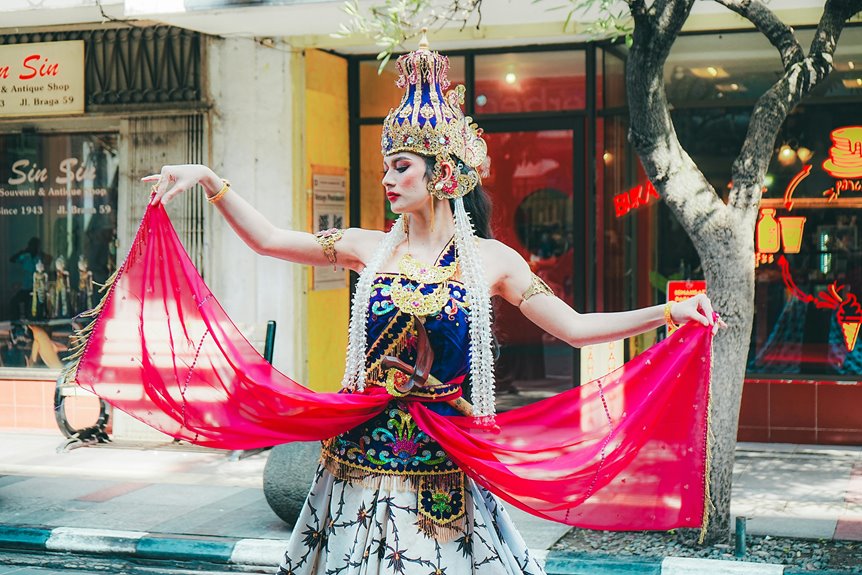
If you’re wondering about Bali and Batik fabric, know that Bali fabric showcases hand-painted or stamped floral and geometric designs reflecting Balinese culture, usually on cotton or silk. Batik fabric, mainly from Java, features intricate patterns created with a wax-resist dyeing technique, symbolizing social and spiritual meanings. Both are rich in tradition but differ in production and symbolism. Keep exploring, and you’ll uncover their fascinating histories and cultural significance further.
Key Takeaways
- Bali fabric features hand-painted and stamped floral and geometric designs reflecting Balinese culture, while batik uses wax-resist dyeing for intricate patterns.
- Bali textiles commonly use cotton and silk with vibrant brush-applied colors; batik involves applying molten wax to fabric before dyeing for multi-colored motifs.
- Bali fabric motifs symbolize harmony, protection, and natural beauty; batik motifs often represent social status, spirituality, and cultural myths.
- Bali fabric production emphasizes unique textures and handcrafting, whereas batik is known for its precise wax application and layered dyeing process.
- Both fabrics are used in fashion and décor, but batik production increasingly focuses on sustainable practices like eco-friendly dyes and fair artisan wages.
Origins and Cultural Background of Bali Fabric
Although Bali fabric has gained global popularity for its vibrant patterns, you mightn’t know much about its rich origins. When you explore Bali fabric, you’re tapping into a tradition deeply rooted in Balinese culture and artistry.
The fabric reflects the island’s natural beauty, religious symbolism, and daily life, often showcasing intricate floral and geometric designs. You’ll notice that Bali fabric is crafted using techniques passed down through generations, combining hand-dyeing and wax-resist methods.
This process allows you to appreciate the unique textures and colors that make each piece distinct. Wearing or using Bali fabric connects you to the island’s spiritual and artistic heritage, embodying more than just a textile—it’s a living expression of Bali’s identity and creativity.
Historical Roots of Batik Fabric
When you explore batik fabric, you’ll discover a centuries-old tradition that originates primarily from Indonesia, with roots stretching back over a thousand years.
Batik began as a method of applying wax to fabric to resist dye, creating intricate patterns by hand. This technique evolved in Java, where royal courts used batik to symbolize status and spirituality.
Batik started with wax-resist dyeing, evolving in Java as a royal symbol of status and spirituality.
You’ll notice the designs often carry deep meanings, reflecting local myths, nature, and cultural values.
Over time, batik spread beyond Indonesia, gaining recognition worldwide for its artistry.
Understanding these historical roots helps you appreciate batik not just as fabric but as a storytelling medium rich in heritage and craftsmanship, distinct from other textile traditions like Bali fabric.
Fabric Materials Commonly Used in Bali Textiles
Bali textiles often feature natural fibers like cotton and silk, prized for their comfort and durability. When you choose Bali fabric, you’re selecting materials that not only feel great but also hold up well over time.
The island’s artisans carefully pick fibers that suit their intricate dyeing and weaving techniques. Here are three common materials you’ll find in Bali textiles:
- Cotton – Lightweight, breathable, and perfect for tropical climates, cotton is the backbone of many Bali fabrics.
- Silk – Adds a luxurious sheen and softness, often used for ceremonial or high-end pieces.
- Linen – Known for its strength and texture, linen offers a rustic appeal and is sometimes blended with cotton.
Understanding these materials helps you appreciate the quality and tradition woven into every Bali textile.
Traditional Materials and Textiles in Batik Production
When you explore batik production, you’ll notice it relies on natural fibers like cotton or silk for the best results.
You’ll also see how artisans apply wax carefully to create intricate patterns before dyeing the fabric.
Understanding the sources of colors, often derived from natural dyes, helps you appreciate the craft even more.
Natural Fibers Used
Natural fibers play an essential role in traditional batik production, offering the ideal texture and absorbency for dyeing.
When you choose fabric for batik, the fiber type impacts how the wax and dyes interact, affecting the final look.
Here are three common natural fibers used:
- Cotton – It’s the most popular choice because it absorbs dye well and feels breathable, making your batik vibrant and comfortable.
- Silk – This fiber gives your fabric a luxurious sheen and allows for delicate, detailed patterns due to its smooth surface.
- Linen – Known for its durability and texture, linen holds dyes nicely and adds a rustic charm to your batik designs.
Wax Application Techniques
The type of fabric you choose sets the stage for how wax is applied in batik making.
When working with Bali or traditional batik fabrics, you’ll use a tool called a canting—a small copper pen that allows you to draw fine lines of hot wax directly onto the cloth.
For broader patterns, a cap, which is a copper stamp, helps you apply wax quickly and repeatedly.
You’ll need to keep the wax at the right temperature to guarantee it flows smoothly but doesn’t soak through the fabric.
By carefully controlling where you apply the wax, you create a resist that prevents dye from coloring those areas, forming intricate designs.
Mastering these wax application techniques is key to producing authentic batik patterns with crisp lines and rich detail.
Color Dye Sources
Anyone exploring batik production will quickly find that color dyes play a crucial role in bringing fabric to life.
Traditional batik colors come from natural sources, each adding unique hues and cultural significance to the textiles you create. You’ll often encounter these three main dye sources:
- Indigo – Extracted from the indigo plant, it gives you deep blue shades, a classic in many batik designs.
- Sappanwood – This yields rich reds and browns, offering warmth and vibrancy to your fabric.
- Turmeric and other roots – These provide yellows and golden tones, brightening the patterns you craft.
Using these natural dyes connects you to centuries-old traditions and guarantees your batik keeps its authentic charm.
Techniques Used in Creating Bali Fabric Designs
Discovering how Bali fabric designs come to life reveals a rich blend of traditional techniques and artistic skill.
When you explore Bali fabric, you’ll notice artisans often use hand-painting and stamping methods to create intricate patterns. Hand-painting lets them apply colors directly with brushes, allowing for detailed, vibrant designs.
Stamping involves pressing carved wooden blocks onto the fabric, producing repeated motifs quickly and consistently. You’ll also find that some artisans combine these techniques, layering stamps with hand-painted accents to add depth.
Carved wooden block stamping creates repeated motifs, often enhanced with hand-painted details for added depth and richness.
Unlike some fabrics that rely solely on machine printing, Bali fabric’s handcrafted approach gives each piece a unique character. This hands-on process preserves cultural artistry and guarantees the designs remain authentic and visually striking.
The Wax-Resist Dyeing Process in Batik Fabric
You’ll find that batik fabric owes its distinctive patterns to a meticulous wax-resist dyeing process.
This technique involves applying molten wax to fabric before dyeing it, preventing the dye from coloring those areas. As you work through the process, you’ll notice several key steps:
- Wax Application: You use a canting tool or stamp to draw wax on specific fabric sections.
- Dyeing: You immerse the fabric in dye; only the unwaxed parts absorb the color.
- Wax Removal: After dyeing, you boil or scrape off the wax, revealing intricate, multi-colored designs.
Typical Patterns and Motifs Found in Bali Fabric
When you look at Bali fabric, you’ll notice common motifs like flowers, animals, and traditional symbols that carry deep meanings.
These patterns often represent nature, spirituality, and local culture. Understanding these designs helps you appreciate the rich storytelling woven into each piece.
Common Bali Motifs
Bali motifs capture the island’s rich culture and natural beauty in vibrant patterns. When you explore Bali fabric, you’ll notice these common motifs that reflect daily life and spirituality.
- Floral Designs – You’ll see hibiscus, frangipani, and lotus flowers often featured, symbolizing purity and beauty.
- Animal Figures – Motifs like dragons, birds, and turtles appear frequently, representing protection and harmony with nature.
- Geometric Patterns – You’ll find intricate shapes and repetitive designs that create rhythm and balance in the fabric’s overall look.
These motifs are more than decoration; they’re a window into Bali’s traditions and environment, making each fabric piece unique and meaningful.
When you wear or use Bali fabric, you’re carrying a piece of this vibrant culture with you.
Symbolic Pattern Meanings
Although the vibrant colors catch your eye, the true essence of Bali fabric lies in the symbolic meanings woven into its patterns. Each motif tells a story or reflects cultural beliefs, making the fabric more than just decoration. When you wear or use Bali fabric, you connect with these deeper meanings, from protection to prosperity.
| Pattern | Symbolic Meaning |
|---|---|
| Barong | Protection and good spirit |
| Rangda | Chaos and balance |
| Lotus flower | Purity and enlightenment |
| Dragon | Power and strength |
| Kupu-kupu (butterfly) | Transformation and joy |
Understanding these symbols helps you appreciate Bali fabric’s cultural richness beyond its aesthetics.
Traditional Design Themes
The symbolic meanings behind each motif invite you to explore the traditional design themes that define Bali fabric.
When you look closely, you’ll see how these patterns tell stories about culture, nature, and spirituality.
Bali fabric often features:
- Floral Motifs – Representing fertility and beauty, these designs connect you to Bali’s lush landscapes and vibrant life.
- Mythical Creatures – Dragons and Garuda symbolize protection and strength, guiding you through life’s challenges.
- Geometric Patterns – These repetitive shapes reflect harmony and balance, grounding you in tradition.
Symbolism and Meaning Behind Batik Patterns
Patterns in batik fabric carry deep meanings that go beyond their visual appeal. When you explore batik, you’ll find each motif tells a story or symbolizes cultural values.
For instance, the parang pattern represents strength and power, while the kawung motif symbolizes purity and harmony. You’ll notice these patterns often convey social status, spiritual beliefs, or natural elements.
As you wear or display batik, you’re connecting to centuries of tradition and meaning embedded in each design. Understanding these symbols enriches your appreciation of the fabric, revealing a language woven with intention and history.
Modern Uses and Popularity of Bali Fabric
When you choose Bali fabric today, you’re tapping into a rich tradition while embracing contemporary style. This vibrant fabric has surged in popularity thanks to its bold colors and versatile patterns.
Choosing Bali fabric means embracing vibrant colors and timeless style in one bold, versatile choice.
You’ll find Bali fabric in various modern uses that fit your lifestyle perfectly:
- Fashion – It’s a favorite for casual wear, dresses, and accessories, offering a unique, eye-catching look.
- Home Décor – You can brighten your living space with Bali fabric in pillows, curtains, and upholstery.
- Craft Projects – It’s ideal for quilts, bags, and other handmade items that showcase your creativity.
Contemporary Trends and Applications of Batik Fabric
You’ll find Batik fabric making waves in modern fashion with bold prints and sleek designs.
It’s also gaining popularity in interior spaces, adding unique patterns to homes and offices.
Plus, many artisans are embracing sustainable practices, so you can enjoy Batik while supporting eco-friendly craftsmanship.
Modern Batik Fashion
Although batik fabric has deep traditional roots, modern designers have embraced it to create fresh, innovative looks that resonate with today’s fashion scene. You’ll find batik in everything from casual wear to high fashion, blending classic patterns with contemporary styles.
When you incorporate batik into your wardrobe, you’re connecting with a rich heritage while staying trendy. Here are three ways modern batik fashion stands out:
- Fusion of styles: Batik patterns mix with modern cuts, making dresses, jackets, and accessories uniquely stylish.
- Sustainable choices: Many designers use eco-friendly dyes and materials, appealing to conscious consumers like you.
- Global appeal: Batik’s versatility lets you wear it anywhere, from casual outings to formal events, highlighting its timeless charm.
Embrace batik and add cultural depth to your fashion sense.
Interior Design Uses
Since batik fabric offers intricate patterns and vibrant colors, it’s become a popular choice in interior design to add character and warmth to spaces.
You can use batik as upholstery for chairs or cushions, instantly creating focal points with its unique motifs. Drapes and curtains made from batik bring in a cultural flair while softening room lighting.
Wall hangings or framed batik panels serve as stunning art pieces, giving your walls a lively, textured look. Even small touches like batik table runners or lampshades can elevate your décor.
By incorporating batik fabric, you blend traditional craftsmanship with modern style, making your space feel personal and inviting.
You’ll find that batik’s versatility allows you to experiment with color and pattern, enhancing any room’s ambiance effectively.
Sustainable Batik Practices
As awareness of environmental impact grows, sustainable batik practices have gained momentum among artisans and designers.
You can now find batik fabrics made with eco-friendly dyes and organic cotton, reducing harm to the planet. If you want to support sustainability, consider these key trends:
- Natural Dyes: Using plant-based dyes minimizes chemical pollution and enhances fabric biodegradability.
- Ethical Production: Fair wages and safe working conditions guarantee artisans are respected and empowered.
- Waste Reduction: Techniques like zero-waste pattern cutting and recycling scraps help lower fabric waste.
Frequently Asked Questions
How Do Bali and Batik Fabrics Differ in Texture and Feel?
You’ll notice Bali fabric feels softer and smoother, perfect for quilting, while Batik fabric tends to be stiffer with a waxy texture from traditional dyeing. Both offer unique tactile experiences you’ll appreciate.
Which Fabric Is More Durable for Everyday Use?
If fabric were a warrior, you’d want Bali as your shield—its tight weave withstands daily battles better than Batik’s delicate artistry. You’ll find Bali holds up tougher, making it your go-to for everyday durability.
Are Bali and Batik Fabrics Suitable for Machine Washing?
You shouldn’t machine wash Bali or Batik fabrics since their dyes may fade or bleed. Instead, hand wash them gently in cold water to preserve colors and patterns, keeping your fabric vibrant and lasting longer.
Can Bali and Batik Fabrics Be Used Interchangeably in Fashion Design?
Though both fabrics showcase intricate patterns, you can’t always swap Bali and Batik in fashion design. Their textures and dye methods differ, so you’ll need to choose carefully to maintain your design’s intended look and feel.
What Are the Price Differences Between Bali and Batik Fabrics?
You’ll find Bali fabrics usually cost less since they’re mass-produced, while batik fabrics, especially handmade ones, tend to be pricier due to intricate designs and labor-intensive processes. Your budget will guide your choice.