
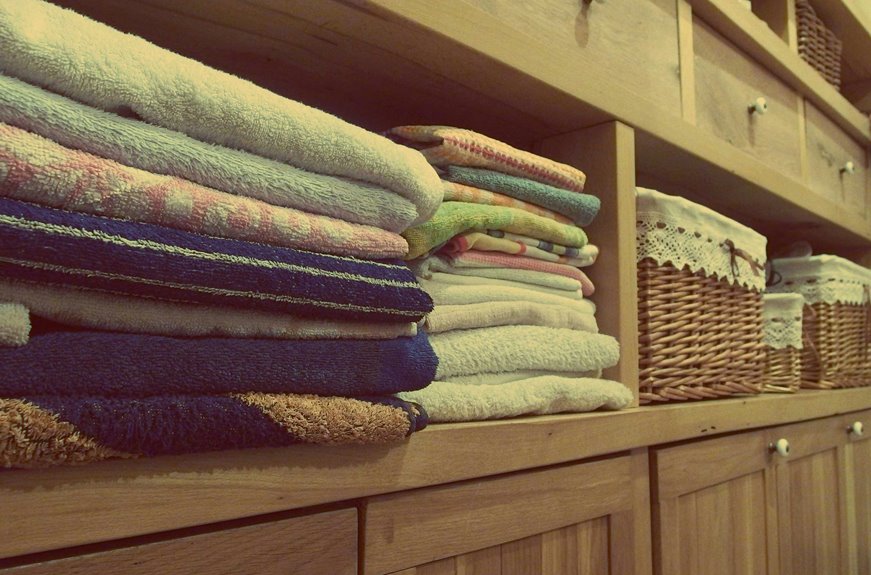
The best way to store lawn fabric is to roll it tightly on a clean, dry surface to avoid creases. Keep it indoors, off the ground, and in a well-ventilated area to prevent moisture and mildew. Use breathable protective covers and avoid direct sunlight to protect from damage. Label each roll for easy identification and steer clear of sharp objects. Check your fabric regularly to catch any problems early. You’ll find even more tips to keep it in great shape.
Key Takeaways
- Store lawn fabric in a clean, dry, and shaded indoor area with good air circulation to prevent moisture and UV damage.
- Roll the fabric tightly and evenly on a smooth surface, securing with ties to avoid creases and maintain shape.
- Use breathable, weather-resistant covers and elevate the fabric on shelves or pallets to protect from moisture, dirt, and pests.
- Label rolls clearly with fabric type and length, and conduct regular inspections for tears, mold, and dirt.
- Keep fabric dry, clean, and away from chemicals, and rotate stored fabric periodically to extend its lifespan.
Choose a Clean and Dry Storage Area
When storing lawn fabric, picking one clean and dry spot is essential to prevent damage. You want to avoid areas prone to moisture, as dampness can cause mildew and weaken the fabric fibers.
Choose a place with good air circulation to keep the material fresh and dry. Make certain the storage area is free from dirt, dust, and pests that might degrade the fabric over time. Avoid spots near chemicals or sharp objects that could accidentally tear or stain the fabric.
If you store the fabric indoors, such as in a garage or shed, confirm it’s elevated off the ground to keep it safe from flooding or damp floors.
Roll Lawn Fabric Neatly to Prevent Creases
Before you roll up your lawn fabric, lay it out on a smooth surface to avoid wrinkles.
Roll it tightly and evenly to keep creases at bay.
Then, store the roll in a dry area to protect it from moisture damage.
Smooth Surface Preparation
To keep your lawn fabric in top condition, you’ll want to roll it smoothly and evenly, avoiding any creases that could weaken the material over time.
Start by preparing a clean, flat surface free of debris or rough textures that might snag or damage the fabric. Lay the fabric out straight, smoothing out wrinkles as you go to guarantee an even roll.
If you find any stubborn folds, gently stretch the fabric to flatten them before rolling. Using a smooth surface like a wooden floor or a clean tarp helps maintain the fabric’s integrity.
Taking this extra step prevents unnecessary wear and guarantees your lawn fabric stays effective and durable for future use.
Tight Rolling Technique
Although rolling lawn fabric might seem straightforward, applying a tight rolling technique guarantees the material stays crease-free and lasts longer.
Start by laying the fabric flat on a smooth surface, ensuring it’s clean and dry. Then, carefully fold or align the edges to create a neat, uniform width.
As you roll, keep the fabric taut and tight, preventing any slack that could cause wrinkles or folds. Use even pressure throughout the roll to maintain consistency.
Once rolled, secure the fabric with ties or straps to hold its shape firmly. This method minimizes damage, makes storage easier, and helps the fabric maintain its effectiveness when you’re ready to use it again.
Tight rolling is key to preserving your lawn fabric’s quality over time.
Store in Dry Area
After you’ve rolled your lawn fabric tightly, choosing the right storage spot plays a big role in keeping it in good condition.
Store your fabric in a dry area to prevent moisture buildup, which can cause mold, mildew, and deterioration. Avoid damp basements or garages prone to humidity. Instead, pick a well-ventilated space like a closet, shed, or attic where air circulates freely.
Make certain the fabric rests off the floor on shelves or hooks to keep it away from any accidental spills or pests. Keeping it dry also prevents creases from setting in, preserving the fabric’s integrity.
Use Protective Covers to Shield From Dust and Moisture
You’ll want to pick durable covers that keep dust and moisture out without trapping humidity.
Make sure the covers allow some ventilation to prevent mold buildup.
Also, store your lawn fabric off the ground to avoid dampness and pests.
Choose Durable Covers
Since lawn fabric is often exposed to dirt and moisture, choosing a durable cover is essential to keep it in good condition.
You want a cover made from tough, weather-resistant materials like heavy-duty polyethylene or canvas. These materials protect your fabric from tears, punctures, and water damage. Look for covers with reinforced seams and secure closures, so dust and moisture don’t sneak in.
Avoid thin plastic sheeting that can easily rip or degrade over time. A durable cover not only extends the life of your lawn fabric but also saves you money by reducing replacement frequency.
When selecting, consider size too—it should fully envelop your stored fabric without leaving gaps. Investing in a strong cover means your lawn fabric stays clean, dry, and ready for use season after season.
Ensure Proper Ventilation
Although protective covers shield your lawn fabric from dust and moisture, ensuring proper ventilation is just as important to prevent mold and mildew buildup.
You want air to circulate freely around the fabric, so it stays dry and fresh. Here’s how you can maintain proper ventilation while protecting your lawn fabric:
- Choose breathable covers made from materials like mesh or perforated plastic.
- Avoid sealing the fabric in airtight containers or plastic bags.
- Store the fabric in a cool, dry place with natural airflow.
- Leave small gaps or vents in the cover to allow moisture to escape.
Store Off Ground
Two simple steps can keep your lawn fabric safe from damage: store it off the ground and use protective covers.
Elevating your fabric prevents it from absorbing moisture, dirt, or pests that often linger on floors or soil. You can use shelves, pallets, or hooks to keep it elevated and dry.
Next, cover your fabric with a breathable tarp, canvas, or plastic sheeting designed for storage. This shield blocks dust and moisture, preserving the fabric’s integrity. Avoid airtight covers, which can trap humidity and cause mold.
Store Lawn Fabric Off the Ground
When you store lawn fabric off the ground, you protect it from moisture and pests that can cause damage.
To do this effectively, follow these steps:
- Use sturdy shelves or pallets to keep the fabric elevated.
- Place the fabric rolls or folded pieces on these elevated surfaces.
- Ascertain the storage area has good airflow to prevent dampness.
- Avoid stacking heavy items on top to maintain the fabric’s shape.
Avoid Exposure to Direct Sunlight
Keeping your lawn fabric off the ground helps prevent moisture damage, but storing it in direct sunlight can cause fading and weakening over time.
You want to keep your fabric in a shaded, cool area to preserve its durability. UV rays break down the fibers, making the fabric brittle and less effective at controlling weeds.
Store fabric in cool, shaded spots to prevent UV damage and maintain its strength and weed control effectiveness.
Even if the fabric looks fine initially, prolonged sun exposure reduces its lifespan considerably.
When choosing a storage spot, opt for a garage, shed, or basement where sunlight won’t reach.
If you don’t have indoor space, cover the fabric with a UV-resistant tarp or fabric to shield it.
Protecting your lawn fabric from direct sunlight guarantees it stays strong and functional for many seasons.
Label Lawn Fabric Rolls for Easy Identification
Clear labeling of your lawn fabric rolls saves you time and hassle during future projects.
When you store multiple rolls, it’s easy to forget which fabric is which, especially if they look similar.
To keep things organized:
- Use waterproof labels or tape to prevent smudging.
- Write the fabric type, length, and intended use clearly.
- Attach the label near one end of the roll for quick access.
- Color-code labels if you have different fabrics for various purposes.
Keep Lawn Fabric Away From Sharp Objects
Several sharp objects can easily damage your lawn fabric if you’re not careful. When storing, make sure to keep your fabric away from tools like garden shears, nails, or any pointed items that could puncture or tear it.
Even small holes can reduce the fabric’s effectiveness, letting weeds grow through or moisture seep in. Store your lawn fabric in a clean, dry area where sharp debris won’t be lying around.
If you keep fabric in a garage or shed, place it on shelves or hang it to avoid contact with hazardous objects on the floor. Using protective covers or containers can add an extra layer of defense.
Inspect and Maintain Stored Lawn Fabric Regularly
Although storing your lawn fabric properly is essential, you should inspect and maintain it regularly to guarantee it stays in good condition.
Regular checks help you catch issues early and extend the fabric’s lifespan. Here’s what you need to do:
Routine inspections catch problems early and help your lawn fabric last longer.
- Look for tears or holes – Fix small damages before they worsen.
- Check for moisture or mold – Keep the fabric dry to prevent mildew.
- Ensure it’s clean – Remove dirt or debris that can degrade the material.
- Confirm proper storage position – Avoid heavy objects on top to prevent crushing.
Frequently Asked Questions
Can Lawn Fabric Be Reused After Multiple Seasons?
You can definitely reuse lawn fabric after multiple seasons if you inspect it for tears or damage. Clean it thoroughly, dry it completely, and store it properly to maintain durability and effectiveness for future use.
How Long Does Lawn Fabric Typically Last?
Lawn fabric can last you a lifetime—or at least several seasons! Typically, it endures 3 to 5 years, depending on weather and care. If you handle it gently, it’ll keep your lawn thriving longer.
Is Lawn Fabric Safe for Pets and Children?
You’ll find most lawn fabrics are safe for pets and children, but always check the label for non-toxic materials. Keep it secured to prevent chewing or tripping hazards, ensuring everyone stays safe while you garden.
Can Lawn Fabric Help Control Weeds Effectively?
Think of lawn fabric as a loyal guardian, standing firm against invading weeds. You’ll find it effectively blocks sunlight, starving weeds before they sprout, helping you keep your garden neat without harsh chemicals or constant weeding.
What Materials Are Lawn Fabrics Made From?
Lawn fabrics are usually made from woven or non-woven polypropylene or polyethylene. These durable synthetic materials let water and air pass through while blocking sunlight, helping you control weeds effectively in your garden or lawn.