
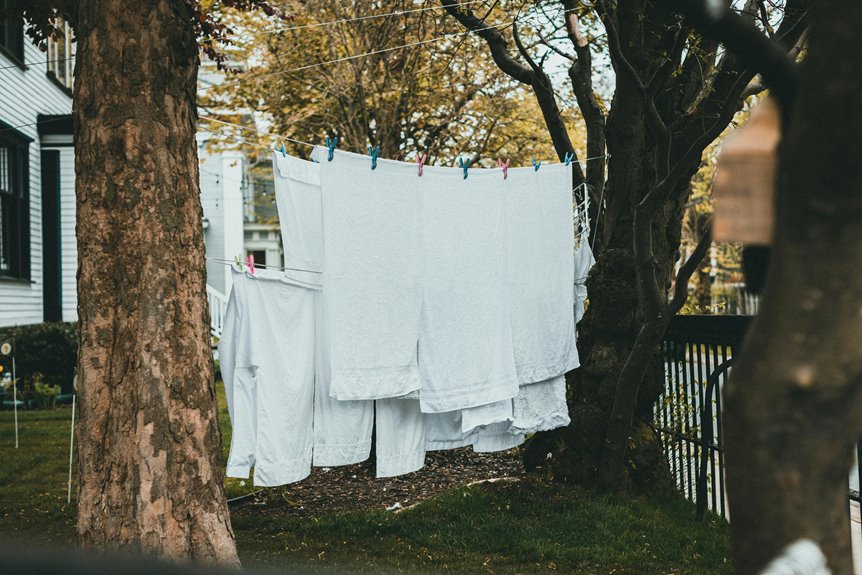
To dry your lawn fabric effectively, first remove any debris and excess moisture by shaking and sweeping it clean. Choose a sunny, well-ventilated spot, avoiding damp or shaded areas. Lay the fabric flat or hang it loosely to promote airflow and prevent creases. Avoid prolonged direct sunlight and never store it damp to prevent mildew. Proper drying extends the fabric’s life, and understanding these steps will help you keep it in top condition for your lawn.
Key Takeaways
- Remove all dirt, debris, and excess moisture from lawn fabric before drying to ensure effective drying and prevent mold.
- Choose a well-ventilated, sunny spot off the ground, avoiding shaded or damp areas to prevent mildew growth.
- Air-dry fabric flat or hang loosely with wide clips, ensuring good airflow without folding or bunching the material.
- Avoid prolonged exposure to harsh direct sunlight and never store fabric damp to maintain durability and prevent damage.
- After drying, store fabric in a cool, dry place, loosely folded, and inspect regularly for dirt or damage to extend its lifespan.
Preparing Lawn Fabric for Drying
Before you start drying your lawn fabric, make certain to remove any debris, dirt, or moisture that could affect the drying process.
Take a broom or a soft brush and gently sweep off leaves, twigs, and soil. If the fabric is damp or wet, shake it out to eliminate excess water—this helps speed up drying and prevents mildew.
Gently sweep debris off and shake out damp fabric to speed drying and prevent mildew.
Also, inspect the fabric for any tears or damage; repairing small holes now guarantees the fabric remains effective when reused.
Folding the fabric loosely before placing it to dry avoids creases that may trap moisture.
By preparing your lawn fabric properly, you’ll guarantee it dries evenly and stays in good condition for your next gardening or landscaping project.
This step is essential for maintaining fabric longevity and performance.
Choosing the Ideal Drying Location
When you choose where to dry your lawn fabric, pick a spot that offers plenty of air circulation and sunlight to speed up the process.
Avoid damp or shaded areas that can slow drying and promote mildew.
Also, consider places that keep your fabric off the ground to prevent dirt or damage.
Ideal locations are:
- A well-ventilated porch or deck with direct sunlight
- An open backyard area away from trees or structures blocking airflow
- A clothesline or drying rack elevated above the ground
Techniques for Air-Drying Lawn Fabric
Although air-drying lawn fabric is straightforward, using the right techniques guarantees it dries evenly and stays in good condition.
First, spread the fabric flat on a clean, dry surface or hang it loosely on a clothesline to prevent creases. Make sure there’s enough airflow around the fabric—this speeds up drying and reduces mildew risks.
Avoid folding or bunching it up during the process to maintain its shape. If you hang it, use wide clips or clothespins to avoid leaving marks.
Check the fabric periodically and adjust its position if certain areas seem damp longer. Taking these steps helps you preserve the fabric’s integrity and extends its lifespan, ensuring it’s ready for use when you need it.
Avoiding Common Drying Mistakes
Since lawn fabric requires careful handling, avoiding common drying mistakes is crucial to maintaining its durability. You want to guarantee your fabric lasts as long as possible without damage.
Proper drying is essential to preserve lawn fabric’s durability and prevent damage over time.
Here are some mistakes to watch out for:
- Don’t expose the fabric to direct, harsh sunlight for extended periods; this can weaken fibers and cause fading.
- Avoid using high heat settings if you dry it in a machine dryer; heat can shrink or warp the fabric.
- Never fold or store the fabric while it’s still damp; trapped moisture promotes mildew and unpleasant odors.
Maintaining Lawn Fabric After Drying
Properly drying your lawn fabric sets the stage for its long-term care.
Once dry, you should store the fabric in a cool, dry place away from direct sunlight to prevent UV damage and fading.
Avoid folding it too tightly to reduce creases that can weaken the fibers over time.
Before storing, inspect the fabric for any dirt or debris and brush it off to avoid mold growth.
If you notice any damage, repair it promptly to extend the fabric’s life.
Regularly check the fabric during storage and before reuse to guarantee it remains clean and intact.
Frequently Asked Questions
Can Lawn Fabric Be Machine Dried Safely?
You shouldn’t machine dry lawn fabric because the heat can damage it. Instead, you’ll want to air dry it by laying it flat or hanging it up, ensuring it stays in good condition without shrinking or melting.
How Long Does Lawn Fabric Typically Take to Dry Completely?
Patience is a virtue—you’ll find lawn fabric typically takes 4 to 6 hours to dry completely under normal sunlight and breeze. Don’t rush it; letting it air dry preserves its strength and effectiveness.
Are There Any Special Detergents Recommended for Cleaning Lawn Fabric?
You don’t need special detergents for cleaning lawn fabric. Just use mild soap or gentle detergent mixed with water. Avoid harsh chemicals or bleach since they can damage the fabric’s fibers and reduce its effectiveness.
Can Lawn Fabric Be Dried in Direct Sunlight Without Damage?
You can’t always dance in the sun without a little burn. Your lawn fabric can handle some sunlight, but too much direct exposure might weaken it over time. It’s best to dry it in a shaded, airy spot.
What Are the Signs That Lawn Fabric Is Fully Dry?
You’ll know lawn fabric is fully dry when it feels crisp and lightweight, with no damp spots or coolness to the touch. It should look consistent in color and not cling or stick together.