
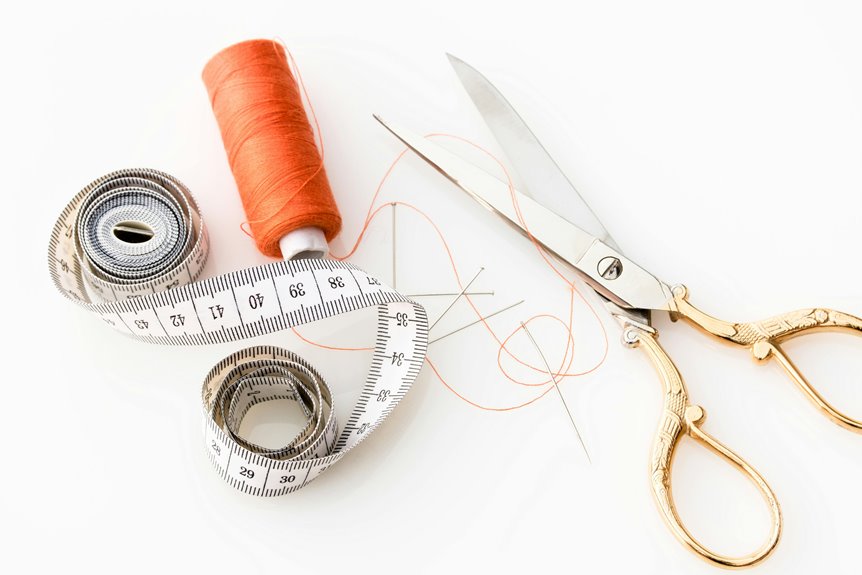
To cut lawn fabric effectively, use sharp scissors or a utility knife for clean, precise edges. First, spread the fabric flat and secure it to prevent shifting. Measure and mark carefully with chalk, then cut slowly along a straight edge to avoid fraying. Seal edges if needed to keep them neat. Always work on a stable surface with good lighting for safety. Keep these tips in mind, and you’ll find even tricky cuts become easier with a bit more insight.
Key Takeaways
- Use sharp heavy-duty scissors or a utility knife with a straight edge for clean, precise cuts on lawn fabric.
- Measure and mark fabric accurately with a tape measure and fabric chalk before cutting.
- Secure the fabric firmly with landscape staples or weights to prevent shifting during cutting.
- Cut slowly and steadily along marked lines to avoid jagged edges and fraying.
- Seal cut edges with fabric glue or seam sealer to prevent unraveling and extend fabric life.
Choosing the Right Tools for Cutting Lawn Fabric
Although cutting lawn fabric seems straightforward, choosing the right tools makes the process much easier and guarantees clean, precise cuts. You’ll want a sharp pair of scissors or heavy-duty shears designed for fabric.
Choosing sharp scissors or heavy-duty shears ensures clean, precise cuts when working with lawn fabric.
Avoid dull blades—they’ll snag and fray the material, making your job frustrating. Utility knives with a fresh blade also work well, especially for straight lines, but you’ll need a cutting mat or firm surface underneath to protect your work area.
Measuring tape or a ruler helps you mark accurate lines before cutting, ensuring a perfect fit. You might also consider fabric markers or chalk to outline your cuts clearly.
With the right tools in hand, you’ll breeze through the cutting step and prepare your lawn fabric efficiently.
Preparing the Lawn Fabric for Cutting
Before you start cutting, make sure to measure your lawn fabric carefully to match your desired dimensions.
You’ll also want to secure the fabric firmly to prevent it from shifting during the cut.
Taking these steps will help you achieve clean, accurate cuts every time.
Measuring Fabric Dimensions
Start by accurately measuring the area where you plan to lay the lawn fabric to confirm a perfect fit. Use a tape measure to note the length and width, and add a few extra inches on each side for overlap and securing. Record each measurement carefully before transferring them to the fabric.
| Measurement Step | Details |
|---|---|
| Length | Measure the longest side of the area |
| Width | Measure the widest side of the area |
| Overlap Allowance | Add 4-6 inches for secure coverage |
| Total Fabric Length | Sum of length + overlap |
| Total Fabric Width | Sum of width + overlap |
Taking precise measurements guarantees you cut the fabric correctly the first time, saving time and materials.
Securing Fabric Before Cutting
Once you’ve measured and marked your fabric, securing it properly will keep your cuts clean and accurate.
Start by spreading the fabric on a flat surface, smoothing out any wrinkles or folds. Use landscape staples or heavy objects like bricks to anchor the fabric firmly at the edges and along your marked lines. This prevents shifting while you cut, ensuring precision.
If your fabric is large, consider adding extra weights in the middle to avoid bunching. You can also use painter’s tape to hold the fabric in place temporarily without damaging it.
Taking these steps before cutting saves time and reduces mistakes, giving you a neat, professional result. Don’t rush—secure your fabric well to make the cutting process smoother and more efficient.
Measuring and Marking the Fabric Accurately
You’ll want to start by choosing the right measurement tools, like a tape measure or ruler, to get precise dimensions.
Marking the fabric clearly with chalk or a fabric pen helps guide your cuts.
Taking your time to guarantee straight lines will make the whole process smoother and your lawn fabric fit perfectly.
Choosing Measurement Tools
Although cutting lawn fabric might seem straightforward, choosing the right measurement tools guarantees your cuts are precise and your project turns out neat. You’ll want tools that are easy to handle and offer clear, accurate readings. A sturdy tape measure or a yardstick works well for length, while a square ruler helps ascertain straight edges. Avoid flimsy rulers that can bend or stretch fabric, causing inaccuracies.
| Tool | Best For |
|---|---|
| Tape Measure | Flexible measuring |
| Yardstick | Straight long lines |
| Square Ruler | Right angles and edges |
| Fabric Marker | Temporary marking points |
Choosing these tools carefully helps you measure confidently before cutting, minimizing mistakes and waste.
Marking Techniques Explained
Three essential marking techniques will help you measure and mark lawn fabric accurately for clean, precise cuts.
First, use a measuring tape to get exact dimensions, ensuring you note the measurements clearly.
Next, employ a chalk line or fabric marker to draw your cutting lines directly on the fabric—these tools provide visibility without damaging the material.
Finally, double-check your marks by measuring twice before cutting. This step prevents costly mistakes and keeps your project on track.
Remember, marking on the fabric’s smooth side helps maintain accuracy, and using light, easy-to-remove markings lets you adjust if needed.
Ensuring Straight Cuts
When you measure and mark lawn fabric accurately, you guarantee your cuts stay straight and clean. Start by laying the fabric flat on a smooth surface, eliminating wrinkles and folds.
Use a measuring tape to determine the exact length and width needed, then mark the fabric with a fabric-safe marker or chalk. Draw straight lines by snapping a chalk line or using a ruler as a guide.
Double-check your measurements before cutting to avoid mistakes. Maintaining consistent tension on the fabric while cutting also prevents uneven edges.
Techniques for Straight Cuts on Lawn Fabric
Mastering straight cuts on lawn fabric starts with selecting the right tools and preparing your workspace. You’ll want a flat, clean surface to lay the fabric out smoothly without wrinkles.
Use a sharp utility knife or heavy-duty scissors for clean edges. Mark your cut line clearly with a pencil or chalk to guide your cut. Here are some techniques to guarantee straight cuts:
- Secure the fabric with weights or clips to prevent shifting.
- Use a metal ruler or straight edge as a cutting guide.
- Cut slowly and steadily along the marked line.
- Double-check measurements before cutting to avoid mistakes.
How to Cut Curves and Irregular Shapes
Cutting curves and irregular shapes in lawn fabric requires a different approach than straight lines.
First, lay the fabric flat and securely pin or weigh it down to prevent shifting. Use a fabric marker or chalk to carefully draw your curved design.
When cutting, opt for sharp, small scissors or a rotary cutter for better control around bends. Take your time and make small, precise cuts instead of trying to cut the entire curve in one go.
If the fabric bunches, pause and smooth it out before continuing. By working slowly and methodically, you’ll avoid jagged edges and maintain the fabric’s integrity.
This technique guarantees your lawn fabric fits perfectly around plants, pathways, or other irregular areas.
Tips for Preventing Fraying and Damage
Although lawn fabric is designed to resist wear, you’ll want to take steps to prevent fraying and damage during cutting and installation. Doing so keeps your project looking neat and guarantees the fabric lasts longer.
Follow these tips to protect your lawn fabric:
- Use sharp scissors or a rotary cutter to make clean, precise cuts.
- Cut the fabric slowly and steadily to avoid jagged edges.
- Seal cut edges with fabric glue or a seam sealer to prevent unraveling.
- Avoid dragging the fabric across rough surfaces that might snag or tear it.
Safety Precautions When Cutting Lawn Fabric
Taking precautions to keep your lawn fabric intact goes hand in hand with protecting yourself during the cutting process.
Always wear gloves to shield your hands from sharp blades and rough fabric edges. Use sharp, clean scissors or a utility knife to make precise cuts—dull tools increase the risk of slips and injury.
Cut on a stable, flat surface to maintain control and prevent accidents. Keep your work area well-lit so you can clearly see your cutting lines.
Avoid distractions and take your time; rushing often leads to mistakes and injuries. Finally, store your cutting tools safely when you’re done to prevent accidental cuts.
Following these safety measures guarantees both you and your lawn fabric stay in great shape.
Best Practices for Handling and Storing Cut Fabric
Once you’ve cut your lawn fabric, handling it carefully will keep it in good condition and ready for use. You want to prevent fraying, dirt buildup, and any damage that might reduce its effectiveness.
Here are some best practices to follow:
- Roll the fabric instead of folding it to avoid creases and tears.
- Store it in a dry, cool place away from direct sunlight to prevent degradation.
- Keep the fabric off the ground by placing it on shelves or hanging it.
- Label the fabric pieces clearly so you can find the right size quickly.
Troubleshooting Common Cutting Issues
When you cut lawn fabric, you might encounter issues like uneven edges, fraying, or difficulty keeping the fabric flat.
To fix uneven edges, make sure you use a sharp utility knife or heavy-duty scissors and cut slowly along a straightedge. If the fabric frays, try sealing the edges with a fabric adhesive or folding the edges under before securing them.
Use sharp tools and cut slowly along a straightedge; seal or fold fraying edges for a clean finish.
To keep the fabric flat, weight it down with bricks or heavy objects and avoid cutting on uneven surfaces. If your fabric shifts while cutting, use masking tape to hold it in place.
Addressing these common problems will help you get clean, precise cuts, making your lawn fabric installation smoother and more professional-looking.
Frequently Asked Questions
Can Lawn Fabric Be Reused After Cutting?
You can reuse lawn fabric after cutting, as long as the pieces remain intact and undamaged. Just make sure to handle the edges carefully to prevent fraying, and secure them properly when reinstalling for effective weed control.
How Long Does Lawn Fabric Typically Last Outdoors?
Like a trusty old friend, lawn fabric usually lasts 5 to 10 years outdoors, depending on sun exposure and weather. If you take good care of it, you’ll get plenty of use before it starts to wear out.
Is Lawn Fabric Environmentally Friendly or Recyclable?
You’ll find most lawn fabrics are made from synthetic materials, which aren’t biodegradable or easily recyclable. So, they’re not very environmentally friendly. However, some brands offer eco-friendly options made from natural fibers you might consider.
Can Lawn Fabric Be Painted or Customized?
You can customize lawn fabric by painting it with fabric or acrylic paint. Make sure to test a small area first, use light coats, and let it dry thoroughly to avoid damaging the material or affecting its durability.
What Are the Best Brands of Lawn Fabric to Buy?
Did you know 70% of gardeners prefer premium lawn fabrics? You’ll want to check out brands like Dewitt, Scotts, and Easy Gardener—they offer durable, UV-resistant fabrics that keep weeds down while letting your lawn breathe.