
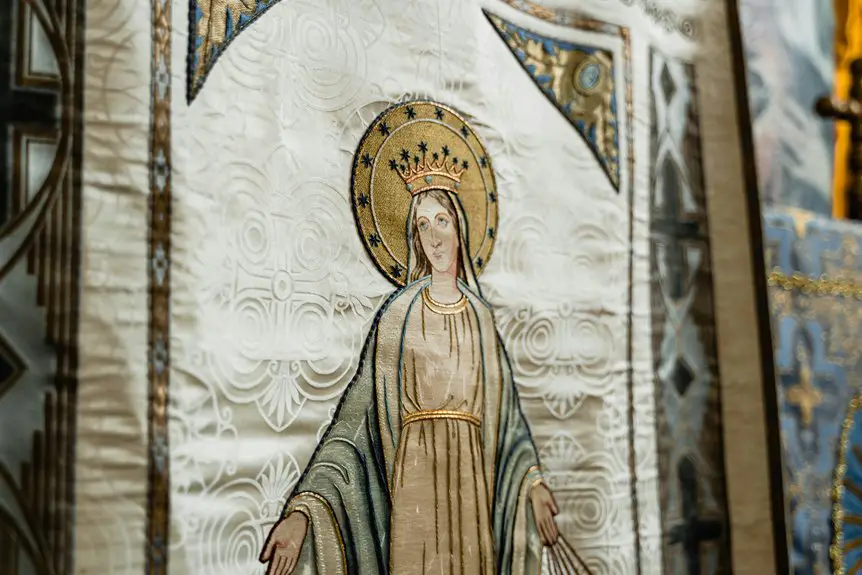
Tapestry fabric goes by many names depending on where you are. In France, it’s “tapisserie,” while Spain calls it “tapiz.” Turkey and Persia use “kilim” or “qilim” for similar woven styles. India’s “pattachitra” showcases painted cloth storytelling akin to tapestry. You’ll also hear terms like Jacquard or Aubusson for different weaving methods and textures. If you want to truly appreciate its history and variations, there’s plenty more to uncover about this rich art form.
Key Takeaways
- Tapestry fabric is called “tapisserie” in France, reflecting its rich artistic tradition.
- In Spain, tapestry is known as “tapiz,” highlighting its intricate artisan designs.
- Turkey and Persia use “kilim” and “qilim” respectively for flat-woven tapestry-style textiles.
- India’s traditional tapestry-like fabrics are called “pattachitra,” featuring painted storytelling cloths.
- Modern variations include “Jacquard,” “Chenille Tapestry,” and “Digital Print Tapestry” for contemporary styles.
Origins and History of Tapestry Fabric
Although tapestry fabric has evolved over centuries, its origins trace back to ancient civilizations where artisans wove intricate scenes by hand. You’ll find that early tapestries served both decorative and practical purposes, like insulating drafty walls.
As you explore their history, you’ll see how these woven artworks depicted stories, religious themes, and important events, making them valuable cultural records. By the Middle Ages, tapestries became symbols of wealth and power, often commissioned by royalty and nobility.
When you handle tapestry fabric, you’re touching a tradition rooted in craftsmanship and storytelling. This fabric’s rich history reveals how societies valued both utility and art, blending function with beauty long before industrial production methods appeared.
Understanding this background helps you appreciate tapestry’s enduring appeal today.
Traditional Names for Tapestry Fabric Worldwide
When you explore tapestry fabric around the world, you’ll find it goes by many traditional names that reflect local cultures and weaving techniques.
In France, it’s often called “tapisserie,” emphasizing its rich artistic heritage. In Spain, you might hear “tapiz,” highlighting intricate designs woven by skilled artisans.
In Turkey, tapestry-like textiles are known as “kilim,” which are flat-woven rugs with bold patterns. The Persian equivalent, “qilim,” shares similarities but carries its own distinct style.
In India, “pattachitra” refers to painted cloths that resemble tapestry storytelling.
Each name carries a history, showing how tapestry fabric serves not just as decoration but as cultural expression in various regions worldwide.
When you recognize these terms, you’ll better appreciate the global tapestry tradition.
Differences Between Tapestry and Aubusson
While both tapestry and Aubusson fabrics showcase intricate weaving, they differ markedly in origin, technique, and style. You’ll find tapestry typically woven on a vertical loom, producing heavy, durable fabric often used for wall hangings. Aubusson, in contrast, comes from a French town and is woven on a horizontal loom, creating softer, more refined textiles suited for upholstery and draperies.
| Feature | Tapestry | Aubusson |
|---|---|---|
| Origin | Various European regions | Aubusson, France |
| Loom Type | Vertical | Horizontal |
| Fabric Weight | Heavier, sturdy | Lightweight, delicate |
| Common Use | Wall art, decorative panels | Upholstery, curtains |
Understanding these differences helps you appreciate their unique qualities and uses.
Gobelin: A Famous Tapestry Type
Since Gobelin tapestries have a rich history and distinctive style, you’ll recognize them as some of the finest examples of woven art.
Originating from the Gobelins Manufactory in Paris, established in the 17th century, these tapestries showcase exceptional craftsmanship and intricate designs.
When you look at a Gobelin tapestry, you’ll notice vivid colors and detailed scenes, often depicting historical events, mythology, or nature.
They’re woven using a hand-operated loom, producing durable, high-quality fabric that’s both decorative and functional.
If you want a tapestry that combines artistic mastery with cultural heritage, Gobelin is a name you’ll often encounter.
These tapestries continue to influence textile art, admired for their elegance and storytelling power.
How Verdure and Flanders Tapestries Got Their Names
Although you mightn’t realize it at first, the names Verdure and Flanders carry rich meanings tied to the origins and themes of their tapestries.
Verdure tapestries get their name from the lush greenery and natural scenes they depict, symbolizing abundance and life. Flanders tapestries, on the other hand, are named after the Flanders region, a major center of tapestry production during the Renaissance.
Here’s what you should know:
- Verdure means “greenery” in French, highlighting the focus on foliage.
- Flanders refers to the historic region spanning parts of modern Belgium and France.
- Verdure tapestries often feature animals, plants, and forest scenes.
- Flanders tapestries became renowned for their fine craftsmanship and detailed storytelling.
Understanding these origins helps you appreciate the cultural and artistic significance behind these tapestry names.
Modern Terms and Variations for Tapestry Fabric
You’ll notice that modern tapestry fabric names often reflect contemporary styles and materials, making them easier to identify.
Depending on the region, terminology can vary, so it’s helpful to learn local names and classifications.
Understanding these variations will give you a clearer picture of tapestry fabric’s current landscape.
Contemporary Tapestry Fabric Names
When exploring contemporary tapestry fabrics, you’ll find a variety of modern terms and styles that reflect today’s design trends.
These names often emphasize texture, technique, and aesthetics suited for current interiors and fashion. As you dive deeper, keep an eye out for these popular contemporary tapestry fabric names:
- Jacquard: Known for intricate woven patterns, offering a refined, detailed look.
- Chenille Tapestry: Features a plush, velvety texture, perfect for cozy upholstery.
- Digital Print Tapestry: Combines traditional tapestry designs with advanced printing technology for vivid colors.
- Mixed-Media Tapestry: Blends different fibers and materials, creating unique tactile and visual effects.
Regional Tapestry Terminology Variations
Modern tapestry fabrics come with names that not only reflect style but also vary widely depending on the region.
If you’re exploring tapestries from Europe, you might hear terms like “Aubusson” or “Verdure” referring to specific French styles known for their floral and landscape motifs.
In the UK, “needlepoint” often overlaps with tapestry, especially when referring to hand-stitched designs.
When you look toward the Middle East, you’ll encounter “kilim” or “soumak,” flat-woven textiles that serve a similar decorative purpose but differ in technique.
In Asia, especially India and China, terms like “brocade” or “silk tapestry” describe rich, woven fabrics with intricate patterns.
Knowing these regional terms helps you appreciate the tapestry’s cultural background and choose the exact style you want for your space or project.
Identifying Tapestry Fabric in the Textile Market
When you’re shopping for tapestry fabric, you’ll come across names like Gobelin, Aubusson, and Verdure.
Knowing these common terms helps you spot authentic tapestry textiles quickly.
Pay attention to the texture and intricate patterns to recognize quality pieces in the market.
Common Tapestry Fabric Names
Several tapestry fabric names dominate the textile market, each carrying distinct patterns, textures, and historical significance.
When you’re exploring tapestry fabrics, you’ll often come across terms like:
- Gobelin: Known for its intricate floral and scenic designs, this French name represents high-quality woven art.
- Verdure: Features lush, green landscapes and foliage, perfect for adding a natural touch.
- Aubusson: Renowned for soft, muted colors and pastoral scenes, often handwoven in France.
- Flemish: Displays rich, detailed medieval themes, reflecting the craftsmanship of Belgium’s tapestry tradition.
Knowing these names helps you identify the style and origin of a tapestry fabric, making your selection process smarter and more informed.
Keep an eye out for these labels when shopping or researching tapestry textiles.
Recognizing Tapestry Textiles
Identifying tapestry textiles in the market can feel challenging, but knowing what to look for makes it easier.
First, check the weaving technique—tapestry fabric uses a weft-faced weave where the weft yarns completely cover the warp. You’ll notice detailed, pictorial designs often resembling artworks.
Feel the fabric; tapestry tends to be thick and sturdy, unlike flat printed fabrics. Look for natural fibers like wool or cotton, common in authentic tapestries.
Also, examine the back—a true tapestry shows the pattern reversed or less detailed.
Avoid confusing tapestry with jacquard or upholstery fabrics, which may look similar but differ in texture and weave.
Regional Nicknames and Slang for Tapestry Fabric
Although tapestry fabric is recognized worldwide, different regions often have their own unique nicknames and slang for it. When you travel or explore textile markets, you might hear terms that reflect local culture or historical influences.
Knowing these names helps you connect better with artisans and collectors.
Here are some regional nicknames and slang you might encounter:
- Gobelin (France): Refers to high-quality, handwoven tapestry fabric from the Gobelins Manufactory.
- Arras (Spain): Named after the city famous for intricate tapestry production.
- Verdure (England): Describes tapestry featuring lush foliage and natural scenes.
- Flemish tapestry (Belgium): Highlights the rich tradition of tapestry weaving in Flanders.
Understanding these terms enriches your appreciation of tapestry’s global heritage.
Frequently Asked Questions
How Do You Clean and Maintain Tapestry Fabric?
You clean tapestry fabric by gently vacuuming or spot-cleaning with mild detergent and cold water. Avoid harsh scrubbing or soaking. To maintain it, keep it out of direct sunlight and rotate regularly to prevent wear.
What Are Common Uses for Tapestry Fabric Today?
You’ll find tapestry fabric everywhere—from jaw-dropping wall hangings to statement upholstery, dramatic curtains, and even bold fashion pieces. It adds instant grandeur and texture, making any space or outfit scream elegance and timeless charm.
Can Tapestry Fabric Be Machine Washed or Dry Cleaned?
You shouldn’t machine wash tapestry fabric since it can damage the fibers and colors. Instead, you can gently dry clean it to preserve its texture and design. Always check care labels before deciding.
How Durable Is Tapestry Fabric Compared to Other Textiles?
You’ll find tapestry fabric quite durable due to its thick, tightly woven fibers. Compared to other textiles, it resists wear and tear well, making it ideal for upholstery and heavy-use items. Just avoid harsh cleaning methods.
Are There Eco-Friendly or Sustainable Tapestry Fabric Options?
You can choose sustainable tapestry fabrics by opting for organic cotton, recycled fibers, or natural dyes. You’ll reduce environmental impact, support ethical production, and enjoy beautiful, eco-friendly textiles that last and look fantastic in your space.