
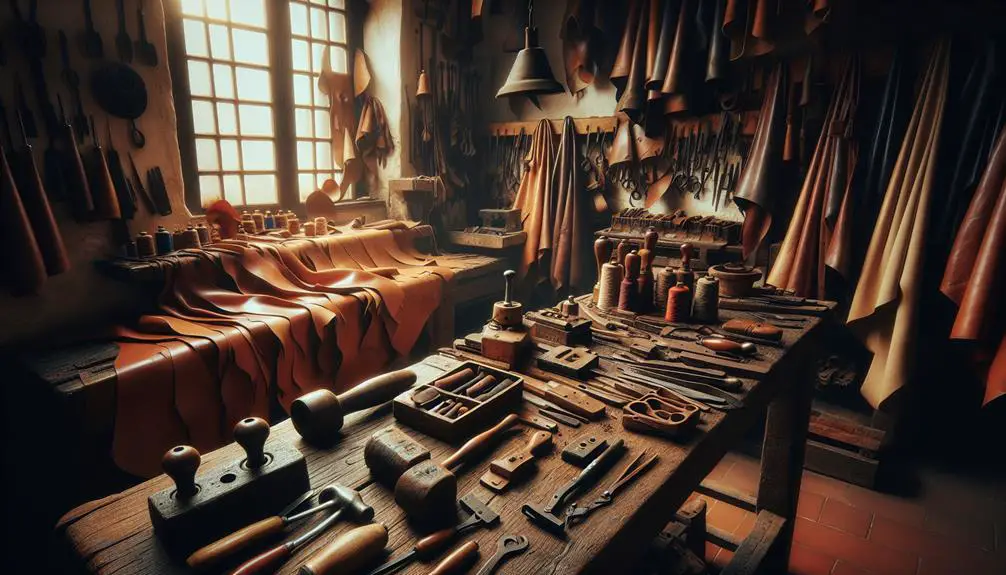
So, real leather, huh? It's made from the hides of animals like cows, sheep, and even some fancy ones like crocodiles and ostriches. These hides go through a process called tanning—that's what turns them into the durable leather you see on jackets, boots, or couches. There are different ways to tan leather, and each method can give it a unique look and feel. Now, if you're curious about how they get from a cow to your closet, or how they impact the environment, there's a lot more under the surface to uncover.
Key Takeaways
- Real leather is crafted from the hides of animals such as cows, buffalo, and deer.
- The tanning process, involving methods like vegetable or chrome tanning, transforms raw hides into durable leather.
- Different animals provide hides with distinct textures and qualities, influencing the leather's final appearance and feel.
- Common leather types include full-grain and top-grain, differing in processing and quality.
- Production includes steps like cleaning, dyeing, and finishing to enhance the leather's durability and aesthetic appeal.
Origin of Leather
Leather comes from the hides of animals like cows and sheep, which are transformed through tanning into the durable material we use today. The journey from raw animal hides to the real leather you see in stores is quite a process, involving multiple meticulous steps to ensure quality and durability.
The tanning process is crucial. It's not just about turning hides into leather; it's about preserving them properly so they last long and look great. Different types of tanning methods lead to different types of leather, each with unique qualities. Whether it's vegetable-tanned leather, known for its natural appearance and ability to develop a rich patina, or chrome-tanned leather, recognized for its softness and color variety, the method used significantly impacts the final product.
Leather production doesn't stop at tanning. It includes thorough cleaning, dyeing to add color, and finishing to protect the surface. This comprehensive treatment ensures that real leather maintains its aesthetic appeal and functional durability over time. So, when I pick up a leather jacket or a wallet, I'm not just holding a piece of fashion; I'm holding a product of ancient craftsmanship optimized for modern use.
Types of Animal Hides
So, let's talk about where most of our real leather comes from and how it's made.
Commonly, leather is sourced from animals like cows and deer, which aren't only plentiful but also give us strong, lasting material.
We'll also explore how these hides are transformed through various techniques to become the leather goods we all use and love.
Common Hide Sources
Several animals provide hides for real leather, including cows, buffalo, deer, crocodile, and ostrich.
Cows are the go-to when we talk about leather production. They give us the bulk of hides and, let's be honest, most of the leather goods you own are probably made from cowhide.
Buffalo hides aren't as common but impress with their toughness; they're really built to last.
Now, if we're talking fancy, that's where crocodile and ostrich come into play. These exotic hides are all about luxury, sporting unique textures that turn heads.
And deer, well, they offer leather that's super soft and flexible, perfect for when you want something a bit more pliable. Each of these hide sources brings something special to the table.
Hide Processing Techniques
After exploring the common sources of hides, let's look at how these hides are processed into different types of leather. The whole journey starts with animal hides like cowhide, sheepskin, pigskin, and goatskin. Each of these lends itself to specific leather products due to unique properties. Cowhide, for instance, is super durable, making it a top pick for everything from jackets to sofas.
In leather production, hide processing techniques are crucial to determine the quality and type of leather. Full-grain leather keeps the hide's rugged surface, while top-grain leather is slightly refined to remove imperfections. This step is essential in crafting the look, feel, and durability of leather goods. Each type of hide offers different advantages for various leather products.
Tanning Processes
Now, let's talk about how leather is actually made tough and durable through tanning.
We've got traditional methods that have been around for ages and modern techniques that speed up the process and can add unique properties to the leather.
It's fascinating to see how both old and new methods play a role in crafting the leather goods we use every day.
Traditional Tanning Methods
One way we've been turning raw hides into durable leather is through traditional tanning methods like vegetable and chrome tanning. Vegetable tanning, for example, uses natural agents like tree bark, which slowly alters the chemical composition of the hide. This method not only gives the leather unique qualities but also vibes well with environmental regulations and sustainability standards.
On the flip side, chrome tanning uses chromium salts. It's quicker and cheaper, making it a popular choice, but it's a bit of a double-edged sword due to its chemical usage.
Both methods have their place in the leather world, each bringing specific qualities to the table. We've tweaked these processes over time to meet modern standards while keeping their traditional roots.
Modern Tanning Techniques
While traditional methods like vegetable and chrome tanning have set the stage, modern tanning techniques have revolutionized how we produce leather today. Chrome tanning, for instance, uses chemicals that make the process cost-effective, speeding up leather production considerably. On the other hand, vegetable tanning uses natural tree bark and although it's pricier, it gives us top-notch leather.
Tanneries globally adapt these methods to achieve specific, desired leather characteristics. They also integrate fats in tanning to boost the leather's strength and softness. Plus, re-tanning processes are critical—they might involve bleaching or shaving, depending on what the final product is meant to look like. Each technique plays a pivotal role in how our everyday leather items turn out.
Leather Grading Systems
Leather grading systems help us understand the quality and characteristics of different types of leather. When I first got into leather goods, I was baffled by terms like full grain, top grain, corrected grain, split grain, and bonded leather. But here's the lowdown: these grades are crucial for making informed choices, especially if you're aiming for products that offer the best bang for your buck.
Full grain leather, for instance, sits at the top of the quality pyramid. It's the real deal—untouched surface showing all the natural marks, making it super durable and uniquely yours over time. Top grain comes next; it's a bit more processed to remove imperfections, so it's still high quality but doesn't age quite like full grain.
Then there's corrected grain and split grain. Corrected grain is sanded down and then embossed to look more uniform. Split grain is taken from lower layers of the hide and is less durable. Lastly, bonded leather is like the hotdog of leathers—it's made from leftover scraps all mashed together. Not the best quality, but it's more affordable.
Understanding these grades really shapes your leather shopping experience, steering you towards choices that match your needs and expectations.
Leather Care Techniques
To keep your leather looking great, it's important to regularly clean and condition it with the right products. Real leather requires a bit of TLC to maintain its quality and appearance. I always start by gently removing dust and dirt with a soft cloth or brush. This is your first step toward gentle cleaning, which really helps in keeping the leather in top shape without causing any damage.
For deeper cleaning, I use cleaners and conditioners specifically designed for leather. These products help in moisturizing the leather and preventing it from drying out or cracking. It's crucial to avoid harsh chemicals that can be too abrasive and end up harming the leather instead of helping it.
When I'm not using my leather items, I make sure to store them properly in a cool, dry place away from direct sunlight. This simple step helps a lot in preserving their condition and color.
Sometimes, the leather might need a bit more than I can handle at home. In those cases, I opt for professional cleaning to ensure it's done right. Here's a quick table summarizing the key points of leather care:
| Action | Tips |
|---|---|
| Cleaning | Use gentle cleaners, soft cloth |
| Conditioning | Apply quality conditioners |
| Storing | Keep in cool, dry places |
| Handling | Avoid harsh chemicals |
| Professional | Consider experts for deep cleaning |
Uses of Real Leather
One often appreciates real leather for its use in high-end fashion items like luxury shoes and designer handbags. It's not just about the look; the durability of real leather makes it ideal for everyday wear and tear, keeping those expensive pieces looking great for years. Beyond fashion, leather's versatility really shines in various other applications.
In home decor, for example, real leather is a star in furniture upholstery. It brings a rich, sophisticated vibe that fabric just can't match. Think about sinking into a plush leather sofa—feels luxurious, right? Plus, it's super durable, handling everything from kids' playdates to adult gatherings with ease.
Then there's the automotive world, where real leather takes the interior of a car from basic to breathtaking. Leather seats, steering wheel covers, and even gear shift knobs add that extra touch of elegance and comfort that makes driving a real pleasure.
And let's not forget those artisan goods. Craftsmen love working with leather because it's both traditional and high-quality. Whether it's handcrafted journals, bespoke wallets, or custom watch straps, real leather elevates everyday accessories into something truly special. It's the go-to material for anyone who values craftsmanship and quality.
Environmental Impact
While we often celebrate its luxury, it's important to address the environmental footprint of real leather production. The leather we adore comes from animal hides, a byproduct of the meat industry, which ties it directly to large-scale cattle farming. This link brings up serious environmental concerns, notably deforestation. Expanding pasture lands for cattle isn't just about more burgers; it's also about more boots and bags.
Deforestation, a major side effect of this demand, strips the Earth of vital forests, impacting biodiversity and carbon storage. But it's not all doom and gloom. The industry is making strides towards reducing its environmental impact. Initiatives like developing environmentally friendly tanning techniques are key. These methods cut down on the harmful chemicals traditionally used, making the process kinder to our planet.
Moreover, organizations like the Leather Working Group champion these sustainable practices. They push for standards that ensure leather production isn't only environmentally sound but also ethically sourced. By supporting such efforts and demanding higher standards, we can help pivot the industry towards more responsible practices. It's about loving our leather, but also loving our planet by insisting on sustainability every step of the way.
Ethical Considerations
Real leather's reliance on animal hides definitely raises some serious ethical questions. When I think about where leather comes from, it's hard not to consider the animal welfare aspects. The fact that these animals are raised primarily for their skins doesn't sit right with me, and I know I'm not alone in this. Many ethical consumers are now looking for alternatives that don't involve animal hide symbols of fashion.
Here's a quick look at the main points to consider:
| Aspect | Concerns | Alternatives |
|---|---|---|
| Animal Welfare | Treatment of animals | Synthetic leather |
| Sustainability | Environmental impact | Plant-based leathers |
| Ethical Sourcing | Transparency in sourcing practices | Certified ethical sources |
| Leather Production | Methods and ethics involved | Recycled materials |
| Consumer Choices | Support for ethical practices | Informed purchasing decisions |
For me, sustainability and ethical sourcing practices play a huge role. I'm always on the lookout for brands that are transparent about their methods. It's all about understanding the ethical implications and making choices that align with my values. Let's face it, navigating these waters can be tricky, but it's worth it to support practices that respect our planet and its inhabitants.
Frequently Asked Questions
What Does Real Leather Made Out Of?
I've learned that real leather is crafted from the hides of animals like cows and sheep, treated through tanning to enhance durability and texture, essential for high-quality, long-lasting leather goods.
Is Genuine Leather 100% Leather?
No, genuine leather isn't 100% leather. It's made by bonding lower-quality leather layers with adhesives, making it the least pure form of real leather you can buy. Always check before purchasing!
How Can You Tell Real Leather?
To spot real leather, I check for natural imperfections and pores. It should also absorb moisture and develop a unique patina over time. A higher price and a rich, authentic smell are good indicators too.
What Quality Is Real Leather?
Real leather varies in quality. Full grain is top-notch, durable and natural. Top grain's pretty good too, slightly processed. Genuine leather's decent, more uniform. Split grain's the lowest, from the hide's bottom layers.