
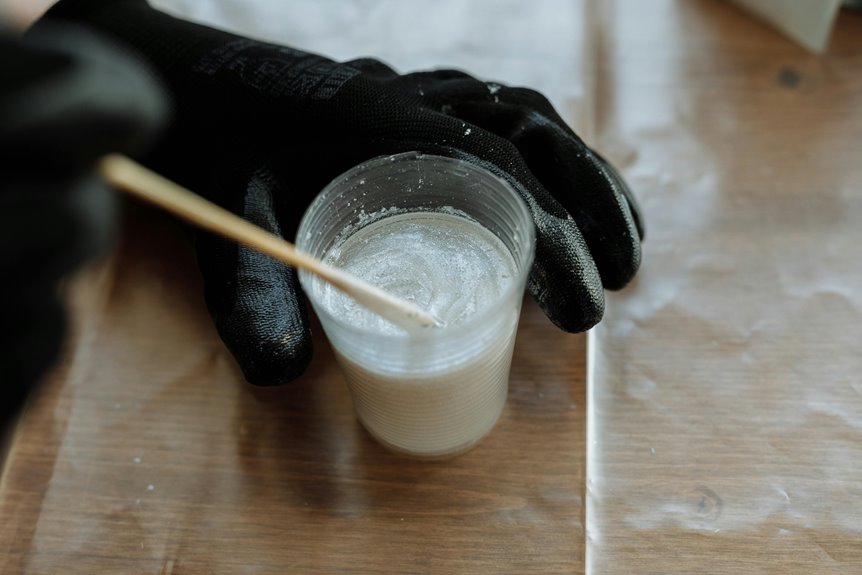
You’ll find polyamide resin is a tough, flexible polymer made of repeating amide bonds, ideal for adhesives, inks, and coatings. It offers strong bonding, quick drying, and excellent resistance to chemicals, heat, and wear—perfect for demanding environments. Using it boosts adhesion, durability, and color vibrancy in inks while protecting surfaces with flexible, durable coatings. If you want to understand its properties, environmental impact, and latest innovations, keep exploring these versatile resins further.
Key Takeaways
- Polyamide resin is a synthetic polymer with strong amide bonds, known for durability, flexibility, and chemical resistance.
- It improves adhesives by enhancing bonding strength, flexibility, and chemical resistance for durable, reliable joints.
- In inks, polyamide resins boost color vibrancy, print durability, and resistance to fading and wear.
- Polyamide resins in coatings provide abrasion resistance, chemical protection, and fast drying while preventing cracking and chipping.
- Innovations focus on bio-based polyamides, improved thermal stability, and faster curing for sustainable, high-performance applications.
Defining Polyamide Resin
Polyamide resin is a versatile synthetic polymer known for its strength and durability. When you work with polyamide resin, you’re handling a material that offers excellent mechanical properties and resistance to wear and chemicals.
It’s commonly used to improve the performance of adhesives, inks, and coatings because it can form strong, flexible films. You’ll find polyamide resin in many industrial and commercial products thanks to its quick drying capabilities and good adhesion to various substrates.
This resin also withstands high temperatures, making it suitable for demanding environments. Whether you’re developing a product that requires toughness or a finish that resists abrasion, polyamide resin provides a reliable solution that balances performance with ease of use.
Chemical Structure and Composition
Although you mightn’t see it, the chemical structure of the resin plays an essential role in its performance.
Polyamide resins are made up of repeating units linked by amide bonds (-CONH-), which form through a reaction between carboxylic acid and amine groups. This backbone gives the resin its characteristic strength and thermal stability.
Depending on the types of monomers used—whether aliphatic or aromatic—you’ll notice different resin properties. Aliphatic polyamides tend to be more flexible and have better chemical resistance, while aromatic ones provide higher strength and heat resistance.
Additionally, the presence of side chains and the degree of polymerization influence how the resin behaves in adhesives, inks, and coatings. Understanding this composition helps you select the right polyamide resin for your specific application needs.
Physical and Mechanical Properties
When you consider how a resin performs under stress or in various environments, its physical and mechanical properties become essential.
Polyamide resins offer excellent tensile strength and flexibility, allowing you to rely on them for durable applications. They also exhibit good impact resistance, which means they can absorb energy without fracturing.
You’ll find their thermal stability impressive, as they maintain integrity over a broad temperature range. Additionally, polyamide resins have notable abrasion resistance, helping coatings and adhesives withstand wear over time.
Their moisture absorption can influence mechanical behavior, so you’ll want to account for environmental humidity in your application.
Advantages of Using Polyamide Resins
You’ll appreciate how polyamide resins combine durability and flexibility to handle tough conditions.
They resist chemicals effectively, making them ideal for harsh environments.
Plus, their enhanced adhesion properties guarantee strong bonding in various applications.
Durability and Flexibility
Durability and flexibility make polyamide resins a top choice for many applications. When you use polyamide resin, you get materials that can withstand mechanical stress without cracking or breaking.
This resilience means your adhesives, inks, or coatings remain reliable even under harsh conditions. Plus, polyamide resins offer excellent flexibility, allowing your products to bend or stretch as needed without losing strength.
This combination lets you design applications that endure wear and tear while maintaining performance. Whether you’re working on flexible packaging, durable coatings, or tough adhesives, polyamide resin adapts to your needs.
Chemical Resistance Benefits
Although many materials struggle against harsh chemicals, polyamide resins stand out for their exceptional chemical resistance.
When you use polyamide resins, you get a material that can withstand exposure to oils, solvents, and acids without degrading. This means your adhesives, inks, or coatings last longer and perform reliably in tough environments.
Here are some chemical resistance benefits you’ll appreciate:
- Resists breakdown from hydrocarbons and oils
- Maintains integrity against acidic and alkaline substances
- Prevents swelling or softening when exposed to solvents
- Offers stability in harsh industrial environments
- Enhances longevity of protective coatings and inks
Choosing polyamide resins means you don’t have to worry about chemical damage compromising your products.
Enhanced Adhesion Properties
Beyond resisting harsh chemicals, polyamide resins also excel at bonding surfaces together. When you use them in adhesives, you’ll notice how well they create strong, durable bonds on a variety of materials, including metals, plastics, and composites.
This enhanced adhesion means your projects will hold up under stress, heat, and moisture, reducing the risk of failure. You’ll appreciate that polyamide resins provide flexibility without compromising strength, allowing bonded materials to withstand movement and vibration.
Whether you’re working on industrial applications or everyday products, these resins guarantee reliable performance. By choosing polyamide-based adhesives, you’re investing in superior bonding power that keeps your materials securely joined, making your work more efficient and long-lasting.
Polyamide Resins in Adhesive Formulations
When you incorporate polyamide resins into adhesive formulations, you release strong bonding properties and excellent flexibility.
This combination makes your adhesives ideal for demanding applications where durability and resilience are key.
Polyamide resins also improve chemical resistance and enhance adhesion to a variety of substrates.
Here’s what you gain by using polyamide resins in adhesives:
- Superior toughness and impact resistance
- Flexibility that prevents cracking or peeling
- Strong adhesion to metals, plastics, and composites
- Resistance to heat, moisture, and chemicals
- Faster curing times for efficient processing
Role in Ink Production and Performance
When you use polyamide resins in ink production, you boost the durability of your prints, making them last longer without fading or smudging.
You’ll also notice improved color vibrancy, which helps your designs stand out with richer, more vivid hues.
These benefits make polyamide resins a smart choice for high-performance inks.
Enhancing Ink Durability
Although ink formulations vary widely, polyamide resins consistently boost their durability by improving adhesion and flexibility.
When you use inks enhanced with polyamide resins, you’ll notice they resist cracking, peeling, and fading much better. These resins create a strong film that stays intact under stress, making your prints last longer in demanding conditions.
You can expect benefits like:
- Enhanced resistance to abrasion and wear
- Improved flexibility to withstand bending and stretching
- Superior adhesion to various surfaces including plastics and metals
- Increased resistance to water and chemicals
- Better performance in high-temperature environments
Improving Color Vibrancy
Since vibrant colors catch the eye and hold attention, polyamide resins play an essential role in ink production by enhancing color brightness and depth.
When you use polyamide resins, you’ll notice inks deliver richer, more vivid hues that don’t fade quickly. These resins improve pigment dispersion, ensuring even color distribution and reducing dull spots.
Plus, they boost adhesion to various surfaces, so the colors stay true longer. You’ll also find that polyamide-based inks resist smudging and maintain their gloss, making prints look sharper and more professional.
Whether you’re working with packaging, textiles, or art prints, incorporating polyamide resins helps your colors pop and keeps them vibrant under different lighting conditions and over time.
This makes your final product stand out with lasting visual impact.
Application in Protective Coatings
If you’re looking to enhance durability and resistance, polyamide resins excel in protective coatings by providing strong adhesion and chemical resistance.
You can rely on them to shield surfaces from wear and tear, moisture, and corrosion, making them ideal for harsh environments. Their flexibility also helps prevent cracking and chipping over time.
Using polyamide resin coatings, you can benefit from:
- Excellent adhesion to metals and plastics
- Resistance to solvents and chemicals
- High abrasion and impact resistance
- Fast drying times for efficient application
- Enhanced surface hardness without compromising flexibility
These qualities make polyamide resins a smart choice when you need protective coatings that stand up to demanding conditions while maintaining a smooth, durable finish.
Environmental and Durability Considerations
Beyond their protective qualities, polyamide resins also raise important environmental and durability factors you should keep in mind.
These resins are known for their strong resistance to abrasion, chemicals, and moisture, which means your coatings, adhesives, or inks will last longer under harsh conditions.
However, since polyamides are derived from petroleum-based sources, you’ll want to take into account their environmental impact, particularly regarding biodegradability and recyclability.
While they don’t break down easily in nature, advances in recycling processes are helping reduce waste.
When selecting polyamide resins, balance durability with sustainability by choosing formulations designed for lower environmental footprints.
Innovations in Polyamide Resin Technology
Although polyamide resins have long been valued for their strength and durability, recent innovations are pushing their capabilities even further.
Polyamide resins, known for strength and durability, are now being enhanced with cutting-edge innovations.
You’ll find that these advancements enhance performance and open new application possibilities. Manufacturers now focus on improving flexibility, chemical resistance, and processing efficiency to meet evolving industry demands.
Here are key innovations you should know about:
- Development of bio-based polyamide resins for sustainability
- Enhanced thermal stability for high-temperature applications
- Modified molecular structures to increase impact resistance
- Faster curing times for adhesives and coatings
- Incorporation of nanomaterials to boost mechanical strength and barrier properties
Future Trends and Market Demand
As industries evolve, you’ll see growing demand for polyamide resins that combine sustainability with advanced performance.
You’ll notice a shift toward bio-based polyamides to reduce environmental impact while maintaining strength and flexibility. Innovations will focus on enhancing thermal stability and chemical resistance to meet stricter industry standards.
In adhesives, inks, and coatings, expect formulations tailored for faster curing and improved durability. You’ll also find increased interest in recyclable and biodegradable options as regulations tighten globally.
Market growth will be driven by sectors like automotive, electronics, and packaging, where lightweight and high-performance materials are essential.
Staying updated on these trends will help you leverage polyamide resins effectively, ensuring your products remain competitive and environmentally responsible in the years ahead.
Frequently Asked Questions
How Is Polyamide Resin Synthesized in Industrial Settings?
You synthesize polyamide resin industrially by polymerizing diamines with dicarboxylic acids or their derivatives. This condensation reaction forms long chains, which you then control through temperature and catalysts to achieve desired resin properties.
What Safety Precautions Are Needed When Handling Polyamide Resins?
Like stepping into a lab from a sci-fi film, you should wear gloves, goggles, and a mask when handling polyamide resins. Make certain proper ventilation and avoid skin contact to keep yourself safe and sound.
Can Polyamide Resins Be Recycled or Repurposed?
You can recycle polyamide resins, but it’s often challenging due to their chemical complexity. Repurposing is more common, like using scrap for fillers or composite materials. Always check local recycling guidelines before disposal.
What Are the Cost Differences Between Polyamide and Other Resins?
You’ll find polyamide resins typically cost more than common resins like polyethylene due to their enhanced performance. However, their durability can reduce long-term expenses, making them a cost-effective choice in demanding applications.
How Does Temperature Affect Polyamide Resin Curing Times?
You’ll find that higher temperatures speed up polyamide resin curing times, while lower temps slow it down. So, controlling temperature helps you optimize curing speed and achieve the best adhesion and coating quality.