
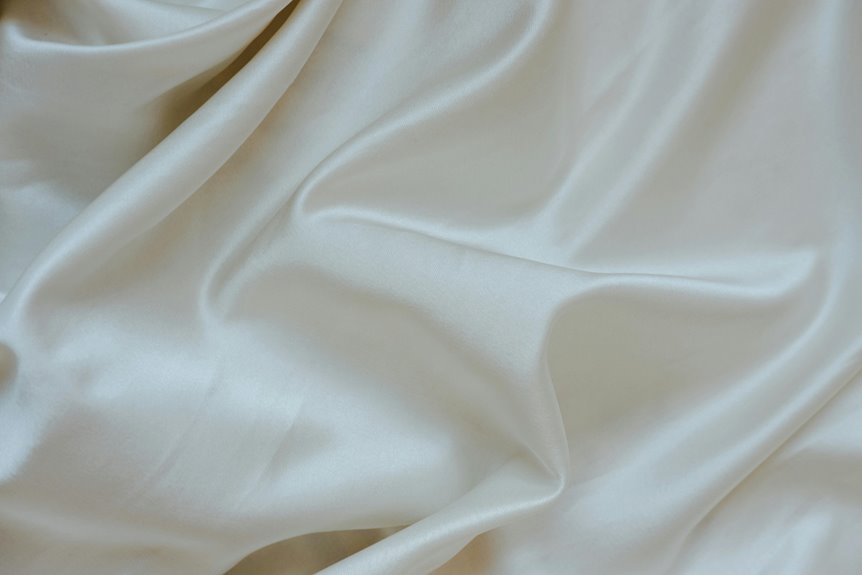
You’ll notice percale and regular cotton differ mainly in their weave. Percale uses a tight one-over-one-under weave, giving it a crisp, cool, and breathable feel that resists pilling and stays durable wash after wash. Regular cotton weaves offer a softer, sometimes warmer texture with a slight sheen but less airflow. Both feel great, but your choice depends on whether you want crisp coolness or cozy softness. Keep exploring to see which fits your needs best.
Key Takeaways
- Percale uses a tight one-over-one-under weave for a crisp, matte finish, while regular cotton employs a plain weave with a softer texture.
- Percale has a higher thread count (200-400), making it smoother and more durable than regular cotton weaves.
- Percale is highly breathable and cool, ideal for warm climates, whereas regular cotton offers a warmer, silkier feel.
- Percale resists pilling and maintains shape after washes; regular cotton softens faster but may fray over time.
- Percale withstands higher wash temperatures; regular cotton requires gentler care to preserve fabric integrity.
Understanding the Cotton Fabric Basics
Cotton fabric forms the foundation for both percale and regular cotton bedding, and understanding its basics helps you make an informed choice.
Cotton fibers come from the cotton plant, prized for their softness, breathability, and durability. When you pick cotton fabric, you’re choosing a natural material that absorbs moisture well, keeping you comfortable through the night.
Cotton’s natural softness and breathability make it ideal for moisture-wicking, comfortable bedding all night long.
You’ll find cotton comes in different qualities, often judged by fiber length—longer fibers mean stronger, smoother fabric.
Also, cotton is versatile; it can be woven in various ways, affecting texture and feel. Knowing these basics means you can look beyond just “cotton” on a label and focus on what gives you the comfort and longevity you want from your bedding.
What Defines Percale Weave?
You’ll notice percale weave stands out with its tight, one-over-one-under pattern that creates a crisp, matte finish.
It usually features a higher thread count, giving the fabric a smooth and durable texture.
Let’s explore how these characteristics affect your bedding experience.
Percale Weave Characteristics
Percale weave stands out for its crisp, matte finish and tightly woven structure. When you feel percale, you notice its smooth, cool touch that stays breathable throughout the night.
This weave uses a one-over, one-under pattern, creating a balanced and durable fabric. Because of this simple yet effective construction, percale resists pilling and holds its shape well wash after wash.
You’ll also find its lightweight nature makes it ideal for warmer climates or those who tend to sleep hot. Unlike softer, looser weaves, percale maintains a firm feel, giving your bedding a neat, tailored look.
Thread Count and Texture
The crisp, cool feel of percale comes down to its thread count and texture. Percale typically features a thread count between 200 and 400, which strikes the perfect balance for breathability without sacrificing durability.
Unlike higher thread counts that can feel heavy or dense, percale’s relatively moderate count guarantees air flows freely, keeping you cool. Its tightly woven plain weave creates a smooth, matte finish that feels crisp against your skin.
You’ll notice percale’s texture is lightweight and slightly stiff at first but softens with each wash. This combination of thread count and weave structure defines percale’s signature texture—fresh, breathable, and durable.
When you want bedding that stays cool and crisp night after night, percale’s thread count and texture deliver exactly that.
Characteristics of Regular Cotton Weave
Regular cotton weave offers a soft, breathable texture that many people find comfortable for everyday use.
When you choose regular cotton, you’re getting a fabric made with a plain weave, where each weft thread crosses over and under each warp thread in a simple, consistent pattern. This construction gives the fabric durability and a smooth surface, though it’s generally less crisp than percale.
You’ll notice the weave allows for some flexibility and slight stretch, making it cozy and easy to handle. Regular cotton weave often feels warmer and can have a subtle sheen, depending on the finishing.
It’s versatile, working well for sheets, clothing, and home textiles. Overall, you get a dependable, natural fabric that balances comfort and practicality without much fuss.
Comparing Breathability and Texture
When comparing breathability and texture, you’ll find noticeable differences between percale and regular cotton weaves.
Percale features a tight, plain weave that allows air to flow freely, making it exceptionally breathable. This means you’ll stay cooler and more comfortable, especially in warmer weather. Its crisp, matte finish feels smooth and cool to the touch, giving your sheets a fresh, clean sensation.
On the other hand, regular cotton weaves, like sateen or jersey, tend to have a softer, sometimes silkier texture but may not offer the same level of airflow.
If you prioritize a cool, crisp feel and enhanced breathability, percale is a smart choice. However, if you prefer a softer, cozier touch, regular cotton weaves might suit you better.
Durability and Care Differences
Although both percale and regular cotton are durable, their care requirements and longevity differ in important ways.
Percale and regular cotton both offer durability, but their care and lifespan vary significantly.
Percale’s tight, plain weave makes it more resistant to wear and pilling, helping it maintain a crisp feel even after frequent washes. Regular cotton, depending on the weave, might soften faster but can be more prone to fraying over time.
When caring for these fabrics, keep in mind:
- Percale withstands higher wash temperatures, ideal for deep cleaning.
- Regular cotton often requires gentler cycles to prevent damage.
- Both fabrics benefit from line drying or low heat to preserve fibers.
- Using mild detergents prolongs the life of both materials.
Following these tips lets you enjoy your sheets longer without sacrificing quality.
Choosing Between Percale and Regular Cotton
Understanding the differences in care and durability can help you make a more informed choice between percale and regular cotton.
If you prefer a crisp, cool feel that gets softer with every wash, percale is your best bet. It’s ideal for warmer climates or if you tend to sleep hot.
On the other hand, regular cotton offers more variety in texture and tends to feel softer from the start, making it great if you want immediate comfort and a cozier feel.
Consider how often you wash your sheets; percale’s durability stands up well to frequent laundering.
Ultimately, your choice depends on your comfort preference, climate, and maintenance routine. Both fabrics provide quality, so pick what feels right for your sleep style.
Frequently Asked Questions
Is Percale Cotton Suitable for Sensitive Skin?
Yes, percale cotton’s crisp, breathable weave helps keep your skin cool and minimizes irritation. If you have sensitive skin, you’ll appreciate its smooth texture and natural fibers, which reduce allergies and promote comfort all night.
Can Percale Weave Be Used for Upholstery?
You can use percale weave for upholstery, but it’s less durable than heavier fabrics. It’s crisp and breathable, great for light-use furniture, but you’ll want something sturdier for high-traffic pieces to avoid quick wear and tear.
How Does Percale Cotton Perform in Humid Climates?
When it rains, it pours—but percale cotton breathes well, keeping you cool and comfortable in humid climates. You’ll appreciate its crisp, lightweight feel that resists moisture buildup, making it ideal for warm, sticky nights.
Are There Eco-Friendly Options for Percale Cotton?
You can find eco-friendly percale cotton options by choosing organic or sustainably sourced fabrics. Look for certifications like GOTS or OEKO-TEX—they guarantee the cotton’s grown and processed with minimal environmental impact, keeping your bedding green.
Does Percale Cotton Shrink After Washing?
Just like a new pair of jeans, percale cotton can shrink a bit after washing. To keep it crisp and true, you’ll want to wash in cold water and tumble dry low or air dry.