
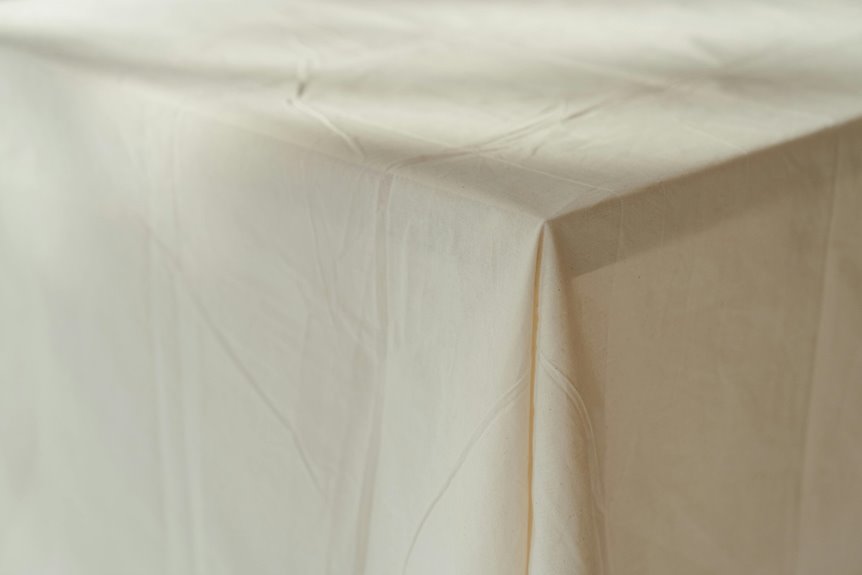
Percale linen blends linen fibers in a tight, one-over-one-under weave, giving you a crisp, smooth fabric that feels cool and breathable. You’ll notice its natural strength and subtle texture, perfect for staying comfortable in warm weather. It holds up well over time, resisting wear and fading while softening with use. If you want to discover how it compares to cotton percale, plus care tips and sustainable benefits, keep exploring this fabric’s unique qualities.
Key Takeaways
- Percale linen is a tightly woven fabric using flax fibers, featuring a crisp, smooth texture with a matte finish and subtle natural irregularities.
- It combines linen’s strength, breathability, and moisture-wicking with the durability of a dense percale weave, ideal for bedding and apparel.
- The fabric maintains shape well, resists fading and abrasion, and becomes softer and more comfortable with repeated washes.
- Percale linen offers superior airflow and moisture absorption compared to cotton percale, keeping users cool and dry in warm or humid conditions.
- Environmentally, it is sustainable due to low water and pesticide use, minimal waste from flax plants, and biodegradability at end of life.
Defining Percale Weave and Its Characteristics
Percale weave is a simple, closely woven fabric structure that gives percale linen its crisp and smooth texture. When you touch percale linen, you’ll notice it feels cool and lightweight, making it perfect for warm weather.
The weave uses a one-over, one-under pattern, which creates a matte finish without any shine. This tight construction enhances durability, so your fabric will stand up to frequent washing and wear without losing its shape.
You’ll appreciate how breathable percale linen is, as the weave allows air to flow freely, preventing overheating. Plus, the fabric’s firmness means it resists pilling and wrinkles better than looser weaves.
Choosing percale linen means you get a fabric that balances softness and strength with a neat, tailored appearance.
The Role of Linen Fibers in Fabric Composition
You’ll notice that linen fibers bring unique strength and breathability to percale fabrics.
Their natural durability means your sheets can last longer and feel better over time.
Understanding how linen blends with other fibers helps you appreciate the perfect balance of comfort and resilience.
Linen Fiber Characteristics
Linen fibers give fabric its distinctive strength, breathability, and texture. When you feel linen, you’ll notice its natural crispness and subtle irregularities, which come from the long, hollow fibers of the flax plant.
These fibers let air flow freely, keeping you cool and comfortable in warm weather. Because linen fibers absorb moisture without feeling damp, your skin stays dry even on hot days.
You’ll also appreciate linen’s natural luster—it reflects light softly, giving fabric a gentle sheen. Keep in mind, linen fibers are stiffer than cotton, so the fabric feels firmer and has a unique drape.
Understanding these characteristics helps you grasp why percale linen blends combine linen’s breathability with a crisp, smooth finish you’ll enjoy every day.
Linen’s Impact on Durability
The strength and texture you notice in linen fibers don’t just enhance comfort—they also play a major role in the fabric’s durability. When linen is part of a percale blend, it boosts the fabric’s ability to withstand daily wear and washing without losing its shape or softness.
You’ll find that linen fibers resist pilling and tearing better than many other materials. This durability means your percale linens maintain their crisp, fresh feel longer.
Here are some key ways linen impacts durability:
- Stronger fiber structure resists stretching and sagging
- Natural stiffness helps fabrics hold their shape
- High resistance to abrasion and friction
- Moisture-wicking properties reduce fiber weakening
- Enhanced longevity even after multiple washes
With linen, you get a fabric that’s both comfortable and built to last.
Linen Blending Techniques
When blending fibers for percale fabrics, incorporating linen adds unique benefits that you won’t get from other materials alone.
Linen fibers bring breathability, moisture-wicking, and a crisp texture that enhances percale’s signature matte finish. When combined with cotton, linen boosts strength and durability while maintaining softness.
You’ll find that the weaving technique plays an essential role, as a balanced blend—often 50/50 or varying ratios—helps optimize both comfort and longevity.
The challenge lies in harmonizing linen’s natural stiffness with cotton’s smoothness to create a fabric that feels both sturdy and breathable.
How Percale Linen Is Manufactured
When making percale linen, you start by carefully selecting high-quality flax fibers to guarantee strength and softness.
Then, the fibers are woven using a tight, plain weave that gives percale its crisp, smooth texture.
Understanding these steps helps you appreciate the craftsmanship behind this durable fabric.
Fiber Selection Process
Although selecting the right fibers might seem straightforward, you’ll find that it plays an essential role in crafting high-quality percale linen. You must carefully choose fibers that balance softness, durability, and breathability.
Typically, percale linen blends long-staple cotton with flax fibers, but the exact mix influences the fabric’s feel and strength.
When selecting fibers, you’ll consider:
- Fiber length for smoothness and strength
- Purity to avoid impurities that weaken fabric
- Fiber fineness to enhance softness
- Color consistency for uniform appearance
- Environmental factors ensuring sustainable sourcing
Weaving Techniques Used
Choosing the right fibers sets the foundation, but how those fibers come together defines the quality of percale linen. Percale linen uses a plain weave technique, where the threads cross alternately, creating a tight, durable fabric with a crisp feel. You’ll notice this weave’s matte finish and smooth texture, which gives percale linen its signature coolness and breathability.
Here’s a quick look at common weaving techniques and their effects on fabric properties:
| Weave Type | Texture | Durability |
|---|---|---|
| Plain (Percale) | Smooth, crisp | High |
| Satin | Glossy, soft | Medium |
| Twill | Diagonal ridges | Very high |
| Basket | Coarse, open | Medium-low |
| Leno | Loose, airy | Low |
Percale’s plain weave strikes the perfect balance for linen bedding.
Comparing Percale Linen to Traditional Cotton Percale
Two key fabric types often come up in bedding discussions: percale linen and traditional cotton percale.
You might wonder how they differ and which suits your needs better. Percale linen blends linen fibers with cotton, giving you a crisp yet breathable fabric, while traditional cotton percale is made solely from cotton, known for its smoothness and durability.
Here’s a quick comparison:
- Texture: Percale linen feels slightly textured; cotton percale is smooth.
- Breathability: Linen blend offers enhanced airflow.
- Durability: Cotton percale tends to be more durable.
- Care: Linen blend may require gentler washing.
- Appearance: Percale linen has a natural, matte finish; cotton percale is often more uniform and polished.
Understanding these differences helps you pick the perfect bedding.
Benefits of Choosing Percale Linen for Bedding
You’ll love how percale linen keeps you cool and comfortable all night with its breathability.
It’s tough enough to last for years, saving you money in the long run.
Plus, caring for it’s simple, so your bedding stays fresh without extra effort.
Breathability and Comfort
Because percale linen features a tight, plain weave, it allows air to flow freely while still providing a smooth surface against your skin.
This unique structure helps regulate your body temperature, keeping you cool in summer and cozy in winter. You’ll notice that moisture wicks away quickly, reducing that sticky feeling on hot nights.
Plus, the fabric’s crisp texture feels invigorating and breathable, promoting better sleep quality.
Here’s why you’ll love the breathability and comfort of percale linen bedding:
- Enhances airflow, preventing overheating
- Wicks moisture efficiently for dryness
- Feels cool and crisp against your skin
- Reduces night sweats and discomfort
- Promotes a fresh, clean sleeping environment
Choosing percale linen means comfort and breathability all night long.
Durability and Longevity
Although percale linen feels lightweight and delicate, it stands up remarkably well to everyday wear and washing. You’ll find that its tightly woven fibers resist pilling and fraying, maintaining a crisp, smooth surface even after frequent use.
This fabric blend combines the strength of linen with the durability of cotton, giving you bedding that lasts season after season. When you invest in percale linen sheets, you’re choosing long-lasting quality that won’t easily fade or lose its shape.
Its resilience means you won’t have to replace your bedding as often, saving you money in the long run. Plus, the natural fibers adapt beautifully over time, becoming softer without sacrificing strength, ensuring your sheets stay comfortable and durable for years.
Easy Maintenance Tips
When you choose percale linen for your bedding, you get a fabric that’s not only comfortable but also easy to care for.
Maintaining its crisp feel and durability is simple with a few straightforward steps. You don’t need to worry about complicated washing routines or special detergents.
Here are some easy maintenance tips to keep your percale linen bedding fresh and lasting longer:
- Wash in cold or lukewarm water to prevent shrinking
- Use a gentle cycle to preserve fabric texture
- Avoid bleach and harsh chemicals that weaken fibers
- Tumble dry on low heat or line dry to maintain crispness
- Iron while slightly damp for a smooth finish if desired
Percale Linen’s Breathability and Moisture-Wicking Properties
If you value comfort during warm nights, percale linen offers exceptional breathability that keeps you cool.
Its tightly woven structure allows air to circulate freely, preventing heat buildup and promoting a fresh sleeping environment. You’ll notice how this fabric feels light and crisp against your skin, making it ideal for warmer climates or those who tend to overheat.
Additionally, percale linen excels at moisture-wicking, drawing sweat away from your body and allowing it to evaporate quickly. This means you stay dry and comfortable even on humid nights.
By choosing percale linen, you get a fabric that actively manages temperature and moisture, enhancing your comfort without sacrificing durability or style.
Percale linen expertly balances temperature and moisture for lasting comfort, durability, and timeless style.
It’s a smart choice for anyone seeking breathable, moisture-friendly bedding.
Care and Maintenance Tips for Percale Linen Products
Since percale linen combines durability with breathability, proper care guarantees it stays comfortable and crisp for years.
You’ll want to handle it gently to preserve its texture and appearance. Here are some essential care tips:
- Wash in cold or lukewarm water using a mild detergent to prevent shrinking.
- Avoid bleach or fabric softeners, which can weaken fibers.
- Tumble dry on low heat or air dry to maintain fabric integrity.
- Iron while slightly damp for a smooth, wrinkle-free finish.
- Store in a cool, dry place away from direct sunlight to avoid discoloration.
Following these steps will keep your percale linen products looking fresh and feeling great, so you can enjoy their natural softness and durability for a long time.
Common Uses of Percale Linen in Home and Fashion
Taking good care of your percale linen guarantees it stays in top shape for various uses around your home and wardrobe.
You’ll find this fabric blend ideal for bedding because it’s crisp, breathable, and softens with each wash, making your sheets and pillowcases comfortable and durable.
Percale linen’s lightweight yet sturdy nature also suits curtains and tablecloths, adding a refined, natural touch to your living spaces.
Lightweight and durable, percale linen enhances curtains and tablecloths with a subtle, elegant natural charm.
In fashion, you can rely on percale linen for shirts, dresses, and pants that keep you cool and stylish, especially in warm weather.
Its smooth, matte finish gives garments a polished look without sacrificing comfort.
Whether in your home or closet, percale linen offers versatility and lasting quality you can count on.
Environmental Impact and Sustainability of Linen Fabrics
Although many fabrics claim eco-friendliness, linen stands out for its genuinely low environmental impact.
When you choose linen, you’re opting for a fabric that requires minimal water and pesticides during flax cultivation. Plus, its durability means your linen items last longer, reducing waste.
Here’s why linen is a sustainable choice:
- Flax grows efficiently with little water and no synthetic chemicals
- Linen production uses less energy compared to cotton
- The entire flax plant is usable, minimizing waste
- Linen is biodegradable, breaking down naturally at the end of its life
- Durable fibers mean fewer replacements and less landfill contribution
What to Look for When Buying Percale Linen Sheets or Clothing
How do you choose the best percale linen sheets or clothing? Start by checking the fabric composition—look for a high percentage of linen blended with cotton to get that crisp, breathable feel.
Next, consider the thread count; percale typically ranges from 200 to 400, and a balanced count guarantees durability without sacrificing breathability. Feel the texture—percale should be smooth and lightweight, not coarse or stiff.
For sheets, pay attention to the weave tightness to assure longevity and softness after washes. Also, check for certifications like OEKO-TEX or GOTS to make certain the fabric is free from harmful chemicals.
Finally, pick colors and finishes that suit your style, but remember that natural linen tones often age beautifully with use and washing.
Frequently Asked Questions
Can Percale Linen Fabric Be Dyed Easily?
You can dye percale linen fabric, but it requires proper preparation and the right dyes. Since it blends fibers, you’ll need to choose dyes that work well on both cotton and linen for even, vibrant colors.
Is Percale Linen Suitable for Sensitive Skin?
You might worry percale linen feels rough, but it’s actually breathable and soft, making it great for sensitive skin. You’ll enjoy its natural fibers that reduce irritation and keep you comfortable all night long.
How Does Percale Linen Feel in Different Climates?
You’ll find percale linen feels crisp and cool in hot climates, helping you stay comfortable. In cooler weather, it’s breathable but might feel a bit chilly, so layering can keep you cozy without overheating.
Can Percale Linen Wrinkle Easily Compared to Cotton?
You’ll find percale linen wrinkles more easily than cotton because linen fibers are stiffer. But those wrinkles add charm! If you prefer less wrinkling, cotton’s smoother texture suits you better for everyday use.
Are There Any Common Allergens in Percale Linen?
Think of percale linen as a gentle breeze—usually hypoallergenic and kind to your skin. You won’t find common allergens here, so you can rest easy without worrying about irritation or allergic reactions.