
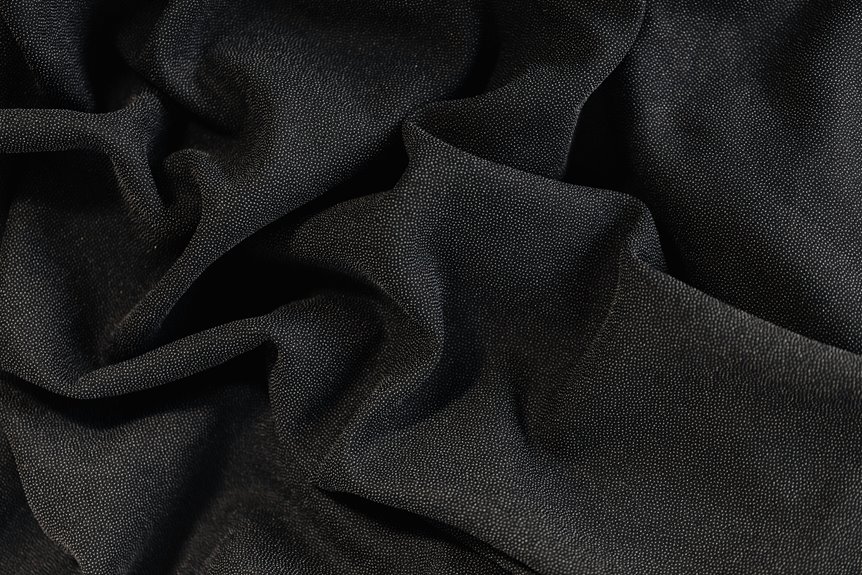
You’ll find jute silk fabric uniquely blends the natural strength of jute with the smooth, lustrous softness of silk, creating a material that’s both durable and elegant. This eco-friendly textile offers breathability and a subtle sheen, perfect for stylish yet sustainable fashion. Caring for it gently preserves its texture and shine. If you want to understand how this fabric stands out in fashion and sustainability, there’s much more to discover about its origins, uses, and trends.
Key Takeaways
- Jute silk fabric is a blend of natural jute fibers and smooth silk threads, balancing strength with elegant softness.
- It features a unique texture combining jute’s rustic coarseness with silk’s lustrous sheen for a durable yet graceful fabric.
- The fabric is eco-friendly, biodegradable, breathable, and suitable for both casual and formal fashion applications.
- Care involves gentle hand washing with cold water and mild detergent to preserve the fabric’s texture and sheen.
- Popular among sustainable fashion brands, jute silk is gaining popularity for its natural appeal and versatile luxury.
Understanding the Origins of Jute and Silk
Although jute and silk come from vastly different sources, both have rich histories that shape their unique qualities today.
You’ll find jute is a natural fiber derived from the stems of the jute plant, mainly grown in South Asia. It’s been used for centuries in making durable, eco-friendly textiles.
On the other hand, silk originates from silkworms that spin cocoons made of fine protein fibers. This luxurious material has been prized in many cultures, especially in China and India, for its smooth texture and sheen.
Silk, spun by silkworms, is cherished worldwide for its smooth texture and shimmering elegance.
When you explore jute and silk, you see one fiber is robust and earthy, while the other is delicate and lustrous.
Understanding these origins helps you appreciate how combining them creates a fabric that balances strength and elegance beautifully.
The Process of Creating Jute Silk Fabric
You start by extracting jute fibers through a careful retting process that separates them from the stalks.
Then, you combine these fibers with silk threads during weaving to create the unique texture of jute silk fabric.
Understanding each step helps you appreciate the craftsmanship behind this blend.
Jute Fiber Extraction
The journey to creating jute silk fabric begins with extracting fibers from the jute plant. You start by harvesting mature jute stalks, then proceed to separate the fibers through a careful retting process. This natural method softens the stalks, making it easier to strip the fibers.
After retting, you strip and wash the fibers to remove impurities, ensuring they’re clean and ready for further processing.
Here’s what you do during jute fiber extraction:
- Harvest jute stalks when they reach maturity
- Soak them in water (retting) to loosen fibers
- Manually strip fibers from the stalks
- Wash and dry fibers to prepare for spinning
This extraction process gives you the strong, lustrous fibers essential for jute silk fabric.
Silk and Jute Weaving
Once the jute fibers are clean and dry, the next step involves weaving them with silk to create jute silk fabric.
You start by aligning the jute threads on the loom as the warp, which provides strength and texture. Then, you carefully interlace the finer silk threads as the weft, adding softness and a subtle sheen.
This combination requires skill to balance the coarse nature of jute with the delicate silk, ensuring the fabric remains durable yet luxurious. As you weave, you adjust tension and spacing to blend the fibers seamlessly.
The result is a unique textile that showcases the best qualities of both materials—natural earthiness from jute and elegant gloss from silk—perfect for fashion and home décor applications.
Key Characteristics of Jute Silk Fabric
Although jute silk fabric blends two distinct fibers, it offers a unique combination of strength and softness that you won’t find in ordinary textiles.
When you touch it, you’ll notice a smooth, lustrous surface from the silk, paired with jute’s natural coarseness, creating a balanced texture. This fabric is durable yet breathable, making it comfortable for various uses.
You’ll also appreciate its eco-friendly nature since both fibers are biodegradable and sustainable.
Here are key characteristics you’ll find in jute silk fabric:
- A subtle sheen thanks to the silk content
- Robust durability from the jute fibers
- Lightweight feel despite its toughness
- Natural earth tones with occasional shimmering highlights
This blend truly stands out for its distinctive look and practicality.
Benefits of Using Jute Silk in Fashion
When you choose jute silk for your fashion pieces, you tap into a fabric that combines style with sustainability. This blend offers you a unique texture that feels soft yet durable, making your garments comfortable and long-lasting.
Jute silk also drapes beautifully, giving your outfit an elegant, luxurious appearance without the heaviness of pure silk. You’ll appreciate its natural sheen, which enhances colors and patterns, helping your designs stand out.
Additionally, jute silk is breathable, keeping you cool in warm weather and cozy in cooler temperatures. It’s versatile enough for casual wear or special occasions, allowing you to express your style effortlessly.
Environmental Impact and Sustainability of Jute Silk
Beyond its style and comfort, jute silk stands out for its positive environmental impact. When you choose jute silk, you’re supporting a fabric that’s eco-friendly and sustainable.
Jute plants require minimal pesticides and fertilizers, which helps keep soil and water clean. Plus, jute is biodegradable, so it won’t linger in landfills like synthetic fibers. The production process also uses less water and energy compared to conventional textiles, making it a greener option overall.
Jute silk requires minimal chemicals and resources, biodegrades naturally, and uses less water and energy than conventional fabrics.
Here’s what makes jute silk sustainable:
- Grows quickly with low resource input
- Biodegradable and compostable material
- Requires less water and energy to produce
- Supports traditional farming communities
Common Uses of Jute Silk Fabric in Home Décor
Jute silk fabric offers a unique blend of elegance and durability that makes it perfect for various home décor applications.
You can incorporate it into your living space through cushions and throw pillows, adding a sophisticated texture that feels both natural and luxurious.
Drapes made from jute silk bring a warm, earthy tone to your windows while maintaining a gentle sheen.
If you want to refresh your furniture, consider upholstering chairs or ottomans with this fabric for a chic yet sturdy finish.
Table runners and placemats crafted from jute silk also create an inviting dining experience.
How to Care for Jute Silk Fabric Properly
You’ll want to follow specific washing guidelines to keep your jute silk fabric looking its best.
Proper storage and gentle handling are key to preventing damage over time.
Let’s explore the best ways to care for this delicate material.
Washing Guidelines
Although jute silk fabric combines durability with elegance, it requires careful washing to maintain its texture and sheen. You should handle it gently to avoid damaging the delicate fibers and preserve its natural luster.
When washing your jute silk fabric, keep these guidelines in mind:
- Use cold water and a mild detergent to prevent color fading and fiber weakening.
- Avoid wringing or twisting; instead, gently press out excess water.
- Hand wash only—machine washing can cause abrasion and shrinkage.
- Dry flat in a shaded area to prevent direct sunlight from dulling the fabric.
Storage Tips
After washing, storing your jute silk fabric properly helps maintain its quality and longevity.
Always keep it in a cool, dry place away from direct sunlight to prevent fading and fiber damage. Fold the fabric gently without sharp creases to avoid permanent marks.
Use breathable cotton bags or muslin cloths for storage instead of plastic, which can trap moisture and cause mildew. Avoid hanging jute silk for long periods, as this may stretch the fabric.
Periodically air out the stored fabric to keep it fresh and prevent mustiness.
Handling Precautions
When you handle jute silk fabric, taking care to avoid rough treatment preserves its delicate fibers and natural luster. Always treat it gently to prevent snags and tears, as the blend is more fragile than pure silk or jute alone.
Avoid direct sunlight for long periods to prevent fading. When cleaning, opt for mild detergents and hand wash with care.
Here are some key handling tips to keep your jute silk fabric looking its best:
- Use a soft brush or cloth to remove dust without damaging fibers.
- Avoid wringing; gently squeeze out water instead.
- Iron on low heat with a cloth barrier to protect the surface.
- Store in a cool, dry place away from moisture and pests.
Following these precautions guarantees your jute silk fabric stays beautiful for years.
Comparing Jute Silk With Other Blended Fabrics
Since you’re exploring different fabric blends, it’s important to understand how jute silk stands out compared to other mixed textiles.
Jute silk combines the rustic texture of jute with the smooth elegance of silk, offering a unique balance of durability and luxury. Unlike cotton-silk blends, which focus more on softness, jute silk provides a sturdier fabric with a natural, earthy appeal.
Compared to synthetic blends, jute silk is more breathable and eco-friendly, making it a sustainable choice. While wool-silk blends offer warmth, jute silk is lighter and ideal for warmer climates.
If you want a fabric that’s both strong and refined, jute silk delivers a distinctive look and feel that other blended fabrics often can’t match.
Popular Designers and Brands Using Jute Silk
Although jute silk remains a niche fabric, many popular designers and brands have embraced it for its unique blend of texture and sustainability.
Jute silk, a niche fabric, is gaining popularity for its unique texture and sustainable appeal.
When you choose jute silk pieces, you’re supporting eco-conscious fashion without sacrificing style. These brands have mastered incorporating jute silk into their collections, offering you both luxury and environmental responsibility.
You’ll find jute silk used in:
- Fabindia, known for its authentic Indian craftsmanship and natural fabrics.
- Bunaai, blending traditional and contemporary designs with sustainable fabrics.
- Anavila, famous for handwoven sarees with eco-friendly fibers.
- Nicobar, which combines modern aesthetics with natural materials.
Future Trends in Jute Silk Fabric Production and Design
You’ll see sustainable innovations driving jute silk fabric production forward, making it more eco-friendly than ever.
Designers are blending traditional and modern techniques to create unique, eye-catching patterns.
As market demand grows, you can expect even more creative and responsible choices in this fabric’s future.
Sustainable Innovation Advances
As the demand for eco-friendly textiles grows, innovations in jute silk fabric production are accelerating to meet sustainability goals.
You’ll find that new techniques focus on reducing waste, enhancing fiber strength, and minimizing water and chemical use. By embracing these advances, you contribute to a greener textile industry without sacrificing quality or luxury.
Here’s what sustainable innovation in jute silk looks like:
- Bio-based dyes that lower environmental impact
- Waterless processing methods to conserve resources
- Improved blending technology for stronger, longer-lasting fabric
- Renewable energy-powered manufacturing facilities
These innovations guarantee you enjoy a fabric that’s as kind to the planet as it’s elegant and durable.
Keeping an eye on these trends helps you support sustainable fashion’s future.
Design Fusion Techniques
Innovations in sustainability set the stage for exciting design fusion techniques in jute silk fabric production.
You’ll see artisans blending traditional weaving methods with modern technology to create intricate patterns that highlight both jute’s rustic charm and silk’s sheen. These techniques allow for experimenting with texture, color gradients, and fabric weight, making each piece unique.
You can also expect hybrid weaving styles that combine natural fibers beyond jute and silk, resulting in fabrics that balance durability with elegance.
Digital printing and eco-friendly dyes enhance design versatility without compromising sustainability.
Market Demand Growth
While demand for sustainable textiles grows worldwide, jute silk fabric is capturing increasing attention for its unique blend of eco-friendliness and luxury.
You’ll find more designers and consumers gravitating toward this fabric, appreciating its natural appeal and versatility. As awareness of environmental impact rises, jute silk’s market demand is set to expand, driving innovation in production and design.
If you’re considering investing in or working with jute silk, expect exciting developments ahead.
Key trends shaping market demand include:
- Growing consumer preference for biodegradable, eco-conscious fabrics
- Increased collaborations between traditional artisans and modern designers
- Expansion into luxury fashion and home décor sectors
- Technological advancements enhancing fabric durability and texture
These factors guarantee jute silk fabric’s popularity will continue to soar.
Frequently Asked Questions
Can Jute Silk Fabric Cause Allergies or Skin Irritation?
About 10% of people experience skin irritation from natural fibers. You might find jute silk fabric itchy or allergenic, especially if you have sensitive skin, so always test it first before wearing it for long periods.
Is Jute Silk Fabric Suitable for Summer Clothing?
You’ll find jute silk fabric suitable for summer since it’s breathable and lightweight. It helps keep you cool and comfortable, but be mindful if you have sensitive skin, as natural fibers sometimes cause irritation.
How Does Jute Silk Fabric Hold up to Repeated Washing?
You’ll find jute silk fabric holds up well if you wash it gently by hand or use a delicate cycle. Avoid harsh detergents and high heat to keep its texture and shine looking great over time.
What Is the Price Range of Jute Silk Garments Compared to Pure Silk?
You’ll find jute silk garments generally cost less than pure silk ones. While pure silk is pricey and delicate, jute silk offers a more affordable, durable option without sacrificing much of that luxurious feel you want.
Can Jute Silk Fabric Be Used for Outdoor Furniture Upholstery?
You might think jute silk fabric works for outdoor furniture, but you’d want to pause. It’s delicate and not weather-resistant, so unless treated, it won’t hold up well to moisture or sunlight over time.