
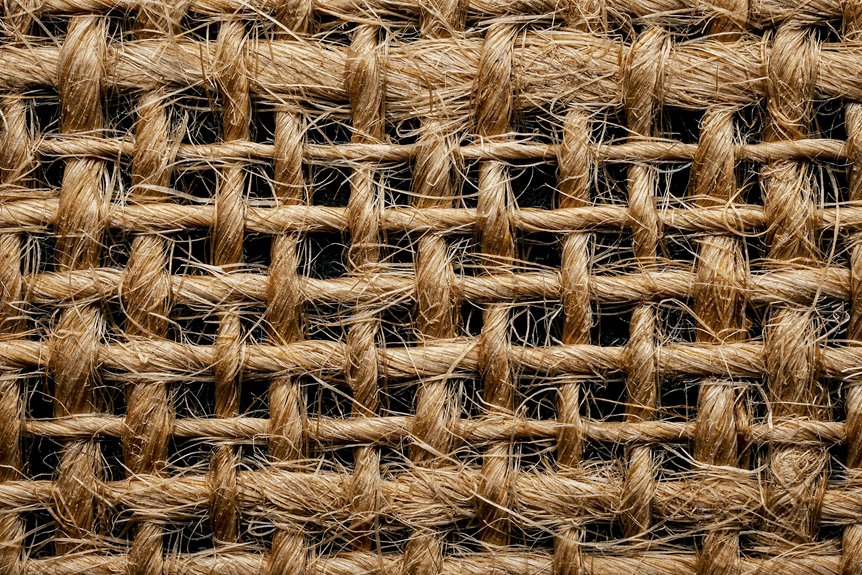
You’ve probably seen jute hessian fabric around—it’s a durable, breathable cloth made from the natural fibers of jute plants, commonly grown in the Indian subcontinent. Its coarse texture and strength make it ideal for sacks, ropes, and decorative uses. It’s also eco-friendly, biodegradable, and supports sustainable farming. Whether for packaging, gardening, or rustic decor, it’s both practical and earth-conscious. Keep exploring, and you’ll find out exactly how it’s made and why it’s so valued worldwide.
Key Takeaways
- Jute Hessian fabric is a coarse, durable cloth made from natural jute fibers woven in a plain weave pattern.
- It originates from the Indian subcontinent and gained global use during British colonial trade for packaging and transportation.
- The production involves retting, stripping, spinning, and weaving jute fibers into a breathable, moisture-absorbent textile.
- Known for its biodegradability and eco-friendliness, jute Hessian supports sustainable farming and reduces environmental impact.
- Commonly used in agriculture, gardening, interior design, crafts, and event decoration for its rustic look and strength.
Origins and History of Jute Hessian Fabric
Although you mightn’t realize it, jute Hessian fabric has a rich history that dates back centuries. You’ll find that its origins trace back to the Indian subcontinent, where jute plants naturally thrived.
People there began weaving jute fibers into durable, coarse cloth for practical uses like sacks and ropes. As you explore its journey, you’ll see how Hessian fabric gained importance during the British colonial period, when it became a key material for packaging and trade.
You’ll appreciate how this fabric’s strength and breathability made it ideal for transporting goods globally. Understanding this history helps you appreciate not just the fabric’s utility but also the cultural and economic impact it’s had through time, shaping industries and livelihoods around the world.
The Production Process of Jute Hessian
Building on its rich history, the production process of jute Hessian fabric involves several carefully coordinated steps that transform raw jute fibers into the sturdy material you recognize.
First, the jute stalks undergo retting, where they’re soaked to loosen the fibers. Then, workers strip and wash the fibers to remove impurities.
Once dried, the fibers are spun into yarn using traditional or modern spinning machines. After spinning, you’ll see the yarn woven on looms in a plain weave pattern, creating the fabric’s characteristic coarse texture.
Finally, the fabric is washed and dried, sometimes treated to enhance durability. This process guarantees the jute Hessian fabric you handle is strong, breathable, and ready for various applications, from packaging to upholstery.
Unique Properties and Characteristics
When you feel jute Hessian fabric, you immediately notice its coarse texture and natural strength that set it apart from synthetic materials. This fabric is breathable and moisture-absorbent, making it ideal for environments where air circulation matters.
It’s biodegradable and eco-friendly, which means you’re choosing a sustainable option when you pick it. Despite its rough feel, jute Hessian is surprisingly flexible and durable, resisting wear and tear effectively. Its natural golden-brown color varies slightly, giving each piece a unique, earthy appearance.
Additionally, it has good insulation properties, helping regulate temperature to some extent. You’ll also find that it’s relatively lightweight, yet strong enough to hold shape under pressure, making it a reliable choice for many practical needs.
Common Uses and Applications
The unique qualities of jute Hessian fabric make it highly versatile across various fields. You’ll find it widely used in agriculture for packaging and storing produce like potatoes, coffee beans, and grains, thanks to its breathability and durability.
In interior design, Hessian adds a rustic charm as upholstery, curtains, or wall coverings. If you enjoy gardening, you can use it for plant protection or as a weed barrier.
Crafts and DIY projects also benefit from Hessian’s texture, whether for making bags, lampshades, or decorative items. Additionally, the fabric serves well in event decoration, giving a natural, earthy look.
Its combination of strength, breathability, and aesthetic appeal makes jute Hessian a practical choice for many everyday applications.
Environmental Benefits and Sustainability
Although you mightn’t always notice, choosing jute Hessian fabric can greatly reduce your environmental impact. Jute is a natural, biodegradable fiber that decomposes quickly, unlike synthetic fabrics that linger in landfills.
It requires minimal water and pesticides to grow, helping preserve ecosystems and reduce pollution. When you opt for jute Hessian, you support sustainable farming practices that promote soil health and conserve resources.
Plus, jute plants absorb large amounts of CO2, contributing to carbon sequestration. By using jute Hessian fabric, you’re not just picking a durable, versatile material—you’re actively supporting eco-friendly production and reducing your carbon footprint.
Your choices matter, and jute Hessian helps you make a positive difference for the planet’s future.
Frequently Asked Questions
How Should Jute Hessian Fabric Be Cleaned and Maintained?
You should gently shake or vacuum jute hessian fabric to remove dust. Avoid soaking it; instead, spot-clean with mild detergent and cold water. Let it air dry completely to maintain its texture and durability.
Can Jute Hessian Fabric Be Dyed or Printed on Easily?
You can dye and print on jute hessian fabric, but it soaks up colors unevenly due to its rough texture. You’ll want to use fabric-specific dyes and test small areas for best results before full projects.
Is Jute Hessian Fabric Hypoallergenic or Safe for Sensitive Skin?
You might find jute hessian fabric isn’t the best for sensitive skin since it can be coarse and irritating. It’s not hypoallergenic, so if you have allergies or sensitivities, you should handle it with care.
What Are the Cost Differences Between Jute Hessian and Other Fabrics?
You might think jute hessian is pricey, but it’s actually more affordable than many natural fabrics like cotton or linen. Its durability and eco-friendliness give you great value without breaking the bank.
How Does Jute Hessian Fabric Perform in Extreme Weather Conditions?
You’ll find jute hessian fabric handles moderate weather fine but struggles in extreme moisture or intense heat. It absorbs water easily, weakening fibers, so you shouldn’t rely on it for prolonged exposure to harsh conditions.