
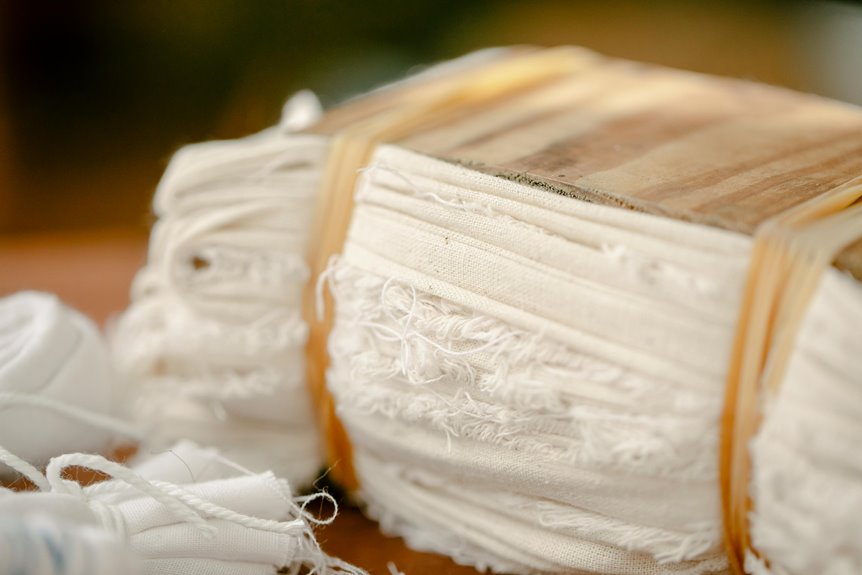
Duchess satin is made from a blend of silk and synthetic fibers like polyester, sometimes mixed with nylon or acetate for added durability and sheen. This fabric uses a tight satin weave where warp threads float over several weft threads, creating its signature heavy, smooth, and glossy surface that holds shape beautifully. Its composition balances luxury with strength, perfect for formalwear and bridal gowns. Keep exploring to understand its unique weave, care tips, and uses in fashion.
Key Takeaways
- Duchess satin is typically made from silk and polyester blends or pure polyester for strength and a luxurious finish.
- The fabric may include nylon or acetate fibers to enhance durability, texture, and luster.
- Its smooth, glossy surface is created using a tightly woven satin weave with floating warp yarns.
- This weave gives duchess satin a heavier weight and more structured feel compared to regular satin.
- The composition balances natural sheen from silk with wrinkle resistance and strength from synthetic fibers.
Definition and Characteristics of Duchess Satin
Duchess satin is a luxurious fabric known for its heavy weight and smooth, glossy surface. When you touch it, you’ll notice its substantial feel that sets it apart from lighter satins.
This fabric is tightly woven, giving it a dense, durable structure that holds shape beautifully, making it ideal for formalwear like wedding gowns and evening dresses.
Its sheen comes from the satin weave, where the threads are woven to maximize light reflection, creating that signature shine.
You’ll also appreciate its slight stiffness, which provides elegant draping without clinging to your body.
Duchess satin combines beauty and functionality, offering both a rich texture and a strong form, perfect when you want garments that look stunning and last a long time.
Historical Background of Duchess Satin
You’ll find that Duchess Satin has a rich history, starting from its origins and evolving through time.
It was first used in elegant garments and special occasions, highlighting its luxurious appeal.
Understanding its cultural significance helps you appreciate why it remains a favorite in fashion today.
Origins and Evolution
Although often associated with luxury and formal wear today, this fabric first gained popularity in the early 19th century as artisans sought a material that combined durability with a rich, lustrous finish. Duchess satin evolved from traditional satin weaving techniques, refined to create a heavier, stiffer fabric ideal for structured garments. You’ll notice its evolution reflects advances in weaving technology and changing fashion needs.
| Time Period | Key Development |
|---|---|
| Early 1800s | Emergence of heavier satin |
| Mid 19th Century | Refinement of weave for sheen |
| Early 20th Century | Introduction of synthetic blends |
| Present Day | Standard in bridal and couture |
This timeline shows how duchess satin adapted, maintaining elegance while meeting practical demands.
Early Uses and Applications
When designers needed a fabric that could hold shape while exuding luxury, they turned to satin with a heavier weave. Duchess satin emerged as a preferred choice, especially in the early 20th century, for creating structured garments that demanded both elegance and durability.
You’d often find it in bridal gowns, evening wear, and formal attire, where its smoothness and weight gave garments a regal silhouette. Tailors appreciated how it resisted wrinkling and maintained crisp lines, making it ideal for designs requiring volume without bulk.
Beyond fashion, duchess satin found its way into upscale upholstery and drapery, adding a touch of sophistication to interiors. Its early uses established it as a versatile fabric that combined beauty with practicality, setting the stage for its lasting appeal in luxury textiles.
Cultural Significance Over Time
As you explore the history of duchess satin, you’ll see how its cultural significance evolved alongside shifting fashion trends and social values.
Originally prized for its luxurious sheen and heavy drape, duchess satin became a symbol of elegance and status, often used in royal garments and high-society weddings.
Over time, you’ll notice how designers embraced it to convey sophistication and opulence.
In modern fashion, duchess satin still holds a prestigious place, especially in bridal wear and formal attire, representing timeless beauty and refinement.
Its association with celebration and ceremony has endured, making it more than just a fabric—it’s a cultural icon that reflects changing tastes while maintaining its classic appeal.
You’ll appreciate how duchess satin bridges tradition and contemporary style.
Primary Fibers Used in Duchess Satin
Since you want a fabric that combines luxury with durability, understanding the primary fibers used in Duchess satin is essential.
This fabric is typically crafted from a blend of silk and polyester or sometimes pure polyester. Silk offers a natural sheen and softness, giving Duchess satin its signature luxurious feel.
Polyester, on the other hand, adds strength and wrinkle resistance, making the fabric more practical for everyday wear and special occasions alike.
Some variations may also include nylon for enhanced durability and stretch.
When you choose Duchess satin, you’re selecting a fabric that balances elegance with resilience, thanks to its carefully chosen fibers.
Knowing these components helps you appreciate why Duchess satin stands out in formalwear and bridal gowns.
The Weaving Technique Behind Duchess Satin
Duchess satin owes its distinctive smoothness and sheen to a specific weaving technique that you should understand if you want to appreciate the fabric fully.
This technique is a variation of the satin weave, characterized by its tightly woven structure and a higher number of floating yarns on the surface. When you look closely, the warp threads float over several weft threads, creating that signature glossy face and a dull back.
This weaving method gives duchess satin a dense, luxurious feel and remarkable durability. Because of the tight weave, the fabric resists wrinkling and holds its shape well.
When you choose duchess satin, you’re selecting a fabric crafted through precision weaving that enhances both its elegance and strength, perfect for formalwear and structured garments.
Differences Between Duchess Satin and Other Satin Fabrics
Three key features set duchess satin apart from other satin fabrics: weight, texture, and durability.
When you pick up duchess satin, you’ll notice its heavier weight compared to regular satin, giving it a luxurious, substantial feel. Its texture is smoother and more structured, which helps garments hold their shape better, making it ideal for formal wear and bridal gowns.
Unlike lighter, more fluid satins, duchess satin resists wrinkles and creases, thanks to its dense weave. This enhanced durability means your pieces will last longer and maintain their elegance after multiple wears.
While other satins might feel slippery or delicate, duchess satin balances softness with strength, so when you choose it, you’re opting for both beauty and resilience in your fabric.
The Role of Silk in Duchess Satin Composition
Although many satin fabrics include silk, its presence in duchess satin plays an essential role in defining the fabric’s luxurious feel and appearance.
When you choose duchess satin with silk, you’re embracing a fabric that offers unmatched elegance and durability.
Silk contributes to:
- A smooth, glossy surface that catches light beautifully
- A natural strength that supports the fabric’s structured drape
- A breathable quality that feels comfortable against your skin
These qualities make duchess satin ideal for formal wear and bridal gowns, where both look and performance matter.
When silk is woven into duchess satin, it enhances the richness and depth of the finish, setting it apart from other satin types.
Synthetic Fibers in Modern Duchess Satin
You’ll find that modern Duchess satin often blends synthetic fibers like polyester and nylon to boost durability and create a smooth texture.
These materials help the fabric hold its shape and resist wrinkles, making your garment last longer.
However, it’s important to weigh these benefits against the environmental impact synthetic fibers can have.
Common Synthetic Materials
When choosing modern duchess satin, you’ll often encounter synthetic fibers like polyester, nylon, and acetate.
These materials are popular because they offer specific qualities that enhance the fabric’s overall appeal and usability.
- Polyester: Known for its affordability and resistance to wrinkles, polyester helps duchess satin maintain a smooth, polished look.
- Nylon: This fiber adds strength and flexibility, making the fabric less prone to tearing while keeping it lightweight.
- Acetate: Valued for its silky feel and lustrous finish, acetate contributes to the luxurious appearance typical of duchess satin.
Understanding these common synthetic fibers helps you select duchess satin that fits your needs, whether you prioritize cost, texture, or durability.
Durability and Texture Benefits
The synthetic fibers commonly found in duchess satin do more than just define its composition—they directly impact its durability and texture.
When you choose duchess satin with synthetic blends like polyester or nylon, you’re getting fabric that resists wrinkles, tears, and stretching better than pure natural fibers. This means your garment or decor piece holds its shape and smooth finish longer, even with regular wear or handling.
You’ll also notice that the fabric feels luxuriously smooth and has a subtle sheen that enhances its elegant appearance.
Thanks to these fibers, duchess satin offers a firm hand and a weighty drape that can elevate any design.
Environmental Impact Considerations
Although synthetic fibers enhance duchess satin’s durability and texture, they also raise important environmental concerns you should consider.
When you choose duchess satin made with synthetic blends, keep these factors in mind:
- Resource Consumption: Producing synthetic fibers relies heavily on non-renewable petroleum resources, increasing your environmental footprint.
- Microplastic Pollution: Washing synthetic fabrics releases microplastics into waterways, which harm marine life and ecosystems.
- Non-Biodegradability: Unlike natural fibers, synthetics can take decades to break down in landfills, contributing to long-term waste issues.
How the Fabric’s Weight Influences Its Use
Since duchess satin comes in various weights, understanding how each weight affects its use can help you choose the right fabric for your project.
Heavier weights offer structure and durability, making them ideal for formal gowns, bridal wear, and tailored garments that need to hold shape.
Heavier duchess satin adds structure and durability, perfect for gowns and tailored pieces that require shape retention.
Lighter weights, on the other hand, provide more fluidity and comfort, better suited for evening dresses or accessories that require gentle draping.
When you select a mid-weight duchess satin, it strikes a balance between stiffness and flexibility, perfect for pieces that need both form and movement.
By considering the fabric’s weight, you ascertain your final product not only looks elegant but also performs well for its intended purpose.
This knowledge helps you avoid issues like sagging or excessive stiffness.
The Surface Texture and Sheen of Duchess Satin
You’ll notice Duchess satin’s surface is incredibly smooth, giving it a luxurious feel.
Its high glossiness catches light beautifully, creating a radiant shine.
This reflective quality makes the fabric stand out in any setting.
Smoothness and Glossiness
The smoothness and glossiness of Duchess satin create its signature luxurious appeal. When you run your fingers across this fabric, you immediately notice its velvety surface and refined shine. This texture results from its dense weave and high-quality fibers, giving it a firm yet silky feel.
You’ll appreciate how:
- The fabric’s tight weave minimizes roughness, making it exceptionally smooth.
- Its glossy finish catches the eye without being overly shiny or flashy.
- The surface feels cool and polished, adding to its premium quality.
These qualities make Duchess satin a top choice for formal wear and elegant decor, offering both tactile pleasure and sophisticated style.
You’ll find it hard to resist its sumptuous touch and subtle glow.
Light Reflection Properties
Beyond its smoothness and subtle shine, Duchess satin plays with light in a way that enhances its elegance. You’ll notice how its surface reflects light softly, creating a gentle glow rather than a harsh glare. This effect comes from the tight weave and the high-quality fibers used, which give the fabric a luxurious, luminous finish. When you move, the fabric shifts light, adding depth and richness to your look.
| Feeling | Light Effect |
|---|---|
| Sophistication | Soft, radiant sheen |
| Grace | Smooth, gentle glow |
| Glamour | Subtle, reflective shimmer |
This interplay of light makes Duchess satin perfect for occasions where you want to captivate without overwhelming.
Common Uses of Duchess Satin in Fashion
Duchess satin shines in fashion for its luxurious feel and elegant appearance. When you choose this fabric, you elevate any garment with its smooth texture and subtle sheen.
Duchess satin enhances garments with its luxurious texture and refined, subtle sheen.
You’ll often see duchess satin used in:
- Bridal gowns and evening dresses, where its structure supports dramatic silhouettes.
- Formal wear like tuxedo lapels and cocktail dresses, adding sophistication.
- Accessories such as clutches and shoes, providing a polished finish.
Because of its weight and weave, duchess satin holds shape beautifully, making it ideal for designs that require form and finesse.
Whether you’re designing or selecting an outfit, this fabric brings a timeless, upscale touch to your wardrobe. Its versatility guarantees it works for both classic and contemporary styles, making it a staple in high-end fashion.
Care and Maintenance of Duchess Satin Garments
When you invest in garments made from duchess satin, caring for them properly helps maintain their luxurious look and feel.
Always check the care label before cleaning; most duchess satin pieces require dry cleaning to preserve their texture and sheen. Avoid machine washing or tumble drying, as these can damage the fabric’s smooth surface.
When storing, hang your duchess satin garments on padded hangers to prevent creases and fabric distortion. Keep them in breathable garment bags to protect from dust and moisture.
If you need to remove wrinkles, use a low-heat iron with a pressing cloth to avoid direct contact. Handle duchess satin gently, and with the right care, your garments will stay elegant and beautiful for years.
Frequently Asked Questions
Can Duchess Satin Be Dyed at Home Without Damaging the Fabric?
You can dye duchess satin at home, but you’ll need to use the right fabric dye and follow instructions carefully. Test a small area first to avoid damaging the fabric or altering its luxurious texture.
Is Duchess Satin Suitable for Upholstery or Home Decor?
You can use duchess satin for home decor, but it’s best for light upholstery or decorative accents. It’s luxurious yet delicate, so avoid heavy wear to keep it looking beautiful and prevent damage over time.
How Does Humidity Affect the Durability of Duchess Satin?
Humidity can feel like a sneaky villain, weakening duchess satin’s durability by encouraging moisture absorption and mildew. You’ll want to keep it dry and well-ventilated to prevent damage and maintain its luxurious sheen longer.
Are There Eco-Friendly Alternatives to Traditional Duchess Satin?
You can choose eco-friendly alternatives like organic silk duchess satin or recycled polyester satin. These options reduce environmental impact while maintaining that luxurious feel, so you don’t have to compromise on quality or sustainability.
Can Duchess Satin Be Safely Ironed With Steam?
You might think steam’s perfect for duchess satin, but you should avoid it to prevent damage. Instead, use a low-heat iron and a pressing cloth; this combo helps keep your fabric smooth and flawless safely.