
Chanderi fabric is made from a fine blend of silk and cotton, woven together to create its signature lightweight, sheer texture with a soft, breathable feel. You’ll find metallic zari threads—usually gold or silver—woven in to add a shimmering decorative touch. This combination gives Chanderi its elegant luster, durability, and comfort, perfect for warm climates and sophisticated styles. Keep exploring, and you’ll discover how traditional techniques and materials shape this timeless fabric.
Key Takeaways
- Chanderi fabric is primarily woven from a blend of silk and cotton yarns, combining strength with breathability.
- Silk threads provide a smooth texture and natural sheen that enhance the fabric’s elegance and durability.
- Cotton contributes softness, moisture absorption, and comfort, making the fabric lightweight and ideal for warm climates.
- Metallic zari threads, often gold or silver, are woven into the fabric to create intricate traditional motifs.
- The weaving process uses handloom techniques involving warp preparation, weft insertion, motif creation, and finishing for fine texture.
Origins of Chanderi Fabric
Although Chanderi fabric has gained widespread popularity today, its origins trace back several centuries to the town of Chanderi in Madhya Pradesh, India.
Chanderi fabric’s timeless charm originates centuries ago from the historic town of Chanderi, Madhya Pradesh.
You’ll find that this fabric’s heritage dates to the 13th century when skilled artisans began weaving lightweight, sheer textiles prized for their elegance and durability.
As you explore its history, you’ll see influences from various cultures, including Mughal and Afghan, which enriched the fabric’s intricate motifs and craftsmanship.
The town’s strategic location on ancient trade routes helped spread Chanderi’s fame, making it a sought-after textile across regions.
When you wear or admire Chanderi fabric, you’re connecting with a rich tradition that blends history, artistry, and cultural exchange, reflecting centuries of expert weaving passed down through generations.
Key Materials Used in Chanderi Weaving
The timeless appeal of Chanderi fabric comes not only from its rich history but also from the unique materials artisans choose to create it. When you explore Chanderi weaving, you’ll notice the careful selection of fibers that bring out its signature lightness and elegance.
Here are the key materials used:
- Cotton yarn – provides breathability and softness, making the fabric comfortable for everyday wear.
- Silk threads – add a subtle sheen and strength without overpowering the weave.
- Zari (metallic thread) – often gold or silver, used sparingly to highlight intricate patterns.
- Natural dyes – guarantee vibrant yet eco-friendly coloring that lasts longer.
These components work together, giving Chanderi its distinct texture and timeless charm you’ll appreciate.
Role of Silk in Chanderi Fabric
Silk plays an essential role in defining the elegance and durability of Chanderi fabric. When you touch Chanderi silk, you feel its smooth, lustrous texture that instantly elevates the fabric’s appeal.
The silk threads provide strength, making the fabric resilient yet lightweight. You’ll notice how silk’s natural sheen adds a subtle glow, enhancing the intricate patterns woven into the fabric. This shimmer is what sets Chanderi apart from other handwoven textiles.
Furthermore, silk’s breathability guarantees comfort, so you won’t feel weighed down or overheated wearing it. Its ability to hold dye well means vibrant colors last longer, maintaining the fabric’s rich appearance.
Incorporation of Cotton in the Weave
When you feel Chanderi fabric, you’ll notice how cotton threads contribute to its unique texture and comfort.
Cotton is skillfully woven with silk to create a balanced fabric that’s both breathable and sturdy. This blend guarantees the fabric feels light on your skin while maintaining durability.
Here’s why cotton matters in Chanderi weave:
Discover why cotton is essential in Chanderi weave for breathability, strength, and comfort.
- Enhances breathability, making it ideal for warm climates.
- Adds strength, preventing the fabric from tearing easily.
- Provides a soft, matte finish that complements the silk’s sheen.
- Absorbs moisture efficiently, keeping you comfortable throughout the day.
Use of Zari Threads and Decorative Elements
Beyond the blend of cotton and silk, Chanderi fabric stands out because of its intricate use of zari threads and decorative elements.
When you look closely, you’ll notice fine gold or silver zari woven into the fabric, adding a subtle shimmer that catches light beautifully. These zari threads aren’t just for show; they highlight motifs inspired by nature, like flowers and leaves, giving the fabric a rich, elegant appeal.
You’ll also find small decorative touches such as sequins and beads enhancing the overall design, making each piece unique. This delicate embellishment transforms Chanderi from simple cloth to a luxurious textile that’s perfect for festive wear and special occasions, reflecting a blend of tradition and artistry you can truly appreciate.
Traditional Weaving Techniques of Chanderi
Now, you’ll see how the handloom weaving process brings Chanderi fabric to life with its unique silk-cotton blends.
You’ll also explore the intricate motif embroidery methods that add signature charm and detail.
These traditional techniques define the fabric’s timeless appeal.
Handloom Weaving Process
Although the art of Chanderi fabric is centuries old, its handloom weaving process remains a vibrant tradition today.
When you explore this method, you’ll see how skilled artisans use simple tools to create intricate patterns.
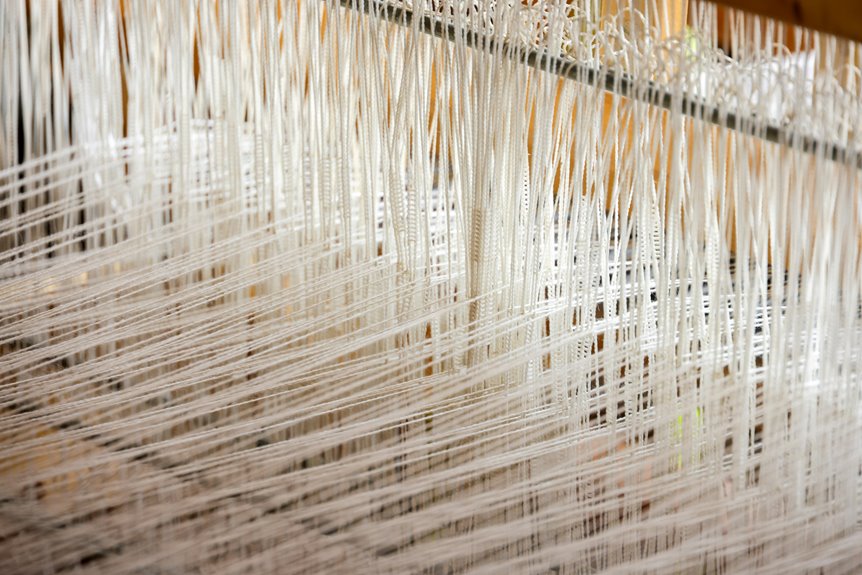
Here’s what you can expect in the handloom weaving process:
- Warp Preparation: You set up the vertical threads carefully, ensuring tension and alignment.
- Weft Insertion: You weave horizontal threads through the warp, building the fabric row by row.
- Motif Creation: You introduce traditional designs by manipulating threads, often by hand.
- Finishing: You inspect and refine the fabric for consistency and texture.
This hands-on approach keeps Chanderi fabric authentic, reflecting the weaver’s skill and cultural heritage in every thread.
Silk-Cotton Blend Techniques
The charm of Chanderi fabric lies in its delicate silk-cotton blend, which you’ll notice in the lightweight, sheer texture. When you explore traditional weaving, you’ll see artisans combine pure silk threads with fine cotton yarns on handlooms. This mix gives Chanderi its signature softness and durability. You’ll find the silk adds a subtle sheen, while the cotton guarantees breathability and comfort. The weaving technique requires skillful handling to maintain balance between the fibers.
| Technique | Description |
|---|---|
| Silk Warp Threads | Provide shine and strength to fabric |
| Cotton Weft Threads | Add softness and lightness |
| Balanced Weaving | Guarantees durability without losing drape |
This blend technique distinguishes Chanderi fabric’s unique appeal.
Motif Embroidery Methods
When you examine Chanderi fabric closely, you’ll notice its intricate motifs that come alive through skilled embroidery methods.
These traditional techniques give the fabric its unique charm and cultural significance. As you explore, keep these four key methods in mind:
- Zari Work – Metallic threads create shimmering floral and geometric patterns.
- Resham Embroidery – Silk threads add delicate, colorful details to motifs.
- Buti Design – Small, repetitive motifs woven or embroidered throughout the fabric.
- Gold and Silver Threading – Enhances motifs with a rich, regal finish.
Each method reflects artisans’ dedication and adds depth to Chanderi’s signature elegance.
When you wear or see Chanderi fabric, you’re witnessing centuries of craftsmanship woven into each motif.
Characteristics That Define Chanderi Fabric
If you’ve ever felt the delicate texture of Chanderi fabric, you’d know it stands out for its lightweight and sheer quality. This fabric combines silk, cotton, and sometimes zari, giving it a subtle sheen and a soft, breathable feel.
You’ll notice its fine weave, which creates a smooth surface that drapes beautifully. Chanderi’s hallmark is its translucent nature, making it perfect for airy, elegant garments.
The fabric also boasts durability despite its delicate appearance, thanks to the high-quality threads used. When you wear Chanderi, you experience a blend of tradition and comfort, enhanced by its natural fibers and handwoven artistry.
Its unique texture and luster define Chanderi, setting it apart from other fabrics.
Modern Variations and Blends in Chanderi Fabric
As fashion evolves, so does Chanderi fabric, embracing modern variations and innovative blends that cater to contemporary tastes.
Chanderi fabric evolves with fashion, blending tradition and innovation to suit contemporary styles.
You’ll find that traditional pure silk Chanderi now often mixes with other fibers to enhance durability and affordability without sacrificing elegance.
Here are some popular modern adaptations:
- Silk-Cotton Blends: Offer breathability and sheen, perfect for daily wear.
- Silk-Mulberry Silk Mixes: Add luster and strength for luxurious pieces.
- Synthetic Fiber Incorporation: Introduces wrinkle resistance and ease of maintenance.
- Handloom Variants with Metallic Threads: Combine tradition with sparkle, ideal for festive occasions.
Frequently Asked Questions
How Should Chanderi Fabric Be Cared for and Maintained?
Imagine you spill tea on your Chanderi saree; you should gently hand wash it with mild detergent and cold water. Always air dry in shade and avoid harsh scrubbing to keep the delicate weave intact and vibrant.
What Types of Garments Are Commonly Made From Chanderi Fabric?
You’ll often find Chanderi fabric used for sarees, kurtas, and dupattas because of its lightweight, sheer texture. Designers also craft elegant dresses and skirts with it, perfect for festive and formal occasions.
Is Chanderi Fabric Suitable for All Seasons?
You want comfort in summer and elegance in winter; Chanderi fabric offers both. Its lightweight, breathable weave keeps you cool, while its rich texture adds warmth, making it a versatile choice for all seasons.
How Long Does It Take to Weave a Piece of Chanderi Fabric?
It usually takes you around 10 to 15 days to weave a piece of Chanderi fabric by hand. The intricate patterns and fine weave demand patience and skill, making each piece truly special and unique.
Where Can Authentic Chanderi Fabric Be Purchased?
You can buy authentic Chanderi fabric directly from Chanderi town in India, trusted online stores, or specialty boutiques. Always check for genuine craftsmanship and certifications to guarantee you’re getting real, high-quality Chanderi fabric.