
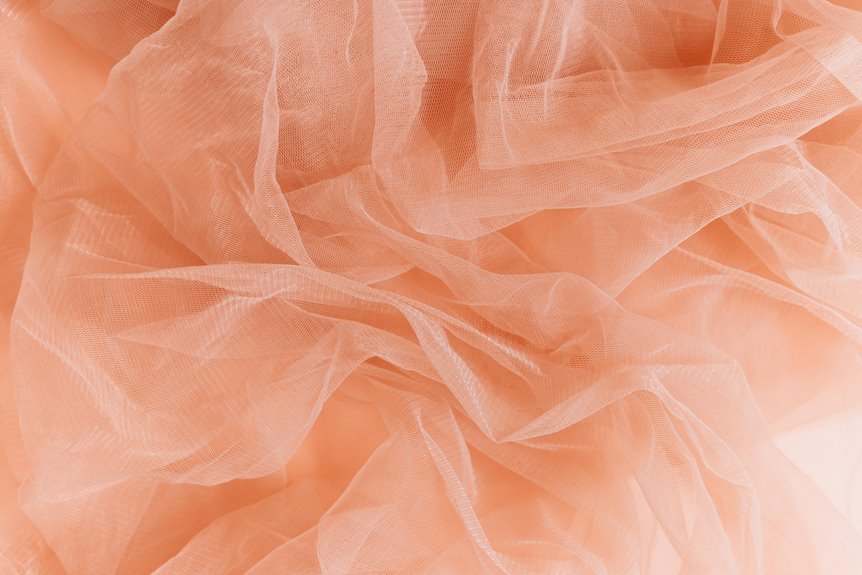
Bubble gauze has a soft, raised bubble texture that cushions and breathes, making it perfect for gentle, breathable wear. It’s thicker, less flexible, and offers moderate insulation, unlike crinkle gauze, which is thinner, highly flexible, and has a wrinkled, flat surface. Bubble gauze feels more structured, while crinkle gauze is lighter and airier. If you want to know how their breathability, uses, and care compare, you’re on the right track to uncovering more useful details.
Key Takeaways
- Bubble gauze has a textured surface with raised bubbles, creating gentle cushioning unlike the flat, wrinkled surface of crinkle gauze.
- Bubble gauze is thicker and less flexible, while crinkle gauze is thinner, more pliable, and lightweight.
- Bubble gauze offers enhanced breathability and moisture management with air pockets, drying faster than crinkle gauze.
- Bubble gauze provides moderate insulation and softness, ideal for warmth without bulk, whereas crinkle gauze offers lighter warmth.
- Bubble gauze is more delicate and prone to snagging, whereas crinkle gauze is generally more durable and resistant to wear.
Understanding the Basics of Bubble Gauze
Bubble gauze offers a unique texture that sets it apart from traditional dressings. When you handle it, you’ll notice its distinctive raised bubbles, which provide gentle cushioning and airflow. This texture helps reduce skin irritation and promotes faster healing.
Unlike flat gauze, bubble gauze’s three-dimensional structure prevents it from sticking to wounds, making removal less painful. You’ll find it lightweight yet durable, allowing for flexibility during movement.
It’s commonly used in wound care where breathability and cushioning are essential. By choosing bubble gauze, you’re opting for a dressing designed to protect sensitive skin while maintaining comfort.
Understanding these basics helps you appreciate why bubble gauze is favored in specific medical and caregiving situations.
Key Characteristics of Bubble Gauze Fabric
You’ll notice bubble gauze stands out because of its unique textured appearance and soft, airy feel.
It’s usually made from lightweight cotton or cotton blends that enhance breathability and comfort.
Understanding these key traits helps you appreciate why bubble gauze works so well in various fabrics and clothing.
Texture and Appearance
The unique texture of this fabric immediately catches your eye with its raised, airy pockets that create a soft, three-dimensional surface.
When you touch bubble gauze, you’ll notice a gentle puffiness that sets it apart from flat or tightly woven textiles. Its surface isn’t smooth but rather textured with evenly spaced bubbles formed by the fabric’s weave. This gives it a lightweight, almost cloud-like appearance that feels inviting against your skin.
Unlike crinkle gauze, which has intentional wrinkles and folds for a crumpled look, bubble gauze maintains a structured yet flexible form.
This distinct texture not only enhances its aesthetic appeal but also adds subtle depth, making your garments or home textiles stand out with a cozy, playful charm.
Material Composition
Softness and breathability define the fabric’s material composition, making it a favorite for delicate garments and baby items.
Bubble gauze typically blends cotton with a small percentage of synthetic fibers, like polyester, to enhance durability without sacrificing its gentle touch. You’ll find it lightweight, thanks to loosely woven yarns that create its signature bubble texture.
Unlike crinkle gauze, which often uses pure cotton or linen, bubble gauze’s fiber mix helps maintain its shape and resilience after washing. When you choose bubble gauze, you’re selecting a fabric designed to be both soft and sturdy, perfect for sensitive skin and everyday wear.
This blend guarantees it holds up well, resisting excessive stretching or shrinking while keeping that airy feel you appreciate.
Breathability and Comfort
Many appreciate bubble gauze for its exceptional breathability, which keeps you cool and comfortable throughout the day.
The fabric’s unique puckered texture creates tiny air pockets that allow better airflow, letting your skin breathe easily. This makes bubble gauze ideal for warm weather or layered clothing.
Unlike crinkle gauze, which can sometimes feel heavier or less airy, bubble gauze maintains a light, airy quality that reduces sweating and irritation.
When you wear bubble gauze, you’ll notice how soft it feels against your skin, enhancing comfort without sacrificing durability.
Its breathable nature also helps moisture evaporate quickly, preventing that sticky feeling you get with less breathable fabrics.
What Defines Crinkle Gauze Material
Crinkle gauze material offers a distinct texture that sets it apart from other fabrics. When you touch crinkle gauze, you’ll notice its intentionally wrinkled surface created through a special weaving and finishing process.
This fabric typically uses lightweight cotton or cotton blends, giving it softness and breathability. The crinkled effect isn’t just for looks; it helps the material resist wrinkles after washing, so you won’t need to iron it.
You’ll find crinkle gauze often used in clothing, bedding, and accessories where comfort and a relaxed appearance matter. Its unique structure also allows it to drape nicely, making it versatile for various designs.
Understanding these defining features helps you appreciate why crinkle gauze stands out in textiles.
Visual and Textural Differences Between Bubble and Crinkle Gauze
The visual and textural qualities of bubble gauze and crinkle gauze differ in distinct ways that you can easily notice. Bubble gauze features small, raised pockets that create a puffy, quilted effect, giving it a soft, cushioned feel. Crinkle gauze, on the other hand, has a wrinkled, textured surface that feels lighter and more airy due to its irregular pleats.
| Feature | Bubble Gauze | Crinkle Gauze |
|---|---|---|
| Appearance | Puffy bubbles | Wrinkled, crinkled surface |
| Texture | Soft, cushioned | Light, slightly rough |
| Thickness | Thicker due to raised bubbles | Thinner with textured pleats |
| Flexibility | Less flexible, more structured | Highly flexible and stretchy |
| Visual Depth | Three-dimensional effect | Flat with textured wrinkles |
You’ll find these differences clear when you touch or look at each fabric.
Common Uses for Bubble Gauze in Sewing and Crafting
If you appreciate the soft, cushioned texture of bubble gauze, you’ll find it suits a variety of sewing and crafting projects.
Its unique puffed surface adds both comfort and visual interest. Here are some common ways you can use bubble gauze:
- Baby blankets and swaddles – The gentle texture is perfect for delicate skin.
- Lightweight scarves and shawls – It offers warmth without bulk.
- Home décor accents – Think textured pillow covers or lightweight curtains.
- Clothing details – Use it for ruffles, sleeves, or overlays to add dimension.
Typical Applications of Crinkle Gauze
Wrinkled texture adds character and versatility to your sewing projects when you choose crinkle gauze. You’ll find it perfect for lightweight clothing like summer dresses, blouses, and scarves, where breathability and softness matter.
Crinkle gauze brings charming texture and softness, ideal for breathable summer dresses, blouses, and scarves.
Its natural crinkles mean you don’t need to iron, saving you time and effort. Crinkle gauze also works well for baby blankets and swaddles because it’s gentle on sensitive skin while providing warmth without bulk.
When crafting home décor, you can use it for curtains or decorative pillows to add subtle texture and a casual feel.
If you enjoy DIY projects, crinkle gauze is great for layering in mixed-media art or making reusable face masks that combine comfort with style.
How Bubble Gauze Performs in Different Weather Conditions
When you wear bubble gauze in humid climates, its breathability helps keep you cool and comfortable.
In colder weather, it provides decent insulation without feeling bulky.
Plus, it manages moisture well during rain, so you won’t feel weighed down or damp.
Breathability in Humid Climates
How does bubble gauze hold up in humid climates? You’ll find it performs quite well thanks to its unique texture. The tiny air pockets in bubble gauze enhance airflow, preventing moisture buildup on your skin.
Here’s why it’s a solid choice for humid weather:
- Improved Ventilation: The raised bubbles create space for air to circulate freely.
- Moisture Wicking: It efficiently draws sweat away, keeping you dry.
- Quick Drying: The fabric dries faster than flat weaves, reducing dampness.
- Reduced Stickiness: Less fabric clings to your skin, boosting comfort.
When you wear bubble gauze in humid conditions, you’ll notice it stays breathable and comfortable, helping you avoid that sticky, overheated feeling common with other fabrics.
Insulation During Cold Weather
Although bubble gauze excels in breathability, you might wonder how it holds up in colder weather. Its unique bubble texture traps tiny air pockets, providing moderate insulation without bulk. While it won’t replace heavy winter fabrics, bubble gauze keeps you cozy in mild cold by retaining warmth and allowing some airflow to prevent overheating. Compared to crinkle gauze, bubble gauze offers a softer, lighter warmth, making it ideal for layering.
| Weather Condition | Bubble Gauze Insulation | How You Feel |
|---|---|---|
| Mild Cold | Moderate | Comfortable warmth |
| Chilly Breeze | Good | Cozy, light layers |
| Freezing Temps | Limited | Needs extra layers |
| Indoor Heating | Perfect | Just right warmth |
| Outdoor Activity | Breathable warmth | Active, unrestricted |
Moisture Management in Rain
Since moisture can quickly undermine comfort, you’ll appreciate how bubble gauze manages damp conditions. Its unique texture traps air, creating a barrier that helps moisture evaporate faster, keeping you drier in the rain.
Here’s how it performs in wet weather:
- Quick Drying: The bubble structure promotes airflow, speeding up drying times.
- Water Resistance: While not waterproof, it repels light rain better than flat fabrics.
- Breathability: It allows sweat to escape, preventing clamminess under rain gear.
- Lightweight Comfort: Even when damp, it stays light, avoiding soggy heaviness.
In contrast, crinkle gauze tends to absorb more water, drying slower and feeling heavier.
Durability and Care Tips for Both Fabrics
When you choose between bubble gauze and crinkle gauze, understanding their durability and care requirements helps you keep them looking their best.
Bubble gauze, with its textured surface, tends to be more delicate and can snag if you’re not careful. Crinkle gauze is generally more robust and resists wear better over time.
To maintain both fabrics, wash them gently in cold water using a mild detergent. Avoid bleach, which can weaken fibers.
It’s best to air dry or tumble dry on low heat to preserve texture and prevent shrinkage. When ironing, use a low setting and press lightly, especially on bubble gauze, to avoid flattening its unique texture.
Following these tips guarantees your fabric stays vibrant and durable for longer.
Selecting the Right Fabric for Your Project Needs
Understanding how to care for bubble gauze and crinkle gauze helps you appreciate their unique qualities, which plays a big role in choosing the right fabric for your project.
When selecting between them, consider these factors:
- Texture Needs: Choose bubble gauze for a soft, puffy feel; crinkle gauze offers a more textured, wrinkled appearance.
- Project Purpose: Bubble gauze suits baby items and cozy apparel, while crinkle gauze works well for decorative scarves and lightweight garments.
- Durability Requirements: If your project demands frequent washing, bubble gauze’s resilience might be preferable.
- Aesthetic Preference: Your design vision will guide whether you want the subtle bubbles or the pronounced crinkles.
Where to Source Quality Bubble and Crinkle Gauze Fabrics
You’ll want to start by checking trusted fabric suppliers known for quality materials.
Online fabric marketplaces offer a wide range of bubble and crinkle gauze options you can browse from home.
Don’t forget to explore specialty textile shops where unique and high-grade fabrics often appear.
Trusted Fabric Suppliers
Finding reliable fabric suppliers is key to sourcing high-quality bubble and crinkle gauze fabrics that meet your project’s needs. When choosing trusted suppliers, consider those with a strong reputation for consistency and quality.
Look for vendors who specialize in natural fibers and offer detailed product information. Here are four tips to help you find the right suppliers:
- Check for certifications verifying fabric authenticity and safety.
- Read customer reviews and testimonials to gauge reliability.
- Request fabric samples before committing to large orders.
- Confirm suppliers have responsive customer service for smooth communication.
Online Fabric Marketplaces
Where can you turn to source high-quality bubble and crinkle gauze fabrics without leaving your home?
Online fabric marketplaces like Etsy, Fabric.com, and Spoonflower offer diverse selections from independent sellers and established brands.
These platforms let you compare textures, colors, and prices at your own pace. You can read reviews and ask sellers questions directly, ensuring you get exactly what you need.
Many marketplaces provide detailed photos and product descriptions, helping you distinguish between bubble and crinkle gauze. Plus, you’ll find options for various budgets and project types.
Just be sure to check shipping policies and return options before purchasing. Using online marketplaces saves time and expands your access to unique, quality gauze fabrics that mightn’t be available locally.
Specialty Textile Shops
Specialty textile shops offer a focused selection of bubble and crinkle gauze fabrics that cater to specific needs and tastes. When you visit these shops, you get access to high-quality materials and expert advice, ensuring your project turns out just right.
Here’s why specialty shops stand out:
- Curated collections featuring unique textures and patterns.
- Knowledgeable staff who understand fabric properties and uses.
- Opportunities to feel fabric quality firsthand before purchasing.
- Custom order options for exclusive or limited-run fabrics.
If you want premium bubble or crinkle gauze, specialty textile shops are your best bet. They provide tailored choices beyond the typical online marketplace, helping you find exactly what fits your creative vision.
Don’t hesitate to explore these shops for your next fabric hunt!
Frequently Asked Questions
Can Bubble Gauze Be Used for Medical Dressings?
You can use bubble gauze for medical dressings since it’s soft and breathable, but it’s less absorbent than traditional gauze. It’s great for gentle wounds, but always check if it suits your specific medical needs.
Is Crinkle Gauze Suitable for Making Reusable Face Masks?
Think of crinkle gauze as fabric with a textured heartbeat, perfect for reusable face masks. You’ll find it breathable, soft, and easy to wash, making it a practical choice that balances comfort and protection daily.
Are Bubble and Crinkle Gauze Fabrics Hypoallergenic?
You’ll find both bubble and crinkle gauze fabrics are generally hypoallergenic, making them great for sensitive skin. However, always check specific blends or treatments, as some may cause irritation depending on your allergies or fabric additives.
What Is the Environmental Impact of Producing Bubble Gauze?
Imagine a factory using organic cotton for bubble gauze; you’ll see lower water use and fewer chemicals. Producing bubble gauze can be eco-friendly if you choose sustainable materials and processes that reduce environmental impact.
Can Bubble Gauze Be Dyed at Home Without Special Equipment?
You can dye bubble gauze at home using fabric dyes and basic supplies like gloves and a container. Just remember to pre-wash it, follow the dye instructions, and air dry to get vibrant, lasting colors without special equipment.