
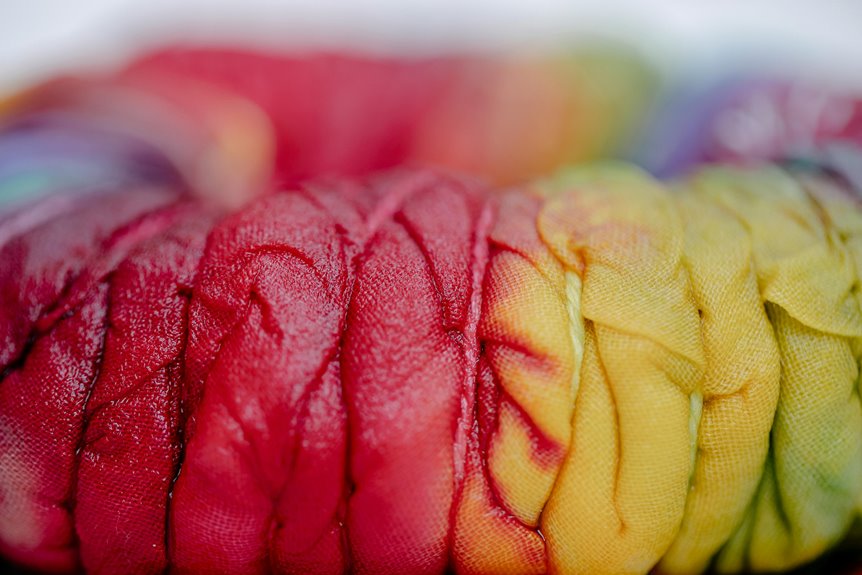
Bandhani is a vibrant Indian tie-dye tradition where you tie tiny knots on fabric before dyeing to create intricate patterns. Originating over 5,000 years ago, it’s most popular in Gujarat and Rajasthan, using fabrics like silk and cotton. Each color and pattern holds cultural meaning, from red symbolizing love to yellow bringing happiness. Today, artisans blend tradition with modern styles, keeping this ancient art alive. If you want to uncover the full story behind Bandhani, there’s plenty more to explore.
Key Takeaways
- Bandhani is a traditional Indian tie-dye technique involving tying knots on fabric before dyeing to create intricate patterns.
- Originating over 5,000 years ago, Bandhani holds deep cultural significance in Indian art and textiles.
- Gujarat and Rajasthan are prominent regions known for distinct Bandhani patterns and vibrant colors.
- Natural fabrics like cotton, silk, and chiffon are commonly used for their dye-absorption and texture qualities.
- Bandhani patterns symbolize cultural beliefs, often featured in weddings, festivals, and modern fashion adaptations.
Origins and Historical Background of Bandhani
Although Bandhani’s exact beginnings are hard to pinpoint, its roots trace back over 5,000 years in India. You’ll find evidence of this ancient tie-dye technique in early sculptures and paintings, showing how deeply it’s woven into Indian culture.
When you create Bandhani, you tie tiny knots on fabric before dyeing, producing intricate patterns that symbolize joy, prosperity, and spirituality. Traditionally, people used natural dyes made from plants, giving each piece a unique vibrancy.
As you explore Bandhani’s history, you’ll see it wasn’t just a craft but a cultural expression passed through generations. You’ll appreciate how this art form continues to connect the past with the present, keeping its rich heritage alive in every colorful design.
Traditional Regions Where Bandhani Thrives
You’ll find Bandhani’s vibrant roots deeply embedded in Gujarat, where artisans keep the tradition alive with intricate patterns.
Rajasthan also stands out as a key center, known for its bold colors and unique designs.
Exploring these regions shows you how Bandhani continues to thrive through local craftsmanship.
Gujarat’s Bandhani Heritage
When you explore Gujarat’s rich textile traditions, Bandhani immediately stands out as a vibrant symbol of the region’s cultural identity. This ancient tie-dye art thrives in specific areas where artisans skillfully create intricate patterns using tiny knots before dyeing.
Here, Bandhani isn’t just fabric; it’s a storytelling medium reflecting heritage and local customs.
You’ll find Gujarat’s Bandhani heritage deeply rooted in:
- Surat, known for its fine silk Bandhani sarees
- Bhuj, where traditional motifs blend with modern designs
- Jamnagar, famous for bold color combinations
- Ahmedabad, a hub for innovation in Bandhani techniques
- Kutch, where tribal influences shape distinctive patterns
Visiting these places, you’ll witness how Bandhani continues to flourish as a living tradition.
Rajasthan Tie-Dye Centers
While Rajasthan shares Bandhani’s deep cultural roots with Gujarat, its tie-dye centers bring unique styles and vibrant energy to the tradition.
When you explore places like Jodhpur, Jaipur, and Udaipur, you’ll notice distinct patterns and color palettes that set Rajasthan’s Bandhani apart. The artisans use bold reds, yellows, and blues, creating striking contrasts that reflect the desert landscape.
You’ll also see intricate motifs inspired by nature and royal heritage, crafted through meticulous tying and dyeing.
Visiting these regions, you’ll appreciate how Bandhani isn’t just fabric but a vibrant expression of Rajasthan’s identity. Each piece you encounter tells a story of skilled craftsmanship handed down through generations, keeping this centuries-old tradition alive and flourishing in modern times.
Materials and Fabrics Used in Bandhani
Several types of fabrics serve as the perfect canvas for Bandhani’s intricate patterns, with cotton, silk, and chiffon being the most popular choices.
You’ll find each fabric offers a unique texture and dye-absorption quality, impacting the final look. Cotton is breathable and durable, ideal for everyday wear. Silk lends a rich sheen, making Bandhani pieces feel luxurious. Chiffon’s lightweight nature creates a delicate, flowing effect.
Other fabrics also contribute to the art’s versatility:
- Georgette: soft with a slightly crinkled texture
- Crepe: offers a matte finish and good dye retention
- Muslin: lightweight and finely woven for subtle patterns
- Velvet: adds depth and richness to designs
- Synthetic blends: affordable options with varied textures
Choosing the right fabric is key to experiencing Bandhani’s vibrant beauty.
The Step-by-Step Process of Creating Bandhani Patterns
To create authentic Bandhani patterns, you start by selecting the right fabric and vibrant colors that will bring your design to life.
Then, you carefully tie and knot the fabric using traditional techniques to shape the intricate patterns.
Finally, you dye the cloth, allowing the tied areas to resist color and form the iconic Bandhani designs.
Selecting Fabric and Colors
Because the foundation of Bandhani lies in its fabric and colors, choosing them carefully is crucial to achieving the desired patterns and vibrancy.
You’ll want to start by selecting lightweight, natural fabrics like cotton, silk, or chiffon, which absorb dyes well and hold knots tightly.
Next, consider the color palette—bright, contrasting hues make the intricate designs pop.
Keep in mind the dye’s compatibility with your chosen fabric to guarantee lasting color.
Also, think about the cultural and regional significance of certain colors to enhance authenticity.
Finally, prepare your fabric properly by washing and drying it to remove any impurities that might affect dye absorption.
- Opt for breathable, natural fibers
- Choose bold, contrasting colors
- Match dye types to fabric
- Reflect traditional color symbolism
- Pre-wash fabric for best results
Tying and Knotting Techniques
Once you’ve selected and prepared your fabric and colors, the next step is mastering the tying and knotting techniques that bring Bandhani patterns to life.
You start by pinching small sections of the fabric between your fingers, then tightly tying them with thread or thin strips of fabric. Each knot acts as a resist point where the dye won’t penetrate, creating intricate dots and shapes.
Varying the size and placement of these knots allows you to design different motifs, from simple dots to complex floral or geometric patterns.
Precision and tension matter—too loose, and the design blurs; too tight, and the fabric can tear.
With practice, you’ll develop control over these ties, setting the stage for the vibrant Bandhani patterns that emerge after dyeing.
Dyeing and Pattern Formation
Immerse your tied fabric into the dye, watching as color seeps into every exposed area while the knotted sections resist it. This contrast creates the signature Bandhani patterns.
Once dyed, you carefully remove the knots to reveal crisp white dots against vibrant backgrounds. Each pattern forms through a precise sequence, combining multiple dye baths and re-tying to add layers of color and complexity.
To master Bandhani pattern formation:
- Use fine tying to produce small, uniform dots
- Control dye immersion time for color intensity
- Layer colors by sequential dyeing and re-tying
- Dry fabric thoroughly between dye baths
- Experiment with knot placement for unique designs
This step-by-step dyeing method transforms simple fabric into intricate artistry.
Symbolism Behind Bandhani Designs and Colors
Although Bandhani patterns captivate with their intricate beauty, they also carry deep symbolic meanings that reflect cultural beliefs and social status. When you wear Bandhani, you’re embracing colors and designs that signify more than just style.
Red often symbolizes fertility and love, making it popular for bridal wear. Yellow represents happiness and good fortune, while green is linked to prosperity and new beginnings. The patterns themselves can indicate marital status or community identity, helping you connect with your heritage.
Different Types of Bandhani Motifs and Patterns
When you explore Bandhani closely, you’ll notice a variety of motifs and patterns that each tell a unique story.
These designs range from simple dots to complex shapes, reflecting the artisan’s skill and creativity. You’ll find that each motif carries traditional significance and is created through meticulous tying and dyeing techniques.
Here are some popular Bandhani motifs and patterns you might come across:
- Chandrakala (moon-shaped): symbolizing beauty and serenity.
- Leheriya (wave-like lines): representing water and movement.
- Mothra (small dots clustered together): conveying fertility and prosperity.
- Kachchi (triangle-shaped patterns): linked to protection and strength.
- Gol (circular dots): often used for festive and celebratory designs.
Recognizing these patterns helps you appreciate the rich artistry behind Bandhani.
Bandhani in Indian Cultural and Religious Celebrations
Since Bandhani has deep roots in Indian tradition, you’ll often see it featured prominently during cultural and religious celebrations.
When attending weddings, festivals like Navratri, or temple ceremonies, you’ll notice people wearing vibrant Bandhani sarees and turbans that symbolize joy and auspiciousness.
Each color and pattern carries meaning—red for marriage, yellow for spring festivals, and white for purity during religious rituals.
Colors and patterns in Bandhani tell stories—red signifies marriage, yellow celebrates spring, white embodies purity.
Wearing Bandhani not only connects you to centuries-old heritage but also reflects regional identity, especially in states like Gujarat and Rajasthan.
As you participate, you’ll appreciate how this art form enhances the festive spirit and honors cultural values.
It’s more than fabric; it’s a living tradition woven into the very fabric of Indian celebrations.
Modern Adaptations and Contemporary Uses of Bandhani
While Bandhani remains a vibrant part of traditional celebrations, its appeal has expanded far beyond those occasions.
You’ll find Bandhani patterns embraced by modern designers, blending classic artistry with contemporary fashion. It’s no longer just sarees or dupattas; Bandhani’s versatility shines in everyday wear and home décor.
You can easily incorporate this timeless technique into your wardrobe or living space, making it feel fresh and relevant.
Here’s how Bandhani adapts today:
- Fusion wear combining Bandhani with Western styles
- Casual tops and dresses with Bandhani prints
- Accessories like bags and scarves featuring Bandhani designs
- Home textiles including cushion covers and curtains
- Eco-friendly fashion movements promoting handcrafted Bandhani
You’ll appreciate how this tradition continues to evolve while honoring its roots.
How Bandhani Differs From Other Tie-Dye Techniques
When you look closely at Bandhani, you’ll notice its distinctive knotting method sets it apart from other tie-dye techniques.
The patterns it creates are uniquely intricate and carry regional craftsmanship styles that you won’t find elsewhere.
Understanding these differences helps you appreciate the true artistry behind Bandhani.
Distinctive Knotting Method
Anyone who’s tried tie-dye might assume all methods rely on similar techniques, but Bandhani stands apart through its distinctive knotting process.
Instead of just folding or twisting fabric, you tie tiny sections with precise knots using threads, creating intricate resist points. This method demands incredible skill and patience since each knot controls the dye’s reach and final design.
Here’s what makes Bandhani’s knotting unique:
- Uses fine threads to tie minute fabric spots
- Each knot forms a tiny resist area for detailed patterns
- Requires manual dexterity and consistent tension
- Knots are tied before dyeing, then carefully removed post-dye
- Allows for multiple dyeing stages with successive knotting
This meticulous knotting sets Bandhani apart, giving you unparalleled control over the dye’s flow and the design’s intricacy.
Unique Pattern Characteristics
Because Bandhani’s pattern emerges from countless tiny knots, you get designs that are far more detailed and delicate than typical tie-dye. Unlike broad swirls or random splotches, Bandhani patterns showcase intricate dots, waves, and motifs that feel almost lace-like. You can spot symmetrical, repetitive designs that tell stories or symbolize cultural meanings. This precision sets Bandhani apart, making it a unique art form. Here’s how Bandhani’s patterns contrast with other tie-dye techniques:
| Feature | Bandhani |
|---|---|
| Pattern Detail | Tiny, intricate dots |
| Symmetry | Highly symmetrical |
| Color Gradations | Sharp, well-defined |
| Motifs | Traditional and symbolic |
| Technique | Knot-based precision tying |
You’ll notice Bandhani’s signature finesse in every piece you see.
Regional Craftsmanship Styles
Although Bandhani shares the basic tie-dye principle of resist-dyeing, its regional craftsmanship styles set it apart with distinct techniques and aesthetics.
When you explore Bandhani, you’ll notice how artisans in Gujarat, Rajasthan, and Punjab each bring unique touches that reflect their cultural heritage. These differences influence the motifs, colors, and tying methods used, making each piece a regional signature.
Unlike other tie-dye forms worldwide, Bandhani’s meticulous hand-tying creates intricate patterns that aren’t just random but deeply symbolic.
Here’s what makes Bandhani’s regional styles stand out:
- Gujarat’s vibrant color palette with tiny, precise dots
- Rajasthan’s bold, larger patterns and use of natural dyes
- Punjab’s fusion of floral and geometric designs
- The fine, detailed tying technique unique to each region
- Cultural stories woven into the patterns you’ll find nowhere else
The Role of Artisans and Craftsmanship in Bandhani
When you look closely at a Bandhani piece, you’ll see the incredible skill and patience artisans pour into every knot and dye. Each tiny tie requires precision, and the dyeing process demands a deep understanding of fabric behavior. You’ll appreciate how these craftsmen blend tradition with creativity, ensuring every pattern is unique. Their expertise transforms simple cloth into vibrant stories of culture and heritage.
| Aspect | Artisan’s Role |
|---|---|
| Knotting Technique | Creates intricate, uniform ties |
| Dye Application | Controls color depth and clarity |
| Pattern Design | Balances tradition with innovation |
You’ll realize that behind every Bandhani fabric lies countless hours of dedication and mastery that make it truly special.
Preserving Bandhani: Challenges and Initiatives
Despite its rich heritage, Bandhani faces significant challenges that threaten its survival in today’s fast-paced market. You might wonder how this traditional craft can keep up with modern demands and competition from machine-made textiles.
Preserving Bandhani takes conscious efforts from artisans, communities, and supporters like you to sustain its legacy.
Sustaining Bandhani’s legacy relies on the dedicated efforts of artisans, communities, and passionate supporters.
Here’s what’s impacting Bandhani preservation and the initiatives helping it thrive:
- Declining number of skilled artisans due to low income
- Competition from mass-produced fabrics reducing demand
- Environmental concerns over synthetic dyes
- Government and NGO programs promoting artisan training
- Increasing global interest encouraging ethical fashion choices
Frequently Asked Questions
How Do You Care for and Wash Bandhani Fabrics?
You should hand-wash bandhani fabrics gently in cold water using mild detergent. Avoid wringing or harsh scrubbing. Dry them in shade to preserve colors. Iron on low heat, and store in a cool, dry place.
Can Bandhani Be Made With Synthetic Dyes?
Wondering if synthetic dyes work for Bandhani? Yes, they can be used, but you’ll want to choose high-quality ones to maintain vibrancy and avoid fading. Natural dyes are traditional, yet synthetics offer more color options and durability.
What Is the Average Time to Complete a Bandhani Piece?
You’ll spend anywhere from a few hours to several days completing a Bandhani piece, depending on its size and intricacy. The detailed tying and dyeing process demands patience and precision to create beautiful patterns.
Are There Any Famous Designers Specializing in Bandhani?
You’ll find famous designers like Anita Dongre and Ritu Kumar specializing in Bandhani. They creatively blend traditional tie-dye techniques with modern styles, making Bandhani pieces trendy and timeless for you to enjoy and wear proudly.
How Much Does a Typical Bandhani Garment Cost?
You’ll find typical Bandhani garments range from $30 to $200, depending on fabric, intricacy, and craftsmanship. Designer pieces can cost more. Always check quality and authenticity before buying to guarantee you get good value.