
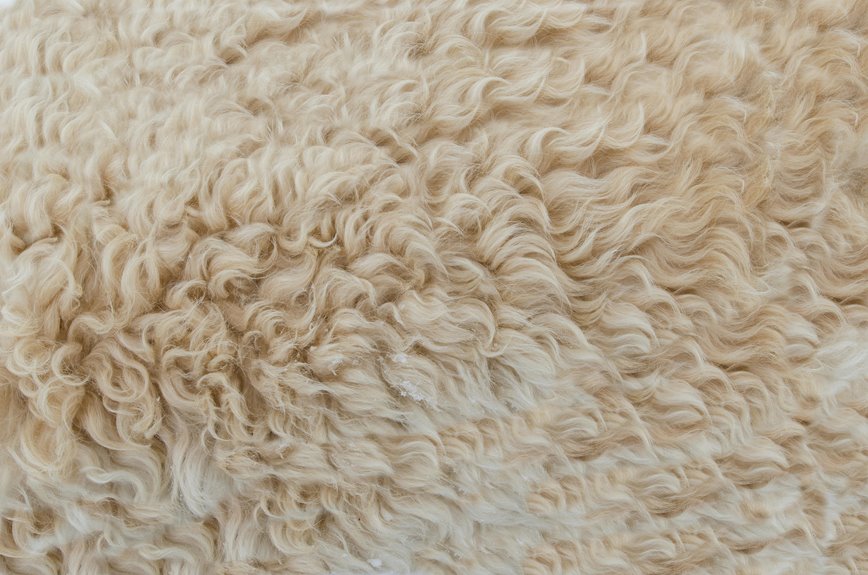
Angora fabric comes from the soft, silky wool of Angora rabbits, known for its incredible warmth and cloud-like feel. You’ll find it lightweight yet highly insulating, thanks to its hollow fibers that trap heat and regulate moisture. Harvested gently every few months to guarantee animal welfare, this luxurious fabric has been prized since Ottoman times. It’s perfect for cozy sweaters, scarves, and home textiles. Keep exploring to uncover how it’s made, cared for, and ethically sourced.
Key Takeaways
- Angora fabric is made from the soft, fine wool of the Angora rabbit, known for its luxurious texture and warmth.
- It features hollow fibers that create air pockets, providing exceptional insulation while remaining lightweight and breathable.
- Harvesting is done every 3-4 months via gentle combing or shearing to ensure ethical treatment and high-quality fiber.
- Angora is commonly used in luxury clothing and home textiles, including sweaters, scarves, gloves, and plush throws.
- Proper care involves hand washing in cold water, drying flat, and storing in breathable bags to maintain softness and durability.
The History and Origins of Angora Fabric
Although you might associate angora fabric with luxury and softness today, its origins date back centuries to the region now known as Turkey. You’ll find that angora wool originally came from the Angora rabbit, native to this area.
The fabric’s unique softness and warmth quickly made it prized among Ottoman nobility. As trade routes expanded, angora reached Europe during the 18th century, where it gained popularity for its exceptional texture and lightweight warmth.
When you wear angora, you’re connecting with this rich history of craftsmanship and cultural exchange. Over time, the fabric’s reputation grew, influencing fashion trends worldwide.
Understanding angora’s roots gives you a deeper appreciation for why it remains a sought-after material in luxury textiles today.
How Angora Wool Is Harvested and Processed
Angora’s rich history is matched by the care involved in turning its wool into fabric.
When you harvest Angora wool, you gently comb or shear the Angora rabbits every three to four months to collect their fine, silky fibers. Combing is preferred because it removes only the loose, soft undercoat without harming the rabbit, ensuring ethical treatment.
After harvesting, you clean the fibers to remove dirt and grease, then carefully card them to align the strands. This preparation readies the wool for spinning into yarn.
Cleaning and carding align fibers perfectly, preparing them for spinning into soft, luxurious Angora yarn.
You’ll find that this meticulous process preserves the fiber’s delicate structure, which is essential for producing high-quality Angora fabric. Understanding these steps helps you appreciate the craftsmanship behind each piece of Angora fabric you encounter.
Unique Characteristics of Angora Fabric
You’ll notice Angora fabric feels incredibly soft and smooth against your skin, making it a luxurious choice for clothing.
Its unique texture comes from the fine fibers, which also trap heat efficiently. This means you stay warm without heavy layers, thanks to Angora’s excellent thermal insulation.
Softness and Texture
When you touch Angora fabric, you’ll immediately notice its extraordinary softness that sets it apart from other materials. This softness comes from the fine, silky fibers of the Angora rabbit, which are smoother and lighter than traditional wool.
You’ll feel a gentle, almost cloud-like texture against your skin, making it ideal for garments worn close to your body. Unlike coarser fabrics, Angora offers a delicate touch without sacrificing durability.
Its lightweight nature also adds to the luxurious feel, giving you comfort without bulk. As you run your fingers over the fabric, you’ll appreciate how the fibers create a subtle sheen, enhancing its elegant appearance.
This unique combination of softness and texture makes Angora fabric truly special and highly sought after.
Thermal Insulation Properties
Because it traps heat so effectively, Angora fabric keeps you warm even in the coldest conditions. When you wear Angora, you benefit from its fine, hollow fibers that provide excellent thermal insulation.
These fibers create tiny air pockets that trap your body heat, preventing it from escaping. Here are three reasons why Angora’s thermal insulation stands out:
- Lightweight Warmth – It offers superior warmth without the bulk, letting you move freely.
- Moisture Regulation – Angora wicks moisture away, keeping you dry and comfortable.
- Breathability – Its breathable nature prevents overheating while maintaining warmth.
This combination means Angora fabric is perfect for chilly days when you want to stay cozy without feeling weighed down.
Common Uses and Applications of Angora Wool
Although angora wool is prized for its softness and warmth, its uses extend far beyond basic clothing. You’ll find angora in luxury sweaters, scarves, and gloves, offering unmatched comfort during cold months.
Designers also incorporate it into delicate blends for hats and socks, giving you extra coziness without bulk. Beyond apparel, angora wool enhances home textiles like plush throws and cushion covers, adding a touch of elegance and warmth to your living space.
It’s even used in specialty yarns for knitting and crocheting, letting you create soft, high-end garments or accessories. When you choose angora, you’re opting for versatility that combines style with function, whether you’re dressing up or cozying down at home.
Caring for Angora Fabric to Maintain Its Softness
Using angora fabric in your wardrobe or home means giving special attention to how you care for it to keep its signature softness intact. This delicate fiber requires gentle handling to preserve its luxuriously soft texture.
- Hand wash with cold water and mild detergent: Avoid hot water and harsh chemicals that can damage the fibers.
- Dry flat away from direct sunlight: Hanging or exposing angora to heat can cause stretching and fading.
- Store properly: Keep your angora items folded in a breathable bag, away from moths and moisture to prevent damage.
Ethical Considerations and Sustainability in Angora Production
When you choose angora fabric, it’s important to contemplate how the fibers are sourced and the impact on animal welfare.
Angora rabbits require gentle care during fiber collection, which involves either shearing or combing. Unfortunately, some producers use harsh methods, causing stress or injury to the animals.
To guarantee ethical choices, look for certifications or brands committed to cruelty-free practices.
Sustainability also matters since angora production can strain resources if done irresponsibly.
Opting for suppliers who prioritize animal health, environmental stewardship, and transparent supply chains helps support more sustainable angora.
Frequently Asked Questions
Can Angora Fabric Cause Allergies in Sensitive Individuals?
Yes, you might experience allergies with angora fabric if you have sensitive skin. The fine fibers can cause itching or irritation, so it’s best you test a small patch before wearing it extensively.
How Does Angora Fabric Compare to Cashmere in Warmth?
When it comes to warmth, Angora and cashmere each bring their A-game. You’ll find Angora is lighter but incredibly warm, while cashmere offers a softer, more breathable feel—perfect if you want to layer without overheating.
Is Angora Fabric Suitable for Summer Clothing?
You won’t find angora ideal for summer since it’s warm and insulating. It traps heat, making it uncomfortable in hot weather. Instead, opt for lighter, breathable fabrics to stay cool and comfy during summer months.
What Are the Price Ranges for Angora Wool Products?
You won’t find Angora wool products on sale at bargain bins—they typically range from $50 for small accessories to several hundred dollars for garments. So, if you’re ready to splurge, Angora’s luxury will definitely show.
Can Angora Fabric Be Blended With Synthetic Fibers?
Yes, you can blend angora fabric with synthetic fibers like nylon or polyester. This mix boosts durability, reduces cost, and helps maintain softness, making your garments more practical and long-lasting without sacrificing that luxurious feel.