
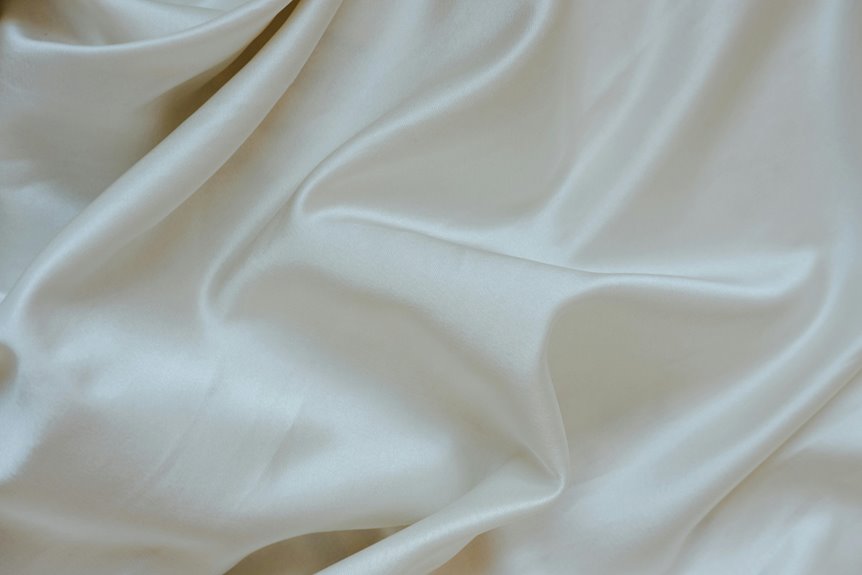
A percale weave is a simple, tight one-over, one-under pattern that gives your sheets a crisp, cool feel you’ll love. Made from long-staple cotton with a thread count around 200 to 400, it guarantees breathability and durability, perfect for staying comfortable through warm nights. Unlike silky sateen, percale offers a matte finish and fresh texture. If you want to know why percale’s so prized and how to pick the best sheets, keep exploring its benefits and care tips.
Key Takeaways
- Percale weave is a tight, one-over-one-under pattern creating a balanced, matte fabric with a crisp texture ideal for sheets.
- It uses long-staple cotton fibers for softness, durability, and a smooth, breathable fabric that stays cool during sleep.
- Percale sheets typically have a thread count between 200 and 400, balancing durability with airflow and breathability.
- The weave’s open structure allows air circulation, making percale sheets cool and refreshing, perfect for warm sleepers or humid climates.
- Percale’s matte finish contrasts with sateen’s sheen, offering a lightweight, crisp feel that resists pilling and withstands frequent washing.
Understanding the Basics of Percale Weave
Percale weave is a simple, tightly woven fabric structure that you’ll find in many high-quality bed sheets. It uses a one-over, one-under weaving pattern, which creates a balanced, matte finish with a smooth feel.
You’ll notice that percale sheets have a crisp texture, making them ideal if you prefer fresh, breathable bedding. This weave typically involves long-staple cotton fibers, enhancing durability and softness over time.
Because the threads are packed closely together, you get a lightweight fabric that also promotes airflow, helping you stay cool through the night.
When you pick percale sheets, you’re choosing a combination of strength and comfort, perfect for those who want a clean, invigorating sleep experience.
How Percale Weave Differs From Other Weaves
You’ll notice percale and sateen differ mainly in their weave patterns, which affects texture and breathability.
Percale uses a simple one-over, one-under pattern, making it crisp and cool.
In contrast, sateen’s weave creates a smoother, silkier feel but traps more heat.
Percale vs. Sateen
When choosing cool sheets, understanding the differences between percale and sateen weaves can help you pick the best option for your sleep preferences.
Percale offers a crisp, matte finish with a lightweight feel, thanks to its simple one-over, one-under weave. It’s breathable and perfect if you tend to sleep hot or prefer a cooler touch against your skin.
On the other hand, sateen has a silkier, smoother texture with a subtle sheen, created by weaving more threads over the surface. While sateen feels luxurious and soft, it’s less breathable than percale and can trap more heat.
Weave Patterns Compared
The way threads interlace in a fabric greatly affects its feel and performance. Percale weave uses a simple one-over, one-under pattern, creating a tight, matte, and breathable fabric.
This differs from satin weave, which floats threads over multiple yarns, giving you a smoother, shinier surface but less breathability.
Twill weave, another common pattern, forms diagonal lines, adding durability and a slightly heavier feel compared to percale.
When you choose percale, you get crisp, cool sheets that stay fresh longer, perfect if you tend to sleep warm.
Other weaves might feel silkier or thicker, but they often trap more heat.
Understanding these patterns helps you pick sheets that match your comfort needs and sleeping style precisely.
The History and Origins of Percale Fabric
You might be surprised to learn that percale fabric has roots dating back centuries, shaped by various cultures along the way.
As you explore its early uses, you’ll see how the weave evolved to meet changing needs.
Understanding this history helps you appreciate why percale remains popular for cool, crisp sheets today.
Early Percale Weave
Percale fabric traces its roots back several centuries, originating from regions known for skilled textile craftsmanship.
When you explore early percale weave, you’ll find it was prized for its tight, one-over-one-under pattern that created a smooth, durable surface. Artisans carefully balanced thread count and quality to achieve a fabric that felt crisp yet breathable.
You’ll notice that this weave technique allowed for excellent airflow, making it ideal for warm climates. Early percale was often made from long-staple cotton, which added to its strength and softness.
As you use percale sheets today, you benefit from these time-tested weaving methods that prioritize longevity and comfort. Understanding this early weave helps you appreciate why percale remains a favorite for crisp, cool bedding.
Cultural Influences
Understanding the early weave techniques gives you insight into how cultural influences shaped percale fabric’s development.
Percale didn’t emerge in isolation; it evolved through interactions across regions and traditions.
Here’s how culture played a role:
- Indian textiles introduced fine cotton weaving, inspiring percale’s smooth texture.
- French weavers in the 18th century adopted and refined these techniques, naming the fabric “percale.”
- Trade routes spread percale across Europe, blending styles and improving quality.
- Colonial demand for breathable, durable fabrics increased percale’s popularity globally.
Evolution Over Time
Although its roots trace back centuries, the fabric you know as percale has continually evolved through innovations in weaving techniques and material quality.
Originally, percale referred to tightly woven cotton textiles crafted in regions like India and France. As you explore its history, you’ll find that early artisans perfected the plain weave to create a smooth, durable fabric.
Over time, advances in cotton cultivation and spinning improved thread quality, enhancing percale’s crisp feel.
Today, manufacturers blend traditional weaving with modern technology to maintain its signature coolness and strength.
When you choose percale sheets, you’re experiencing a fabric shaped by centuries of refinement, balancing heritage and innovation to deliver comfort that stands the test of time.
Key Characteristics of Percale Sheets
You’ll notice that percale sheets stand out for their crisp, lightweight feel and tight weave. They’re woven using a simple one-over, one-under pattern, which gives them durability and a smooth texture.
When you choose percale, here are four key characteristics you’ll appreciate:
- Thread Count: Typically between 200 and 400, ensuring breathability without sacrificing strength.
- Cool Touch: The weave allows air to circulate, keeping you cool throughout the night.
- Matte Finish: Unlike sateen, percale has a subtle, matte appearance that feels fresh and clean.
- Durability: The tight weave resists pilling and lasts through frequent washing.
These traits make percale sheets a popular choice if you want bedding that’s crisp, breathable, and built to last.
Benefits of Sleeping on Percale Bedding
Choosing percale sheets means choosing more than just a fabric—you’re opting for bedding that actively enhances your sleep experience.
Percale’s crisp, breathable weave keeps you cool throughout the night, making it ideal if you tend to overheat while sleeping. You’ll appreciate the lightweight feel that doesn’t cling to your skin, promoting better airflow and comfort.
Percale bedding is also incredibly durable; it softens with each wash without losing its strength or smooth texture. This means your sheets will stay fresh and inviting longer than many other types.
Plus, the matte finish resists pilling and stays wrinkle-resistant, so your bed always looks effortlessly neat.
With percale, you get a clean, cool, and comfortable sleep environment every night.
Common Materials Used in Percale Fabrics
Percale fabrics commonly feature materials like cotton, polyester, and blends that balance comfort and durability.
When you choose percale sheets, knowing the material helps you pick the best fit for your needs.
Here are four common materials used in percale fabrics:
- 100% Cotton – Offers breathability and softness, perfect for hot sleepers.
- Cotton-Polyester Blends – Combines cotton’s comfort with polyester’s wrinkle resistance.
- Linen-Cotton Blends – Adds a textured feel and enhanced durability.
- Organic Cotton – Grown without chemicals, ideal for sensitive skin and eco-conscious buyers.
Each material affects how your sheets feel and perform, so consider your preferences when selecting percale bedding.
How to Identify High-Quality Percale Sheets
Quality is key when selecting percale sheets, and knowing what to look for can make all the difference in your sleep experience.
Start by checking the thread count; high-quality percale typically ranges between 200 and 400 threads, ensuring durability without sacrificing breathability.
Feel the fabric—good percale feels crisp and smooth, not rough or stiff.
Look for natural fibers like cotton or linen, as synthetic blends can reduce breathability.
Inspect the weave closely; it should be tight and consistent, with no gaps or irregularities.
Pay attention to the finishing details, such as reinforced seams and deep pockets, which indicate better craftsmanship.
Choosing sheets that meet these criteria will guarantee you enjoy the cool, crisp comfort percale is known for night after night.
Caring for Your Percale Bedding
While percale sheets are known for their durability and crisp feel, proper care will help maintain their texture and longevity.
You’ll want to treat your percale bedding with some simple steps to keep them fresh and comfy:
- Wash your sheets in cold or warm water to prevent shrinking and preserve the fabric’s crispness.
- Use a mild detergent and avoid bleach, which can weaken fibers over time.
- Tumble dry on low heat or line dry to prevent damage and maintain that cool, crisp feel.
- Iron your sheets on a medium setting if you prefer a smooth finish, but it’s optional since percale naturally softens with use.
Following these tips, you’ll enjoy your percale bedding for years without losing that signature cool, crisp texture.
Choosing the Right Percale Sheets for Your Bedroom
How do you pick the perfect percale sheets to match your bedroom’s style and needs? Start by considering thread count—aim for 200 to 400 for that crisp, breathable feel percale is known for.
Next, think about fabric quality; 100% long-staple cotton offers durability and softness.
Color and pattern matter too—choose shades that complement your existing décor or create a fresh look.
Don’t forget size and fit; make sure your sheets match your mattress dimensions, including depth.
Finally, consider your sleep habits and climate—percale’s cool, lightweight weave suits warm sleepers or humid environments.
Frequently Asked Questions
Can Percale Sheets Be Used for Outdoor Furniture?
In a world before smartphones, you’d love percale sheets for outdoor furniture—they’re breathable and crisp, but they might not handle weather well. You’ll want to protect them from rain and sun to keep that fresh feel.
Are Percale Sheets Hypoallergenic?
You’ll find percale sheets are often hypoallergenic because their tight weave resists dust mites and allergens. They’re great if you struggle with sensitivities, helping you sleep cleaner and more comfortably every night.
Do Percale Sheets Shrink After Washing?
You might notice slight shrinking after the first wash because percale sheets are made from natural fibers like cotton. To minimize this, wash them in cold water and avoid high heat drying, which can cause more shrinkage.
Can Percale Fabric Be Dyed Easily?
Dyeing percale fabric is a walk in the park because its tightly woven cotton fibers soak up colors evenly and vibrantly. You’ll find it takes dye easily, making your sheets bright and invigoratingly cool.
Are Percale Sheets Suitable for People With Sensitive Skin?
You’ll find percale sheets great if you have sensitive skin since they’re made from tightly woven cotton, which is breathable and gentle. They help reduce irritation and keep you cool throughout the night, ensuring comfort.