
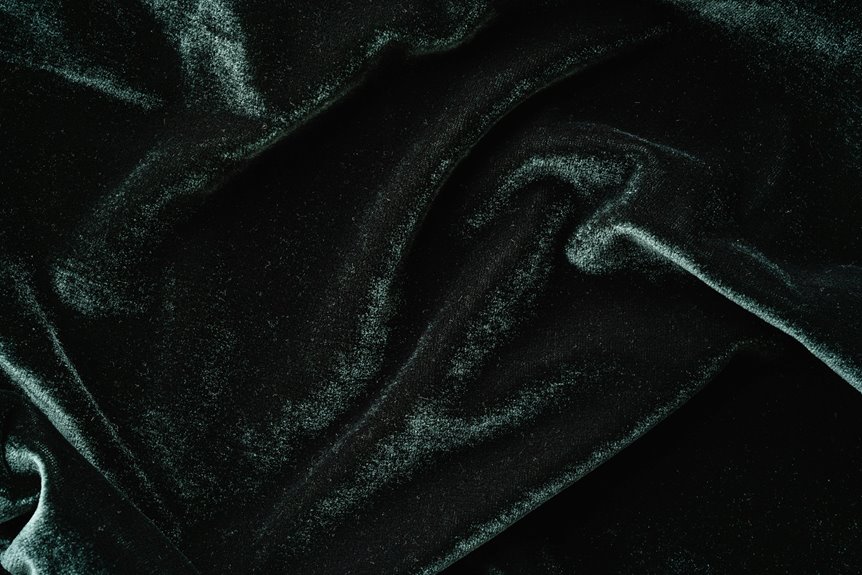
If you like velour’s soft, plush feel but want more shine, fabrics like satin and silk velvet are great picks. Satin offers a smooth texture with a glossy finish, while silk velvet combines that luxurious softness with a beautiful sheen. Taffeta and charmeuse also provide high sheen with elegant drape, perfect for formalwear. If you’re aiming to add stylish shimmer to your project, exploring these options will give you plenty of inspiration and help you find the perfect fabric.
Key Takeaways
- Velvet is similar to velour but has a higher iridescent shine and a dense, luminous pile.
- Satin offers a smooth texture with a lustrous finish, providing a higher sheen than velour.
- Silk velvet combines rich shine and soft texture, making it a luxurious high-sheen alternative.
- Taffeta has a crisp texture and reflective surface, ideal for structured garments with high sheen.
- Faux fur delivers a glossy, modern finish while maintaining a plush feel like velour.
Understanding Velour and Its Characteristics
Velour is a plush fabric known for its soft texture and rich appearance. When you touch velour, you’ll notice its smooth, velvety pile that feels luxurious against your skin.
It’s often made from cotton or synthetic fibers like polyester, which gives it flexibility and durability. You’ll find velour used in clothing such as tracksuits, dresses, and upholstery because it drapes well and offers comfort.
Unlike some fabrics, velour doesn’t have a high sheen; instead, it has a matte or slightly lustrous finish that adds depth without reflecting too much light.
If you’re looking for something cozy with a subtle glow, velour’s stretchy and breathable qualities make it a great choice for casual and elegant wear alike.
Velvet: The Classic High-Sheen Alternative
You’ll notice velvet offers a richer, more luxurious texture compared to velour.
Its unique pile reflects light beautifully, giving it that classic high sheen you might want.
Let’s compare how velvet and velour differ in feel and appearance.
Velvet’s Luxurious Texture
When you run your hand over velvet, you immediately notice its rich, plush texture that sets it apart from other fabrics.
Velvet’s dense pile creates a soft, tactile surface that feels luxurious against your skin. This fabric’s unique weave produces a depth you can both see and feel, making it ideal for garments and upholstery where comfort and elegance matter.
You’ll appreciate how velvet molds to your touch, adding a cozy warmth that velour, despite its similar look, can’t quite match. Its texture isn’t just about softness; it carries a subtle weight that gives your clothing or décor a sense of quality and durability.
Choosing velvet means embracing a fabric that combines opulence with inviting comfort in every thread.
Light Reflection Qualities
Although velour often mimics velvet’s appearance, velvet stands out with its distinctive light reflection qualities that give it a rich, high-sheen finish. When you run your hand over velvet, you’ll notice how its pile catches and reflects light unevenly, creating depth and shimmer that velour can’t quite match. This play of light results from velvet’s dense, cut-pile weave, enhancing its luminous effect.
| Fabric | Light Reflection | Sheen Intensity |
|---|---|---|
| Velvet | Iridescent shine | High |
| Velour | Soft glow | Medium |
| Satin | Smooth gloss | Very High |
Velvet’s light reflection gives your garments or décor an elegant, dynamic look, perfect if you want that classic high-sheen effect.
Velvet Versus Velour
Velvet’s unique light reflection qualities set it apart from velour, making it the go-to choice for those seeking a classic high-sheen fabric.
While both fabrics share a soft, plush texture, velvet’s shorter pile and tighter weave create a smoother surface that catches light more brilliantly.
If you want to decide between them, consider these points:
- Sheen and Appearance: Velvet offers a richer, more luminous shine compared to velour’s matte finish.
- Durability: Velour tends to be more durable and stretchier, making it ideal for casual wear.
- Use and Style: Velvet suits formal or luxurious settings; velour fits casual, comfortable garments.
Choosing velvet means embracing timeless elegance with that unmistakable gleam you won’t get from velour.
Satin: Smooth and Lustrous Fabric Choice
A satin fabric captivates with its smooth texture and lustrous finish, making it a popular choice for those seeking elegance and shine.
When you choose satin, you’re opting for a material that reflects light beautifully, creating a glossy surface that rivals velour’s soft sheen. Satin’s weave structure gives it that signature smoothness, which feels cool and silky against your skin.
It’s commonly used for eveningwear, linings, and decorative elements because it adds a sophisticated shimmer without overwhelming the design.
Unlike velour’s plush, textured pile, satin offers a sleek, flat surface that enhances its reflective quality.
If you want a fabric that combines a polished look with a fluid drape, satin is a smart, stylish option to contemplate.
Silk Velvet: Luxurious Shine and Softness
When you choose silk velvet, you embrace a fabric that combines rich shine with an irresistibly soft texture. This luxurious material reflects light beautifully, giving your garments or upholstery a sophisticated glow that’s hard to match.
Its smooth pile feels gentle against your skin, making it perfect for elegant clothing or plush home décor.
Here’s why silk velvet stands out:
- Natural Luster – The silk fibers create a distinct sheen that catches the eye without being overwhelming.
- Softness – Its dense pile offers a velvety touch that feels both indulgent and cozy.
- Durability – Despite its delicate appearance, silk velvet holds up well with proper care, maintaining its shine and texture over time.
Opting for silk velvet means choosing timeless elegance with tactile luxury.
Faux Fur With a Glossy Finish
While silk velvet offers a natural sheen and softness, faux fur with a glossy finish brings a different kind of shine and texture to your designs.
You’ll notice that this fabric catches light in a way that highlights its plush, dense pile, creating a sleek, almost wet-look gloss. Unlike matte faux furs, the glossy finish adds a modern twist, making it perfect for statement pieces or accent details.
This fabric’s light-catching gloss highlights its plush pile, adding a sleek, modern edge to any design.
When you choose faux fur with a glossy surface, you get the warmth and softness of traditional fur without sacrificing style.
It’s also more durable and easier to care for, so you can confidently use it in outerwear, accessories, or home decor items that demand both luxury and practical shine.
Chenille: Plush Texture With Subtle Gloss
Chenille offers a uniquely plush texture that gently catches the light, giving your pieces a subtle, inviting gloss.
When you choose chenille, you’re selecting a fabric that balances softness with a delicate sheen, making it perfect for cozy yet elegant home décor or apparel.
Here’s why chenille stands out:
- Softness: Its fuzzy yarns create a luxurious feel that’s warm and comforting to the touch.
- Light Reflection: The twisted fibers reflect light unevenly, creating a muted shine rather than a sharp gloss.
- Durability: Chenille’s construction resists wear, maintaining its plush look and gentle luster over time.
Taffeta: Crisp Fabric With a Reflective Surface
You’ll notice taffeta’s crisp texture and shiny surface make it a popular choice for formalwear like gowns and tuxedos.
When you wear it, the fabric reflects light beautifully, adding a touch of elegance.
Just remember to handle it gently and follow care tips to keep that reflective sheen intact.
Taffeta’s Shiny Texture
When you run your fingers over taffeta, you’ll notice its smooth, crisp feel combined with a distinctive shine that sets it apart. This fabric’s glossy surface comes from the tightly woven fine threads that reflect light beautifully.
You’ll find that the sheen isn’t just for show—it enhances the fabric’s luxurious appearance and texture. Here’s why taffeta’s shiny texture matters:
- Light Reflection: The surface bounces light, giving garments a vibrant, eye-catching glow.
- Texture Contrast: Its crispness paired with shine adds depth, making the fabric visually dynamic.
- Durability: The weave that creates the shine also strengthens the fabric, helping it hold shape and resist wrinkles.
Understanding these qualities helps you appreciate why taffeta stands out among high-sheen fabrics.
Uses in Formalwear
Taffeta’s crisp texture and reflective surface make it a popular choice for formalwear. When you wear a gown or suit made from taffeta, you’ll notice how the fabric catches light, giving you a polished, elegant look perfect for special occasions.
Designers often select taffeta for evening dresses, bridal gowns, and prom wear because it holds shape well, allowing for structured silhouettes and dramatic styles. You’ll also find taffeta in tuxedo linings and statement skirts, adding a subtle sheen that enhances the overall outfit without overwhelming it.
If you want a fabric that combines sophistication with a bit of shimmer, taffeta is a fantastic option to elevate your formal wardrobe effortlessly.
Care and Maintenance Tips
Although delicate, taffeta requires careful handling to maintain its crisp texture and reflective sheen.
If you want your taffeta garments to look their best, you’ll need to treat them gently. Here are three essential care tips:
- Dry Clean Only: Avoid machine washing; professional dry cleaning preserves the fabric’s finish without damage.
- Store Properly: Hang taffeta in a cool, dry place to prevent wrinkles and avoid crushing the fabric’s natural sheen.
- Handle with Care: When ironing, use a low heat setting and place a pressing cloth between the iron and fabric to prevent scorching or dulling the surface.
Charmeuse: Silky Fabric With a Reflective Sheen
If you want a fabric that combines softness with a lustrous glow, charmeuse is an excellent choice. This satin-weave fabric features a smooth, shiny front and a dull back, giving it that signature reflective sheen you’re after.
Unlike velour’s plush texture, charmeuse feels silky and delicate against your skin, making it perfect for elegant garments like evening gowns and lingerie. It drapes beautifully, enhancing your design’s fluidity and sophistication.
You’ll find charmeuse made from silk or synthetic fibers, each offering a slightly different shine and durability. When handling charmeuse, be gentle—it wrinkles easily and can snag if you’re not careful.
Choosing the Right High-Sheen Fabric for Your Project
How do you decide which high-sheen fabric best suits your project? It boils down to understanding your needs and fabric properties.
First, consider the fabric’s texture and drape—does it need to flow smoothly or hold structure?
Second, think about the sheen level; some fabrics like charmeuse offer a mirror-like shine, while velour provides a softer glow.
Third, assess durability and care requirements to guarantee the fabric matches your lifestyle or project demands.
- Project Purpose: Formal wear needs a different sheen than upholstery.
- Fabric Behavior: Lightweight fabrics suit flowing designs; heavier ones add volume.
- Maintenance: Some high-sheen fabrics require delicate care, so factor in practicality.
Frequently Asked Questions
How Do You Care for High-Sheen Fabrics to Maintain Their Shine?
You should gently hand wash high-sheen fabrics in cold water with mild detergent, avoid wringing, and air dry them flat. Iron on low heat inside out, and store away from direct sunlight to keep their shine intact.
Are High-Sheen Fabrics Suitable for Outdoor Use?
You might find high-sheen fabrics less outdoorsy, as they’re delicate and prone to fading or damage from sun and moisture. If you want them outside, keep them in sheltered spots and treat them gently to preserve their glow.
Can High-Sheen Fabrics Be Dyed at Home?
You can dye high-sheen fabrics at home, but you’ll need the right dye type and careful handling. Synthetic fibers often require special dyes, so test a small piece first to avoid uneven color or damage.
What Are the Environmental Impacts of Producing High-Sheen Fabrics?
Producing high-sheen fabrics often leaves a carbon footprint as big as a whale. You’ll face water pollution, chemical waste, and energy use, so choosing eco-friendly options or recycled materials can really help lighten your environmental impact.
How Do High-Sheen Fabrics Perform in Different Climate Conditions?
You’ll find high-sheen fabrics perform well in cooler climates, reflecting light and warmth. In hot, humid conditions, they might trap heat and moisture, making you feel uncomfortable unless the fabric is breathable or moisture-wicking.