
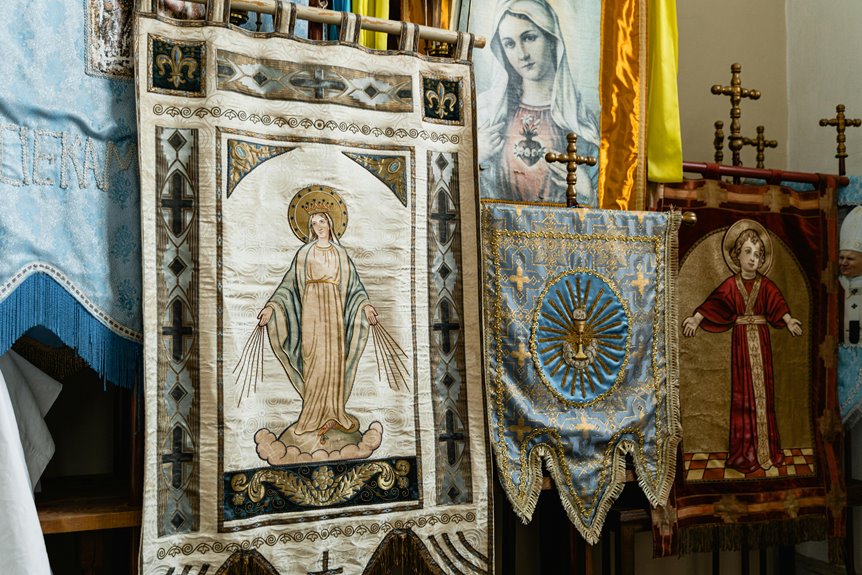
Tapestries are typically made from natural fibers like wool, cotton, silk, and linen, each offering unique qualities. Wool gives you durability and warmth, cotton brings strength and vibrant colors, silk adds luxury with its sheen, and linen provides a sturdy base. Modern tapestries also use synthetic fibers or blends for extra resilience and ease of care. Choosing the right fabric affects how long your tapestry will last and how it feels. You can explore how each fabric type shapes tapestry art.
Key Takeaways
- Tapestries are primarily made from natural fibers like wool, cotton, silk, and linen for durability and detailed designs.
- Wool is the classic tapestry fabric, valued for its warmth, resilience, and ability to retain shape over time.
- Cotton offers breathability, strong fiber support, and vibrant color absorption, making it suitable for intricate weaving.
- Silk provides a luxurious sheen and fine detail but is more delicate, often reserved for high-end or ceremonial tapestries.
- Synthetic fibers and blended fabrics combine natural softness with enhanced durability, colorfastness, and resistance to wear.
Understanding the Basics of Tapestry Fabric
Although tapestry fabric might seem complex at first, understanding its basics is straightforward once you know what to look for.
You’ll find tapestry fabric is a heavy, woven textile designed to display intricate patterns or scenes. Unlike printed fabrics, tapestries are created by interlacing warp and weft threads, making the design an integral part of the fabric itself.
This weaving technique gives tapestries durability and texture, allowing them to serve both decorative and functional purposes. You’ll notice the fabric often has a slightly rough surface with visible thread variations, which add to its charm.
When choosing tapestry fabric, focus on the weave tightness and thread quality, as these influence the final appearance and longevity of your tapestry piece.
Wool: The Classic Choice for Tapestries
You’ll appreciate wool’s durability when creating tapestries that last for generations.
Its natural texture and warmth add depth and comfort to your designs.
Plus, traditional weaving techniques bring out wool’s unique qualities in every piece you craft.
Wool’s Durability Benefits
When you choose wool for your tapestry, you’re opting for a material known for its exceptional durability.
Wool fibers naturally resist wear and tear, making your tapestry last longer even with frequent handling. It holds up well against stretching and sagging, so the design stays intact over time.
Wool also resists dirt and stains better than many other fabrics, which helps maintain the tapestry’s appearance without constant cleaning. Its resilience to crushing means you won’t see permanent wrinkles or flattened areas, preserving the tapestry’s vibrant look.
These durability benefits guarantee your wool tapestry remains a striking and reliable piece in your space for years to come, combining strength with the timeless appeal that only wool can offer.
Texture and Warmth Qualities
A tapestry made from wool offers a unique combination of texture and warmth that few other fabrics can match. When you run your fingers over a wool tapestry, you’ll notice its slightly coarse yet inviting surface, which adds depth and character to any space.
Wool naturally traps air within its fibers, providing excellent insulation that keeps you cozy and comfortable, especially in cooler environments. This warmth isn’t just physical; it also creates a sense of visual comfort, making wool tapestries perfect for adding a welcoming atmosphere to your home.
Plus, wool’s resilience helps maintain its texture over time, so your tapestry stays soft without becoming flat or worn out. Choosing wool means embracing both tactile richness and enduring warmth.
Traditional Weaving Techniques
Although many materials can be woven into tapestries, wool remains the classic choice thanks to its durability and versatility.
When you work with traditional weaving techniques, you’ll often use a loom to interlace wool threads tightly, creating intricate patterns and rich textures. The wool fibers naturally grip each other, helping your tapestry hold its shape over time.
You’ll find that techniques like plain weave, twill, and tapestry weave allow you to play with color and design, making your piece both functional and decorative.
By choosing wool, you benefit from its ability to absorb dyes well, giving your tapestry vibrant, lasting hues.
Cotton and Its Role in Tapestry Weaving
Cotton plays an essential role in tapestry weaving by providing a strong, flexible foundation that supports intricate designs.
When you work with cotton, you’ll notice its durability allows the tapestry to hold up over time without losing shape or detail. It’s also breathable, which helps maintain the artwork’s condition in varying climates.
Here’s why cotton is a popular choice in tapestry weaving:
- Strength and Flexibility: Supports complex patterns without tearing.
- Ease of Dyeing: Absorbs colors vibrantly, enhancing visual appeal.
- Affordability and Availability: Makes it accessible for both artisans and mass production.
Silk in Tapestry: Luxury and Lustrous Textures
When you choose silk for tapestry weaving, you’re bringing a touch of luxury and a shimmering texture that few other fibers can match.
Silk’s natural sheen enhances the tapestry’s colors, making images appear more vibrant and lifelike. Its smooth, fine threads allow for intricate detailing, so your designs can be exceptionally refined.
Silk’s sheen enriches colors and fine threads enable exquisite, detailed tapestry designs.
While silk is more delicate than cotton or wool, it adds an unmatched elegance and softness to the final piece. You’ll appreciate how silk reflects light, giving your tapestry a dynamic quality as it catches the eye from different angles.
Because of its luxurious feel and appearance, silk often features in high-end or ceremonial tapestries, elevating both the visual and tactile experience for anyone who admires your work.
Linen as a Durable Tapestry Base
You’ll appreciate linen’s remarkable strength and longevity when choosing a tapestry base.
Its unique texture and tight weave create a sturdy foundation that holds up over time.
Plus, linen has been a trusted material in tapestry-making for centuries, proving its lasting value.
Strength and Longevity
Although many materials can serve as a tapestry base, linen stands out for its exceptional strength and durability.
When you choose linen, you’re investing in a fabric that can withstand the test of time, resisting wear and tear better than many alternatives. Its natural fibers offer resilience that keeps your tapestry intact even after years of display or handling.
Here’s why linen is a smart choice for longevity:
- High tensile strength prevents frequent tearing or damage
- Resistance to environmental factors like humidity and sunlight
- Maintains structural integrity without stretching or sagging
Texture and Weave
Linen’s strength goes hand in hand with its distinctive texture and weave, which play a key role in its durability as a tapestry base. When you look closely, you’ll notice linen’s natural fibers create a slightly uneven, yet firm surface, allowing tapestries to hold intricate designs without sagging.
Its plain weave structure—interlacing warp and weft threads tightly—provides a stable foundation that resists wear and tension over time. This texture not only supports detailed embroidery but also enhances the visual depth of the artwork.
Historical Usage Patterns
Since ancient times, artisans have relied on linen as a durable base for tapestries that stand the test of time.
You’ll find that linen’s strength and smooth surface made it an ideal foundation for detailed weaving. Historically, linen’s natural fibers resisted wear, preserving intricate designs through centuries.
When you explore tapestry history, you’ll notice these key patterns:
- Linen was the preferred base fabric in medieval Europe, supporting elaborate scenes.
- Its durability allowed tapestries to be rolled and transported without damage.
- Linen’s breathability helped prevent mold and decay in varied climates.
Synthetic Fibers and Modern Tapestries
When you explore modern tapestries, you’ll notice synthetic fibers have transformed their creation and durability. Unlike traditional natural fibers, synthetics like polyester and nylon offer vibrant colors and resistance to fading. They also resist mold and mildew, making tapestries ideal for various environments. Plus, synthetic fibers allow for easier maintenance and longer lifespan, perfect if you want a tapestry that stays beautiful with less effort.
| Synthetic Fiber | Key Benefit |
|---|---|
| Polyester | Colorfastness |
| Nylon | Strength and resilience |
| Acrylic | Lightweight and soft |
With these fibers, you can enjoy tapestries that combine artistry with practicality, fitting modern lifestyles without sacrificing style.
Blended Fabrics: Combining Strength and Beauty
Although blending different fibers can be challenging, it lets you enjoy tapestries that balance durability and aesthetic appeal.
When you choose blended fabrics, you get the best of both worlds—natural fibers add softness and richness, while synthetic fibers boost strength and resilience. This combination creates tapestries that hold up well over time and look stunning in your space.
Here’s what makes blended fabrics stand out:
- Enhanced texture and color depth from natural fibers
- Increased resistance to wrinkles and fading thanks to synthetics
- Greater flexibility in design and weaving techniques
How Fabric Choice Affects Tapestry Longevity
Your choice of fabric plays an essential role in determining how long your tapestry will last. Natural fibers like wool and cotton offer durability but may be prone to fading or wear under harsh conditions. Synthetic fibers often resist moisture and UV damage, extending lifespan. Blended fabrics balance these traits, providing strength and aesthetic appeal.
| Fabric Type | Durability | Longevity Factors |
|---|---|---|
| Wool | High | Resistant to wear, but sensitive to moths |
| Cotton | Moderate | Breathable but can fade with sunlight |
| Synthetic | Very High | Resists moisture and UV, less prone to tearing |
Choosing the right fabric guarantees your tapestry maintains beauty and structure over time.
Caring for Different Tapestry Fabrics
Selecting the right fabric sets the stage for how you should care for your tapestry. Different materials demand specific attention to keep their colors vibrant and fibers intact.
For instance, cotton tapestries like gentle, cool water washes, while wool needs dry cleaning to avoid shrinkage. Synthetic fabrics often tolerate mild detergents and light machine washing.
To care effectively for your tapestry, remember to:
- Avoid direct sunlight to prevent fading.
- Use a vacuum with a brush attachment to remove dust gently.
- Store in a cool, dry place away from moisture and pests.
Frequently Asked Questions
How Are Tapestries Traditionally Dyed Before Weaving?
Think of dyeing as painting a story on threads before they unite. You soak yarn in natural dyes from plants or minerals, letting colors soak in deeply. This sets the stage for weaving vibrant, lasting tapestries.
What Historical Periods Influenced Tapestry Fabric Choices?
You’ll find tapestry fabric choices were shaped by medieval and Renaissance periods, reflecting available fibers like wool and silk. These eras influenced durability and luxury, guiding artisans to select materials fitting the artistic and functional needs of their time.
Can Tapestries Be Made From Recycled Materials?
You can weave stories from yesterday’s threads; tapestries made from recycled materials breathe new life into discarded fabrics. By embracing sustainability, you transform waste into vibrant art, stitching history and hope into every fiber you choose.
How Does Tapestry Fabric Affect Acoustic Properties?
You’ll find that tapestry fabric absorbs sound, reducing echoes and improving room acoustics. Thicker, denser fabrics work better, so choosing the right material can make your space quieter and more comfortable to be in.
Are There Environmental Concerns With Tapestry Material Production?
Yes, you should consider environmental concerns since tapestry materials like wool and cotton often involve resource-intensive farming and chemical use. Choosing sustainable or recycled fibers helps reduce your ecological impact while enjoying beautiful tapestries.