
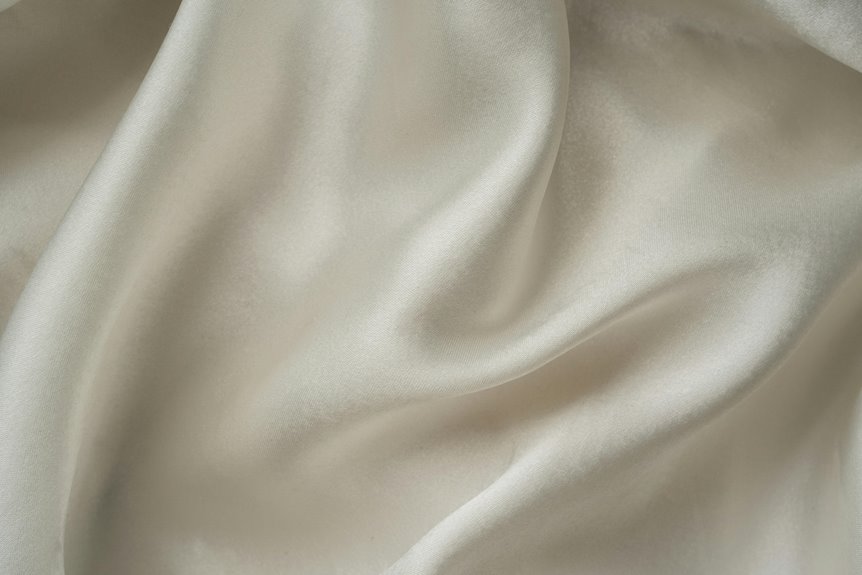
Gabardine feels smooth and soft against your skin, yet firm and durable thanks to its tightly woven twill structure. You’ll notice it holds its shape well without stiffness, offering a polished, wrinkle-resistant surface that drapes elegantly with clean lines. It’s lightweight but substantial, breathable yet insulating enough for mild cooler weather. If you wear gabardine garments, you’ll enjoy a comfortable, sleek fit that moves with you while maintaining its sharp look. There’s much more to explore about what makes gabardine a favorite among designers.
Key Takeaways
- Gabardine has a smooth, soft surface with a firm yet flexible feel against the skin.
- Its tightly woven twill structure creates a wrinkle-resistant, polished texture.
- The fabric drapes with clean, sharp lines while maintaining a lightweight, substantial feel.
- Gabardine offers a gentle, cool sensation and breathability despite its durability.
- It balances firmness and flexibility, allowing for elegant movement without losing shape.
Understanding Gabardine Fabric
Gabardine fabric stands out for its tightly woven twill structure, giving it a smooth texture and durable feel. When you touch gabardine, you’ll notice its firm yet soft surface, which resists wrinkles and holds shape well. This makes it ideal for garments that need structure, like suits or outerwear.
The diagonal rib pattern gives it a subtle texture without roughness, so it feels comfortable against your skin. You’ll find gabardine’s drape both crisp and flexible—it moves with you but keeps a polished look.
Whether made from wool, cotton, or synthetic fibers, gabardine blends durability with elegance. Understanding these qualities helps you appreciate why gabardine remains a popular choice for tailored clothing and practical fashion.
The Origin and History of Gabardine
Tracing back to the late 19th century, this fabric’s invention revolutionized the world of textiles. You’d be interested to know that Thomas Burberry, a British designer, created gabardine in 1879. His goal was to produce a tightly woven, water-resistant fabric that could withstand harsh weather while remaining breathable.
Gabardine quickly gained attention for its durability and comfort, becoming a favorite for outerwear and uniforms. When you wear gabardine, you’re experiencing a fabric born from innovation and practicality.
Its history is tightly linked to exploration and military use, especially during the early 20th century. Understanding this background helps you appreciate gabardine not just for how it feels, but for the legacy woven into every thread.
Key Characteristics of Gabardine
Understanding the history of this fabric gives you a deeper appreciation for what makes it stand out today. Gabardine is known for its durability, tight weave, and versatility. You’ll find it resistant to wrinkles and water, making it ideal for outerwear and suits. Its weight varies, but it generally offers a firm structure while maintaining flexibility.
Here’s a quick overview of gabardine’s key traits:
| Characteristic | Description |
|---|---|
| Weave | Tightly woven, twill pattern |
| Durability | Strong, resistant to wear |
| Flexibility | Holds shape but allows movement |
These features guarantee gabardine provides a reliable, comfortable fabric choice for many garments.
The Smooth Texture of Gabardine
A fabric’s texture can make all the difference in how it feels against your skin and moves with your body. Gabardine stands out with its smooth, tightly woven surface that offers a sleek, polished look.
When you wear gabardine, you’ll notice:
- A fine, even weave that resists wrinkles
- A slight sheen that enhances its elegance
- A firm yet flexible hand that holds shape well
- A dense construction that feels substantial without heaviness
- A surface that glides smoothly, avoiding roughness or fuzziness
This smooth texture means gabardine drapes beautifully while maintaining a crisp appearance.
You get a fabric that’s both durable and refined, perfect for garments where a neat, professional finish matters. Gabardine’s smoothness makes it a reliable choice for classic suits, trousers, and outerwear.
How Gabardine Feels to the Touch
When you run your fingers over gabardine, you’ll notice its smooth and soft surface that feels gentle against your skin.
Despite its lightweight nature, it holds a satisfying weight that gives it structure without stiffness.
You’ll also appreciate how flexible it moves, wrapping comfortably without losing shape.
Smoothness and Softness
Gabardine feels surprisingly smooth against your skin, with a sleek surface that glides effortlessly under your fingertips.
You’ll notice its softness is subtle but undeniable, making it comfortable without being too plush or fuzzy.
When you touch gabardine, you can expect:
- A finely woven texture that feels polished
- A gentle, almost cool sensation on your skin
- A surface free from roughness or irritation
- A fabric that holds softness without fluffiness
- A smooth finish that enhances its refined look
This combination of smoothness and moderate softness gives gabardine a distinctive feel—elegant yet practical.
You’ll appreciate how it balances comfort with a crisp, clean touch, perfect for garments that require both style and ease.
Weight and Flexibility
Although it carries a noticeable weight, you’ll find gabardine surprisingly flexible to the touch. This balanced combination means it holds shape well without feeling stiff or restrictive. When you run your fingers over it, the fabric’s density is evident, yet it bends and moves with ease. This makes gabardine ideal for structured garments that still need comfort and mobility.
| Feature | Description | How It Feels to You |
|---|---|---|
| Weight | Medium to heavy | Substantial but not bulky |
| Flexibility | Moderate | Bends easily, not rigid |
| Drape | Smooth and fluid | Flows nicely over curves |
| Use | Suits tailored clothing | Gives you ease of movement |
The Drape and Structure of Gabardine
Because of its tightly woven twill construction, gabardine offers a firm yet flexible drape that holds shape exceptionally well. When you wear or handle gabardine, you’ll notice how it maintains structure without feeling stiff.
This balance makes it ideal for tailored garments and outerwear alike. Here’s what you can expect from gabardine’s drape and structure:
- Smooth, clean lines that resist wrinkling
- A subtle sheen enhancing its polished look
- Enough body to create sharp pleats and folds
- Flexibility that allows comfortable movement
- Consistent weight distribution preventing sagging
You’ll appreciate how gabardine shapes your outfit confidently while adapting to your motions, giving you both style and comfort in one fabric.
Comparing Gabardine to Other Fabrics
The way gabardine holds its shape and moves with you sets it apart from many other fabrics. Unlike linen, which wrinkles easily and feels crisp, gabardine offers a smooth, almost polished surface that resists creasing.
Compared to denim, gabardine is lighter and drapes more fluidly, giving your garments a refined look without sacrificing durability. If you’ve felt wool flannel, you’ll notice gabardine is tighter woven and less fuzzy, providing a sleeker silhouette.
Even against cotton twill, gabardine stands out with its distinctive diagonal weave that enhances both texture and strength. When you choose gabardine, you get a balance of firmness and softness that few fabrics can match, making it a versatile choice if you want comfort with a sharp appearance.
Common Uses of Gabardine in Fashion
Gabardine’s unique texture and durability make it a favorite in various fashion pieces you’ll often encounter. Its smooth finish and sturdy weave provide both style and functionality.
When you choose gabardine, you’re picking a fabric that holds its shape and looks polished throughout the day. You’ll find it commonly used in:
- Tailored suits offering a sharp, professional appearance
- Trench coats that balance weather resistance with elegance
- Uniforms designed for durability and comfort
- Skirts and dresses that maintain structure without stiffness
- Trousers that resist wrinkles and drape nicely
Each piece benefits from gabardine’s smooth texture and resilience, making it a go-to fabric for garments where you want both style and practicality.
How Gabardine Performs in Different Weather
You’ll find gabardine adapts well to both warm and cold weather thanks to its breathability and insulation.
It keeps you comfortable by wicking moisture and resisting light rain.
Let’s explore how this fabric performs across different climates.
Breathability in Warm Climates
Although gabardine is known for its durability and smooth texture, it also offers surprising breathability that can keep you comfortable in warm climates. The tightly woven fabric allows airflow while maintaining its structure, so you won’t feel stifled even on hotter days.
When you wear gabardine, you’ll notice:
- Lightweight feel that doesn’t trap heat
- Moisture-wicking ability to keep sweat at bay
- Smooth surface that resists clinging to skin
- Durable weave that still allows ventilation
- Versatile drape that moves with you, enhancing comfort
This balance of breathability and toughness makes gabardine a smart choice when you want to look sharp without overheating. You can rely on it to perform well, no matter how warm it gets.
Insulation During Cold Weather
When temperatures drop, you can still count on gabardine to offer reliable insulation without feeling bulky. Its tightly woven twill weave traps warmth effectively, keeping you cozy during chilly days.
Unlike heavier fabrics, gabardine maintains a sleek silhouette, so you won’t feel weighed down or restricted. Layering with gabardine works well since it adds warmth without excessive thickness, making it ideal for cold-weather jackets or trousers.
While it doesn’t provide extreme insulation like wool, gabardine strikes a great balance between warmth and style. You’ll appreciate how it protects you from cold drafts, making it a practical choice for fall and mild winter conditions.
Gabardine’s smooth texture also prevents irritation, ensuring comfort as temperatures dip.
Moisture Resistance and Comfort
While gabardine isn’t fully waterproof, its tight weave naturally repels light moisture, helping you stay dry during unexpected drizzles or humid days.
You’ll appreciate how it balances comfort and protection without feeling stiff or heavy. Gabardine adapts well to varying weather, making it a reliable choice for shifting seasons.
Here’s what you can expect:
- Resists light rain and dampness effectively
- Breathable enough to prevent overheating
- Dries quickly when wet due to fabric density
- Maintains smooth texture without sogginess
- Provides comfort without trapping excessive moisture
This makes gabardine ideal for days when the weather’s unpredictable, ensuring you stay comfortable and presentable without worrying about sudden showers or humidity.
Caring for Gabardine Garments
Anyone who owns gabardine garments knows they require careful attention to maintain their sharp appearance and durability. You should always follow the care label, but generally, dry cleaning is safest for gabardine to preserve its texture and structure. If you wash at home, use cold water and a gentle cycle, then air dry to avoid shrinking or warping. Iron on a low setting while the fabric is slightly damp to smooth wrinkles without damaging the fibers.
| Care Step | Recommended Method | Key Tip |
|---|---|---|
| Cleaning | Dry clean or gentle wash | Avoid bleach |
| Drying | Air dry flat or hang | Avoid direct sunlight |
| Ironing | Low heat setting | Use steam or damp cloth |
| Storage | Hang or fold carefully | Avoid overcrowding in closet |
Why Designers Choose Gabardine
Maintaining gabardine garments takes some care, but the effort pays off because designers consistently choose this fabric for its unique qualities.
Caring for gabardine is worth it, as designers favor its unmatched qualities and lasting appeal.
When you pick gabardine, you’re opting for durability and elegance combined. Here’s why designers love it:
- Its tightly woven structure resists wrinkles, keeping clothes looking sharp.
- The smooth texture offers a polished, professional appearance.
- Gabardine drapes beautifully, complementing various body shapes.
- It’s breathable yet sturdy, perfect for year-round wear.
- The fabric holds dye well, allowing for rich, vibrant colors.
When you wear gabardine, you experience comfort without sacrificing style.
Designers rely on its blend of practicality and sophistication, making it a top choice for tailored suits, trousers, and outerwear.
You’ll appreciate how this fabric enhances both form and function.
Frequently Asked Questions
Can Gabardine Fabric Be Recycled or Is It Eco-Friendly?
You might not know that only 12% of textiles get recycled globally. While gabardine is durable, recycling it depends on its fiber content. You can choose eco-friendly options, but always check labels to make sure.
What Are the Best Shoes to Wear With Gabardine Trousers?
You’ll want classic leather loafers or brogues to complement gabardine trousers. For a casual look, try clean white sneakers. Avoid bulky shoes; sleek, polished footwear keeps your outfit sharp and balanced.
Is Gabardine Suitable for Upholstery or Home Decor?
Gabardine isn’t ideal for upholstery or home decor since it’s designed for clothing. It’s durable but not as heavy or stain-resistant as typical upholstery fabrics, so you’ll want to choose materials better suited for furniture use.
Does Gabardine Fabric Cause Skin Allergies or Irritation?
Gabardine rarely causes skin allergies or irritation since it’s tightly woven and smooth. However, if you have sensitive skin or allergies to wool or synthetic fibers, you might want to test a small patch before wearing it extensively.
How Long Does Gabardine Fabric Typically Last With Regular Use?
With regular use, gabardine fabric typically lasts several years if you care for it properly. You’ll want to avoid harsh washing and excessive wear to keep its durability and smooth texture intact over time.