
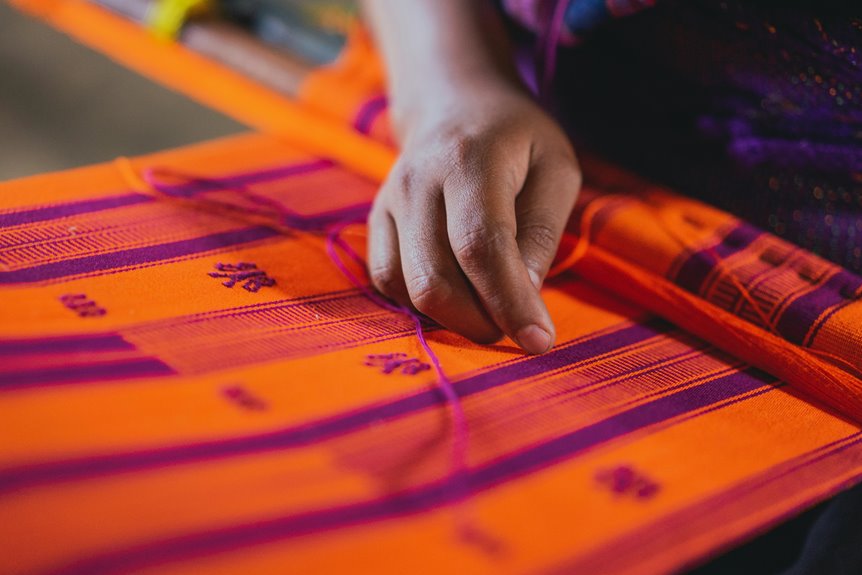
When you wear batik fabric, you’re embracing centuries of culture, identity, and history woven into its intricate patterns. Each motif tells a story, reflecting nature, social status, or local beliefs unique to Indonesian communities. Batik isn’t just cloth—it’s a symbol of heritage used in ceremonies and a mark of artistry. Its vibrant designs inspire modern fashion worldwide. Curious how these patterns connect to tradition and status? There’s a rich world of meaning waiting for you.
Key Takeaways
- Batik fabric represents cultural identity and heritage through traditional wax-resist dyeing techniques originating from Indonesia.
- Its patterns symbolize social status, with specific motifs reserved historically for nobility and high social ranks.
- Batik designs convey stories, beliefs, and messages inspired by nature and regional histories.
- The fabric plays a vital role in ceremonies, marking significant life events and cultural rituals.
- Batik also reflects artistic expression and evolving cultural narratives, linking past traditions to modern creativity.
The Origins and History of Batik
The art of batik has fascinated people for centuries, and its origins trace back to ancient times in Indonesia.
Batik’s timeless allure originates from ancient Indonesian artistry, captivating hearts across centuries.
When you explore batik, you discover it began as a traditional textile technique where artisans used wax and dye to create intricate patterns on fabric. You’ll find that this method wasn’t just about decoration—it reflected cultural stories and social status.
Over time, batik spread across regions and evolved with influences from trade and colonization.
Today, when you wear or see batik, you’re experiencing a craft thousands of years old, deeply rooted in Indonesian heritage. You can appreciate how this fabric connects history, art, and identity, making it more than just cloth but a living tradition passed through generations.
Symbolism in Batik Patterns
You’ll notice batik patterns carry deep cultural meanings that tell stories about tradition and belief.
Many designs draw inspiration from nature, using flowers, animals, and landscapes to convey messages.
Plus, certain motifs can signal social status, so you’re seeing more than just fabric—you’re reading history and identity.
Cultural Meanings
Although batik patterns may seem purely decorative at first glance, they carry deep cultural meanings that reflect the values, beliefs, and histories of the communities that create them.
When you wear or study batik, you’re engaging with symbols that communicate social status, spiritual beliefs, and local identity. Certain motifs might represent fertility, protection, or harmony, linking you to generations of tradition.
You’ll find that each pattern tells a story or conveys a message, often reserved for particular ceremonies or life stages. Understanding these cultural meanings helps you appreciate batik beyond its beauty, recognizing it as a living language woven into fabric.
Nature-Inspired Motifs
Patterns in batik don’t just carry cultural meanings—they often draw directly from the natural world around the artisans. When you look closely, you’ll see motifs inspired by plants, animals, and natural elements that symbolize life, growth, and harmony. These designs connect you to the environment, reflecting respect for nature’s balance.
Here’s a quick guide to some common nature-inspired motifs and their meanings:
| Motif | Symbolism |
|---|---|
| Lotus | Purity, beauty |
| Butterfly | Transformation, hope |
| Bamboo | Resilience, strength |
| Waves | Continuity, life |
Social Status Indicators
While batik designs often celebrate nature and culture, they also serve as markers of social status. When you wear certain batik patterns, you’re not just showcasing art—you’re signaling your place in society.
Different motifs and colors can reveal your role, rank, or community ties. For instance, some designs were traditionally reserved for nobility, while others indicated common folk or specific professions.
You can recognize social status through:
- Exclusive royal patterns featuring intricate details
- Specific colors like gold or deep blue symbolizing wealth
- Motifs representing power, such as crowns or mythical creatures
- Regional designs tied to aristocratic families
- Patterns used in ceremonies marking social events
Understanding these symbols helps you appreciate batik’s deeper cultural significance beyond its beauty.
Cultural Significance Across Indonesian Communities
You’ll notice that batik patterns carry different meanings depending on the Indonesian region they come from.
Each community uses specific designs in rituals and traditions that reflect their unique heritage.
Exploring these variations helps you appreciate the deep cultural significance woven into every piece.
Regional Symbolism Variations
Because Indonesia is made up of diverse cultures, batik fabric carries unique meanings in each region. When you explore batik, you’ll notice these regional symbolism variations reflecting local beliefs and histories.
For example, certain patterns signify social status or nature’s elements, varying by community. Here’s what you’ll find:
- In Yogyakarta, batik often symbolizes royalty and power.
- Solo’s designs emphasize fertility and prosperity.
- Pekalongan batik features vibrant colors representing openness and trade.
- Cirebon patterns incorporate Chinese influences, symbolizing harmony.
- Madura batik uses bold colors to express bravery and strength.
Understanding these differences helps you appreciate batik not just as fabric, but as a storytelling canvas tied to each Indonesian region’s identity.
Rituals and Traditions
Each batik pattern tells a story deeply rooted in the rituals and traditions of Indonesian communities.
When you wear batik during ceremonies like weddings or religious events, you’re honoring generations of cultural heritage. Different motifs symbolize blessings, protection, or social status, so choosing the right design matters.
You’ll notice elders wearing specific patterns at rites of passage, signaling respect and continuity. In some villages, batik production itself is a sacred ritual, involving prayers and offerings to guarantee quality and spiritual harmony.
By embracing batik, you connect with these meaningful practices, preserving identity and community bonds.
Batik as a Marker of Social Status
Although batik fabric is admired for its intricate designs and vibrant colors, it also serves a deeper purpose as a symbol of social status. When you wear certain batik patterns, you’re not just showcasing art—you’re signaling your place in society.
Batik patterns go beyond beauty—they reveal the wearer’s social identity and cultural heritage.
Historically, specific motifs and colors were reserved for royalty or nobility, while others indicated commoners or particular professions. Recognizing these details helps you understand the wearer’s social standing at a glance.
Here’s what you should know about batik as a social marker:
- Exclusive patterns often signified royal lineage
- Color choices reflected rank and wealth
- Complex designs required skilled artisans, indicating prestige
- Wearing restricted patterns without permission was taboo
- Batik styles could denote regional or familial status
The Role of Batik in Traditional Ceremonies
Anyone attending a traditional ceremony will notice how batik fabric plays an essential role in the event’s atmosphere and meaning. You’ll see batik worn to symbolize respect, heritage, and unity. Different patterns and colors mark occasions like weddings, births, or religious rituals. You might wonder what each design represents in these moments.
| Ceremony Type | Batik Significance |
|---|---|
| Wedding | Blessings and prosperity |
| Birth | Protection and purity |
| Funeral | Respect and remembrance |
| Religious Ritual | Spiritual connection |
| Coming of Age | Change and growth |
Techniques and Craftsmanship Behind Batik
Batik fabric’s deep meaning in ceremonies comes from the time and skill invested in its creation.
When you explore batik craftsmanship, you’ll find a blend of patience and artistry that shapes every piece.
Here’s what you should know about the techniques behind batik:
- Wax application: You draw intricate patterns with melted wax using a canting tool or stamp.
- Dyeing process: The fabric is dyed multiple times, with wax protecting certain areas to create layers.
- Wax removal: After dyeing, you boil or scrape off the wax to reveal the design.
- Hand-painting details: Some batik includes hand-painted touches for added precision.
- Pattern symbolism: Each motif carries cultural and spiritual meaning, connecting the fabric to tradition.
Mastering these steps guarantees the batik’s rich symbolism shines through.
Batik’s Influence on Modern Fashion and Art
When you look at today’s fashion and art scenes, you’ll see batik’s vibrant patterns inspiring designers and creators worldwide. You can spot batik motifs in runway collections, streetwear, and contemporary art pieces, blending tradition with modern aesthetics. This fusion lets you express cultural appreciation through style and creativity.
| Fashion Applications | Artistic Expressions |
|---|---|
| Dresses and skirts | Abstract batik paintings |
| Accessories like scarves | Mixed media art |
| Casual wear designs | Digital batik prints |
| Haute couture outfits | Sculptures with batik motifs |
| Sustainable fashion lines | Batik-inspired murals |
Preserving Batik Heritage for Future Generations
As you admire the way batik influences fashion and art today, it’s important to contemplate how this rich tradition can be protected and passed down.
You play an essential role in preserving batik heritage by supporting artisans and educating others about its cultural significance.
Here’s how you can help:
- Buy authentic batik products to sustain local craftsmen
- Learn and share batik’s history and symbolism
- Encourage schools to include batik in art and cultural programs
- Support workshops that teach traditional batik techniques
- Advocate for policies protecting indigenous art forms
Frequently Asked Questions
How Is Batik Fabric Cared for and Maintained?
You should hand wash batik fabric gently in cold water with mild detergent, avoid wringing it out, and dry it in the shade. Iron on low heat to preserve the colors and patterns longer.
Can Batik Patterns Be Customized for Personal Use?
You might think batik patterns are fixed, but you can totally customize them for personal use. Many artisans work with your ideas, so you’ll get unique, meaningful designs tailored just for you.
What Types of Dyes Are Used in Batik Fabric?
You’ll find natural dyes like indigo, turmeric, and soga used in batik fabric, but synthetic dyes are common too. These dyes soak into the fabric, creating vibrant, lasting colors perfect for intricate batik patterns.
Are There Any Environmental Concerns With Batik Production?
You should know batik production can harm the environment due to chemical dyes and wax waste. However, many artisans now use natural dyes and eco-friendly methods, so you can support sustainable batik by choosing responsibly made fabric.
How Long Does It Take to Make a Single Piece of Batik?
Imagine painting a detailed mural—creating one batik piece takes days to weeks, depending on design complexity. You’ll carefully apply wax and dye multiple times, patiently building layers like an artist crafting a masterpiece.