
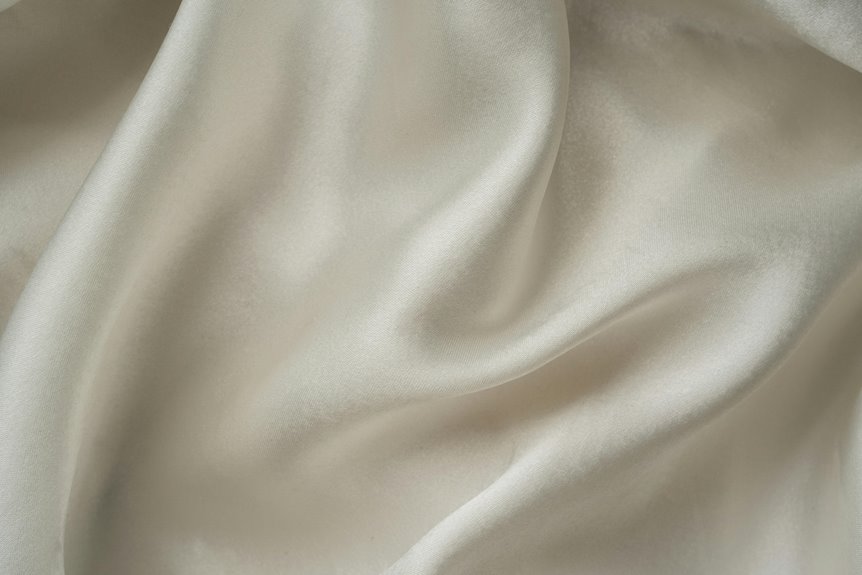
You’ll find acetate fabric incredibly soft and smooth, with a cool, lightweight feel that stays comfortable on your skin. Its natural sheen gives a luxurious, polished look, and it drapes gracefully, flowing beautifully with your movements. Acetate holds pleats well and resists wrinkles better than many fabrics, making it elegant yet easy to wear. If you want to explore how it compares to silk or polyester and how to care for it, there’s plenty more to discover.
Key Takeaways
- Acetate fabric feels incredibly soft and smooth, with a natural sheen that provides a polished, silky finish.
- It stays cool and lightweight against the skin, making it comfortable for warm weather wear.
- The fabric drapes beautifully, enhancing garment flow with a lustrous surface that falls gracefully.
- Acetate holds pleats and gathers well while resisting wrinkles better than many natural fibers.
- Its breathable texture reduces friction and irritation, offering a comfortable experience for sensitive skin.
Understanding the Composition of Acetate Fabric
Although you mightn’t realize it, acetate fabric is a unique material made from cellulose fibers derived primarily from wood pulp or cotton linters.
When you wear acetate, you’re experiencing a semi-synthetic fiber created through a chemical process that transforms natural cellulose into a fabric with distinctive qualities. This process gives acetate its ability to mimic the feel of natural fibers while maintaining a consistent texture and sheen.
You’ll notice that acetate doesn’t absorb moisture as much as cotton or linen, thanks to its chemical structure, which makes it less prone to wrinkles.
Understanding this composition helps you appreciate why acetate drapes elegantly and resists shrinking, setting it apart from purely natural or synthetic fabrics in your wardrobe.
The Silky Smooth Texture of Acetate
You’ll notice acetate feels incredibly soft with a natural sheen that catches the light beautifully.
It stays cool against your skin, making it perfect for warmer days.
Plus, its lightweight nature means you won’t feel weighed down when you wear it.
Softness and Sheen
The silky smooth texture of acetate immediately catches your attention with its soft touch and subtle sheen. When you run your fingers over it, you’ll notice how effortlessly it glides, offering a gentle caress against your skin.
This fabric’s softness isn’t just about feel—it’s about the way light plays on its surface, creating a low-key shine that enhances its elegance without overwhelming. You won’t find any roughness or stiffness here; acetate’s smoothness makes it a pleasure to wear and handle.
Its subtle sheen adds a refined look, perfect for garments that need a touch of sophistication. Overall, acetate combines softness with a gentle glow, making it stand out in both comfort and style.
Cool and Lightweight Feel
When you wear acetate, you immediately notice how cool and lightweight it feels against your skin. This fabric’s smooth surface allows air to flow freely, keeping you comfortable even on warm days. Its silky texture glides effortlessly, reducing friction and making it ideal for garments that drape elegantly without feeling heavy.
Here’s a quick comparison to highlight acetate’s cool and lightweight qualities:
| Fabric Type | Weight (g/m²) | Cooling Effect |
|---|---|---|
| Acetate | 80-120 | High – breathable |
| Cotton | 120-180 | Moderate |
| Polyester | 90-150 | Low – traps heat |
Acetate blends luxury with practicality, making it a smart choice if you want to stay cool and comfortable all day.
How Acetate Fabric Feels Against the Skin
Softness stands out as one of acetate fabric’s most appealing qualities against your skin. When you wear acetate, you’ll notice its smooth, silky texture that feels gentle and comforting without any roughness.
It glides effortlessly, reducing friction, which makes it ideal if you have sensitive skin or want to avoid irritation. Acetate’s surface feels cool initially, giving a revitalizing sensation, especially in warmer weather.
Unlike some synthetic fabrics, acetate doesn’t cling uncomfortably; it lets your skin breathe while maintaining a polished look. You’ll appreciate how it drapes smoothly without feeling heavy or stiff.
The Draping Qualities of Acetate Material
You’ll find acetate fabric drapes beautifully, enhancing the flow and movement of any garment.
When you wear acetate, its smooth, lustrous surface allows the fabric to fall gracefully, creating elegant lines without stiffness. This makes it ideal for dresses, blouses, and linings where fluidity matters.
Acetate’s smooth, lustrous surface drapes gracefully, perfect for creating elegant, fluid lines in dresses and blouses.
You’ll notice that acetate holds pleats and gathers well, maintaining shape while still moving freely with your body. Because it’s lightweight, it doesn’t weigh down your outfit, giving you a comfortable, airy feel.
Plus, acetate resists wrinkles better than many natural fibers, so your garment looks polished throughout the day.
When you choose acetate, you get a fabric that combines softness with structure, making your clothes both stylish and effortlessly flattering.
Comparing Acetate to Other Common Fabrics
You might wonder how acetate stacks up against fabrics like silk and polyester.
Each material offers unique texture and care differences that affect your choices.
Let’s compare acetate’s feel and performance to help you decide what works best for you.
Acetate vs. Silk
Although acetate and silk share a similar smooth feel and luxurious appearance, they differ greatly in origin, durability, and care requirements.
You’ll find silk is a natural fiber produced by silkworms, prized for its strength and breathability. Acetate, on the other hand, is a semi-synthetic fabric made from wood pulp, giving it a similar sheen but less resilience.
When it comes to durability, silk tends to be stronger and ages well, while acetate can be more prone to wrinkles and damage from heat.
Caring for silk usually means gentle hand washing or dry cleaning, whereas acetate requires careful handling to avoid melting or distortion.
Choosing between them depends on how much wear, care effort, and budget you’re willing to commit.
Acetate vs. Polyester
Silk and acetate share a luxurious feel, but when comparing acetate to polyester, the differences become more about practicality and performance.
You’ll notice acetate feels softer and has a silk-like sheen, while polyester tends to feel smoother but less natural. Acetate drapes beautifully, making it ideal for flowing garments, whereas polyester is more rigid and holds shape well.
Also, acetate breathes better, so you’ll stay cooler, but it’s less durable and can wrinkle easily. Polyester, on the other hand, resists wrinkles, dries quickly, and is more stain-resistant, making it easier to care for.
If you want elegance with moderate care, acetate’s your choice; for durability and low maintenance, polyester suits you better. Your pick depends on how you balance feel versus function.
Common Uses of Acetate in Fashion and Home Textiles
Acetate’s smooth texture and vibrant sheen make it a popular choice in both fashion and home textiles. When you pick acetate, you’re choosing a fabric that feels silky and looks luxurious without breaking the bank.
Here are some common uses you’ll find acetate in:
- Lining for garments: Its smooth finish helps clothes slip on easily, enhancing comfort.
- Evening and bridal wear: The fabric’s elegant drape and shine add a touch of sophistication.
- Home décor: Acetate is often used in curtains and decorative pillows because it holds color well and drapes beautifully.
You’ll notice acetate’s versatility allows it to blend functionality with style, making it a smart choice for various textile needs.
Caring for Acetate Fabric to Maintain Its Feel
Because acetate fabric has a delicate texture and sheen, you’ll want to handle it with care to keep it looking its best.
Always check the care label first, but generally, hand washing in cold water with a mild detergent is safest. Avoid wringing or twisting the fabric; instead, gently press out excess water.
When drying, lay acetate flat or hang it away from direct sunlight to prevent fading and distortion. Iron on a low heat setting while the fabric is slightly damp, using a pressing cloth to protect the surface.
Avoid bleach and harsh chemicals, as they can damage the fibers. With these simple steps, you’ll maintain acetate’s smooth feel and vibrant sheen for years to come.
Why Choose Acetate for Your Next Textile Project?
When you want a fabric that combines elegance with durability, acetate stands out as a smart choice. It offers a luxurious sheen that mimics silk’s allure without the high maintenance.
Plus, acetate drapes beautifully, enhancing the flow of any garment or textile project you undertake.
Here’s why acetate is ideal for your next creation:
- Aesthetic Appeal: Its smooth, lustrous surface adds a polished finish.
- Comfort: It feels soft against the skin, making it perfect for clothing.
- Versatility: Acetate works well in linings, dresses, and home décor, adapting easily to various designs.
Choosing acetate means you don’t have to compromise between style and practicality.
Frequently Asked Questions
Is Acetate Fabric Environmentally Friendly or Sustainable?
You shouldn’t consider acetate fabric very sustainable since it’s made from wood pulp but processed with chemicals. While it’s biodegradable, the production involves toxic substances, so it’s not the most eco-friendly choice for your wardrobe.
Can Acetate Fabric Cause Allergic Reactions?
About 10% of people experience skin irritation from acetate fabric. You might get allergic reactions like redness or itching, especially if you have sensitive skin. Always test a small patch before wearing acetate clothes extensively.
How Does Acetate Fabric React to Heat and Ironing?
You should avoid high heat when ironing acetate fabric because it melts easily. Use a low-temperature setting and place a pressing cloth between the iron and fabric to prevent damage and keep your garment looking great.
Does Acetate Fabric Shrink After Washing?
You should know acetate fabric can shrink if washed improperly. To avoid this, use cool water and gentle cycles. Always air dry or use low heat to keep your acetate garments looking their best without shrinking.
What Is the Typical Lifespan of Acetate Fabric Garments?
Picture your acetate garment glowing softly, but remember it’s delicate. With proper care, you’ll enjoy its silky charm for 1-3 years before fading or wear appears, so handle it gently to stretch its graceful lifespan.