
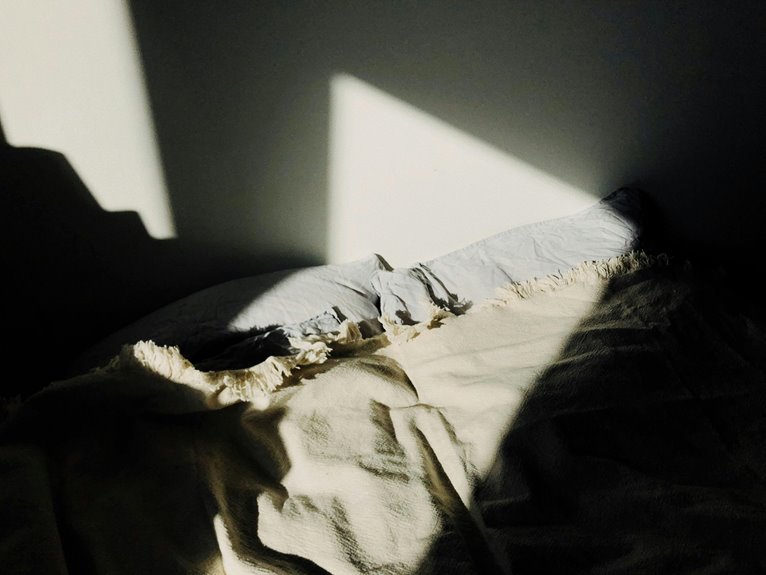
Lyocell sheets are made from natural wood pulp using an eco-friendly closed-loop process, giving you silky-soft, breathable bedding that stays cool and moisture-free. They’re gentle on sensitive skin and resist wrinkles, making care easy with cold washes and low drying heat. Compared to cotton and linen, lyocell offers superior softness and moisture-wicking but with slightly less durability. If you want bedding that balances comfort, sustainability, and easy care, there’s more you’ll want to know before you buy.
Key Takeaways
- Lyocell sheets are made from natural wood pulp fibers like eucalyptus, produced via an eco-friendly closed-loop process.
- They offer exceptional softness and smoothness, providing a luxurious, silky feel superior to cotton.
- Highly breathable and moisture-wicking, lyocell sheets regulate temperature and keep skin dry throughout the night.
- These sheets are hypoallergenic and gentle, ideal for sensitive skin and allergy sufferers.
- Easy to care for, lyocell requires cold gentle washing, low heat drying, and mild detergents without bleach.
What Is Lyocell Fabric Made From?
Lyocell fabric comes from natural wood pulp, usually sourced from eucalyptus, beech, or spruce trees. When you choose lyocell, you’re selecting a fiber made through a closed-loop process that recycles almost all solvents and water.
This method dissolves the wood pulp into a solution, which is then spun into fibers. You’ll find that lyocell is a type of rayon but stands out because it’s produced with fewer harmful chemicals and less environmental waste.
The pulp undergoes a gentle chemical process that preserves the fiber’s strength and softness. Understanding this origin helps you appreciate why lyocell sheets often feel smooth and breathable.
Knowing what it’s made from lets you make an informed choice about your bedding materials.
Benefits of Choosing Lyocell Sheets
Although you mightn’t have heard much about this fabric before, choosing sheets made from it can transform your sleep experience.
Lyocell sheets feel incredibly soft and smooth, giving you a luxurious touch every night. They’re also highly breathable, which means they help regulate your body temperature and keep you cool during warm nights.
If you tend to sweat or get hot while sleeping, these sheets can really make a difference. Plus, lyocell is naturally moisture-wicking, so it pulls sweat away from your skin, keeping you dry and comfortable.
You’ll also appreciate that lyocell is hypoallergenic and gentle, making it ideal if you have sensitive skin or allergies.
Finally, these sheets resist wrinkles, so your bed looks neat without much effort.
How to Care for Lyocell Bedding
Taking proper care of your bedding can extend its life and keep it looking fresh. For lyocell sheets, wash them in cold water on a gentle cycle to prevent damage and maintain softness.
Use mild detergent without bleach or fabric softeners, as harsh chemicals can weaken fibers. Avoid high heat when drying; tumble dry on low or line dry to preserve the fabric’s smooth texture.
If you iron, use a low temperature setting. Since lyocell is prone to wrinkles, removing the sheets promptly after drying helps.
Store your lyocell bedding in a cool, dry place away from direct sunlight to prevent fading. By following these steps, you’ll guarantee your lyocell sheets stay comfortable, durable, and beautiful for years to come.
Comparing Lyocell to Cotton and Linen
When choosing bedding, you might wonder how lyocell stacks up against cotton and linen.
Lyocell offers a smooth, silky feel that’s often softer than cotton and less coarse than linen. It excels in moisture-wicking, keeping you cool and dry, unlike cotton which can trap heat.
Lyocell feels silky smooth and wicks moisture better than cotton, keeping you cool and comfortable all night.
Linen is durable and breathable but can feel rough initially.
Here’s a quick comparison to help you decide:
- Softness: Lyocell > Cotton > Linen
- Breathability: Linen > Lyocell > Cotton
- Durability: Linen > Cotton > Lyocell
- Moisture Management: Lyocell > Linen > Cotton
This way, you can pick the fabric that matches your sleep preferences and lifestyle best.
Who Should Consider Buying Lyocell Sheets?
Understanding how lyocell compares to cotton and linen helps clarify who might benefit most from its unique qualities.
If you’re sensitive to allergens or prone to skin irritation, lyocell’s hypoallergenic and smooth texture can offer relief. You’ll also appreciate lyocell sheets if you tend to overheat at night, as their moisture-wicking and breathable nature keeps you cool and dry.
Those seeking eco-friendly bedding will find lyocell appealing since it’s sustainably produced using less water and chemicals than cotton. Plus, if you want sheets that balance softness, durability, and easy care, lyocell fits the bill.
However, if you prefer the crispness of linen or the traditional feel of cotton, you might want to weigh your options before switching to lyocell.
Frequently Asked Questions
Are Lyocell Sheets Hypoallergenic?
Yes, lyocell sheets are hypoallergenic. You’ll find they resist dust mites and bacteria, making them great if you have sensitive skin or allergies. Plus, their breathable fabric helps keep you comfortable all night.
Do Lyocell Sheets Retain Color Well After Washing?
You’ll find lyocell sheets hold color quite well after washing since their fibers absorb dye deeply. Just use gentle detergents and avoid harsh chemicals to keep your sheets vibrant and fresh-looking over time.
Can Lyocell Sheets Help With Night Sweats?
Yes, lyocell sheets can help with night sweats because they’re highly breathable and moisture-wicking. You’ll stay cooler and drier throughout the night, making them a great choice if you struggle with overheating while sleeping.
Are Lyocell Sheets Wrinkle-Resistant?
Think of lyocell sheets as a calm lake, naturally smooth and gentle. Yes, they’re wrinkle-resistant, so you won’t battle creases every morning. You’ll enjoy a neat, fresh bed without extra effort or ironing hassles.
How Long Do Lyocell Sheets Typically Last?
You can expect lyocell sheets to last around 5 to 7 years with proper care. They’re durable but delicate, so washing gently and avoiding harsh detergents helps keep them soft and long-lasting.