
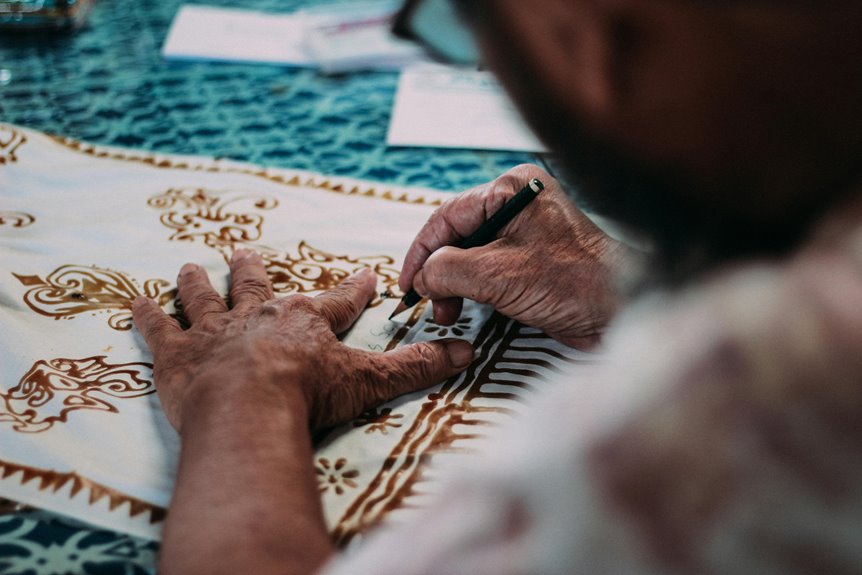
You might think batik fabric is only from Indonesia or that it’s just simple printing, but in reality, batik comes from various cultures with unique techniques and meanings. Not all patterns symbolize the same thing, and batik isn’t always handmade or waxed by traditional methods. It’s also more versatile than just clothing, appearing in modern fashion and decor. If you keep exploring, you’ll uncover even more fascinating details about this rich, crafty art form.
Key Takeaways
- Batik is not exclusive to Indonesia; it also has rich traditions in Malaysia, Thailand, Africa, and India with unique regional styles.
- Batik is not simple printed fabric; it requires skilled, manual wax-resist dyeing and multiple dyeing steps for intricate designs.
- Not all batik patterns are decorative only; many carry deep cultural symbolism related to fertility, protection, power, or nature.
- Batik is not only for traditional ceremonies; it is widely used in modern fashion, accessories, and home decor.
- Machine-made batik exists but often lacks the artisanal quality and detail of handmade batik produced by skilled craftsmen.
Batik Is Only From Indonesia
Although many people associate batik exclusively with Indonesia, you might be surprised to learn that this fabric art has roots in several other countries as well.
Many think batik is only Indonesian, but its rich roots span multiple countries worldwide.
If you look beyond Indonesia, you’ll find batik traditions in places like Malaysia, Thailand, and even parts of Africa. Each region has developed its own unique style and techniques, reflecting local cultures and histories.
So, when you think batik is only Indonesian, you’re missing out on a rich, global tapestry of creativity. Recognizing these diverse origins helps you appreciate batik more deeply and understand how this art form connects different cultures through fabric.
Next time you see batik, remember it’s a worldwide tradition, not confined to just one place.
Batik Is Just a Simple Printing Technique
While batik might look like a straightforward printing method at first glance, it actually involves a complex, skillful process that requires patience and expertise.
You might assume it’s as simple as stamping patterns onto fabric, but creating authentic batik means mastering multiple detailed steps.
Here’s what’s involved:
- Applying hot wax carefully with a canting tool or stamp to create resist areas.
- Dyeing the fabric multiple times, waxing over sections to preserve colors in layers.
- Removing the wax by boiling or scraping to reveal intricate patterns beneath.
Each step demands precision and timing to avoid smudges or color bleeding.
When you appreciate batik’s craftsmanship, it’s clear it’s much more than just a simple printing technique—it’s a traditional art form that reflects dedication and skill.
All Batik Patterns Have the Same Meaning
If you think all batik patterns carry the same meaning, you’re missing the rich symbolism woven into each design. Each batik motif tells a unique story, reflecting cultural beliefs, local history, or natural elements.
When you see a batik pattern, consider its origin—different regions and communities create distinct motifs with specific meanings. Some patterns represent fertility, prosperity, or protection, while others celebrate nature or spiritual concepts.
You shouldn’t assume one batik design conveys a universal message; instead, take time to learn its background. By understanding these nuances, you appreciate batik not just as fabric but as a vibrant narrative art form.
Batik Is an Outdated or Traditional-Only Fabric
Even though batik has deep traditional roots, you shouldn’t think of it as outdated or limited to cultural ceremonies.
Batik fabric is evolving and remains relevant in today’s fashion and design scenes. You’ll find it embraced by modern designers and worn in everyday life, not just special occasions.
Here’s why batik stays current:
- Designers blend traditional motifs with contemporary styles, creating fresh looks.
- Batik appears in diverse items like casual clothing, accessories, and home decor.
- Global fashion trends continue to spotlight batik, celebrating its artistic value.
Batik Fabric Is Always Made by Hand
You might think all batik fabric is crafted by hand, but machines can create batik designs too.
While handmade batik showcases unique artistry and detail, industrial processes speed up production and lower costs.
Understanding the difference helps you appreciate both the traditional craft and modern adaptations.
Machine-Made Batik Exists
Some people believe batik fabric can only be made by hand, but machine-made batik actually exists and is quite common.
When you see batik patterns, they might come from machines designed to mimic traditional wax-resist dyeing techniques. This method speeds up production and lowers costs, making batik more accessible.
Here’s what you should know about machine-made batik:
- It often uses printed patterns rather than real wax resist.
- Machine production can replicate complex designs consistently.
- The texture and feel may differ from hand-dyed batik.
Knowing this helps you appreciate the variety in batik fabrics and recognize that not all batik has the same origin or crafting process.
Handcraft vs. Industrial Process
While machine-made batik offers affordability and consistency, many still hold the belief that batik fabric is always crafted by hand.
In reality, you can find both hand-drawn and industrially produced batik. Handcrafting batik involves applying wax with a canting tool and dyeing fabric in multiple stages, which demands skill and patience.
On the other hand, industrial processes use machines to print batik patterns quickly and in bulk, making it more accessible and affordable.
If you value unique, artisanal qualities, hand-made batik offers subtle variations and texture that machines can’t replicate.
However, don’t assume machine-made batik lacks appeal—it’s perfect when you need consistent designs at a lower cost.
Understanding this difference helps you appreciate the diversity within batik fabric production.
Batik Designs Are Random and Lack Symbolism
Misunderstanding often leads people to believe batik designs are random and without meaning.
But when you look closer, you’ll see each pattern carries deep symbolism connected to culture, history, and identity. The motifs aren’t just decorative; they tell stories and convey messages.
For example:
- Floral patterns often symbolize fertility and growth.
- Geometric shapes can represent harmony and balance.
- Animal motifs might signify strength or protection.
When you wear or create batik, you’re participating in a tradition rich with meaning.
So, don’t dismiss the designs as mere decoration—they’re a visual language full of cultural significance that has been passed down through generations.
Understanding this enriches your appreciation for batik beyond its beauty.
Batik Can Only Be Made With Wax
Although wax is the most traditional and common material used in batik-making, it’s not the only option available. You might assume batik always requires wax to create its intricate patterns, but artisans sometimes use other substances like rice paste or clay as resist materials.
These alternatives can produce different textures and effects, expanding the creative possibilities beyond wax. Using non-wax resists is especially helpful when working on fabrics sensitive to heat or when a different finish is desired.
Batik Is Expensive Because It’s Mass-Produced
Exploring the various materials used in batik shows how much care and creativity go into each piece.
You might think batik is expensive because it’s mass-produced, but that’s not the case. In fact, many batik fabrics are handmade, which makes them unique and valuable. The cost reflects the skill and time invested, not mass production.
Batik’s value lies in handmade artistry, reflecting skill and time—not mass production.
Here’s why batik isn’t mass-produced like fast fashion:
- Each design requires meticulous wax application and dyeing.
- Artisans often work on one piece at a time, ensuring quality.
- The drying and waxing process can take days, limiting quantity.
Batik Patterns Are Universal Across Cultures
While batik patterns may seem similar at first glance, you’ll find that each culture infuses its designs with unique symbols and meanings. You can’t just lump all batik into one category because the motifs tell different stories depending on where they come from.
| Region | Common Motifs | Symbolic Meaning |
|---|---|---|
| Indonesia | Parang, Kawung | Power, fertility |
| Malaysia | Bunga Raya, Daun | National pride, nature |
| Africa | Geometric, Animal | Community, spirit world |
| India | Paisley, Floral | Life, growth |
When you explore batik, you’ll see it’s a rich tapestry of cultural identity, not a universal design repeated across borders.
Batik Is Only Used for Clothing
Recognizing the cultural significance behind batik patterns helps you appreciate that batik isn’t limited to just clothing.
You might think of batik only as traditional attire, but its uses extend far beyond that. Batik fabric plays a versatile role in various cultural and artistic expressions.
You can find it in:
- Home decor, like cushion covers and wall hangings that add unique flair to any room.
- Accessories such as bags, scarves, and even shoes, showcasing batik’s adaptability.
- Ceremonial items and souvenirs, preserving cultural heritage in everyday objects.
Frequently Asked Questions
How Does the Wax Resist Process Affect Fabric Durability?
You’ll find the wax resist process strengthens fabric by creating a protective layer during dyeing, but it can make the fabric slightly stiffer. Proper care prevents wax cracking, so your batik stays durable and vibrant longer.
Can Batik Be Made Using Modern Digital Techniques?
You can definitely create batik using modern digital techniques. While traditional wax-resist methods remain popular, digital printing lets you replicate intricate batik designs quickly and affordably without the labor-intensive wax application.
What Types of Tools Are Used in Traditional Batik Making?
You might be surprised that traditional batik tools include a canting, a small copper pen for applying wax, and a cap, a copper stamp. You’ll use these to create intricate, beautiful patterns by hand.
How Do Environmental Factors Influence Batik Dyeing Results?
You’ll notice temperature, humidity, and water quality directly affect batik dyeing results. Higher humidity slows drying, altering color intensity. Hard water can change dye absorption, so you’ll want to control these factors for consistent, vibrant patterns.
Are There Specific Care Instructions for Batik Fabric?
You should hand wash batik fabric gently in cold water and avoid harsh detergents to preserve its colors. Don’t wring it out; instead, air dry it away from direct sunlight to keep the patterns vibrant longer.