
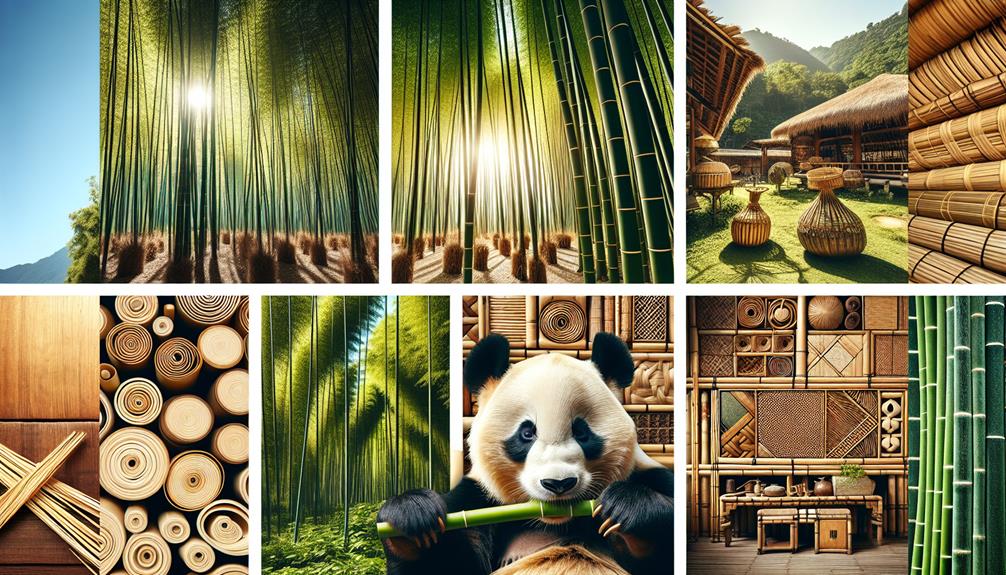
I've learned some pretty neat things about bamboo. First off, it's incredibly fast-growing, shooting up almost a meter in just one day. Then there's its environmental upside; it spits out 35% more oxygen and sucks up five times more CO2 than trees. It's also tougher than it looks—its tensile strength actually beats that of steel. Culturally, it symbolizes strength and resilience across various traditions. Plus, it's super versatile, used in everything from building homes to making soft clothes. Honestly, there's a lot more to this amazing plant that just might surprise you.
Key Takeaways
- Bamboo can grow up to nearly 1 meter in just one day, making it one of the fastest-growing plants.
- It releases 35% more oxygen and absorbs five times more CO2 than trees, enhancing air quality.
- The tensile strength of bamboo surpasses that of steel, making it a strong material for construction.
- Bamboo is used in various products, from construction materials to biodegradable utensils and soft textiles.
- Culturally, bamboo symbolizes strength and resilience and plays a significant role in traditional practices and beliefs.
Rapid Growth Rate
Bamboo's ability to shoot up almost 1 meter in a day showcases its incredible growth speed. It's no wonder bamboo is called one of the fastest-growing plants on Earth. The rapid growth rate is just the beginning of what makes bamboo so fascinating.
Within just a few months, the diameter of bamboo shoots expands significantly, facilitating continuous growth. This isn't just a quick sprout and then a plateau; bamboo keeps expanding, getting thicker and taller at an almost unbelievable pace. Once the primary shoots establish themselves, secondary branches start to sprout, adding to the plant's robustness. These branches eventually bear leaves, which contribute not only to the plant's photosynthesis but also to its structural integrity.
Now, let's talk toughness—bamboo's tensile strength actually surpasses that of steel. Yep, you heard that right; the same stuff towering above us in the form of skyscrapers is outmatched by what's essentially a giant grass. This incredible strength, combined with its speedy growth, makes bamboo a standout in the natural world. Imagine a material that grows before your eyes and is strong enough to rival steel measures in tensile strength. That's bamboo for you—quick to grow, tough to beat.
Environmental Benefits
Now that we've explored how strong and fast-growing bamboo is, let's look at how it benefits our environment.
First off, bamboo's a champ at improving air quality. It releases 35% more oxygen compared to trees. This isn't just good news; it's a breath of fresh air—literally! Plus, it absorbs five times more carbon dioxide, tackling those pesky greenhouse gases that are heating up our planet.
But that's not all. Bamboo plays a crucial role in soil conservation. It prevents soil erosion effectively by anchoring itself deep into the earth, stabilizing landscapes that might otherwise wash away. This makes it a top-notch choice for areas prone to degradation and landslides.
What's more, growing bamboo is as low-maintenance as it gets. It needs minimal water to thrive and doesn't rely on harmful pesticides, making it incredibly environmentally friendly. And when it comes to disposal, bamboo products are biodegradable. They break down naturally, returning to the earth without a trace of pollution.
Structural Strength
Let's dive into how bamboo's incredible tensile strength makes it a top choice for builders and architects worldwide. Bamboo is one of the strongest natural materials on the planet. Its high tensile strength surpasses that of steel, making it not only durable but also resilient against various stresses. Due to this, it's widely used to make building materials and furniture that need to withstand heavy loads and impacts.
When bamboo is harvested, its root structure remains intact, promoting sustainability and reducing the carbon footprint associated with its use. This is crucial in an era where eco-friendly building materials are more important than ever. Additionally, planting bamboo helps in environmental conservation as bamboo plants release 35% more oxygen compared to other trees, while also providing crucial structural materials.
The use of bamboo in construction isn't just about its strength. Its flexibility allows for innovative designs that are both aesthetically pleasing and functionally robust. This material's versatility is evident as over a billion people live in bamboo houses, which aren't only structurally sound but also have a minimal environmental impact. The reduced risk of fire due, to its particular properties, further underscores bamboo's suitability as a building material.
Cultural Symbolism
In many cultures, bamboo isn't just a plant; it's a powerful symbol of strength and resilience. In Chinese culture, for instance, bamboo embodies both strength and flexibility, qualities that are highly admired. This duality makes bamboo a frequent subject in art and philosophy, symbolizing the ideal balance between the mighty and the yielding.
Across various Asian cultures, bamboo's durability and resilience have cemented its role in traditional practices and beliefs. It's fascinating how these cultures revere a bamboo grove not just for its natural beauty but for the deep cultural symbolism it holds. The grove becomes a sanctuary, representing endurance through adversity.
Moreover, bamboo's significance extends to traditional medicine, where it's used for treating infections and promoting healing. This use aligns with the symbolism of bamboo, as it aids in recovery, further reinforcing the plant's image of resilience.
The global significance of bamboo is profound, resonating well beyond its native habitats. For example, its role in surviving the atomic bombing of Hiroshima highlights a remarkable aspect of resilience, marking bamboo as a symbol of hope and renewal worldwide. Its presence in such a critical moment of history illustrates not just survival but also a profound cultural depth.
Versatile Uses
Bamboo serves as a remarkably versatile resource, often used in everything from building materials to culinary delights. One of the strongest reasons I'm fascinated by bamboo is its incredible variety of uses. Here's a quick rundown:
- Construction and Manufacturing: Bamboo is incredibly strong, rivaling the toughness of many traditional woods and even some metals. It's used to produce scaffolding, flooring, and even as reinforcement in concrete, a testament to its strength and versatility.
- Textiles and Clothing: The fibers of this giant grass are transformed into soft yet durable fabrics. Clothes made from bamboo aren't only eco-friendly but also comfortable, thanks to the breathable nature of the fibers.
- Culinary Uses: In many Asian countries, bamboo shoots are a staple. They're nutritious, delicious, and a fantastic source of fiber. I've tried them myself, and they add a unique flavor to any dish.
- Sustainable Products: From carbonized bamboo filament for light bulbs to biodegradable utensils, bamboo's applications are expanding as the world seeks more sustainable alternatives.
Every time I delve into the versatile uses of bamboo, it's clear why it's celebrated in so many cultures around the world.
Frequently Asked Questions
What Are 3 Interesting Facts About Bamboo?
I've found that bamboo grows incredibly fast, releases more oxygen than trees, and has survived atomic bombings, showcasing its resilience and environmental benefits. It's fascinating how this plant impacts both culture and nature.
How Tall Is 1 Bamboo?
I've learned that the height of a single bamboo can vary widely. Typically, it ranges from 30 to 80 feet tall, but some species like the Giant Bamboo can exceed 100 feet.
Do Snakes Live in Bamboo?
I've learned that snakes usually avoid bamboo. Its smooth surfaces and dense growth make it tough for them to navigate or find shelter, so they rarely make their homes in bamboo forests.
Does All Bamboo Take 5 Years to Grow?
No, not all bamboo takes 5 years to grow. Some species can be harvested in just 3 years, depending on environmental factors and the specific type of bamboo, like the fast-growing Moso.