
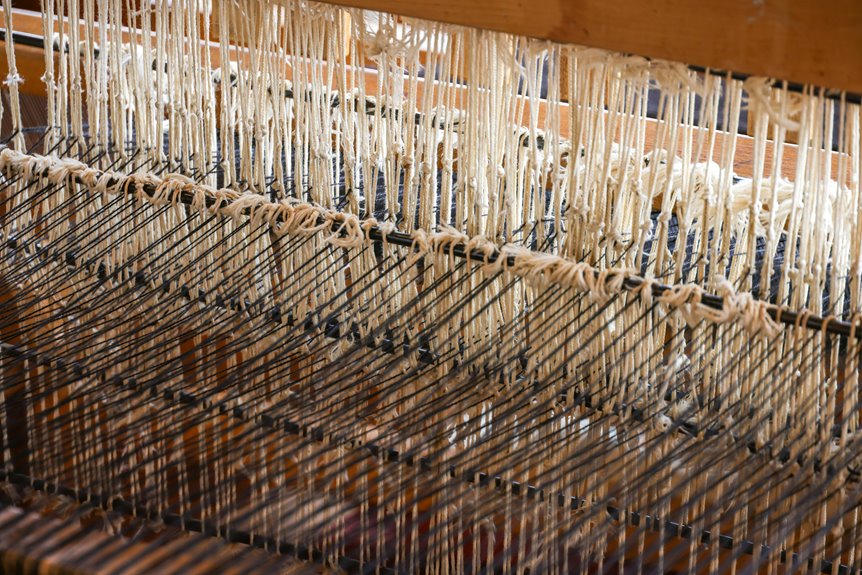
If you’re new to weaving with abaca fiber, start by understanding its origins as a strong, silky plant native to the Philippines. Gather essential tools like a loom, shuttle, and comb, and prepare the fibers by soaking, drying, and combing them for smooth weaving. Learn basic techniques like plain and twill weaves while keeping tension consistent. With proper care, your creations will last long. You’ll discover more about patterns, maintenance, and the craft’s rich traditions as you explore further.
Key Takeaways
- Abaca fiber, native to the Philippines, is prized for its strength, silky texture, and natural sheen, ideal for weaving textiles and ropes.
- Essential tools for abaca weaving include a sturdy loom, shuttle, heddle or reed, beater or comb, and quality abaca fibers.
- Preparing abaca fibers involves stripping, soaking, rinsing, drying partially, combing, and aligning fibers for uniform thickness before weaving.
- Basic weaving techniques include plain weave, twill weave, and basket weave, with consistent tension crucial for even fabric.
- To maintain abaca creations, avoid sunlight and moisture, dust regularly, and spot-clean gently without harsh chemicals.
Understanding Abaca Fiber and Its Origins
Abaca fiber comes from a plant native to the Philippines, known for its strength and durability. When you work with abaca, you’re handling fibers extracted from the leaf stalks of the abaca plant, a type of banana plant.
Its natural toughness makes it ideal for weaving sturdy textiles and ropes. You’ll find that abaca fibers have a silky texture and a natural sheen, which adds beauty to your finished pieces.
Understanding its origins helps you appreciate the cultural significance and traditional techniques developed over centuries. The plant thrives in tropical climates and requires careful harvesting to maintain fiber quality.
Essential Tools and Materials for Abaca Weaving
To start weaving with abaca, you’ll need a few basic tools like a loom, shuttle, and scissors.
Choosing quality abaca fibers is just as important to guarantee your final piece is strong and beautiful.
Let’s look at what you’ll need to get going.
Basic Weaving Tools
Although weaving may seem simple at first, you’ll need specific tools to work effectively with abaca fiber.
Start with a sturdy loom—either a simple frame or a more complex floor loom—depending on your project size. You’ll also need a shuttle to guide the fibers across the warp threads smoothly.
A heddle or reed helps separate and space the warp threads evenly, guaranteeing a consistent weave. Don’t forget a beater or comb to press the fibers tightly together with each pass.
Scissors are essential for cutting the fibers cleanly, and a measuring tape guarantees your work stays on track.
Finally, a warping board or peg system can help prepare your warp threads neatly before you begin weaving.
With these tools, you’re set to start your abaca weaving journey confidently.
Quality Abaca Fibers
Getting the right fibers makes all the difference when weaving with abaca. You’ll want to select fibers that are strong, flexible, and free from damage.
High-quality abaca fibers are long, smooth, and have a natural sheen, which guarantees your finished piece looks polished and lasts longer. Avoid fibers that feel brittle or have visible discoloration, as they might break during weaving or weaken over time.
When sourcing your abaca, check if it’s been properly dried and cleaned, because impurities can affect the texture and durability. You can find quality abaca fibers from trusted suppliers or local artisans who specialize in traditional preparation.
Preparing Abaca Fibers for Weaving
Before you begin weaving, you need to prepare the abaca fibers carefully to guarantee they’re strong and flexible.
Start by stripping the outer sheath from the abaca stalks to extract the fibers. Next, soak these fibers in water for several hours to soften them and remove impurities.
After soaking, rinse the fibers thoroughly and let them dry partially—damp fibers are easier to work with.
Once semi-dry, comb or tease the fibers to separate strands and remove any remaining debris or knots.
Finally, align the fibers neatly for weaving, ensuring they’re uniform in thickness.
Proper preparation prevents breakage and makes weaving smoother, giving your finished piece durability and a refined texture.
Take your time; well-prepared fibers make all the difference in your craft.
Basic Weaving Techniques Using Abaca
Now that you’ve prepped your abaca fibers, it’s time to gather the essential tools for weaving.
You’ll learn how to set up your fibers and try simple weaving patterns to create beautiful, sturdy pieces.
Let’s get started with the basics that make weaving with abaca both easy and rewarding.
Essential Tools Overview
Mastering abaca weaving starts with having the right tools at your fingertips.
You’ll need a sturdy loom—whether a simple frame or a more complex floor model—designed to hold your fibers taut. A shuttle helps you pass the weft thread back and forth smoothly.
Don’t forget a heddle or a shed stick; these tools help separate warp threads, making your weaving more efficient. A beater or comb is essential to push your weft tightly into place, ensuring a firm fabric.
Scissors and a measuring tape keep your work precise and tidy. Starting with these basics sets you up for success, making the weaving process enjoyable and manageable as you explore abaca’s unique texture and strength.
Preparing Abaca Fibers
With your tools ready, it’s time to focus on preparing the abaca fibers themselves. Start by stripping the outer bark from the abaca stalks carefully, revealing the inner fibers.
Next, soak these fibers in water for several hours to soften them, making them easier to work with. After soaking, rinse the fibers thoroughly to remove any remaining sap or dirt.
Then, separate the fibers by hand, pulling them apart gently to avoid breakage. Once separated, dry the fibers in a shaded, well-ventilated area to prevent brittleness from direct sunlight.
Finally, comb the fibers with a fine-toothed comb or your fingers to align them neatly. Proper preparation guarantees your abaca fibers will be strong, flexible, and ready for weaving.
Simple Weaving Patterns
Three basic weaving patterns form the foundation of working with abaca fibers: plain weave, twill, and basket weave.
You’ll find the plain weave the easiest to start with—just alternate the weft over and under each warp thread. This creates a strong, balanced fabric.
Once comfortable, try twill, where you pass the weft over two warps and under one, shifting the pattern each row to create diagonal lines. It adds texture and flexibility.
Basket weave is a variation of plain weave but groups multiple threads together, giving a checkerboard look and a thicker fabric.
As you practice, focus on maintaining consistent tension to keep your work even. Experiment with these patterns to see how they highlight abaca’s natural strength and beauty.
Creating Simple Patterns and Designs
Patterns bring life to your abaca weaving, turning simple strands into eye-catching designs. When creating simple patterns, start by experimenting with basic shapes like stripes, checks, or zigzags. These offer a strong visual impact without overwhelming your work.
Patterns add vibrancy to abaca weaving with simple shapes like stripes, checks, and zigzags for bold, clear designs.
You can also play with color contrasts to highlight the designs effectively. Remember, consistency in your weaving tension helps keep patterns clear and neat.
Here are three easy pattern ideas to try:
- Alternating colors in vertical or horizontal stripes
- Creating a checkerboard by switching colors every few threads
- Weaving diagonal zigzag lines by adjusting your thread sequence
Tips for Maintaining and Caring for Abaca Creations
Because abaca fibers are natural and delicate, you’ll want to handle your creations gently to keep them looking their best.
Avoid exposing your pieces to direct sunlight for long periods, as this can weaken fibers and cause fading. Keep abaca products away from moisture to prevent mold and mildew; store them in a dry, well-ventilated area.
When cleaning, dust regularly with a soft brush or cloth. If necessary, spot-clean with a damp cloth, but never soak the fiber. Avoid harsh chemicals or detergents that could damage the fibers.
Finally, handle your abaca creations with care to prevent fraying or breakage. These simple steps will help preserve the beauty and longevity of your woven abaca projects.
Exploring Traditional and Modern Uses of Abaca Weaving
Now that you know how to care for your abaca creations, it’s worth exploring the many ways abaca weaving has been used throughout history and continues to evolve today.
Discover the rich history and evolving artistry of abaca weaving beyond care techniques.
You’ll find that abaca’s versatility makes it perfect for both traditional and modern applications.
Traditionally, abaca weaving was used for:
- Durable ropes and fishing nets essential to coastal communities.
- Everyday textiles like mats and clothing with unique natural textures.
- Ceremonial items symbolizing cultural heritage.
Today, you can see abaca in:
- Eco-friendly fashion accessories and sustainable home décor.
- Innovative composite materials in automotive and construction industries.
- Artistic expressions blending traditional weaving with contemporary designs.
Frequently Asked Questions
Where Can I Buy Sustainable Abaca Fiber in Bulk?
You can buy sustainable abaca fiber in bulk from specialty eco-friendly suppliers, online marketplaces like Etsy or Alibaba, or directly from farms in the Philippines. Make sure to check certifications for ethical sourcing and quality before purchasing.
How Does Abaca Weaving Impact Local Philippine Communities Economically?
Imagine planting seeds that bloom into vibrant markets; by weaving abaca, you empower Philippine communities, boosting income, preserving culture, and creating jobs. You’re not just buying fiber—you’re nurturing a living tapestry of economic growth and tradition.
Are There Health Benefits to Working With Natural Abaca Fibers?
You’ll find that working with natural abaca fibers can reduce exposure to harmful chemicals, promoting better respiratory health. Plus, the tactile, hands-on process can relieve stress and improve your overall mental well-being.
Can Abaca Fiber Be Dyed With Natural Plant-Based Colors?
You can dye abaca fiber using natural plant-based colors like indigo, turmeric, or beetroot. Just prepare the fiber properly, apply the dye evenly, and fix the color with a natural mordant for vibrant, lasting results.
What Are Common Mistakes Beginners Make in Abaca Weaving?
Don’t let your fingers trip over tangled threads—beginners often rush, causing uneven tension and weak spots. You’ll want to keep patience close, avoid skipping prep steps, and embrace mistakes as part of your weaving dance.