
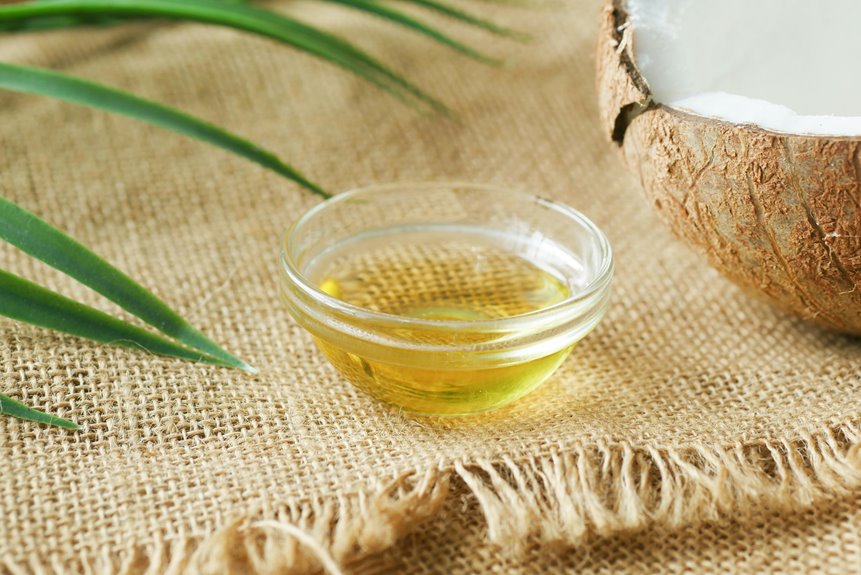
You can use coconut oil as a natural, temporary way to waterproof fabric, especially natural fibers like cotton or linen. It creates a thin, water-resistant layer that repels light moisture but needs regular reapplication since it wears off. Unlike synthetic treatments, it’s eco-friendly but may leave a greasy feel and attract dirt. If you want to know how to apply it properly and weigh its pros and cons, there’s more useful info ahead.
Key Takeaways
- Coconut oil creates a natural, thin water-resistant layer that repels light moisture but is not fully waterproof.
- It works best on natural fibers like cotton, filling thread gaps to enhance water resistance.
- Compared to synthetic waterproofing, coconut oil is eco-friendly but less durable and requires frequent reapplication.
- Application involves warming oil, rubbing it evenly on dry fabric, and letting it absorb in a warm area.
- Downsides include greasy residue, dirt attraction, and reduced effectiveness under heavy or prolonged water exposure.
Understanding the Waterproofing Properties of Coconut Oil
Although it might seem unusual, coconut oil has natural waterproofing properties that can protect your fabric from moisture. When you apply it, the oil creates a thin, water-resistant layer on the fabric’s surface. This layer repels water, preventing it from soaking in and causing damage.
Coconut oil’s saturated fats make it stable and effective against moisture. You’ll find it particularly helpful for light exposure to water, like dew or light rain.
However, keep in mind that this protection isn’t permanent; the oil can wear off over time, especially with frequent washing or heavy rain. Understanding these properties helps you decide when and how to use coconut oil to keep your fabrics dry and shielded from water.
How Coconut Oil Interacts With Different Fabric Types
Knowing how coconut oil forms a protective barrier on fabric, you might wonder how it works with different materials.
Natural fibers like cotton and linen absorb coconut oil well, allowing the oil to fill the gaps between threads and create a water-resistant layer.
However, synthetic fabrics such as polyester or nylon don’t absorb the oil as effectively, so the waterproofing effect tends to be weaker or uneven.
For blends, the outcome depends on the ratio of natural to synthetic fibers.
You should also consider that coconut oil can temporarily darken lighter fabrics and may leave a slight residue.
Testing on a small, hidden area first is essential to see how your specific fabric reacts before treating larger sections.
This way, you’ll know what to expect.
Comparing Coconut Oil to Traditional Waterproofing Methods
When you compare coconut oil to traditional waterproofing methods, you’ll notice some clear differences in application, effectiveness, and environmental impact.
Traditional methods often rely on synthetic chemicals like fluoropolymers, which provide strong, long-lasting water resistance but can be harmful to the environment. Applying these treatments usually requires special equipment or professional service.
Coconut oil, on the other hand, is natural and eco-friendly, making it appealing if you want to avoid harsh chemicals. However, its waterproofing effect tends to be less durable and may need frequent reapplication.
Natural and eco-friendly, coconut oil offers gentle waterproofing but requires regular reapplication due to limited durability.
Plus, coconut oil can alter the fabric’s feel and attract dirt. So, if you prioritize sustainability and don’t mind some upkeep, coconut oil might work, but for reliable, heavy-duty waterproofing, traditional methods still lead the way.
Step-by-Step Guide to Applying Coconut Oil on Fabric
If you decide to try coconut oil for waterproofing, applying it correctly can make a big difference in how well it works.
First, clean and dry the fabric thoroughly. Next, warm a small amount of coconut oil until it’s liquid but not hot—this helps it spread evenly.
Using a clean cloth or your fingers, rub the oil gently into the fabric in small, circular motions. Cover the entire surface you want to waterproof, applying a thin, even layer.
After application, let the fabric sit in a warm, dry area for a few hours to absorb the oil fully. Finally, wipe off any excess oil with a dry cloth to prevent stickiness.
Repeat this process as needed for better water resistance.
Pros and Cons of Using Coconut Oil for Waterproofing
Although coconut oil offers a natural and affordable way to waterproof fabric, it comes with both advantages and drawbacks you should consider before using it.
You’ll appreciate its eco-friendly nature and ease of application, but it may not provide long-lasting protection or withstand heavy rain.
Here are the key pros and cons:
- Pros: Coconut oil is biodegradable, safe for skin, and readily available, making it a budget-friendly, natural option.
- Cons: The oil can attract dirt, may leave a greasy residue, and requires frequent reapplication to maintain waterproofing.
- Durability: Unlike specialized waterproof treatments, coconut oil’s effectiveness diminishes quickly under constant exposure to water and wear.
Weigh these factors carefully to decide if coconut oil fits your waterproofing needs.
Frequently Asked Questions
Can Coconut Oil Waterproofing Affect Fabric Breathability?
Like wrapping your fabric in plastic wrap, coconut oil waterproofing can reduce breathability. You’ll find it blocks airflow, making your fabric less breathable and potentially uncomfortable, especially during extended wear or in warm conditions.
Is Coconut Oil Waterproofing Safe for Skin Contact?
You can safely wear fabric treated with coconut oil since it’s natural and gentle on skin. However, if you have allergies or sensitive skin, test a small area first to avoid irritation or discomfort.
How Long Does Coconut Oil Waterproofing Last Outdoors?
You’ll find coconut oil’s waterproofing outdoors lasts only a few days to a week since sunlight, rain, and dirt break it down quickly. You’ll need to reapply often to keep your fabric water-resistant.
Can Coconut Oil Cause Fabric Discoloration Over Time?
Yes, coconut oil can cause fabric discoloration over time, especially on lighter fabrics. You’ll notice yellowing or dark spots as the oil oxidizes and interacts with the fabric fibers, so use it cautiously to avoid stains.
Is Coconut Oil Waterproofing Environmentally Friendly Compared to Chemicals?
Think of coconut oil as nature’s gentle shield. You’ll find it’s more eco-friendly than harsh chemicals since it’s biodegradable and non-toxic, but its waterproofing isn’t as strong or long-lasting, so you’ll need frequent reapplications.