
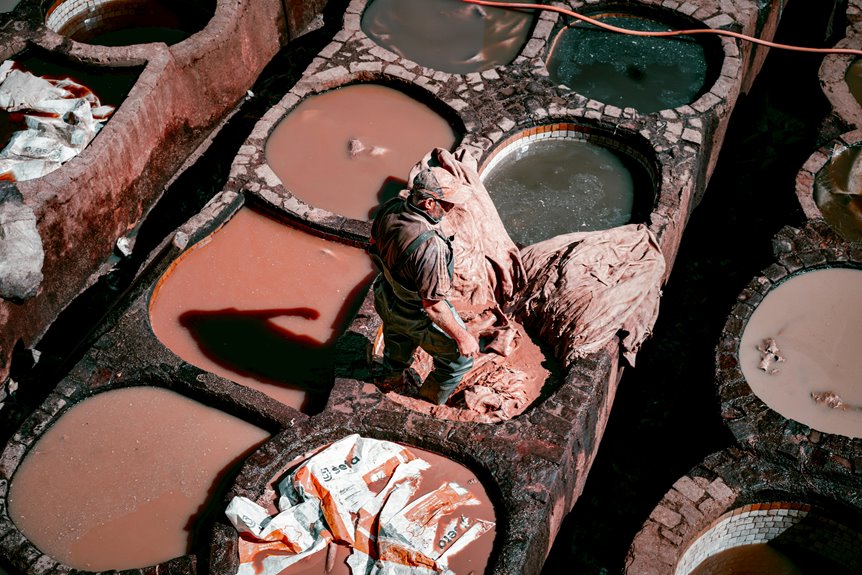
Imagine a thirsty sponge, soaking up every drop of water it encounters. That’s how wool absorbs water during scouring and dyeing, processes that demand significant amounts of water to achieve cleanliness and vibrant colors. As you explore the intricacies of wool processing, consider how this essential resource is utilized and the innovative practices that could reshape the industry’s water footprint. What if there’s a way to balance quality and sustainability?
Key Takeaways
- Wool scouring requires large volumes of water to clean raw wool, balancing efficiency with effective impurity removal.
- Traditional scouring methods are water-intensive and can lead to significant pollution; eco-friendly techniques reduce both water usage and environmental impact.
- The dyeing process consumes approximately 35-55 liters of water per kilogram of wool, including pre-soaking, dyeing, and rinsing stages.
- Implementing water recycling and closed-loop systems in scouring and dyeing can drastically decrease overall freshwater consumption.
- Innovations, such as biodegradable detergents and waterless dyeing techniques, are key to improving sustainability in wool processing.
Overview of Water Usage in Wool Scouring
Water plays an essential role in the wool scouring process, where it effectively removes grease, dirt, and impurities from raw wool. This process is critical for preparing wool for further processing and guarantees the final product meets quality standards.
Typically, you’ll find scouring plants using large volumes of water to achieve ideal results. Efficient water usage is key, as excessive water can lead to increased costs and environmental concerns.
While the quantity of water varies depending on the wool’s condition, it’s important to balance water efficiency with effective cleaning. Understanding the dynamics of water usage in scouring can help you appreciate the significance of this step in the overall wool processing journey, ultimately contributing to better quality wool products.
The Scouring Process: Techniques and Environmental Impact
While scouring is essential for cleaning wool, the techniques employed can greatly impact both the quality of the wool and the environment.
You might opt for traditional methods, using large amounts of water and harsh chemicals, which can lead to significant waste and pollution.
Alternatively, consider eco-friendly techniques that utilize biodegradable detergents and reduced water usage. These methods not only preserve the wool’s natural properties but also minimize your environmental footprint.
Additionally, recycling water and implementing closed-loop systems can drastically lower water consumption.
Water Requirements in Wool Dyeing
When it comes to dyeing wool, understanding the specific water requirements is crucial for achieving vibrant colors and maintaining the fiber’s integrity.
You’ll need to take into account several factors to guarantee effective dyeing without wasting water. Here’s a quick overview of the key water needs:
- Pre-Dyeing Soak: Wool must be soaked to remove any residual oils, requiring about 5-10 liters of water per kilogram.
- Dyeing Process: Expect to use around 20-30 liters of water per kilogram of wool during the dyeing phase.
- Post-Dye Rinsing: Rinsing dyed wool typically requires an additional 10-15 liters of water.
- Water Recycling: Implementing recycling methods can greatly reduce overall water consumption.
Comparing Water Footprints: Wool vs. Other Textiles
Understanding the water footprint of wool compared to other textiles reveals significant insights into sustainability. Wool’s production requires substantial water, especially during scouring and dyeing.
However, when you compare it to cotton, wool often has a lower overall water usage, primarily due to cotton’s high irrigation demands.
Synthetic fibers like polyester can utilize less water in processing, but the environmental costs of oil extraction and pollution can outweigh those benefits.
By examining these differences, you can appreciate the complexities of textile production. Choosing wool over cotton or synthetics may offer a more sustainable option, especially when considering the full lifecycle impacts.
Ultimately, understanding these metrics helps you make informed choices about your clothing and its environmental footprint.
Innovations and Future Directions for Water Conservation in Wool Processing
Innovation drives the quest for water conservation in wool processing, presenting exciting opportunities to reduce environmental impact. By embracing new technologies and practices, you can notably lower water usage.
Here are four promising directions to contemplate:
- Closed-loop systems: Implementing systems that recycle water during scouring and dyeing minimizes freshwater consumption.
- Eco-friendly dyes: Using waterless dyeing techniques or dyes that require less water can greatly reduce your overall usage.
- Smart monitoring: Adopting IoT devices helps track water usage in real-time, allowing for timely adjustments.
- Biodegradable detergents: Utilizing environmentally safe detergents can lessen water pollution, improving the overall sustainability of the process.
Frequently Asked Questions
What Are the Main Contaminants Found in Raw Wool?
Raw wool’s often contaminated with grease, dirt, and vegetable matter. You’ll find lanolin, dust, and even animal waste mixed in. Each contaminant affects the wool’s quality, requiring careful cleaning before any processing can begin.
How Does Water Usage in Wool Processing Affect Climate Change?
Water usage in wool processing contributes to climate change by increasing greenhouse gas emissions through energy consumption. You’re also impacting local ecosystems, as excessive water withdrawal can lead to habitat degradation and reduced biodiversity.
Are There Certifications for Sustainable Wool Production?
Yes, there are certifications for sustainable wool production. Look for labels like Responsible Wool Standard or Global Organic Textile Standard. These guarantee ethical practices, animal welfare, and environmental considerations are prioritized in wool sourcing and production.
What Is the Role of Lanolin in Wool Processing?
Lanolin acts as a natural lubricant, helping you soften and condition wool fibers during processing. It also enhances moisture resistance, ensuring the wool maintains its quality and durability throughout various textile manufacturing stages.
How Can Consumers Support Sustainable Wool Production Practices?
You can support sustainable wool production by choosing certified brands, advocating for ethical practices, and educating others about the importance of responsible sourcing. Every purchase you make can promote environmental stewardship and animal welfare in the industry.