
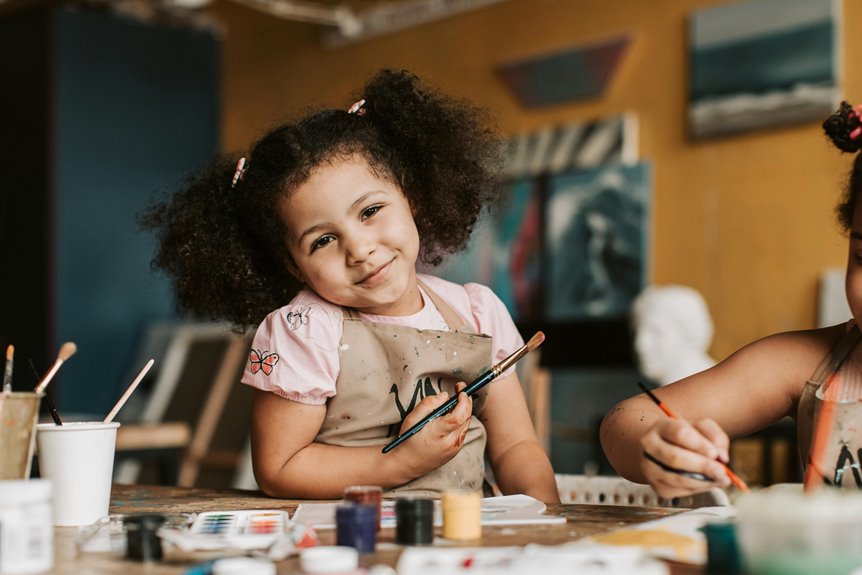
Using water-based paint on a child’s polyester art smock can create vibrant designs, but you need to prepare the fabric properly for the best results. Start by washing the smock with mild detergent, then dry and iron it on low heat. Choose acrylic or fabric paint for durability and safety. Remember to supervise kids during the process and guarantee a well-ventilated space. There’s more to learn about optimizing adhesion and caring for their creations!
Key Takeaways
- Use acrylic or fabric paint for better adhesion on polyester, ensuring vibrant and durable designs.
- Properly prepare the fabric by washing with mild detergent to enhance paint bonding.
- Apply paint in thin layers to avoid peeling and ensure effective adhesion.
- Air dry the smock after washing to protect the paint and fabric texture.
- Always supervise children during painting to ensure safety and proper use of materials.
Understanding Polyester Fabric
Polyester fabric is a popular choice for children’s art smocks due to its durability and resistance to stains. This synthetic material holds up well against wear and tear, making it ideal for active kids who love to create.
You’ll appreciate how easily polyester can be cleaned; it dries quickly and doesn’t retain moisture, keeping your child comfortable while they work. Plus, the fabric resists fading, so those vibrant colors remain bright even after multiple washes.
Polyester is also lightweight and breathable, ensuring your child can move freely during art projects. With its versatility and practicality, using polyester for art smocks means you’re investing in a long-lasting, easy-to-care-for option that supports your child’s creative endeavors.
Challenges of Using Water-Based Paint
When using water-based paint on a child’s art smock, you might face some challenges.
Adhesion can be tricky, and you risk dye migration if the smock’s fabric isn’t compatible.
It’s important to be aware of these issues to guarantee a successful painting experience.
Adhesion Difficulties
Although water-based paints are popular for their ease of use and quick drying times, they can pose significant adhesion difficulties on a child’s art smock.
Since polyester is a smooth synthetic fabric, paint may struggle to adhere properly, leading to peeling or flaking over time. If you don’t prepare the surface adequately, you might find that the paint won’t stick well, especially during wash cycles.
Additionally, applying too much paint can result in a thick layer that doesn’t bond effectively. To improve adhesion, consider using a fabric medium mixed with the paint or lightly scuffing the fabric surface before application.
Dye Migration Risk
Since water-based paints can be prone to dye migration, you might encounter some challenges when using them on a child’s art smock.
Dye migration occurs when the paint seeps into the fabric, potentially altering its color or ruining your design. This issue is especially relevant with synthetic fabrics like polyester, which can absorb dyes differently than natural fibers.
To minimize this risk, it’s essential to pre-wash the smock and test the paint on a small area first. Additionally, using a fabric medium can help enhance the paint’s stability and reduce migration.
Always let the paint cure fully before washing or wearing the smock, ensuring that your child’s masterpiece stays vibrant and intact.
Importance of Proper Fabric Preparation
Before you start painting, proper fabric preparation is key to ensuring great results.
Washing and drying the smock removes any residues that could interfere with paint adhesion, while enhancing the surface texture helps the paint stick better.
Taking these steps will make your child’s artwork look vibrant and last longer.
Washing and Drying
Proper washing and drying are essential steps in preparing fabric for a child’s art smock.
If you want the paint to adhere well and the fabric to last, you need to follow these steps:
- Pre-Wash: Wash the polyester fabric in cold water to remove any finishes or residues.
- Use Mild Detergent: Choose a gentle detergent that won’t damage the fibers.
- Air Dry: Opt for air drying to prevent any heat damage from the dryer, which can alter the fabric’s texture.
- Iron on Low Heat: If necessary, iron the smock on a low setting to smooth out wrinkles without harming the fabric.
Surface Texture Enhancement
When preparing fabric for a child’s art smock, the surface texture plays an essential role in how well the paint adheres and how vibrant the colors appear. A smooth surface can lead to paint running off, while a textured surface allows for better grip and color retention. To enhance the texture, consider pre-washing the fabric, using a fabric stiffener, or lightly sanding the surface.
Here’s a quick reference table to help you with fabric preparation:
| Fabric Preparation Step | Purpose | Benefits |
|---|---|---|
| Pre-wash | Removes impurities | Improves paint adhesion |
| Use fabric stiffener | Adds texture | Enhances color vibrancy |
| Lightly sand | Creates grip | Prevents paint running off |
These steps guarantee a successful painting experience!
Recommended Paint Types for Polyester
If you want your child’s art smock to showcase vibrant colors while being durable, choosing the right paint for polyester is essential.
Here are some recommended paint types:
- Acrylic Paint: Water-based and easy to clean, it adheres well to polyester and offers bright colors.
- Fabric Paint: Specifically designed for textiles, it provides flexibility and durability, ensuring the smock withstands wear and tear.
- Spray Paint: Look for fabric-safe options, as they can cover large areas quickly and create unique designs.
- Textile Markers: Great for detailed work, they’re perfect for personalizing the smock and are available in various colors.
Alternative Printing Techniques for Durability
Although choosing the right paint is essential for your child’s art smock, exploring alternative printing techniques can greatly enhance durability.
Techniques like screen printing and heat transfer printing provide long-lasting designs that withstand wear and tear. Screen printing uses a mesh stencil to apply ink, allowing for vibrant colors and intricate patterns that won’t easily fade.
Screen printing and heat transfer printing create vibrant, durable designs that resist fading and withstand the rigors of creative play.
Heat transfer printing involves transferring a design from paper to fabric with heat, ensuring a strong bond and resistance to washing. Both methods create a more durable finish compared to traditional painting.
If you want your child’s smock to last through countless art projects, consider these options. They not only enhance the smock’s durability but also add a professional touch to your child’s creations.
Safety Considerations for Children’s Art Projects
While creativity flourishes in children’s art projects, safety must always be a priority. To guarantee a safe and enjoyable experience, keep these considerations in mind:
- Non-Toxic Materials: Always choose non-toxic, child-safe paints and supplies to prevent harmful exposure.
- Protective Gear: Use smocks, gloves, and safety goggles to shield clothing and skin from spills and splashes.
- Well-Ventilated Space: Set up projects in a well-ventilated area to minimize inhalation risks from fumes.
- Supervision: Always supervise children during art activities, especially when using tools or substances that could pose hazards.
Optimizing Adhesion and Flexibility
To guarantee that water-based paint adheres well to a child’s art smock while maintaining flexibility, start by selecting the right fabric. Polyester is an excellent choice, as it allows for better paint adhesion.
Before painting, prewash the smock to remove any sizing or chemicals. When applying paint, use thin layers to avoid stiffness; let each layer dry completely before adding more. You can also mix a fabric medium with the paint to enhance flexibility and durability.
Once your design is complete, heat-set the paint by ironing it on a low setting, ensuring a protective cloth is used to prevent direct contact. This process helps the paint bond better, ensuring a fun and functional art smock for your child.
Caring for Your Painted Art Smock
Once your child’s art smock is beautifully painted and heat-set, caring for it properly will help maintain its vibrant colors and flexibility.
Follow these simple steps to keep the smock looking great:
- Wash gently: Hand wash with cold water and mild detergent to avoid damaging the paint.
- Air dry: Lay the smock flat or hang it up to air dry. Avoid using a dryer, as heat can harm the paint.
- Avoid bleach: Never use bleach or harsh chemicals, as they can fade the colors and weaken the fabric.
- Store wisely: Store the smock in a cool, dry place, away from direct sunlight to prevent fading.
Enhancing Longevity of Art Smocks
If you want your child’s art smock to last through countless creative sessions, it’s essential to take proactive steps in its care and maintenance. Start by washing it gently in cold water with mild detergent, avoiding harsh chemicals. Hang it to dry instead of using high heat, which can weaken the fabric.
Here’s a quick guide:
| Action | Frequency | Notes |
|---|---|---|
| Wash | After each use | Use cold water and mild detergent |
| Inspect for damage | Weekly | Check seams and fabric for wear |
| Store properly | When not in use | Keep it in a cool, dry place |
Frequently Asked Questions
Can I Use Fabric Softener on Painted Polyester Smocks?
Using fabric softener on painted polyester smocks is like trying to mix oil and water; it can damage the paint. You should avoid fabric softener to keep your painted designs vibrant and intact.
How Can I Remove Paint From Polyester Fabric?
To remove paint from polyester fabric, quickly dab the stain with a cloth soaked in rubbing alcohol or paint thinner. Rinse thoroughly, then wash as usual. Always test on a small area first to avoid damage.
What Colors Work Best for Children’s Art Projects?
When choosing colors for children’s art projects, bright and bold hues like red, blue, and yellow work best. They inspire creativity, engage kids’ imaginations, and make their artwork vibrant and exciting to showcase.
Is It Safe to Use Water-Based Paint on Children’s Clothing?
Yes, it’s safe to use water-based paint on children’s clothing. These paints are non-toxic and easy to clean, making them a great choice for art projects while ensuring your child stays safe and mess-free.
How Do I Store Painted Polyester Art Smocks?
To store painted polyester art smocks, hang them in a cool, dry place away from sunlight. If folded, use tissue paper to prevent paint smudging. Make certain they’re completely dry before storage to maintain quality.