
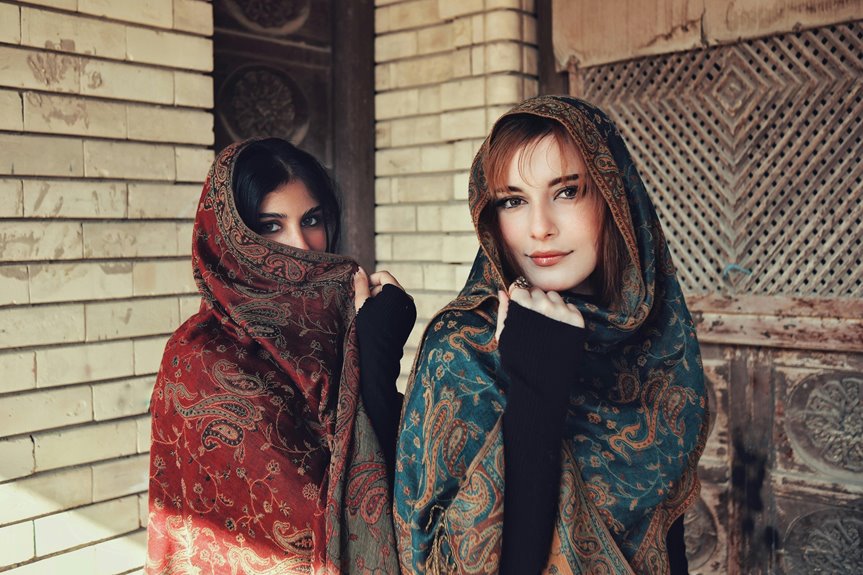
When you choose burnout velvet for scarves and shawls, you get a lightweight, breathable fabric that blends sheer and plush textures for a chic look and cozy feel. Its unique burnt-out patterns add elegance and dimension, while the fabric drapes beautifully for effortless styling. Cutting and sewing require care—use sharp tools and gentle stitching to protect the delicate texture. Pair it with solid colors to truly stand out. Ready to master handling and styling tips that make the most of this fabric?
Key Takeaways
- Burnout velvet offers a unique blend of sheer and plush textures, creating elegant scarves and shawls with eye-catching patterns.
- Its lightweight and breathable nature ensures comfort and warmth, perfect for layering in various seasons.
- Choose seasonal colors and complementary patterns to enhance the style and versatility of burnout velvet accessories.
- Use sharp tools and gentle sewing techniques like fine needles and French seams to handle burnout velvet without damage.
- Press burnout velvet with low heat and a pressing cloth, and accessorize minimally to highlight its luxurious texture.
Benefits of Choosing Burnout Velvet for Accessories
When you choose burnout velvet for your scarves and shawls, you get a unique blend of texture and elegance that stands out.
This fabric combines sheer and plush areas, creating eye-catching patterns that add depth to your accessories. You’ll appreciate its lightweight feel, making it comfortable to wear without sacrificing warmth.
Burnout velvet’s breathable nature means you won’t overheat, perfect for layering in different seasons. Plus, it drapes beautifully, enhancing the overall silhouette and giving your scarves and shawls a flowing, graceful look.
Breathable and elegant, burnout velvet layers effortlessly while adding graceful movement to your scarves and shawls.
The fabric also offers versatility in styling, easily shifting from casual to formal settings. Choosing burnout velvet means you’re investing in accessories that elevate your outfit with subtle sophistication and lasting appeal.
Understanding the Burnout Technique and Fabric Composition
You’ll want to start by learning how the burnout technique chemically removes parts of the fabric to create its unique patterns.
Burnout velvet combines plush texture with sheer areas, giving your scarves and shawls a rich, tactile feel.
Knowing the common fiber blends, like silk and rayon, helps you choose pieces that balance softness and durability.
Burnout Technique Process
Although the burnout technique may seem complex at first, it’s a straightforward process that involves selectively dissolving fibers to create semi-transparent patterns on velvet fabric.
You start by choosing a blended fabric—usually a mix of cellulose fibers like cotton and synthetic ones such as polyester. Next, you apply a chemical gel or paste onto the fabric’s surface where you want the design. This gel dissolves the cellulose fibers but leaves the synthetic fibers intact, creating sheer areas contrasting with the plush velvet.
After the chemical sets, you wash the fabric to remove the dissolved fibers and neutralize the chemicals. Finally, the fabric dries with distinct burnt-out patterns that add texture and visual interest to scarves and shawls, making each piece unique and elegant.
Velvet Fabric Characteristics
Velvet’s unique texture and fiber composition play an essential role in how the burnout technique affects its appearance. When you work with burnout velvet, you’re dealing with a fabric that combines raised velvet areas and sheer base fabric. The burnout process dissolves some fibers, creating intricate patterns and contrasting textures ideal for scarves and shawls.
Here’s a quick overview of velvet fabric characteristics relevant to burnout:
| Characteristic | Description | Effect on Burnout |
|---|---|---|
| Pile Texture | Raised, soft surface | Creates depth and dimension |
| Base Fabric | Usually semi-sheer or sheer | Allows pattern transparency |
| Fiber Content | Mixed fibers (synthetic/natural) | Determines burnout success |
| Weight | Lightweight to medium | Affects drape and comfort |
Understanding these helps you choose the right velvet for stunning burnout designs.
Common Fiber Blends
Fabric composition plays an essential role in the burnout technique, especially when selecting velvet for scarves and shawls.
You’ll often find burnout velvet made from fiber blends that combine cellulose fibers like cotton or viscose with synthetic fibers such as polyester or nylon. This mix allows the chemical process to dissolve the cellulose sections, creating that signature sheer pattern against the plush velvet base.
For example, a cotton-polyester blend works well because the polyester remains intact while the cotton burns away in treated areas.
When choosing burnout velvet, look for blends where at least one fiber is cellulose-based, as this is key to achieving the textured transparency. Understanding these common fiber blends helps you pick fabrics that yield beautiful, durable scarves and shawls with distinctive burnout designs.
Selecting the Right Patterns and Colors for Scarves and Shawls
When choosing patterns and colors for your burnout velvet scarves and shawls, keep seasonal color trends in mind to stay stylish year-round.
You’ll want to contemplate the scale of patterns so they complement your outfit without overwhelming it.
Also, harmonize textures and hues to create a balanced, eye-catching accessory.
Seasonal Color Trends
As the seasons change, you’ll want to choose patterns and colors for your scarves and shawls that reflect the mood and palette of the time.
Burnout velvet, with its rich texture, beautifully showcases seasonal hues. In spring, embrace soft pastels and floral-inspired designs to evoke freshness.
Summer calls for vibrant, sunny shades that boost your energy. Fall invites warm, earthy tones to mirror the changing leaves, while winter suits deep, jewel colors that add warmth and sophistication.
- Feel renewed with gentle spring greens and blush pinks.
- Radiate confidence in bright, bold summer oranges and yellows.
- Cozy up with rustic browns and burnt siennas in autumn.
Selecting these seasonal colors helps your accessories harmonize with your environment and mood.
Pattern Scale Considerations
Choosing seasonal colors sets a great foundation, but paying attention to pattern scale can make your burnout velvet scarves and shawls truly stand out.
When selecting patterns, consider the size of the motifs in relation to the scarf or shawl’s dimensions. Large, bold patterns often work best on bigger pieces, allowing the design to be fully appreciated without overwhelming the fabric.
Smaller, intricate patterns suit more delicate scarves, adding subtle interest without competing with the burnout texture.
Also, think about how pattern scale interacts with your chosen colors; larger motifs in contrasting hues create striking focal points, while smaller patterns in tonal shades offer elegant detail.
Harmonizing Textures and Hues
Although burnout velvet offers a rich texture, you’ll want to carefully select patterns and colors that complement rather than compete with its unique surface.
When choosing hues, opt for subtle contrasts or tonal variations that enhance the fabric’s depth without overwhelming it. Pairing solid colors with delicate prints can help balance the visual weight.
Additionally, consider the feel of your scarf or shawl—mixing burnout velvet with smooth fabrics creates an inviting tactile experience.
- Embrace soft, muted tones to highlight burnout velvet’s elegance.
- Combine textures that invite touch and warmth.
- Select patterns that enhance, not overpower, the fabric’s intricate design.
Tips for Cutting and Handling Burnout Velvet Fabric
Handling burnout velvet fabric requires a gentle touch and careful preparation to avoid damaging its delicate texture. When cutting, always use sharp scissors or a rotary cutter to guarantee clean edges without pulling the nap.
Lay your fabric flat on a smooth surface and avoid stretching it, as burnout velvet can distort easily. Pin sparingly and use fine, sharp pins to prevent snagging. Consider using pattern weights instead of pins for added control.
To prevent fraying, cut along the fabric’s natural grain and handle pieces minimally before sewing. Keep your hands clean and dry to avoid transferring oils or dirt.
Sewing Techniques for Durable and Elegant Finishes
Once you’ve carefully cut and prepared your burnout velvet fabric, the next step is sewing it to achieve both durability and elegance.
Use a fine needle and polyester thread to prevent snags and maintain strength. A narrow zigzag stitch helps secure delicate edges without bulk. Always sew slowly, guiding the fabric gently to avoid stretching or distortion.
To make your scarves and shawls truly special, focus on these techniques:
- French seams: Encapsulate raw edges for a clean, polished look that lasts.
- Stay stitching: Stabilize curves and prevent fabric from shifting.
- Pressing with care: Use low heat and a pressing cloth to preserve texture and sheen.
These steps guarantee your burnout velvet pieces feel luxurious and stand up to wear beautifully.
Styling Ideas to Showcase Burnout Velvet Scarves and Shawls
When you wear burnout velvet scarves and shawls, you highlight their unique texture and intricate patterns. To showcase them, drape a scarf loosely over your shoulders, letting the light catch the sheer and velvety contrasts.
Pair the shawl with solid-colored outfits to let its design stand out without overwhelming your look. You can knot a scarf at the neck for a chic, effortless vibe or wrap a shawl around your arms for evening elegance.
Experiment with layering—wear the burnout velvet piece over a fitted jacket or simple dress to add depth. Remember, these fabrics are statement pieces, so keep accessories minimal.
Frequently Asked Questions
How Do I Care for and Clean Burnout Velvet Scarves?
You should hand wash your burnout velvet scarves gently in cold water with mild detergent. Avoid wringing them out, instead press water out softly. Lay flat to dry, keeping them away from direct sunlight to preserve texture.
Can Burnout Velvet Be Used for Other Accessories Besides Scarves?
Did you know 65% of designers use burnout velvet for various accessories? You can definitely use it for bags, headbands, or even gloves. It adds a unique texture and elegance to many fashion pieces you create.
What Are the Best Fabric Substitutes for Burnout Velvet?
You can try chiffon, lace, or mesh as substitutes for burnout velvet. These fabrics offer similar sheerness and texture, letting you create elegant, lightweight accessories without sacrificing style or comfort.
Is Burnout Velvet Suitable for Sensitive Skin?
Burnout velvet can be gentle, but if you have sensitive skin, you’ll want to test it first. Its texture might irritate some people, so always check for reactions before wearing it for long periods.
Where Can I Buy High-Quality Burnout Velvet Fabric?
You want quality, you want variety, and you want reliability—you’ll find high-quality burnout velvet fabric at specialty fabric stores, online marketplaces like Etsy or Mood Fabrics, and designer textile shops that focus on luxury materials.