
Imagine taking that old, forgotten pair of jeans at the back of your closet and transforming them into a stylish, one-of-a-kind jacket. Upcycling clothes isn't just a trend; it's a significant shift towards sustainable fashion. You can reduce waste and make a statement with unique, eco-friendly pieces. But what exactly does it take to turn your wardrobe into a treasure trove of upcycled fashion? From simple DIY projects to innovative techniques, there's much to explore in this growing movement. Curious about how you can start your own upcycling journey?
Key Takeaways
- Upcycling clothes reduces fashion industry waste and pollution by reimagining existing materials.
- It promotes sustainable practices by conserving resources and lowering the need for new raw materials.
- Unique, creative pieces emerge from upcycling, enhancing individual style and reducing carbon footprints.
- Upcycling empowers personal expression and offers financial savings while supporting ethical fashion.
- Success stories from brands like Patagonia and designers like Shaina Mote highlight upcycling's potential.
The Rise of Upcycling
Why has upcycling clothes become so popular in recent years?
You've likely noticed a growing trend toward sustainable practices, and upcycling is at the forefront. As you seek mastery in this area, understanding the environmental impact is essential.
The fashion industry is notorious for its waste and pollution. By upcycling, you can notably reduce the amount of discarded textiles, which often end up in landfills.
When you upcycle, you're not just giving old garments a new life; you're directly combating the negative environmental impact of fast fashion. This practice conserves resources and reduces the need for new raw materials.
Imagine the water, energy, and chemicals saved when you repurpose an existing piece instead of buying new.
You're also participating in a movement that values creativity and individuality. Upcycling allows you to transform garments in unique ways, setting your style apart from mass-produced fashion.
As you explore further into sustainable practices, remember that every item you upcycle contributes to a larger goal—minimizing your carbon footprint and promoting a circular economy.
Embrace upcycling to make a tangible difference in the world of fashion.
Benefits of Upcycled Fashion
Upcycling fashion not only reduces waste but also fosters creativity and uniqueness in your wardrobe. Embracing sustainable style means you'll stand out with pieces that are truly one-of-a-kind. When you upcycle, you're not just following eco-friendly trends; you're pioneering them. This proactive approach to fashion drastically lowers your carbon footprint, as you're reimagining existing materials rather than contributing to the demand for new resources.
Moreover, upcycled fashion empowers you to express your individuality. Instead of settling for mass-produced garments, you can tailor pieces to reflect your personal taste and flair. Each upcycled item tells a story, adding depth and character to your clothing collection.
Financially, upcycling also makes sense. By repurposing what you already own or sourcing inexpensive second-hand items, you save money while still enjoying high-quality, stylish attire. It's a win-win situation: you're both savvy and sustainable.
Additionally, this innovative approach to fashion supports local artisans and small businesses, promoting a more ethical fashion industry. By choosing upcycled garments, you're making a statement about what fashion should be—sustainable, unique, and meaningful.
Creative Upcycling Ideas
Transforming your old clothes into something new and stylish is easier than you might think. Engaging in DIY projects not only breathes life into forgotten pieces but also aligns perfectly with a sustainable style ethos.
Start by envisioning what you want to create. That old pair of jeans? Turn them into chic shorts or a trendy tote bag. A worn-out sweater can become cozy mittens or a stylish pillow cover.
Think beyond just altering shapes. Consider dyeing fabrics to give them a fresh look. Tie-dye is back in vogue, and it's a simple yet effective way to rejuvenate old t-shirts. Adding patches or embroidery can also infuse personality into plain garments. Got a dress with a stain? Cover it with a fabric applique or transform it into a two-piece set.
Another exciting idea is repurposing scarves into unique accessories. Sew them into headbands, belts, or even patchwork skirts. The key is to see potential where others see waste.
Tools and Techniques
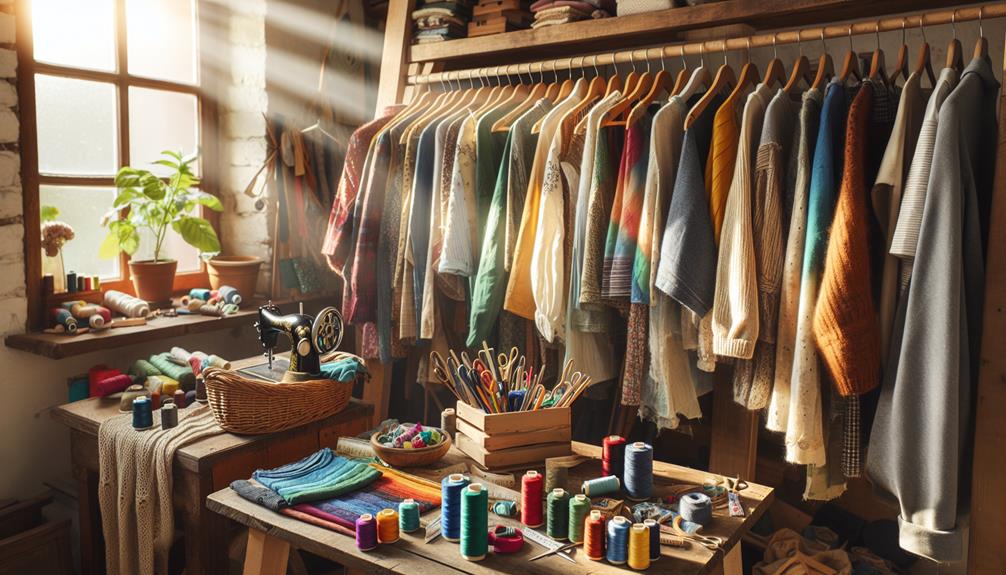
To successfully upcycle your clothes, you'll need a few essential tools and techniques at your disposal. Mastering these will elevate your DIY upcycling projects, making them look professional and uniquely yours. Here are four must-haves:
- Sewing Machine: A basic yet reliable sewing machine is indispensable. It allows you to make precise alterations, add new fabric, and reinforce seams. If you're new to sewing, plenty of upcycling tutorials can guide you through the basics.
- Fabric Scissors: High-quality fabric scissors ensure clean, accurate cuts. They're designed to slice through fabric like butter, preventing fraying and ensuring your edges are neat. Dull scissors can ruin your material and your project.
- Measuring Tools: A tailor's tape measure and a clear ruler are essential for accuracy. Precise measurements are the backbone of any successful DIY upcycling project, helping you avoid mistakes and wasted material.
- Pins and Needles: These may seem basic, but they're necessary. Pins help keep your fabric in place while you sew, and a variety of needles (including hand-sewing and machine needles) can handle different fabric types and thicknesses.
Inspiring Upcycling Success Stories
Countless creative individuals have turned their old clothes into stunning new outfits, proving that upcycling can be both stylish and sustainable.
Take the example of upcycling entrepreneurs like Livia Firth, co-founder of Eco-Age. She transformed her passion for sustainable design into a thriving business, showing that discarded fabrics can be the foundation for high-fashion garments.
Another inspiring story is that of Shaina Mote, who focuses on creating timeless pieces from repurposed textiles. Her collections highlight the potential of upcycling, demonstrating that you don't need new materials to craft beautiful, durable clothing.
You can also look to the work of brands like Patagonia, which has been a pioneer in sustainable design. They've mastered the art of transforming worn-out clothing into new, functional pieces, setting an industry standard for upcycling.
These stories illustrate that with ingenuity and dedication, anyone can become an upcycling entrepreneur. By embracing sustainable design, you're not just creating unique items—you're contributing to a fashion revolution.
Let these success stories inspire you to look at your wardrobe with new eyes and see the possibilities for transformation.
Frequently Asked Questions
How Do I Care for My Upcycled Clothes?
Ever wondered how to care for your upcycled clothes? Wash gently, store in cool, dry places, and master repair techniques. Maintain fabrics by avoiding harsh chemicals. These washing tips and storage solutions will keep them looking fresh.
Where Can I Buy Upcycled Fashion Items?
You can find upcycled fashion items at specialized upcycled fashion boutiques or by hunting for thrift store treasures. These places offer unique, sustainable pieces that elevate your style while being eco-friendly. Explore and master sustainable fashion today!
Can I Upcycle Clothes if I Have No Sewing Skills?
Think you need sewing skills to upcycle clothes? Think again! With no sew upcycling ideas and creative alternatives, you can transform your wardrobe into something extraordinary. Immerse yourself in the world of fabric glue and iron-on patches!
How Do I Price My Upcycled Clothing for Sale?
To price your upcycled clothing, analyze competitor pricing, understand customer preferences, and use effective marketing tactics. Employ dynamic pricing strategies to find the sweet spot that balances profitability and appeal. Adapt based on market feedback.
Are There Online Communities for Upcycle Fashion Enthusiasts?
You wouldn't believe the vast number of online forums and social media groups for upcycle fashion enthusiasts. Explore, and you'll find a treasure trove of tips, inspiration, and like-minded individuals keen to share their expertise.