
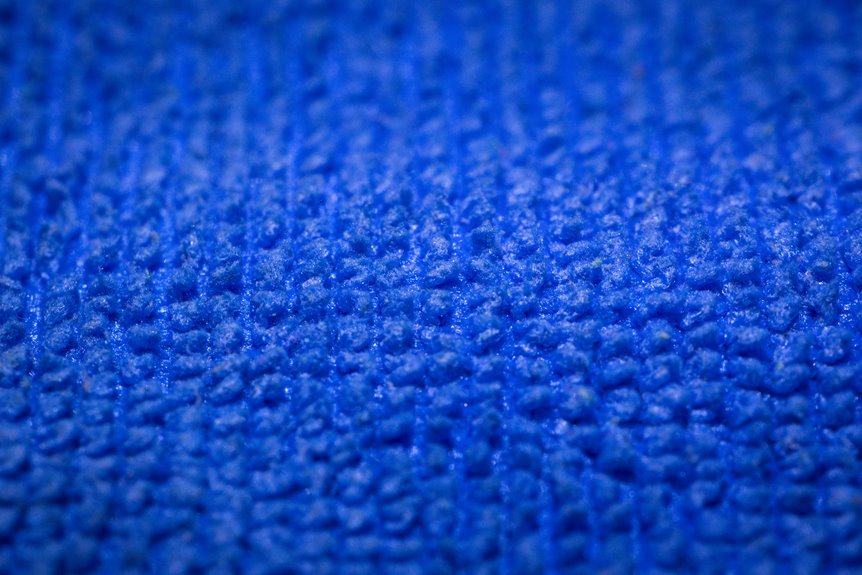
When you choose microfiber for your workout gear or everyday wear, you might not realize how its unique structure plays a key role in keeping you dry. The way these ultra-fine fibers are arranged isn’t just for softness—it actively manages moisture by pulling sweat away from your skin. But what exactly about microfiber’s design makes this possible? Let’s explore how its fiber alignment and other properties work together to enhance moisture-wicking.
Key Takeaways
- Microfiber’s extremely fine synthetic fibers create a large surface area for efficient moisture absorption and evaporation.
- Precise, parallel fiber alignment forms microscopic channels that transport moisture away from the skin.
- Hydrophobic fiber properties repel water, keeping sweat on the fabric surface for faster drying.
- Tightly packed fibers enable capillary action, moving moisture quickly through the fabric for enhanced comfort.
- Advanced microfiber technology integrates nano-engineered fibers to improve moisture management without sacrificing softness.
What Is Microfiber Fabric?
Microfiber fabric consists of extremely fine synthetic fibers, typically made from polyester and nylon.
When you explore microfiber uses, you’ll find it’s incredibly versatile, appearing in everything from cleaning cloths to athletic wear. Its fine fibers give it a large surface area, making it excellent for trapping dirt and moisture.
Because of this, many microfiber applications focus on durability, softness, and quick-drying properties. You’ll notice microfiber in household items like towels, upholstery, and bedding, thanks to its lightweight feel and easy maintenance.
In sportswear, it’s prized for comfort and breathability.
Understanding what microfiber fabric is helps you appreciate why manufacturers choose it for so many products designed to perform well and last longer in everyday use.
Key Properties of Microfiber for Moisture Management
Because it has such fine fibers, this fabric excels at managing moisture in ways that other materials can’t match.
Its ultra-fine fibers give microfiber unmatched moisture management for lasting comfort and dryness.
You’ll find microfiber’s key properties—like high surface area and quick drying—make it ideal for moisture management. Its tiny fibers create more space to absorb and evaporate sweat quickly, reducing moisture retention on your skin. This means you stay dry and comfortable during physical activities.
In various microfiber applications, from activewear to cleaning cloths, these properties help wick moisture away efficiently. The fabric’s durability also lets you rely on it repeatedly without losing its ability to manage moisture.
When you choose microfiber, you’re picking a fabric designed specifically to keep moisture moving, not sitting, ensuring better comfort and performance overall.
How Microfiber’s Fiber Alignment Enhances Capillary Action
When fibers align precisely, they create narrow channels that draw moisture away from your skin through capillary action. This fiber alignment enhances how effectively microfiber transports sweat, keeping you dry and comfortable. The tightly packed fibers form microscopic pathways, pulling moisture along the fabric’s surface.
Here’s how fiber alignment impacts capillary action:
| Fiber Alignment | Effect on Capillary Action |
|---|---|
| Parallel and dense | Maximizes moisture transport |
| Loosely arranged | Reduces capillary efficiency |
| Random orientation | Limits directional moisture flow |
The Role of Hydrophobicity in Moisture Wicking
Although fiber alignment plays an essential role, hydrophobicity greatly influences how moisture moves through fabric.
Fiber alignment matters, but hydrophobicity is key to moisture movement through fabric.
When you wear microfiber clothing, its hydrophobic properties repel water, preventing excessive moisture absorption. This means sweat doesn’t soak into the fibers but instead stays on the surface, where it can evaporate quickly.
You’ll notice that hydrophobic fibers keep you feeling dry and comfortable during physical activity. By minimizing moisture absorption, the fabric maintains its lightweight feel and dries faster than traditional materials.
Understanding this helps you appreciate why microfiber excels in moisture-wicking performance.
Influence of Fabric Weave and Breathability on Drying
Moisture-wicking benefits don’t rely solely on hydrophobic fibers; the way fabric is woven also plays a big part in how quickly it dries.
You’ll find that different weave patterns impact airflow and moisture movement, directly affecting drying efficiency. Here’s what you should know:
- Open weave patterns increase breathability, allowing air to circulate freely and speeding up evaporation.
- Tight weaves trap moisture, reducing airflow and slowing drying time.
- Balanced weaves combine durability with moderate breathability, offering reasonable drying efficiency without sacrificing strength.
Comparing Microfiber With Natural and Synthetic Fibers
Since microfiber is engineered from ultra-fine synthetic fibers, it offers unique properties that set it apart from both natural and traditional synthetic fabrics. When you compare microfiber with natural fibers, you’ll notice microfiber durability surpasses natural fiber comfort. Meanwhile, traditional synthetics often lag in moisture management.
| Fiber Type | Moisture-Wicking | Durability |
|---|---|---|
| Microfiber | Excellent | High |
| Natural Fibers | Moderate | Moderate |
| Traditional Synthetics | Low | Moderate to High |
You’ll find microfiber excels in moisture control due to its fine fibers and structure, making it ideal for activewear. Natural fibers feel softer but don’t wick moisture as effectively. So, if you want a balance of comfort and performance, microfiber is a smart choice.
Innovations in Microfiber Technology for Improved Moisture Control
Building on microfiber’s natural advantage in moisture control, recent advancements have pushed its performance even further.
You’ll find that innovations in microfiber technology now target enhanced absorption, quicker drying, and improved breathability. These improvements open doors to advanced applications across sportswear, medical textiles, and smart fabrics.
Here are three key innovations driving future trends:
- Nano-engineered fibers that boost moisture transport while maintaining softness.
- Hybrid weaves combining microfiber with natural fibers for better comfort and moisture management.
- Integration of antimicrobial and moisture-sensing properties to regulate sweat and odor dynamically.
Frequently Asked Questions
How Should Microfiber Fabrics Be Washed to Maintain Moisture-Wicking Properties?
Before washing microfiber, don’t treat it like a Victorian gown! You should use cold water, mild detergent, and avoid fabric softeners to keep moisture retention strong. Gentle cycles help maintain microfiber washing effectiveness and moisture-wicking properties.
Can Microfiber Cause Skin Irritation or Allergies?
You might experience skin sensitivity or allergy reactions with microfiber, especially if you have sensitive skin. However, most people tolerate it well. If irritation occurs, switching fabrics or washing thoroughly can help reduce issues.
Are There Environmental Concerns Related to Microfiber Production?
Like Pandora’s box, microfiber production releases tiny plastic fibers polluting oceans. You can’t ignore microfiber pollution, but you can choose sustainable alternatives that reduce harm and help protect our environment for future generations.
How Does Microfiber Perform in Extreme Weather Conditions?
You’ll find microfiber insulation excels in extreme weather by providing excellent temperature regulation. It traps heat efficiently in cold conditions while allowing breathability during warmth, keeping you comfortable regardless of the weather’s intensity or changes.
What Are the Best Uses of Microfiber Outside of Clothing and Cleaning?
Ever wondered about microfiber applications beyond clothes and cleaning? You’ll find microfiber benefits in air filters, insulation, and even medical dressings. These uses rely on its fine fibers’ ability to trap particles and manage moisture effectively.