
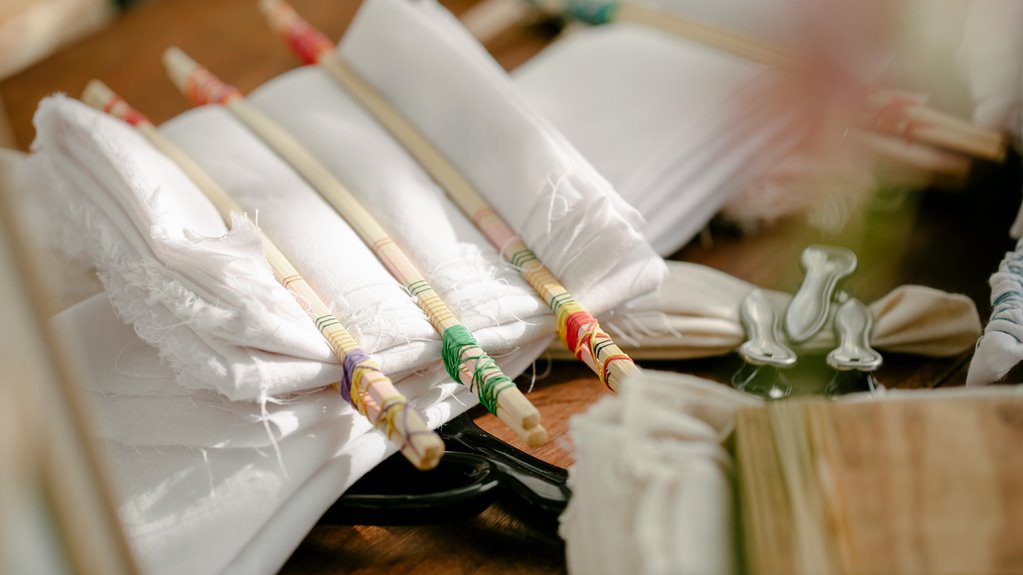
You’ll find fabric dyeing splits into natural and synthetic dyes, each with unique benefits like earthiness or vibrancy. Techniques vary from immersing fabric for solid colors to applying dye directly for detailed patterns. Resist methods like tie-dye and shibori create bold, artistic effects. Setting colors properly guarantees durability, while considering environmental impacts helps you choose sustainable options. Keep exploring, and you’ll uncover more about making your fabric colors last while caring for the planet.
Key Takeaways
- Fabric dyeing uses natural or synthetic dyes, balancing sustainability with vibrancy and color consistency.
- Immersion dyeing ensures uniform color by submerging fabric in dye baths for even absorption.
- Direct application and resist dyeing create unique patterns with precise dye placement or blocked areas.
- Color fixation methods like heat-setting and mordants improve colorfastness and prevent fading or bleeding.
- Sustainable dyeing emphasizes reducing water usage, managing chemical waste, and choosing eco-friendly dyes.
Natural Vs Synthetic Dyes
Although natural dyes have been used for centuries, synthetic dyes now dominate the fabric dyeing industry because they offer brighter colors and greater consistency.
When you choose natural dyes, you work with pigments derived from plants, insects, or minerals, which provide unique, earthy tones but may fade faster and vary between batches.
On the other hand, synthetic dyes are chemically engineered, allowing you to achieve vibrant, long-lasting colors with reliable results every time.
You’ll find synthetic dyes easier to use for large-scale projects since they dissolve well and bond uniformly with fabrics.
However, natural dyes appeal if you value eco-friendly, biodegradable options and enjoy a more artisanal, traditional process.
Your choice depends on whether you prioritize sustainability and subtlety or vibrancy and precision in your fabric dyeing.
Immersion Dyeing Methods
When you immerse fabric in dye, you guarantee even color absorption throughout the material. This method involves submerging your fabric completely into a dye bath, allowing the color to penetrate evenly.
You’ll want to stir or agitate the fabric gently to prevent uneven spots or streaks. Immersion dyeing works well for both natural and synthetic fibers, but you need to follow specific temperature and timing guidelines depending on the dye type.
Gently stir fabric during immersion dyeing to avoid streaks, following precise temperature and timing for each dye type.
Keep in mind that longer soaking usually results in deeper hues, but too much time can weaken fibers. After dyeing, rinse your fabric thoroughly to remove excess dye and set the color.
This technique suits creating solid, uniform colors and is ideal when you want consistent results across large fabric pieces.
Direct Application Techniques
Since direct application techniques let you control where and how the dye hits the fabric, you can create unique patterns and effects that immersion methods can’t achieve.
These techniques involve applying dye directly onto the fabric surface, allowing for precision and creativity. You might use brushes, spray bottles, or even squeeze bottles to craft detailed designs or random splashes of color.
Direct application also helps you experiment with layering colors without fully saturating the fabric.
Consider these benefits when you try direct application:
- Precise placement of colors and patterns
- Ability to blend and layer dyes on fabric
- Quick adjustments during the dyeing process
- Minimal waste of dye compared to immersion
Resist Dyeing Processes
Direct application gives you control over where the dye lands, but resist dyeing processes take that control further by blocking dye from certain areas to create striking patterns.
You achieve this by applying a substance or technique that prevents the dye from penetrating specific fabric sections. Wax, paste, or even tied threads can serve as barriers.
When you apply dye afterward, the covered parts resist color, leaving unique designs once the resist is removed. This method lets you experiment with contrast and texture, producing intricate, often unexpected results.
Resist dyeing demands patience and precision, but it rewards you with bold, artistic effects that direct application alone can’t match.
Mastering these processes expands your creative toolkit and deepens your understanding of fabric dyeing’s versatile possibilities.
Tie-Dye and Shibori Styles
You’ll find that tie-dye and shibori styles have rich origins rooted in different cultures.
Each method creates unique patterns through specific dyeing techniques you can easily try yourself.
Let’s explore how these styles developed and how you can make classic designs using simple tools.
Origins and History
Although tie-dye and shibori have distinct cultural roots, both techniques share a rich history of transforming plain fabrics into vibrant works of art through intricate dyeing methods.
When you explore their origins, you’ll see how each style reflects its culture’s creativity and resourcefulness.
Tie-dye, popularized in the 1960s counterculture, traces back to ancient Asia and Africa. Shibori, rooted in Japan, dates to the 8th century and involves precise folding and binding.
Keep in mind these historical highlights:
- Tie-dye emerged from traditional resist-dyeing in India and Africa
- Shibori developed as a meticulous, handcrafted technique in Japan
- Both methods originally used natural dyes like indigo
- Each style symbolizes cultural identity and artistic expression
You’ll appreciate how these histories shape their timeless appeal.
Common Patterns
Patterns like spirals, circles, and waves define the vibrant look of tie-dye, while shibori relies on intricate folds and bindings to create its signature geometric and organic designs.
When you try tie-dye, you’ll notice how twisting or binding fabric before dyeing forms these bold, colorful patterns. Each twist or knot changes the dye’s reach, making every piece unique.
Shibori, on the other hand, involves precise folding, stitching, or clamping techniques. You manipulate the fabric to resist dye in specific areas, resulting in sharp lines or soft gradients depending on your method.
Dyeing Techniques
Mastering dyeing techniques like tie-dye and shibori gives you creative control over fabric transformation.
With tie-dye, you twist, fold, or crumple fabric, securing it with rubber bands before applying vibrant dyes. This method creates bold, colorful patterns with a playful, psychedelic vibe.
Shibori, on the other hand, involves intricate folding, stitching, or binding, producing more delicate, often geometric designs rooted in Japanese tradition.
When you try these techniques, keep in mind:
- Tie-dye is great for casual, expressive looks.
- Shibori offers subtle, artistic patterns.
- Both rely on fabric manipulation before dyeing.
- Experimenting with resist areas controls color placement.
Batik Fabric Dyeing
Batik fabric dyeing involves applying wax to cloth before dyeing it, creating intricate designs through a resist technique.
When you work with batik, you start by drawing patterns on the fabric with hot wax using tools like a canting or brush. The wax prevents dye from penetrating those areas, so when you dip the cloth into dye baths, only the unwaxed sections absorb color.
After dyeing, you remove the wax by boiling or scraping it off, revealing the contrast between dyed and undyed parts. You can repeat waxing and dyeing multiple times to layer colors and add complexity.
This method gives you unique, detailed patterns that are hard to replicate with other dyeing techniques, making batik a popular choice for creating vibrant, artistic textiles.
Digital Fabric Printing
Although traditional dyeing methods have their charm, digital fabric printing offers a faster and more versatile way to create designs on textiles.
You can print intricate patterns directly onto fabric using computer-controlled printers, which means you don’t need screens or stencils. This method allows you to experiment with unlimited colors and gradients without increasing production time.
Plus, digital printing reduces waste by using only the ink necessary for the design.
When you choose digital fabric printing, you benefit from:
- High-resolution, detailed prints
- Quick turnaround times
- Customization options for small or large runs
- Eco-friendly processes with less water and chemical use
This technique is ideal if you want precision and flexibility in your fabric designs without the hassle of traditional setups.
Setting and Fixing Colors
Once you apply dye to fabric, you need to set and fix the colors to confirm they stay vibrant and don’t wash out.
Setting colors involves processes like heat-setting, steaming, or chemical fixation, depending on the dye type and fabric. For example, reactive dyes often require steaming to bond color molecules with fibers, while disperse dyes use heat to fix colors on synthetic fabrics.
You can also use mordants to help fix colors on natural fibers, enhancing colorfastness. Proper fixation prevents bleeding and fading during washing or exposure to sunlight.
Environmental Impact of Dyeing Methods
When you choose a dyeing method, you need to evaluate how much water it uses and where the waste ends up.
Managing chemical waste properly is essential to prevent pollution. Understanding these impacts helps you make more sustainable fabric choices.
Water Usage Concerns
Because dyeing fabrics demands large volumes of water, you should be aware of its significant environmental impact.
Water is essential for rinsing, dye fixation, and washing, but excessive use strains local water supplies and ecosystems.
When you consider the dyeing process, keep in mind:
- Conventional dyeing can consume up to 150 liters of water per kilogram of fabric.
- Inefficient water use leads to water scarcity in some regions.
- High water consumption increases energy needed for heating and treatment.
- Reducing water use lowers operational costs and environmental footprint.
Chemical Waste Management
Managing the chemicals involved in fabric dyeing is just as important as controlling water use. When you dye fabrics, harmful substances like heavy metals, salts, and acids can enter wastewater. If you don’t treat this chemical-laden water properly, it can pollute rivers and harm aquatic life.
To keep the environment safe, you need to implement effective chemical waste management systems. This includes using advanced filtration, neutralization processes, and recycling methods to minimize waste. Choosing eco-friendly dyes and reducing chemical concentrations during dyeing also help.
Frequently Asked Questions
How Do Fabric Dyes Affect Skin Sensitivity or Allergies?
Fabric dyes can trigger skin sensitivity or allergies, especially if you have sensitive skin. Some dyes contain chemicals that irritate or cause allergic reactions. Always test new fabrics and wash them before wearing to reduce risks.
What Are the Best Fabrics for Beginners to Dye at Home?
You’ll find cotton, linen, and rayon are the best fabrics for beginners to dye at home. They absorb dye well, making colors vibrant and easier to work with, giving you great results without frustration.
Can Dyeing Fabrics Improve Their Durability or Texture?
Dyeing fabrics can be a double-edged sword; while it usually enhances texture by softening fibers, it rarely boosts durability. You’ll notice improved feel but shouldn’t expect your clothes to become tougher or longer-lasting.
How Does Temperature Influence the Dyeing Process?
You’ll find that temperature controls how well dye penetrates fabric fibers; higher heat speeds absorption and color bonding, but too much can damage fibers or cause uneven colors. So, you’ll want to balance it carefully.
What Tools Are Essential for Professional Fabric Dyeing?
You’ll need a painter’s palette of tools: dye pots, stirring sticks, gloves, and a thermometer. These essentials let you dance with colors, ensuring every fabric piece sings with vibrant, lasting hues you’ll be proud to wear.