
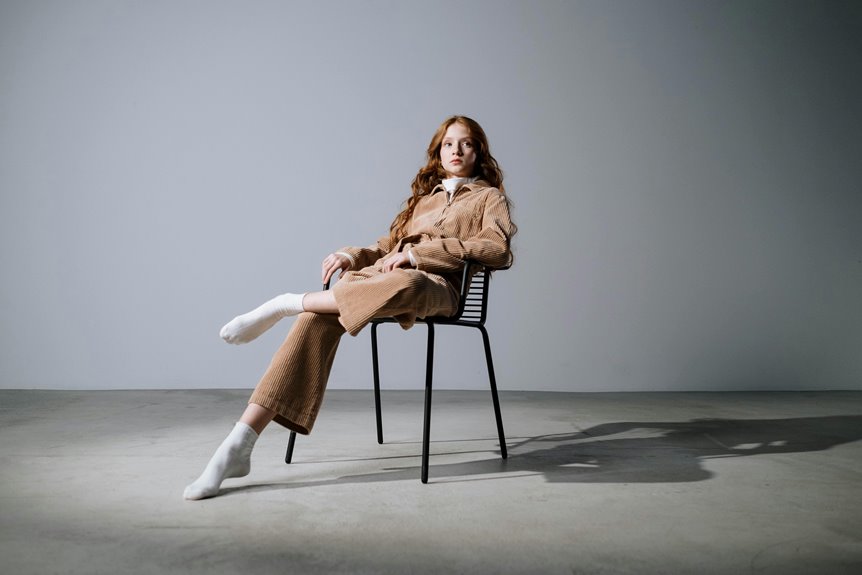
When you hear “14 wale” corduroy, it means the fabric has 14 narrow ribs per inch, giving it a fine, smooth texture that’s soft yet durable. This count makes it perfect for lightweight jackets, trousers, or skirts that feel comfortable and look polished. It’s versatile for both clothing and home décor. You’ll appreciate how its subtle sheen and dense weave balance style with durability. Keep exploring, and you’ll uncover ways to care for, style, and spot quality 14 wale corduroy.
Key Takeaways
- “14 wale” indicates 14 fine ribs per inch, creating a soft, lightweight corduroy texture ideal for delicate, comfortable garments.
- This corduroy offers a smooth feel with closely spaced ridges, balancing durability with a refined, slightly lustrous appearance.
- Historically, corduroy evolved from 18th-century durable workwear to fashionable clothing prized for warmth and texture.
- Commonly used in casual jackets, trousers, skirts, and upholstery, 14 wale corduroy suits versatile clothing and home décor projects.
- Care involves gentle washing inside out, cold water, air drying, and low-heat ironing to preserve texture and fabric quality.
What Does “14 Wale” Mean in Corduroy?
When you see “14 wale” in corduroy, it refers to the number of ribs or ridges per inch on the fabric.
These wales are the raised, vertical lines that give corduroy its distinctive texture. A 14 wale corduroy means there are 14 ribs packed into each inch, creating a finer, more delicate pattern compared to lower wale counts.
You’ll notice that fabrics with higher wale numbers feel softer and are often used for lighter garments like shirts and dresses. Conversely, lower wale counts produce thicker, chunkier ribs, ideal for durable pants or jackets.
Understanding wale counts helps you choose the right corduroy for your project, balancing texture, weight, and appearance to match your style and needs precisely.
Historical Background of Corduroy Fabric
Corduroy carries a rich history that dates back centuries, evolving from humble beginnings into a beloved fabric worldwide.
When you explore its origins, you’ll find it emerged in Europe during the 18th century, initially as a practical textile for workwear. The name “corduroy” likely comes from the French phrase “corde du roi,” meaning “cord of the king,” though this connection is debated.
Corduroy originated in 18th-century Europe as durable workwear, with a name possibly linked to the French “corde du roi.”
Over time, corduroy shifted from purely functional use to fashionable clothing, prized for durability and warmth. By the 20th century, it became popular across various styles and cultures, from academic attire to casual wear.
Understanding this background helps you appreciate corduroy’s enduring appeal and how its evolution shaped the fabric’s role in your wardrobe today.
Characteristics of 14 Wale Corduroy
The texture of 14 wale corduroy stands out for its fine, closely spaced ridges, giving you a smooth yet tactile feel. You’ll notice that the narrow wales create a subtle, refined look compared to wider wale cords.
This fabric usually feels lightweight and soft, making it comfortable against your skin. Because the ridges are tightly packed, 14 wale corduroy drapes nicely and resists excessive bulkiness.
The fabric’s durability comes from its dense weave, so it holds up well with regular wear. You’ll also find it has a slight sheen that catches light differently depending on the angle.
Common Uses for 14 Wale Corduroy
If you’re wondering where to incorporate 14 wale corduroy into your wardrobe or projects, its versatility makes it a great choice for many applications.
You’ll find this fabric perfect when you want something durable yet stylish, with a subtle texture that stands out without overwhelming your look.
Durable and stylish fabric with subtle texture that enhances your look without overpowering it.
Consider using 14 wale corduroy for:
- Casual jackets that offer warmth and a refined appearance
- Trousers that balance comfort and a classic vibe
- Skirts or dresses with a structured yet soft feel
- Upholstery accents, like cushions or chair covers, adding cozy texture
This wale count strikes a balance, making it ideal for both clothing and home décor, giving you plenty of creative flexibility.
Comparing 14 Wale to Other Corduroy Wale Counts
When you compare 14 wale corduroy to other wale counts, you’ll notice distinct texture differences that affect both feel and appearance.
You’ll also find variations in durability, with some counts standing up better to wear and tear.
Plus, understanding these differences helps you pick the style that suits your wardrobe best.
Texture Differences
Although it might seem subtle at first, you’ll notice that 14 wale corduroy offers a finer texture compared to lower wale counts like 8 or 10. This means the ridges are narrower and more closely packed, giving the fabric a smoother, more refined feel.
When you touch 14 wale corduroy, you sense a delicate softness, while lower wale fabrics feel chunkier and more rugged. Higher wale counts like 21 wale are even finer, but 14 wale strikes a great balance.
Imagine the texture differences through these sensations:
- Soft, tight ridges that almost brush your fingertips
- A gentle, velvety surface with subtle grooves
- Less pronounced ridges that create a sleek look
- A comfortable, lightweight feel compared to chunkier corduroy
This makes 14 wale corduroy great for stylish yet casual wear.
Durability Comparison
Because 14 wale corduroy features moderately spaced ridges, it offers a solid balance between durability and comfort.
When you compare it to lower wale counts, like 8 wale, you’ll notice 14 wale is less prone to wear and tear since its finer ribs distribute stress more evenly.
On the other hand, higher wale counts, such as 21 wale, tend to be thinner and less durable, making 14 wale a sturdier option for everyday use.
If you want something tough yet flexible, 14 wale hits the sweet spot—it endures regular wear better than wide wale but doesn’t sacrifice the softness found in finer wale cords.
Style Versatility
How does 14 wale corduroy stack up against other wale counts with respect to style versatility? You’ll find 14 wale strikes a perfect balance between bold texture and subtlety, making it adaptable for various looks.
Unlike thicker wales (like 8 wale), which feel chunkier and more casual, 14 wale lends itself well to smart-casual and even semi-formal outfits. Compared to finer wales (such as 21 wale), which appear delicate and dressy, 14 wale offers more durability without sacrificing style.
Consider these style scenarios where 14 wale excels:
- A tailored blazer with visible yet refined ribs
- Casual trousers that hold shape but don’t overwhelm
- A jacket with texture that pairs well with smooth fabrics
- Versatile skirts or pants balancing ruggedness and polish
You’ll appreciate 14 wale’s unique ability to complement diverse wardrobes effortlessly.
How to Identify Quality 14 Wale Corduroy
You can spot quality 14 wale corduroy by paying close attention to its texture and wale spacing. The ridges, or wales, should be evenly spaced and consistent in size, reflecting precise weaving. High-quality fabric feels soft yet sturdy, not rough or overly stiff.
Check the fabric’s backing—it should be smooth and tightly woven, indicating durability. Hold the material up to light; quality corduroy has a dense weave that blocks light rather than letting it pass through easily.
A smooth, tightly woven backing and dense weave that blocks light signal durable, high-quality corduroy fabric.
Also, notice the color—rich, even dye without blotches or fading points to superior fabric. Finally, examine the edges for clean finishes or minimal fraying.
When you focus on these details, you’ll confidently identify authentic, well-made 14 wale corduroy.
Care and Maintenance Tips for 14 Wale Corduroy
Once you’ve identified quality 14 wale corduroy, proper care will keep it looking sharp and feeling comfortable.
Treat it gently to preserve the distinct ridges and prevent wear. Always wash corduroy inside out on a gentle cycle with cold water to protect the fabric’s texture. Avoid bleach and harsh detergents that can damage fibers.
Dry it flat or hang it to air dry, steering clear of high heat that can shrink or distort the fabric. When ironing, use a low heat setting and press on the reverse side to avoid crushing the wales.
- Turn garments inside out before washing
- Use mild detergent and cold water
- Air dry to maintain shape and texture
- Iron on low heat, pressing from the back side
Styling Ideas for 14 Wale Corduroy Garments
You can easily create casual looks with 14 wale corduroy by pairing it with simple tees or cozy sweaters.
Try layering different textures to add depth and interest to your outfit.
Don’t forget to experiment with color combinations that complement the rich tones of corduroy for a polished finish.
Casual Looks With 14 Wale
Although 14 wale corduroy has a distinct texture, it effortlessly fits into casual wardrobes. You can easily create relaxed, stylish outfits by pairing this fabric with simple, comfortable pieces.
For a laid-back vibe, choose corduroy pants or jackets in earthy tones. Combine them with soft cotton tees or cozy knit sweaters for a balanced look. Footwear like sneakers or desert boots complements the tactile nature of 14 wale corduroy perfectly.
Try these casual styling ideas:
- Olive 14 wale corduroy pants with a white crewneck tee
- Rust-colored corduroy jacket over a chambray shirt
- Navy corduroy skirt paired with ankle boots and a slouchy sweater
- Beige corduroy shorts combined with a striped long-sleeve top
These combos keep you comfortable and effortlessly stylish.
Layering Tips for Texture
When layering with 14 wale corduroy, focus on mixing textures to create depth and interest in your outfit. Pair your corduroy pieces with smoother fabrics like cotton tees or lightweight knits to balance its rich, ribbed surface.
A denim jacket or a soft wool sweater complements corduroy’s tactile feel without overwhelming it. Don’t shy away from subtle contrasts—think a suede vest over a corduroy shirt or a leather jacket atop corduroy pants. These combinations add dimension while keeping the look cohesive.
Keep your layers streamlined to avoid bulk; corduroy’s thickness means you don’t need heavy or multiple layers underneath. By thoughtfully blending textures, you’ll highlight the unique character of 14 wale corduroy and create effortlessly stylish, tactile outfits.
Color Pairing Suggestions
Balancing textures is just one part of styling 14 wale corduroy effectively; choosing the right color combinations can elevate your look even further.
When pairing colors, think about contrast and harmony to make your outfit pop without overwhelming the rich texture of the fabric. Here are some ideas to inspire you:
- Deep navy corduroy pants with a crisp white shirt for a classic, clean look
- Mustard yellow jacket paired with earthy olive greens to embrace autumn vibes
- Burgundy corduroy skirt matched with soft blush or cream tops for subtle warmth
- Charcoal grey trousers combined with jewel-toned sweaters like emerald or sapphire for a bold statement
These combinations keep your outfit balanced and visually appealing, highlighting corduroy’s unique texture while keeping your style fresh.
Frequently Asked Questions
Can 14 Wale Corduroy Be Used for Upholstery?
Did you know 14 wale corduroy is denser than standard fabric? You can definitely use it for upholstery since it’s durable and textured, giving your furniture a cozy, stylish look while standing up to daily wear and tear.
Is 14 Wale Corduroy Suitable for Summer Clothing?
You probably won’t find 14 wale corduroy ideal for summer clothing since it’s thicker and warmer. It traps heat, so you’ll feel uncomfortable in hot weather. Opt for lighter fabrics to stay cool instead.
How Does 14 Wale Corduroy Perform in Wet Weather?
Like a sponge in disguise, 14 wale corduroy tends to absorb moisture quickly. You’ll find it less ideal in wet weather since it holds water, drying slowly and feeling heavy—so keep it for drier days.
Are There Eco-Friendly Options for 14 Wale Corduroy?
You can find eco-friendly 14 wale corduroy made from organic cotton or recycled fibers. Brands increasingly use sustainable dyes and water-saving processes, so you don’t have to sacrifice style while supporting the environment.
What Are Common Manufacturing Defects in 14 Wale Corduroy?
You’ll often spot defects like uneven wale spacing, inconsistent pile height, or color variations in 14 wale corduroy. Sometimes, weaving flaws or weak spots cause durability issues, so always inspect the fabric carefully before buying.