
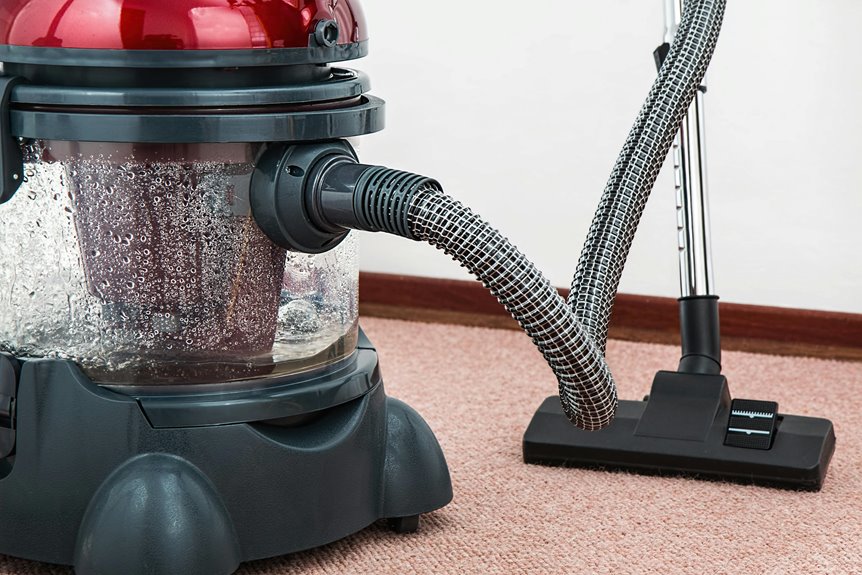
To keep your polyamide carpet looking fresh, vacuum daily with a strong suction and rotating brush to remove dirt. Treat spills immediately by blotting gently with a damp cloth; avoid rubbing. Use mild, pH-neutral detergents for spot cleaning and consider deep cleaning every 12 to 18 months, either with hot water extraction or dry methods. Rotate furniture to prevent uneven wear and choose products designed for synthetic fibers. Keep following along to discover smarter ways to preserve your carpet’s vibrant look and durability.
Key Takeaways
- Vacuum polyamide carpets daily using strong suction and a rotating brush to remove dirt and prevent fiber wear.
- Immediately blot spills with a damp cloth, avoiding rubbing, and use mild detergent or specialized cleaners for stains.
- Deep clean polyamide carpets every 12 to 18 months with hot water extraction, dry cleaning, or foam cleaning methods.
- Use mild, pH-neutral detergents and test new cleaning products on hidden areas to avoid fiber damage.
- Schedule professional cleanings yearly and seek expert help for persistent stains or allergen buildup to maintain carpet longevity.
Understanding Polyamide Carpet Fibers
Polyamide fibers, commonly known as nylon, form the backbone of many durable carpets. When you choose a polyamide carpet, you’re opting for strength and resilience.
These fibers resist wear and tear better than many alternatives, making them ideal for high-traffic areas. You’ll notice polyamide carpets maintain their appearance longer because they bounce back from crushing and matting.
They also handle stains well, thanks to their synthetic nature, which repels many spills. However, they can attract static electricity if not properly treated.
Understanding these fibers helps you appreciate why polyamide carpets are a popular choice for both homes and businesses. Knowing their properties prepares you to care for them effectively, ensuring your carpet stays beautiful and functional over time.
Daily Cleaning Practices for Polyamide Carpets
Since nylon fibers resist stains and bounce back from pressure, your carpet can look fresh longer with regular care.
Start by vacuuming daily to remove dirt and debris that wear down fibers over time. Use a vacuum with strong suction and a rotating brush to lift particles effectively.
Spot clean spills immediately with a damp cloth, blotting rather than rubbing to avoid fiber damage. Keep traffic areas clear and rotate furniture occasionally to prevent uneven wear.
Place doormats at entrances to reduce dirt tracked inside. These simple daily routines prevent buildup, maintain your carpet’s appearance, and extend its life.
Consistency is key—make these habits part of your cleaning routine to keep your polyamide carpet looking its best every day.
Effective Methods for Removing Common Stains
When a spill happens, you need to act quickly to remove food and drink stains before they set.
Oil-based stains require special attention to break down the grease without damaging the fibers.
For ink and dye marks, using the right cleaning agents can make all the difference in restoring your polyamide carpet’s appearance.
Removing Food and Drink
Dealing with food and drink stains quickly can save your carpet from lasting damage. Start by blotting the spill gently with a clean cloth—never rub, as it spreads the stain. Use a mild detergent mixed with warm water to treat the area, then rinse and blot dry. For tougher stains, a vinegar solution can help lift residues effectively.
| Stain Type | Immediate Action | Cleaning Solution |
|---|---|---|
| Coffee | Blot with paper towel | Detergent + warm water |
| Wine | Blot, apply vinegar mix | Vinegar + water |
| Juice | Blot, use mild detergent | Detergent + warm water |
| Tomato Sauce | Scrape excess, blot | Detergent + warm water |
Act fast, and your polyamide carpet will stay spotless longer.
Tackling Oil-Based Stains
Although oil-based stains can seem stubborn, you can remove them effectively with the right approach.
Start by blotting the stain gently with a clean cloth to absorb excess oil—avoid rubbing, which spreads it. Next, sprinkle baking soda or cornstarch over the stain and let it sit for 15-30 minutes to draw out the oil.
Vacuum the powder thoroughly. For remaining residue, mix a few drops of dishwashing liquid with warm water and apply it to the spot using a sponge. Blot until the stain lifts, then rinse with a damp cloth.
Finally, let the area air dry completely. If the stain persists, consider using a carpet cleaner specifically designed for polyamide fibers, but always test in an inconspicuous spot first to prevent damage.
Handling Ink and Dye
Since ink and dye stains can set quickly, you need to act fast to prevent permanent damage to your polyamide carpet. Blot excess ink gently with a clean cloth—never rub. Next, apply a cleaning solution suited for ink stains, like rubbing alcohol or a specialized carpet cleaner. Test any cleaner on a hidden spot first to avoid discoloration.
| Step | Action | Tip |
|---|---|---|
| 1 | Blot stain immediately | Use a white cloth |
| 2 | Apply cleaning solution | Use rubbing alcohol or cleaner |
| 3 | Blot again gently | Avoid spreading the stain |
| 4 | Rinse with cold water | Prevent cleaner residue |
| 5 | Dry carpet | Use a fan or air dry |
Act quickly, and your carpet will stay fresh and stain-free.
Deep Cleaning Techniques and Frequency
When you want to keep your polyamide carpet looking fresh and vibrant, regular deep cleaning is essential.
Unlike routine vacuuming, deep cleaning removes embedded dirt and allergens, extending your carpet’s life and appearance. Aim to deep clean every 12 to 18 months, or more often in high-traffic areas.
Here are three effective techniques:
- Hot Water Extraction: Uses heated water and cleaning solutions to lift dirt, ideal for thorough cleaning.
- Dry Carpet Cleaning: Employs specialized powders and minimal moisture, perfect for quick refreshes without drying time.
- Foam Cleaning: Applies a foaming agent to trap debris, which is then vacuumed away, balancing moisture and cleaning power.
Choose a method based on your carpet’s condition and your schedule to maintain its softness and color vibrancy.
Preventing Damage and Extending Carpet Life
To keep your polyamide carpet looking its best for years, you’ll need to take proactive steps that prevent damage before it happens.
Start by placing doormats at entrances to reduce dirt and grit, which can wear down fibers. Avoid dragging heavy furniture across the carpet; instead, lift and carry items to prevent snags or tears.
Regularly rotate rugs and furniture to guarantee even wear. Keep pets’ nails trimmed to minimize snagging, and clean spills immediately to avoid stains setting in.
Use protective pads under furniture legs to prevent indentations. Finally, maintain consistent indoor humidity to prevent fibers from becoming brittle or overly damp.
These simple habits will extend your carpet’s life and keep it looking fresh longer.
Choosing the Right Cleaning Products for Polyamide
When choosing cleaning products for your polyamide carpet, it’s important to pick detergents designed specifically for synthetic fibers.
You’ll want to avoid harsh chemicals like bleach or strong solvents that can damage the material.
Sticking to gentle, pH-balanced cleaners will help keep your carpet looking fresh without causing harm.
Suitable Detergents Overview
Although polyamide carpets are known for their durability, choosing the right detergent plays an essential role in maintaining their appearance and longevity.
You want a product that cleans effectively without damaging the fibers or colors. Here are three types of suitable detergents to take into account:
- Mild, pH-neutral detergents – These clean gently and preserve the carpet’s texture and color.
- Enzyme-based cleaners – Great for breaking down organic stains like food or pet messes without harsh chemicals.
- Specialized carpet shampoos – Formulated specifically for synthetic fibers, they offer deep cleaning while protecting polyamide carpets.
Using these detergents guarantees your carpet stays vibrant and lasts longer.
Always test any new product on a small, hidden area first for safety.
Avoiding Harmful Chemicals
Since polyamide fibers can react negatively to harsh chemicals, you should steer clear of cleaners containing bleach, ammonia, or strong acids.
These substances can weaken the fibers, cause discoloration, and reduce your carpet’s lifespan. Instead, choose mild, pH-neutral detergents designed specifically for synthetic fibers.
Always check labels to verify the product is safe for polyamide carpets. Avoid using homemade remedies with vinegar or lemon juice, as their acidity can damage the material.
When testing a new cleaner, apply it to a small, hidden area first to spot any adverse reactions. Using the right products protects your carpet’s texture and color, keeping it looking fresh and vibrant longer.
Being cautious with cleaning agents helps maintain your polyamide carpet’s integrity and appearance.
Professional Carpet Care: When and Why to Consider It
If you want your polyamide carpets to stay vibrant and last longer, hiring professional carpet care can make a significant difference.
Professionals use specialized equipment and eco-friendly solutions designed to clean deeply without damaging the fibers.
Consider calling in the experts when:
- Stains persist despite your best cleaning efforts.
- Allergens build up, affecting your indoor air quality.
- Annual deep cleaning is due to maintain the carpet’s appearance and durability.
Professional care not only removes dirt and stains more effectively but also restores the carpet’s texture and color.
Plus, experts can advise you on ongoing maintenance tips tailored to polyamide fibers.
Don’t wait for visible damage—regular professional cleanings keep your carpet looking fresh and extend its life.
Frequently Asked Questions
Are Polyamide Carpets Hypoallergenic?
Polyamide carpets aren’t inherently hypoallergenic, but you can reduce allergens by cleaning them regularly. You’ll want to vacuum often and address spills quickly to keep dust mites and allergens from building up in the fibers.
How Do Polyamide Carpets Compare to Wool in Durability?
You’ll find polyamide carpets last about 25% longer than wool ones, thanks to their synthetic strength. They resist stains and wear better, so if durability’s your priority, polyamide’s a smart, long-lasting choice.
Can Polyamide Carpets Be Recycled?
You can recycle polyamide carpets, but it depends on local facilities. Polyamide, a type of nylon, is recyclable and often repurposed into new fibers or products. Check with your local recycling center for specific options.
What Is the Environmental Impact of Polyamide Carpet Production?
Picture smoky factories and tangled chemical streams; that’s the environmental impact you face with polyamide carpet production. It uses lots of energy and emits greenhouse gases, so you should consider eco-friendly options to reduce harm.
Are Polyamide Carpets Suitable for Outdoor Use?
Polyamide carpets aren’t ideal for outdoor use because they can degrade under prolonged sunlight and moisture exposure. You’ll find they absorb water and lose durability faster compared to materials designed specifically for outdoor environments.