
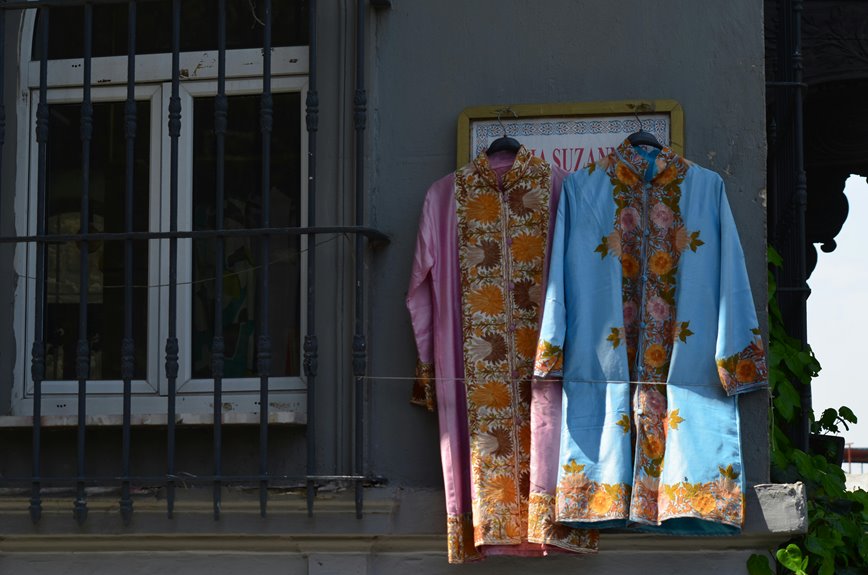
Your acetate garment might feel weak or tear easily because acetate is a delicate fabric prone to snags and low abrasion resistance. Manufacturing defects, such as poor stitching or uneven fibers, can create weak spots. Harsh washing, heat, or exposure to chemicals like bleach or alcohol also damages fibers. Aging and improper storage contribute to wear, causing brittleness and fraying. Understanding these factors will help you care for your acetate better and maintain its strength longer.
Key Takeaways
- Acetate’s natural softness and low abrasion resistance make it prone to snagging and tearing, especially in 100% acetate garments.
- Manufacturing defects like uneven fiber extrusion or poor seam stitching can create weak spots that tear easily.
- Harsh washing methods and chemical exposure, such as bleach or alcohol-based perfumes, degrade acetate fibers and reduce fabric strength.
- Aging causes discoloration, fraying, and loss of sheen, indicating weakened fabric structure prone to tearing.
- Improper storage, such as exposure to sunlight or dampness, accelerates fabric deterioration and fragility in acetate garments.
Understanding the Nature of Acetate Fabric
Because acetate fabric is a synthetic fiber derived from cellulose, you’ll find it has a unique combination of softness and sheen. When you wear acetate, you’ll notice it feels smooth and luxurious against your skin, mimicking silk’s elegance.
However, acetate’s delicate nature means it isn’t as strong as some other fabrics. You should handle it gently because it can weaken with exposure to heat, moisture, or harsh chemicals.
Its low resistance to abrasion means it’s prone to snagging or tearing if you’re not careful. Knowing acetate’s characteristics helps you understand why your garment might feel fragile or wear out faster than expected.
Common Manufacturing Defects in Acetate Garments
Understanding acetate’s delicate nature also means recognizing the common manufacturing defects that can affect your garment’s quality and durability.
You might notice weak spots where the fabric feels thin or uneven, often caused by inconsistent fiber extrusion during production. Poor dyeing techniques can leave your garment with uneven color and weakened fibers, making it more prone to tearing.
Seams can also be a problem—if stitching isn’t tight or properly aligned, stress points develop that lead to rips. Additionally, improper finishing processes like inadequate heat setting can cause your acetate fabric to lose strength and shape.
Effects of Fabric Blending on Acetate Strength
When you blend acetate with other fibers, you change how the fabric performs with respect to strength and durability. Some blends enhance tear resistance, while others may weaken the fabric. For example, mixing acetate with polyester typically increases strength and longevity. However, blending it with delicate fibers like silk can reduce durability, making your garment prone to damage.
| Blend Type | Strength Impact | Durability Notes |
|---|---|---|
| Acetate + Polyester | Increased | Better tear and abrasion resistance |
| Acetate + Cotton | Moderate | Balanced comfort and strength |
| Acetate + Silk | Decreased | Softer feel but less durable |
| 100% Acetate | Baseline | Prone to weak spots and tearing |
Understanding these effects helps you pick fabrics that last longer and resist wear.
Impact of Improper Washing Techniques
If you don’t follow proper washing techniques, your acetate garments can quickly lose their shape, color, and strength. Agitating them too harshly or using strong detergents can break down the delicate fibers.
Avoid tossing acetate items in with rough fabrics like jeans or towels, as friction can cause pilling or tears. Always check the care label and opt for a gentle cycle or hand wash in cold water.
Skipping the rinse or leaving detergent residues behind weakens the fabric over time. Also, never wring or twist acetate garments; instead, press out excess water gently.
Role of Heat Exposure in Fabric Weakening
You need to understand how heat affects acetate fibers to prevent damage.
Acetate has specific temperature limits, and exceeding them can weaken the fabric’s structure. Prolonged exposure to heat only speeds up this deterioration, so it’s essential to manage temperature carefully.
Heat and Fiber Integrity
Although acetate fabrics offer a luxurious feel, exposing them to excessive heat can quickly compromise their fiber integrity.
When you apply too much heat, the fibers soften and weaken, making your garment prone to tears and holes. Heat disrupts the molecular structure, reducing strength and flexibility.
To protect your acetate pieces, be mindful of how heat affects them.
Here’s what happens with heat exposure:
- Fibers lose tensile strength
- Increased risk of fabric distortion
- Surface becomes brittle over time
- Color may fade or change due to heat
- Seam stress points weaken faster
Avoiding high heat during ironing, drying, or storage will help maintain your acetate garment’s durability and extend its lifespan.
Temperature Thresholds for Acetate
When acetate fabrics face temperatures above 230°F (110°C), their fibers begin to weaken and lose structural integrity. If you expose your acetate garment to heat beyond this threshold, you risk causing the fabric to become brittle and prone to tearing.
That’s why ironing acetate requires caution—using a low heat setting or placing a pressing cloth between the iron and fabric helps protect the fibers. You should also avoid direct contact with hot surfaces like radiators or heated car seats.
Knowing this temperature limit empowers you to handle acetate garments carefully, preventing unexpected damage. By keeping heat exposure below 230°F, you maintain the fabric’s strength and appearance, ensuring your acetate clothing stays durable and comfortable over time.
Impact of Prolonged Heat
Since acetate fibers weaken under high temperatures, prolonged heat exposure accelerates fabric deterioration.
When your acetate garment faces continuous heat, its strength diminishes, making it prone to tears and wear. You might notice thinning areas or less resilience after repeated heat contact.
To protect your garment, consider these points:
- Avoid direct sunlight for extended periods
- Use low heat settings on irons
- Steer clear of hot dryers; air dry instead
- Limit exposure to heated environments like car interiors in summer
- Store away from heat sources such as radiators or stoves
Consequences of Frequent Mechanical Stress
Frequent mechanical stress wears down acetate garments faster than you might expect.
When you stretch, pull, or rub your acetate clothing repeatedly, the fibers start to weaken. This constant strain causes tiny breaks in the fabric’s structure, making it less resilient over time.
You’ll notice your garment losing its shape, developing thin spots, or even small tears where stress is concentrated. These damages compromise the garment’s durability and appearance, leading to premature wear.
If you want your acetate pieces to last, try to handle them gently—avoid excessive stretching or friction during wear and care.
Influence of Chemical Exposure on Acetate Durability
You need to be careful with chemicals around acetate garments since bleach can cause severe discoloration and weakening.
Perfume sprays often contain alcohol, which may damage the fabric’s finish over time.
Also, some cleaning solvents can break down acetate fibers, reducing your garment’s durability.
Effects of Bleach Use
Several types of bleach can seriously damage acetate garments, so you’ll want to handle them with care.
Bleach breaks down the delicate fibers, causing your fabric to weaken and become prone to tearing. Even small amounts can cause discoloration or permanent spotting, ruining the look of your garment.
When you use bleach, the chemical reaction can:
- Reduce fiber strength considerably
- Cause yellowing or fading of colors
- Make the fabric brittle and less flexible
- Increase the risk of small holes forming
- Weaken seam integrity
To protect your acetate pieces, avoid bleach-based cleaners and opt for gentle, bleach-free detergents.
If you must remove stains, test any product on a hidden area first to verify it won’t harm the fabric.
Impact of Perfume Sprays
Although perfume sprays add a pleasant scent, their chemicals can harm acetate garments by weakening fibers and causing discoloration.
When you spray perfume directly onto your acetate clothing, the alcohol and other ingredients can break down the fiber structure, making the fabric fragile and prone to tears.
Over time, repeated exposure causes the material to lose its strength and sheen.
To protect your garment, always apply perfume before dressing and let it dry completely.
Avoid spraying perfume on collars, cuffs, or delicate areas where fabric stress is common.
If you notice any discoloration or fabric weakening after perfume contact, handle the garment gently and consider professional care to prevent further damage.
Taking these steps helps maintain your acetate item’s durability and appearance.
Damage From Cleaning Solvents
Perfume sprays aren’t the only chemical threat to acetate garments—cleaning solvents can also cause significant damage.
When you expose acetate to harsh solvents, you risk weakening the fibers, which leads to tears or holes. To protect your garment, avoid:
- Using strong dry-cleaning solvents frequently
- Applying stain removers with aggressive chemicals
- Soaking acetate in bleach or chlorine-based products
- Using acetone or nail polish removers near the fabric
- Ignoring care labels that specify mild cleaning agents
These chemicals can break down the acetate’s structure, making it brittle over time.
Always opt for gentle, acetate-safe cleaning methods to maintain your garment’s strength and appearance. If unsure, consult a professional cleaner who understands acetate’s delicate nature.
Signs of Aging and Wear in Acetate Clothes
When you wear or store acetate garments over time, you’ll notice specific signs that indicate aging and wear.
Over time, acetate garments show distinct signs of aging and wear through regular use and storage.
The fabric may start feeling weaker and more fragile, making it prone to tearing with minimal stress. You might see slight discoloration or yellowing, especially in areas exposed to sunlight or sweat.
Pilling or surface fuzz can develop, reducing the garment’s smooth appearance. The fabric may also lose its original sheen, looking dull or lifeless.
Seams could begin to strain or fray, signaling structural weakening. If you spot these signs, it’s a clear indication that your acetate clothing has aged and requires gentle handling to avoid further damage.
Recognizing these symptoms early helps you take steps before the fabric deteriorates beyond repair.
Proper Storage Practices to Prevent Damage
Proper storage plays an essential role in maintaining the quality and longevity of your acetate garments. You want to keep them away from conditions that cause weakening or tearing. Avoid moisture, heat, and direct sunlight, as these can degrade the fabric quickly.
Use proper hangers or fold carefully to prevent stress on seams and fibers. Here are some tips to help you store acetate clothes correctly:
- Store in a cool, dry place away from direct sunlight
- Use padded or wide hangers to maintain shape
- Avoid overcrowding in closets to prevent wrinkles and abrasion
- Keep away from dampness to prevent mildew and fabric weakening
- Use breathable garment bags for long-term storage to allow air circulation
Tips for Repairing Minor Tears and Weak Spots
A small tear or weak spot in your acetate garment doesn’t have to mean the end of its life. You can fix minor damages with simple tools and careful techniques to extend its wear. Begin by cleaning the area and trimming loose threads. Use a fine needle and matching thread to sew small tears with tight, even stitches. For weak spots, reinforce from the inside with fusible interfacing or fabric glue to add strength without bulk. Here’s a quick guide to repairing minor damages:
| Damage Type | Repair Tip |
|---|---|
| Small Tear | Hand sew with fine thread |
| Weak Spot | Apply fusible interfacing |
| Frayed Edges | Trim and seal with fabric glue |
| Loose Seams | Reinforce with tight stitching |
| Puckering | Press gently with low heat iron |
Frequently Asked Questions
Can Acetate Fabric Cause Allergic Skin Reactions?
You can experience allergic skin reactions from acetate fabric, especially if you’re sensitive to chemicals used in its processing. If your skin feels irritated or itchy, it’s best to switch to natural fibers or consult a dermatologist.
Is Acetate Environmentally Friendly or Biodegradable?
You might find acetate isn’t very eco-friendly since it’s made from wood pulp treated with chemicals. While it’s technically biodegradable, the process takes time and involves chemicals, so it’s not the best choice for the environment.
How Does Acetate Compare to Silk in Comfort and Appearance?
You’ll find acetate feels smooth and shiny but less breathable than silk. Silk offers superior softness, natural sheen, and comfort. While acetate mimics silk’s look, it won’t match silk’s luxurious feel or temperature regulation.
Are There Specific Brands Known for High-Quality Acetate Garments?
You’ll find brands like Eileen Fisher and Theory offering high-quality acetate garments. They focus on craftsmanship and fabric blends, ensuring durability and a luxurious feel. Check reviews to confirm the quality before buying.
Can Acetate Garments Be Safely Dyed at Home?
Ever wondered if you can safely dye acetate garments at home? You can, but you’ll want to choose a dye meant for acetate fibers and test a small area first to avoid damaging your clothes.