
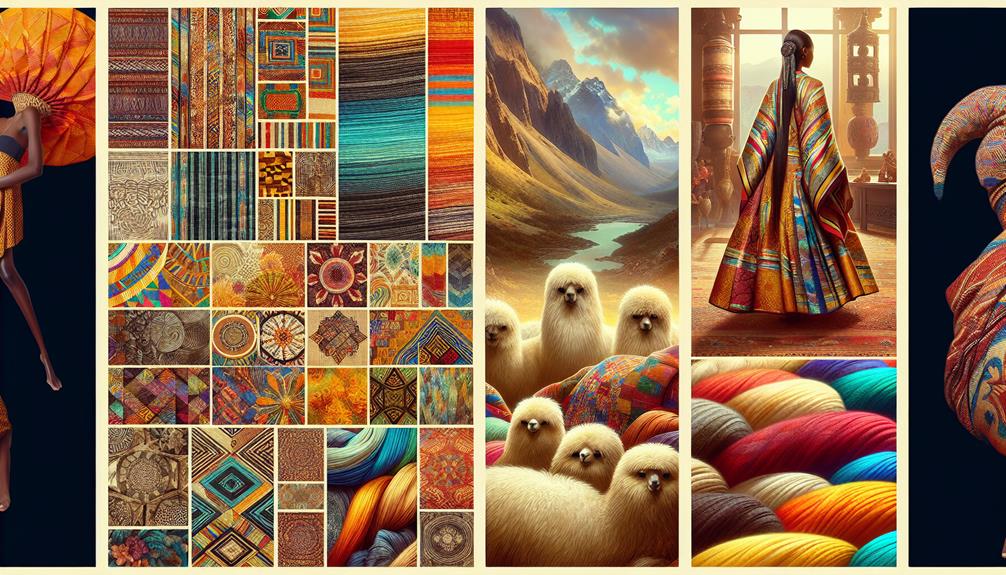
When you consider traditional fabrics from different cultures, you're not just looking at materials but at stories woven through time. Take the intricate Kente Cloth of Ghana, for example, with its vivid geometric designs that symbolize history and status. Or think about the elegance of Japanese Silk Kimonos, a proof of cultural refinement. Each fabric, whether it's the colorful Indian Sari or the artisanal Peruvian Alpaca textiles, offers a unique narrative. Curious about how these textiles blend history with contemporary style? Let's explore the rich tapestries of global traditions.
Key Takeaways
- Kente cloth of Ghana features vibrant colors and geometric designs symbolizing cultural heritage and pride.
- Ikat patterns in Indonesia use resist dyeing techniques and intricate weaving to tell unique narratives.
- Japanese silk kimonos are elegant garments with traditional designs and dyeing methods, representing cultural heritage.
- Indian sari fabrics showcase vibrant colors and intricate patterns, with region-specific weaving techniques like Banarasi and Kanjeevaram silks.
- Scottish tartan plaids represent clan identities and heritage, now woven into contemporary fashion trends.
Kente Cloth of Ghana
The vibrant and intricate patterns of Kente cloth from Ghana tell stories of cultural heritage and pride. As someone seeking mastery, you'll appreciate the skillful weaving techniques that go into each piece. Kente cloth is traditionally woven on a loom by master weavers, often using methods passed down through generations. This meticulous process involves interlacing different threads to create complex, geometric designs that are visually striking and culturally significant.
Understanding the color symbolism in Kente cloth will deepen your appreciation. Each color isn't just visually appealing; it carries profound meaning. Gold represents wealth and royalty, while green signifies growth and renewal. Red stands for the bloodshed in struggles for liberation, and blue conveys peace and harmony. By recognizing these meanings, you'll see how each piece of Kente cloth communicates much more than its aesthetic appeal.
When you immerse yourself in the world of Kente cloth, you're not just learning about fabric; you're connecting with a rich cultural tapestry. The mastery of Kente weaving techniques and the deep symbolism of its colors offer a window into the soul of Ghanaian tradition.
Ikat Patterns of Indonesia
You'll find Ikat patterns from Indonesia boast a rich history and intricate weaving techniques.
These patterns aren't just visually striking; they carry deep cultural significance.
Let's explore their origins, the methods used to create them, and what they mean to Indonesian communities.
History and Origins
Indonesia's ikat patterns boast a rich history that dates back centuries, reflecting the archipelago's diverse cultural heritage. When you explore the weaving traditions of Indonesia, you'll uncover ancient origins that are deeply embedded in the country's textile history. These intricate patterns aren't just visually stunning; they carry profound cultural symbolism that tells stories of the communities that created them.
The term 'ikat' itself comes from the Indonesian word 'mengikat,' meaning to tie or bind. This speaks to the meticulous process that weavers have perfected over generations, creating patterns that are both complex and meaningful.
You can't ignore the significance of these textiles in various rites of passage, ceremonies, and daily life. Each ikat pattern conveys a unique narrative, reflecting the beliefs, values, and social structures of the people who weave them.
Techniques and Methods
Mastering the intricate techniques of ikat weaving in Indonesia involves a detailed process that demands both skill and patience. You'll start by tying bundles of yarn tightly with a resist material to create the desired patterns. These tied sections resist dye, allowing you to produce intricate designs once the yarn is dyed and woven.
Using natural dyeing techniques, you'll immerse the yarn in vats of plant-based dyes, often repeating the process multiple times to achieve vivid colors. This method not only respects indigenous fabric traditions but also secures the longevity of the colors in the textile.
After dyeing, the yarn is carefully untied and prepared for weaving. Hand weaving methods are employed on traditional looms, where each strand of yarn is meticulously aligned to form the intricate patterns envisioned by the weaver. Your hands become an extension of the loom, guiding each thread with precision.
Textile preservation practices are essential throughout this process. From the careful selection of natural dyes to the protective storage of finished textiles, every step is aimed at maintaining the integrity and beauty of the ikat fabric. Master these techniques, and you'll not only create stunning textiles but also help uphold an ancient art form.
Cultural Significance
The detailed ikat patterns of Indonesia symbolize the rich cultural heritage and deep spiritual beliefs of its people. When you look at these textiles, you're not just seeing fabric; you're witnessing a symbolic representation of centuries-old traditions and values. Each pattern tells a story, often reflecting local myths, ancestral tales, and communal identity. The colors and motifs are meticulously chosen to convey specific meanings, connecting the past and present in a vibrant tapestry.
As you explore further into the significance of ikat, you'll find that it's more than just an artistic expression; it's an essential part of traditional ceremonies. From birth to marriage and even death, ikat fabrics play a significant role in marking life's milestones. They're often used in rituals to invoke blessings, ward off evil, and honor the spirits.
The process of creating these patterns is itself a spiritual journey, requiring patience, skill, and a deep connection with one's heritage.
Japanese Silk Kimonos
Adorned with intricate designs, Japanese silk kimonos have long symbolized elegance and cultural heritage. When you examine kimono patterns, you'll discover a rich tapestry of history and artistry. Traditional dyeing techniques like shibori and yuzen add layers of depth and color, making each piece unique. These methods require precision and skill, ensuring that every kimono tells a story through its vivid hues and detailed motifs.
| Aspect | Description |
|---|---|
| Patterns | Rich floral, geometric, and nature-inspired designs |
| Dyeing Techniques | Shibori (tie-dye), Yuzen (hand-painting), and Kasuri (ikat) |
| Traditional Styles | Furisode (long sleeves), Tomesode (short sleeves, formal), and Yukata (casual) |
| Modern Adaptations | Contemporary fashion, fusion styles, and casual wear adaptations |
Traditional kimono styles like the furisode and tomesode have specific uses, often dictated by the occasion and the wearer's status. Modern adaptations have brought kimonos into the everyday wardrobe, blending classic elements with contemporary aesthetics. You can now find kimonos in casual settings, thanks to simplified designs and more accessible materials.
Mastering the art of the kimono involves understanding its historical context and appreciating the meticulous craftsmanship behind each piece. Whether you're drawn to traditional styles or modern interpretations, Japanese silk kimonos offer a timeless blend of art and fashion.
Indian Sari Fabrics
When you explore Indian sari fabrics, you'll uncover a world of vibrant colors, intricate patterns, and diverse weaving techniques. Each region in India boasts its own unique sari weaving techniques, contributing to a rich tapestry of styles and designs.
From the opulent Banarasi silks of Varanasi, characterized by their luxurious brocades and gold or silver zari, to the elegant Kanjeevaram silks of Tamil Nadu, known for their bold colors and temple patterns, the artistry is breathtaking.
Understanding traditional sari patterns enhances your appreciation for these textiles. The intricate motifs often draw inspiration from nature, mythology, and daily life. For instance, the Pochampally Ikat from Telangana features geometric patterns achieved through a resist-dyeing technique, while the delicate Chikankari embroidery from Lucknow showcases floral patterns and fine needlework.
To master the world of Indian saris, focus on the details: the weave, the pattern, and the region of origin. Recognize that each sari tells a story, embodying the cultural heritage and craftsmanship of its weaver.
Peruvian Alpaca Textiles
When you explore Peruvian alpaca textiles, you'll find that crafting alpaca wool involves intricate techniques passed down through generations.
These textiles hold significant cultural value today, symbolizing heritage and identity.
Crafting Alpaca Wool
Drawing from ancient traditions, Peruvian artisans skillfully craft alpaca wool into vibrant textiles that showcase their rich cultural heritage. When you explore into the weaving and knitting techniques, you'll find that these crafts aren't merely functional; they're deeply rooted in history. Artisans employ intricate traditional patterns, passed down through generations, to create pieces that aren't just beautiful but also tell a story.
In mastering these techniques, you'll see how the artisans blend old-world charm with modern aesthetics. Their expertise turns raw alpaca wool into luxurious garments, known for their warmth and softness. These textiles aren't just a nod to the past; they're a beacon for the future of sustainable fashion.
You'll appreciate that ethical sourcing is integral to the craft. Alpacas are raised with care, ensuring minimal environmental impact. This commitment to sustainability means you can wear these garments with pride, knowing they align with eco-friendly practices.
Cultural Significance Today
Today, Peruvian alpaca textiles symbolize cultural pride and sustainable fashion. When you think about modern applications, these textiles are more than just garments; they're statements of identity and environmental responsibility. You'll notice how they're seamlessly integrated into fashion trends, combining traditional craftsmanship with contemporary design. Alpaca wool, known for its luxurious softness and durability, is now a staple in high-end fashion collections worldwide.
Peruvian alpaca textiles aren't just confined to local markets. Thanks to global influences, they've found a significant place in the international textile industry. Designers from around the world are incorporating these fabrics into their collections, celebrating the rich heritage and exceptional quality that Peruvian artisans bring to the table.
You'll see alpaca wool in everything from everyday wear to haute couture, showcasing its versatility and timeless appeal.
Scottish Tartan Plaids
Scottish tartan plaids, with their distinctive crisscross patterns, symbolize a rich heritage and clan identity. When you think of Scottish kilts, traditional attire that dates back centuries, you're embracing a profound history. Each tartan pattern is unique, representing different clans, regions, and families. This makes wearing a kilt more than just a fashion statement; it's a nod to ancestry and tradition.
In today's world, tartan patterns have transcended their historical roots and found a place in modern fashion trends. You'll see them on runways, in high-street stores, and even in home decor. Designers have masterfully woven these traditional elements into contemporary styles, making tartan both timeless and trendy. Whether you're sporting a tartan scarf, a tailored blazer, or even a pair of shoes, you're participating in a cultural legacy that's been modernized without losing its essence.
To fully appreciate Scottish tartan plaids, you should explore the history and significance of each pattern. Understanding the stories behind them won't only enrich your knowledge but also deepen your connection to this iconic fabric. Embrace tartan, and you're embracing centuries of culture and craftsmanship.
Nigerian Aso Oke
When you encounter the vibrant, handwoven fabric known as Nigerian Aso Oke, you're looking at a piece of Yoruba heritage that has adorned generations. Aso Oke, often reserved for special occasions, isn't just fabric; it's a tapestry of history and identity.
Mastering Aso Oke starts with understanding its intricate weaving techniques. Artisans employ the traditional narrow-strip loom, where each strip is meticulously woven and later sewn together. This method guarantees durability and a unique texture that modern machines can't replicate. By learning the process, you'll appreciate the skill and patience required to produce a single piece.
Color symbolism plays a vital role in Aso Oke. You'll find that each hue has a meaning deeply rooted in Yoruba culture. For instance, red (Aláàbà) symbolizes courage and liveliness, while white (Ẹtù) represents purity and peace. Blue (Sányán) is often associated with love and harmony. When you select an Aso Oke fabric, you're not just choosing colors; you're making a statement that resonates with cultural significance.
Understanding these aspects will enhance your appreciation and mastery of Nigerian Aso Oke, making each piece you encounter more than just a beautiful fabric.
Moroccan Berber Rugs
Distinctive in their geometric patterns and rich history, Moroccan Berber rugs offer an enchanting glimpse into the artisanal traditions of the Berber people. As you explore these masterpieces, you'll uncover the intricate rug weaving techniques that have been passed down through generations. Each rug tells a story, imbued with Berber symbolism that reflects the weaver's life and environment.
When examining a Berber rug, you'll notice a combination of traditional Moroccan design and modern interpretations. The traditional designs often feature bold, geometric patterns and earthy tones, while contemporary versions may incorporate brighter colors and innovative patterns.
Here are four key elements to understand:
- Material: Authentic Berber rugs are typically made from natural wool, which provides durability and a unique texture.
- Weaving Techniques: The process involves hand-knotting or hand-weaving, both requiring immense skill and patience.
- Symbolism: Common symbols include diamonds for protection and zigzags representing water and life.
- Usage: Traditionally used as floor coverings, wall hangings, or even blankets, these rugs now also serve as stylish home decor pieces.
Frequently Asked Questions
What Are the Environmental Impacts of Traditional Fabric Production?
You should understand that traditional fabric production often leaves a significant ecological footprint. However, by adopting sustainable practices, you can minimize environmental impacts and promote eco-friendly methods in the textile industry.
How Do Traditional Fabrics Influence Modern Fashion Trends?
Think of traditional fabrics as the roots nourishing the tree of modern fashion. They influence global trends by inspiring innovation and sustainability. You see their global impact in designs that blend heritage with contemporary aesthetics, driving fashion forward.
What Are Common Methods for Preserving and Storing Traditional Fabrics?
You should prioritize fabric preservation by using acid-free tissue paper and climate-controlled environments. When focusing on textile storage, make sure you avoid direct sunlight and pests. Proper fabric care is essential to maintain the integrity of cultural textiles.
Are There International Organizations That Support Traditional Fabric Artisans?
Did you know 70% of traditional fabric artisans rely on international support? Organizations like UNESCO empower artisans, ensuring cultural preservation, economic sustainability, and global collaboration, fostering a thriving ecosystem for craftspeople worldwide.
How Do Traditional Fabrics Contribute to Cultural Identity and Heritage?
Traditional fabrics contribute to cultural identity and heritage by embodying cultural significance and heritage preservation. You'll see artistic expression in every thread, fostering community identity and connecting generations. They're essential in preserving your rich cultural tapestry.