
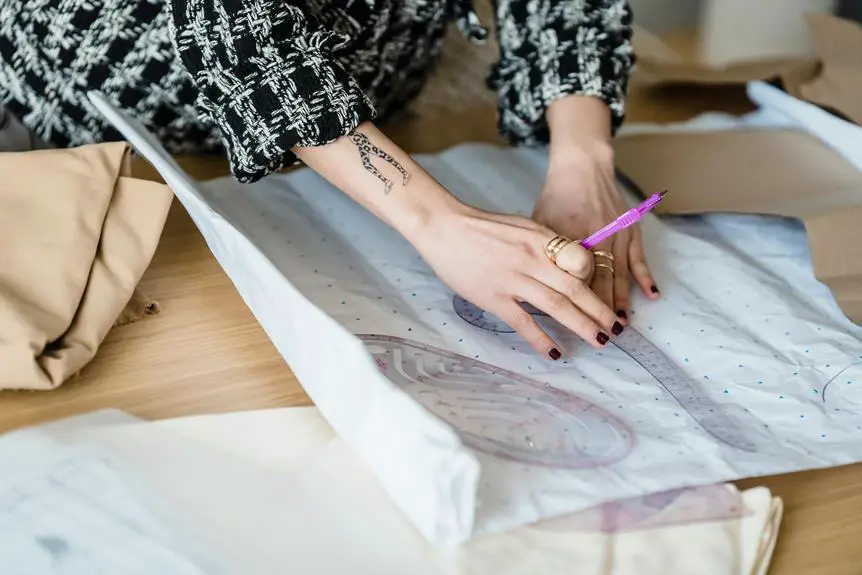
When you're working on quilted projects, preventing creases is essential for maintaining that polished look. You'll want to start by choosing the right fabrics and employing proper cutting techniques to set a solid foundation. Plus, optimizing your sewing machine settings can make a significant difference. But it doesn't stop there; how you handle and store your quilts can also impact their appearance. If you're curious about the best practices for each step, you might find some surprising tips that could save your next project from unwanted wrinkles.
Key Takeaways
- Choose stretchable fabrics and busy patterns to reduce visibility of creases in your quilted projects.
- Use a walking foot while sewing to ensure even feeding and minimize fabric distortion.
- Lift quilted pieces from the bottom and slide fabric gently to avoid stretching and creasing.
- Store quilts rolled or folded along natural seams using breathable materials to prevent sharp creases.
Choose the Right Fabrics
When selecting fabrics for your quilted projects, opt for those with a bit of stretch to help prevent creases. Fabrics like cotton blends or knits offer that flexibility, allowing the quilt to maintain its shape and resist unwanted folds. Avoid stiff or rigid materials, as they're more likely to crease during the quilting process.
Additionally, consider the weight of the fabric. Heavier fabrics can provide a more substantial feel but may also lead to more creasing if not handled properly. Lightweight materials, while easier to work with, can shift and distort easily. Striking a balance in weight will enhance your project's overall appearance.
Don't forget to pay attention to the fabric's weave. Looser weaves tend to be more forgiving and can help reduce the likelihood of creases forming. If you're drawn to prints, choose those with busy patterns to help camouflage any creases that might occur.
Lastly, always prewash your fabrics to eliminate any shrinkage later on. This simple step can save you from dealing with unwanted creases after your quilt is complete. By carefully selecting your fabrics, you'll set your quilted projects up for success.
Use Proper Cutting Techniques
To prevent creases in your quilted projects, using proper cutting techniques is essential.
Make sure you're working with a sharp rotary cutter, as this ensures clean edges.
Accurate measurements and stabilizing your fabric layers will also help maintain the integrity of your pieces.
Sharp Rotary Cutter
A sharp rotary cutter is essential for achieving clean, precise cuts in your quilted projects, helping to minimize creases.
When you use a dull cutter, you're more likely to pull or tug on the fabric, which can create unwanted wrinkles.
Here are some tips to ensure you're using your rotary cutter effectively:
- Keep your cutter sharp: Regularly replace the blade to maintain clean edges.
- Use a cutting mat: A self-healing cutting mat protects your blades and provides a smooth surface for cutting.
- Cut with a steady hand: Maintain a consistent pressure as you glide the cutter along the fabric.
- Utilize rulers: A clear acrylic ruler helps guide your cuts, ensuring accuracy without shifting the fabric.
Accurate Measurement Practices
Accurate measurement practices are crucial for achieving the perfect fit in your quilted projects, helping you avoid those pesky creases. Start by using a reliable ruler or measuring tape. Ensure that you're measuring from the same reference point each time to maintain consistency.
When cutting your fabric, always double-check your measurements before making any cuts—you'd be surprised how a small mistake can lead to significant issues down the line.
Next, use a rotary cutter on a self-healing mat for clean, precise cuts. This method minimizes fabric distortion and leaves you with straight edges. If you're working with multiple layers, consider pinning them together before cutting to prevent slipping.
Also, pay attention to the grain of the fabric. Cutting on the straight grain helps maintain the fabric's integrity and reduces the risk of stretching, which can create creases. If you're using patterned fabric, align the pattern carefully to ensure a balanced look in your quilt.
Stabilizing Fabric Layers
Stabilizing fabric layers before cutting can make a huge difference in preventing creases and achieving clean edges in your quilted projects. When you take the time to ensure your fabric is properly stabilized, you'll notice how much easier it's to cut precisely and how much neater your finished product looks.
Here are a few tips to help you stabilize your fabric layers effectively:
- Press Your Fabric: Always iron your fabric before cutting to eliminate any existing creases.
- Use a Cutting Mat: A self-healing cutting mat provides a sturdy surface and helps prevent shifting during cuts.
- Pin or Clip Layers: Secure your fabric layers with pins or clips to keep them aligned and stable while cutting.
- Choose the Right Tools: Utilize a rotary cutter for clean edges, and ensure your blades are sharp.
Optimize Your Sewing Machine Settings
To achieve smooth, crease-free seams in your quilted projects, adjust your sewing machine settings for optimal performance.
Start by selecting the right needle; a size 90/14 or 100/16 needle works best for quilting through multiple layers. Next, use a high-quality thread suitable for quilting, as it reduces friction and helps prevent tangling.
Adjust your stitch length to about 2.5 to 3.0mm. A shorter stitch can create more stability in your seams, while a longer stitch may lead to puckering. Make sure to keep your tension balanced; too tight or too loose can cause fabric distortion. Test your settings on scrap fabric before starting your main project to ensure everything's just right.
Additionally, consider using a walking foot or a quilting foot to guide the layers evenly. These tools help maintain even feed, preventing any shifting or creasing while you sew.
Finally, don't forget to keep your machine clean and well-oiled, as a well-maintained machine performs better, resulting in smoother seams.
With these adjustments, you'll be well on your way to achieving professional-looking quilted projects.
Handle With Care
When you're working on your quilt, gentle fabric handling is essential to keep creases at bay.
You'll also want to pay attention to how you store your projects, as improper techniques can lead to unwanted wrinkles.
Gentle Fabric Handling
Handling your quilted fabric gently can significantly reduce the risk of creases and damage. When you treat your fabric with care, you ensure that your beautiful work remains pristine and ready for display or use.
Here are some essential tips to keep in mind while handling your quilted projects:
- Always lift your quilted pieces from the bottom to avoid stretching.
- Avoid dragging or pulling the fabric across surfaces; instead, gently slide it.
- When folding, use soft, padded surfaces to prevent sharp creases.
- Keep your hands clean and dry to avoid transferring oils or dirt onto the fabric.
Proper Storage Techniques
How you store your quilted projects can make all the difference in preventing unwanted creases and ensuring they stay beautiful for years to come.
First, always choose a cool, dry place for storage. Avoid areas with high humidity or direct sunlight, as these can weaken fabrics and cause fading.
When it comes to folding your quilt, do it gently. Use a soft cotton sheet or acid-free tissue paper to cushion the folds. This extra layer helps support the fabric and reduces pressure points that lead to creases.
Make sure to avoid sharp creases by folding along natural seams or in larger sections.
If you have space, consider rolling your quilts instead of folding them. This method minimizes creases and allows for even distribution of weight.
Lastly, store your quilt in a breathable fabric bag or a cotton pillowcase instead of plastic, which can trap moisture.
Store Quilts Correctly
To keep your quilts looking pristine, always store them flat or rolled, avoiding any heavy folds that can create unwanted creases. Proper storage can extend the life of your quilt and maintain its beauty.
Here are some effective storage tips to consider:
- Use acid-free tissue paper: Place sheets of acid-free tissue paper between layers to prevent friction and creasing.
- Choose a breathable bag: Store quilts in a cotton or linen bag to protect them from dust while allowing airflow.
- Avoid plastic containers: Plastic can trap moisture and lead to mildew; opt for natural materials instead.
- Keep away from direct sunlight: Store your quilts in a cool, dark place to prevent fading and deterioration of fabric.
Ironing and Pressing Tips
When it comes to keeping your quilted projects looking their best, knowing the right ironing and pressing techniques can make all the difference. Start by using a dry or steam iron, but avoid excessive moisture, as it can lead to unwanted creases. Always test the heat settings on a scrap piece of fabric first. An ideal temperature for most quilted fabrics is medium to high, but this can vary based on the materials you're using.
Instead of sliding the iron back and forth, gently lift and press down. This method reduces the risk of distorting your quilted layers. For delicate fabrics, consider using a pressing cloth to protect your quilt.
When working with seams, press them open first to flatten before pressing the entire piece. If you encounter stubborn creases, use the steam function sparingly, and never directly on the quilt to prevent water spots.
Lastly, always let your quilt cool completely before handling it to ensure it retains its new shape. By following these ironing and pressing tips, you'll maintain the beauty and integrity of your quilted projects, making them last for years to come.
Frequently Asked Questions
How Do I Choose the Right Batting for My Quilted Project?
To choose the right batting for your quilt, consider the desired warmth, thickness, and loft. Cotton provides breathability, while polyester offers durability. Test samples to see which feels best for your specific project.
Can I Use Pre-Cuts to Minimize Creases?
Yes, you can use pre-cuts to minimize creases. They're often already pressed and cut, which helps reduce handling. Just ensure you store them flat and avoid stacking too many to keep them wrinkle-free.
What Types of Thread Are Best for Preventing Creases?
For preventing creases, you'll want to choose threads that are strong yet flexible, like polyester or cotton blends. These threads hold fabric together without adding unnecessary tension, helping your quilt stay smooth and flat.
How Often Should I Clean My Sewing Machine to Avoid Creases?
You should clean your sewing machine after every major project or every few weeks, depending on usage. Regular maintenance helps keep your machine running smoothly, reducing the chances of creases in your finished projects.
Is It Safe to Fold Quilts for Long-Term Storage?
Yes, it's safe to fold quilts for long-term storage, but you should use a clean, dry space. Consider using acid-free tissue paper between folds to minimize creases and keep your quilt looking its best.