
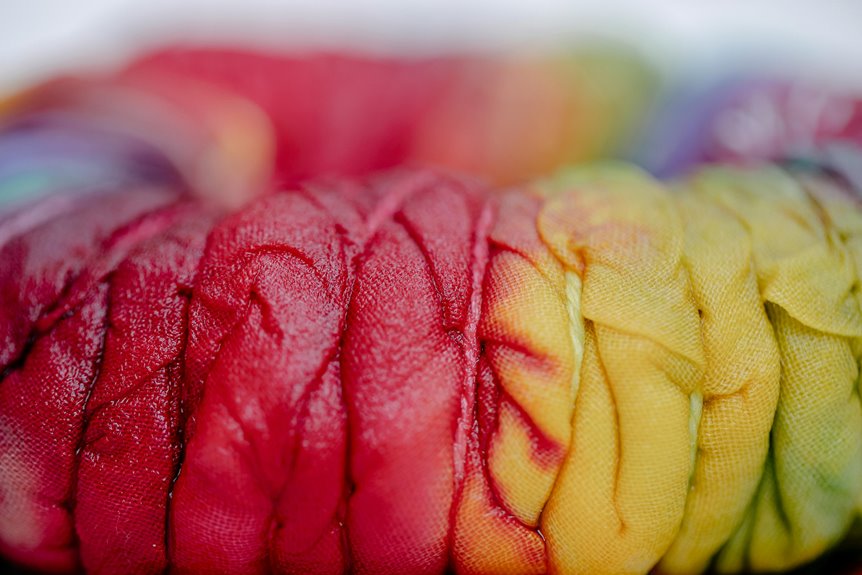
You can start your tie-dye journey with classic spirals by twisting fabric into tight spirals and applying vibrant dyes. Try bullseye patterns by pulling fabric into cones and sectioning with rubber bands. For textured styles, scrunch or crumple fabric for random effects. Stripes and rings come from folding and binding tightly. When you’re ready, explore advanced mandalas by folding fabric into sections and applying dyes symmetrically. Keep going to discover how to blend colors and create intricate designs with ease.
Key Takeaways
- Start with white cotton fabric soaked in soda ash for better dye absorption and vibrant results.
- Create classic spiral patterns by twisting fabric into a flat spiral and applying dye in pie sections.
- Use bullseye and sunburst techniques by folding fabric into cone shapes or strategic patterns for concentric circles and dynamic effects.
- Experiment with crumple, scrunch, and stripes for textured, abstract designs using varied folding and dye application methods.
- Advance to multi-color blends and mandalas by folding fabric symmetrically and applying dye carefully to maintain color harmony and pattern precision.
Understanding the Basics of Tie-Dye
Although tie-dye might seem complex at first, you’ll find it’s simple once you grasp the basics.
You start with a plain white fabric, usually cotton, which absorbs dye best. Before dyeing, you’ll want to prepare the fabric by soaking it in a soda ash solution; this helps the colors stick better and last longer.
Next, you fold, twist, or scrunch the fabric and secure it tightly with rubber bands or string. This step creates the resist areas where the dye won’t reach, forming your patterns.
Folding and securing fabric with rubber bands creates unique resist patterns where dye won’t penetrate.
When choosing dyes, go for fiber-reactive ones if you want vibrant, long-lasting colors.
Finally, apply the dye carefully to your bound fabric, making sure to saturate the areas you want colorful. After setting and rinsing, you’re ready to reveal your unique design!
Creating Classic Spiral Patterns
Once you’ve mastered the basics of preparing and binding your fabric, you can move on to creating eye-catching spiral patterns.
Start by laying your fabric flat and pinching the center where you want the spiral to begin. Twist the fabric around this point, turning it into a tight, flat spiral. Secure it with rubber bands, dividing the spiral into sections like pie slices.
Apply different dye colors to each section, allowing vibrant hues to blend slightly at the edges. Make sure to saturate the fabric well for bold results.
After dyeing, let the fabric rest according to the dye instructions before rinsing and drying.
This classic spiral technique adds dynamic movement and color flow to your tie-dye projects, making them truly stand out.
Mastering the Bullseye Technique
To master the bullseye technique, you’ll need to start with the right folding methods to create those perfect concentric circles.
Pay close attention to how you apply your dyes to keep the colors vibrant and defined.
Choosing the best color combinations will make your design really pop.
Folding Methods Explained
Mastering the Bullseye technique starts with precise folding that creates concentric circles of color on your fabric.
Begin by pinching the fabric where you want the center of the bullseye. Pull it straight up into a cone shape.
Next, use rubber bands to section the cone at regular intervals, depending on how many rings you want. Each band marks a boundary between colors.
Keep the fabric taut and evenly folded to guarantee clean, distinct rings. Avoid wrinkles or uneven folds, as these can distort the pattern.
This method relies on symmetrical, even sections, so take your time aligning the bands.
Once folded and secured, your fabric is ready for dyeing, and the bullseye pattern will emerge clearly after rinsing.
Dye Application Tips
After securing your fabric with rubber bands for the bullseye pattern, applying dye carefully will determine how vivid and defined your rings appear.
Start by choosing a dye bottle with a fine tip for precise application. Apply dye directly onto each fabric section between the rubber bands, saturating the fabric but avoiding oversaturation, which can cause colors to bleed. Work from the outer rings inward or vice versa to maintain clean lines.
Remember to flip the fabric to dye both sides evenly. Use gloves to avoid staining your hands and protect your work surface.
After dyeing, wrap your fabric in plastic to keep it moist and let the colors set for 6–8 hours. Following these steps guarantees crisp, vibrant bullseye rings every time you tie-dye.
Color Combinations Choices
Choosing the right color combinations can make or break your bullseye tie-dye design. Start by selecting colors that contrast well to make each ring pop. For instance, pairing bright yellows with deep purples creates striking visuals.
You can also use analogous colors like blues and greens for a more harmonious look. Remember, the bullseye technique relies on concentric circles, so think about how each color will shift to the next. Avoid colors that blend too closely, or your rings might lose definition.
Don’t shy away from experimenting with bold hues or pastels, depending on the vibe you want. Ultimately, trust your eye and have fun mixing shades. Your perfect bullseye emerges when your color choices complement the design’s rhythm and energy.
Exploring Crumple and Scrunch Styles
Now, let’s explore how the crumple method creates unique patterns by bunching your fabric before dyeing.
You’ll learn simple steps to achieve this look and see how scrunching adds interesting texture effects.
These techniques will give your tie-dye projects a fresh, dynamic twist.
Crumple Method Steps
You’ll find that the crumple method offers one of the simplest ways to create vibrant, random patterns on fabric.
To start, lay your fabric flat and gently scrunch it up into a loose ball. Avoid compressing it too tightly; you want natural folds and creases.
Next, secure the crumpled fabric with rubber bands to hold its shape. Once secured, apply your chosen dye colors directly onto the fabric, letting the hues seep into the folds. Use multiple colors for a dynamic effect but don’t oversaturate, or colors may blend muddy.
After dyeing, wrap the fabric in plastic to keep it moist and let it sit for 6-8 hours.
Finally, rinse and wash your piece gently to reveal a unique, vibrant crumple pattern that’s truly one of a kind.
Scrunch Texture Effects
Anyone experimenting with tie-dye will find scrunch texture effects offer a versatile way to create depth and movement in your designs.
To achieve this, you’ll start by loosely gathering the fabric into random folds, scrunching it together without pressing too hard. This technique differs from tightly twisted spirals, allowing dye to pool unevenly and produce organic, marbled patterns.
When applying color, use a spray bottle or squeeze dye gently over the scrunched fabric to enhance texture without oversaturating. The result is a beautifully mottled effect with soft shifts between shades.
Designing Stripes and Rings
Stripes and rings create bold, dynamic patterns that bring energy to any tie-dye project. To design stripes, fold your fabric accordion-style, then bind tightly with rubber bands at intervals to form clear bands of color.
Stripes and rings add bold, dynamic energy to tie-dye, achieved by precise folding and binding techniques.
For rings, pinch the fabric center, pull it up, and secure rubber bands at spaced sections along the length. When dyeing, apply contrasting colors between the bands for vivid separation.
Here’s how to get started:
- Choose fabric folds that match your stripe or ring vision.
- Use tight rubber bands to prevent color bleed.
- Alternate dye colors to enhance contrast.
- Let your dye saturate long enough for vibrant results.
This method guarantees crisp, eye-catching stripes and rings every time.
Crafting Sunburst Effects
When you want to create a radiant sunburst effect, start by gathering sections of your fabric into tight points that will become the focal centers of your design.
Twist or scrunch these points firmly, securing each with rubber bands to maintain tension. The number of points determines how many bursts you’ll have, so plan accordingly.
Apply dye generously around each secured area, allowing colors to radiate outward like sun rays. Use contrasting or complementary shades to enhance the effect, but keep the application neat to avoid muddling.
After dyeing, let the fabric sit to absorb colors fully before rinsing. Once dry, remove the bands to reveal crisp, vibrant sunburst patterns that bring dynamic energy to your tie-dye piece without complex folding or layering.
Techniques for Multi-Color Blends
Mastering three key techniques will help you create stunning multi-color blends that flow seamlessly across your fabric.
First, wet blending involves applying adjacent colors while the fabric is damp, allowing dyes to merge softly.
Second, the gradient method requires layering colors progressively from light to dark, creating smooth shifts.
Third, the scrunch technique adds texture by bunching fabric before dyeing, blending colors unpredictably for a natural effect.
Finally, you can use a spray bottle to mist dyes, blending edges gently without oversaturation.
Using a spray bottle to mist dyes creates soft, beautifully blended edges without overpowering the fabric.
- Wet blending for soft merges
- Gradient layering from light to dark
- Scrunching fabric for textured blends
- Spraying dyes to soften color edges
These techniques guarantee your multi-color tie-dye looks vibrant and harmonious.
Step-by-Step Guide to Advanced Mandala Designs
Blending multiple colors smoothly sets a strong foundation for more intricate designs like mandalas.
Start by folding your fabric into equal sections, usually eight or sixteen, to create symmetrical patterns. Use a pencil or washable marker to lightly draw concentric circles and radial lines as guides.
Next, apply dye carefully within each section, alternating colors to highlight the mandala’s symmetry. Squeeze dye gently to avoid bleeding between segments.
After dyeing, wrap your fabric tightly in plastic and let it set for 6-8 hours to guarantee vivid colors.
Finally, rinse with cold water, remove excess dye, and let it dry flat. Following these steps helps you create stunning, precise mandala tie-dye designs that stand out with vibrant, balanced color patterns.
Frequently Asked Questions
What Types of Fabric Work Best for Tie-Dye Projects?
You’ll get the best tie-dye results with natural fabrics like cotton, rayon, and hemp because they absorb dye well. Avoid synthetics like polyester, which resist dye and don’t hold colors as vibrantly or evenly.
How Do I Set the Dye to Prevent Fading?
You’d think setting dye lasts forever, but to prevent fading, soak your fabric in a soda ash solution before dyeing, then rinse with cold water and let it air dry away from direct sunlight to lock in vibrant colors.
Can I Use Natural Dyes Instead of Chemical Ones?
You can definitely use natural dyes instead of chemical ones. They’re eco-friendly and give unique colors, but you’ll need mordants like alum to fix the dye and prevent fading. Experiment to find what works best!
What Safety Precautions Should I Take While Dyeing?
You should wear gloves, wear old clothes, and work in a well-ventilated area. You should avoid inhaling fumes, avoid skin contact, and clean spills immediately. You’ll stay safe if you handle dyes carefully and responsibly.
How Do I Remove Unwanted Dye Stains From Skin or Surfaces?
You can remove unwanted dye stains from your skin by scrubbing gently with soap and warm water or using rubbing alcohol. For surfaces, try a mixture of baking soda and water or a commercial stain remover for best results.