
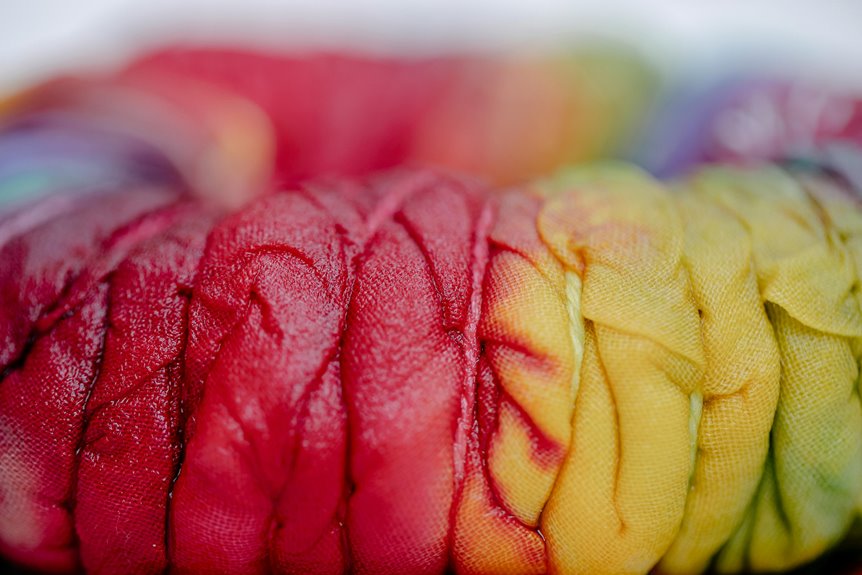
To create bold chevrons with the V-fold tie-dye technique, start by prepping damp natural fabric and folding it precisely in a diagonal accordion style to form sharp “V” shapes. Apply vibrant dyes carefully along the folds, securing with rubber bands for crisp lines. Keep your fabric taut and fold evenly to avoid blurry patterns. After dyeing, wrap the fabric to set colors and handle your garment gently to preserve brightness. You’ll find more tips to perfect your chevron design ahead.
Key Takeaways
- Choose natural cotton fabric, wash to remove chemicals, and keep it damp for even dye absorption before folding.
- Fold fabric lengthwise, then accordion-fold diagonally in alternating directions to create tight, sharp “V” shapes.
- Apply dye with squeeze bottles starting from outer edges inward, alternating vibrant colors for a striking chevron pattern.
- Secure tightly with rubber bands and use thin dye layers to maintain sharp, crisp chevron lines.
- After dyeing, wash garment separately in cold water, air dry away from sunlight, and avoid bleach to preserve colors.
Preparing Your Fabric for the V-Fold
Before you begin the V-fold tie-dye process, you need to prepare your fabric properly. Start by choosing a natural fiber like cotton, as it absorbs dye best.
Wash your fabric to remove any sizing or chemicals that might block dye absorption. Don’t use fabric softener; it can prevent the dye from setting.
After washing, leave the fabric damp—this helps the dye spread evenly. Flatten your fabric on a clean surface, removing wrinkles to guarantee smooth folding later.
Use gloves to protect your hands from staining. Also, gather your supplies: rubber bands, plastic sheets, and dye bottles.
Taking these steps guarantees your fabric is ready for precise folding and vibrant, lasting colors in your V-fold tie-dye project.
Step-by-Step Folding Process
Start by laying your damp fabric flat on a clean surface, smoothing out any wrinkles. This guarantees your folds will be crisp and even, helping create the signature chevron pattern. Follow these steps:
- Fold the fabric in half lengthwise, matching edges precisely.
- Starting at one corner of the folded edge, make small accordion-style folds diagonally, alternating directions to form a “V” shape.
- Continue folding the entire length, keeping folds tight and aligned.
- Once folded, press down firmly to set the creases and secure the shape.
This method creates the structured base you need for the V-fold tie-dye technique, setting you up perfectly for dye application.
Make sure your folds are neat for the best results!
Choosing and Applying Your Dye Colors
With your fabric folded and creases firmly set, you’re ready to bring your design to life by choosing and applying your dye colors.
Pick vibrant shades that complement each other to make your chevron pattern pop. Use squeeze bottles for precise application, allowing you to control where each color lands along the folds.
Start by applying dye to the outer edges, then move inward, alternating colors to create contrast. Remember to saturate the fabric thoroughly but avoid over-saturating to prevent colors from bleeding into unwanted areas.
Keep a steady hand and work slowly to maintain clean lines between colors. After applying all your chosen dyes, wrap the fabric in plastic to keep it moist while the colors set.
This step locks in your vibrant chevrons perfectly.
Tips for Achieving Sharp Chevron Patterns
To achieve sharp chevron patterns, you’ll need to focus on precise folding and consistent dye application. The cleaner your folds, the crisper the chevrons, so take your time aligning edges perfectly.
Precise folding and consistent dyeing are key to creating sharp, crisp chevron patterns every time.
Also, keep your fabric taut while folding to avoid loose, uneven lines. When applying dye, use a steady hand and saturate each section evenly to prevent bleeding.
Here are four tips to help:
- Use a ruler or straight edge for folding accuracy.
- Secure folds tightly with rubber bands to maintain sharp lines.
- Apply dye slowly and in thin layers to control color spread.
- Work on a flat surface to keep fabric steady during dyeing.
Following these steps will guarantee your chevrons pop with precision.
Caring for Your Finished Tie-Dye Chevron Garment
Once your chevron patterns are crisp and vibrant, maintaining their look depends on how you care for your garment.
Always wash your tie-dye chevron piece separately in cold water to prevent colors from bleeding onto other clothes. Use a gentle detergent designed for delicate fabrics and avoid bleach or harsh chemicals that can fade the dye.
Turn your garment inside out before washing to protect the design. Air drying is best; avoid direct sunlight to preserve color intensity. If you must use a dryer, choose a low heat setting.
When ironing, place a cloth between the iron and your garment to avoid direct heat on the dye. Following these steps will keep your tie-dye chevrons looking fresh and vibrant for many wears.
Frequently Asked Questions
Can the V-Fold Technique Be Used on Synthetic Fabrics?
You can use the V-fold technique on synthetic fabrics, but results might vary. Synthetic materials don’t absorb dye as well, so colors may appear lighter or uneven. Always test a small area before fully committing.
What Types of Dye Work Best for Outdoor Tie-Dye Projects?
You’ll want fiber-reactive dyes for outdoor tie-dye projects because they bond well with natural fibers and resist fading. For synthetic fabrics, use disperse dyes, which penetrate polyester and nylon effectively outdoors.
How Long Should the Dye Set Before Rinsing?
Think of dye setting like letting a sunset linger—give it about 6 to 8 hours, or even overnight if you can. This lets the colors soak deep, ensuring your design stays vibrant and won’t wash away.
Can I Combine the V-Fold With Other Tie-Dye Patterns?
Yes, you can combine the V-fold with other tie-dye patterns to create unique designs. Just fold and dye each section carefully, letting your creativity guide you. It’s a fun way to customize your project!
What Safety Precautions Should I Take When Handling Dye?
When handling dye, treat it like a mischievous storm: wear gloves, protect your eyes, and work in a well-ventilated space. Don’t let dye touch your skin or clothes—safety keeps your art vibrant and your hands clean!