
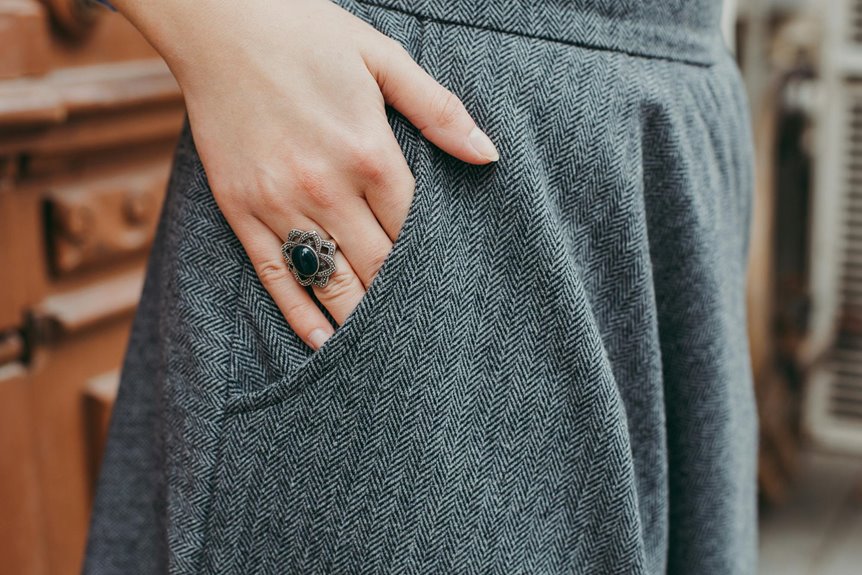
You’ll notice herringbone velvet’s unique texture from its rich, plush pile combined with the dynamic zigzag herringbone weave. This pattern creates a tactile surface that shifts with light and touch, giving you both visual depth and a soft, luxurious feel. The density and directional grain add complexity, making it feel alive and inviting. If you want to explore how this blend of texture and pattern enhances fashion and décor, there’s a lot more to uncover.
Key Takeaways
- Herringbone velvet features a distinctive zigzag pattern combining plush velvet pile with textured herringbone twill weaving.
- The fabric’s pile reflects light variably, creating depth, richness, and dynamic color vibrancy.
- Its soft, dense velvet pile provides a smooth, luxurious tactile feel with a unique ridge-and-valley texture.
- The directional grain of the herringbone weave adds complexity and a subtle tactile contrast compared to flat velvet.
- Shearing and brushing during finishing enhance the fabric’s texture, highlighting pattern clarity and plushness.
Understanding the Herringbone Pattern
Anyone who’s noticed the distinctive zigzag design on herringbone velvet knows it’s more than just a pattern—it’s a clever arrangement of V-shaped lines that create a broken zigzag effect.
The distinctive zigzag on herringbone velvet is a clever pattern of V-shaped lines forming a broken zigzag effect.
When you look closely, you’ll see these lines run parallel but alternate direction, forming a series of chevrons. This design adds depth and texture, giving the fabric a dynamic visual appeal.
You’ll find that herringbone differs from a simple zigzag because the breaks in the pattern make it less repetitive and more sophisticated.
When used in velvet, this pattern enhances the plush texture, making it feel as rich as it looks.
Understanding this pattern helps you appreciate how herringbone velvet combines style and tactile luxury in one fabric.
Origins of Herringbone Velvet
The distinctive zigzag design you see in herringbone velvet didn’t appear by chance; it has a rich history rooted in ancient weaving traditions.
When you trace its origins, herringbone patterns first emerged in textiles crafted by early civilizations, particularly in regions like Egypt and Rome. The pattern mimics the bones of a herring fish, which is why it’s called “herringbone.”
As you explore velvet’s history, you’ll find that combining this pattern with velvet’s plush texture became popular in Europe during the Renaissance. This fusion created a fabric that offered both visual interest and luxury.
How Herringbone Velvet Is Made
Although crafting herringbone velvet requires specialized skills, understanding its process can deepen your appreciation for this luxurious fabric.
Mastering herringbone velvet involves specialized skills that enhance appreciation for this luxurious fabric.
You start with weaving the base fabric using a herringbone twill pattern, which gives the distinctive zigzag design. Then, velvet’s characteristic pile is created by weaving additional yarns that are cut or looped to form a soft surface.
The fabric is carefully finished through processes like shearing and brushing to enhance its texture and appearance. Throughout, quality control guarantees the pattern remains crisp and the pile consistent.
- Weave the herringbone twill base
- Integrate extra yarns for the velvet pile
- Cut or loop the pile yarns precisely
- Shear and brush to perfect texture
- Inspect for pattern clarity and pile uniformity
This craftsmanship results in the elegant herringbone velvet you love.
The Distinctive Texture of Velvet
When you touch herringbone velvet, you’ll notice its soft pile that creates a unique, plush feel.
The way light reflects off the fabric’s surface gives it a rich, dynamic appearance.
You’ll also appreciate the fabric’s density, which adds to both its texture and durability.
Velvet’s Soft Pile
Velvet’s soft pile invites your touch with a luxurious, plush feel that sets it apart from other fabrics. This dense layer of upright fibers creates a smooth, velvety surface that feels incredibly gentle against your skin.
When you run your hand over velvet, you’ll notice how the pile’s softness offers both comfort and elegance. This tactile sensation makes velvet a favorite in upholstery, clothing, and accessories.
Here’s what makes velvet’s soft pile so special:
- Dense fiber arrangement provides a rich, velvety texture
- Pile height varies, affecting softness and appearance
- Fibers stand upright, creating a smooth surface
- Plush feel adds warmth and coziness
- Durable pile maintains softness despite frequent use
You’ll appreciate how this texture enhances velvet’s timeless appeal.
Light Reflection Effects
The soft pile of velvet does more than just feel luxurious—it interacts with light in a unique way that gives the fabric its distinctive texture.
As you move your hand across herringbone velvet, you’ll notice how light shifts and plays on its surface. This happens because the tiny fibers catch and reflect light at varying angles, creating a subtle shimmer that changes with your perspective.
The herringbone pattern enhances this effect by directing light differently across the woven zigzag design, adding depth and visual interest.
You’ll find that this dynamic interplay of light makes the fabric appear richer and more vibrant, making herringbone velvet a perfect choice when you want texture that’s both tactile and visually enchanting.
Fabric Density and Feel
A dense weave gives herringbone velvet its unmistakable weight and softness, making it easy for you to feel the fabric’s luxurious quality.
When you run your fingers across it, you’ll notice how the tightly packed fibers create a plush surface that’s both smooth and resilient.
This density not only enhances durability but also adds to the tactile richness that defines velvet.
You’ll appreciate how the fabric’s thickness provides a cozy warmth without feeling heavy or stiff.
Here’s what you’ll enjoy about the fabric density and feel of herringbone velvet:
- Silky smooth texture with subtle grip
- Noticeable weight that signals quality
- Softness that cushions and comforts
- Durable weave that resists wear
- A tactile depth that invites touch and admiration
Combining Velvet and Herringbone: A Perfect Match
Combining velvet and herringbone creates a unique texture and depth that elevates any design. When you bring these two elements together, you get the softness and richness of velvet paired with the distinctive zigzag pattern of herringbone.
This combination isn’t just about looks; it adds tactile interest that you can feel with every touch. You’ll notice how the herringbone’s structured lines contrast beautifully against velvet’s plush surface, giving your fabric an elegant yet dynamic character.
Whether you’re crafting upholstery, fashion pieces, or accessories, this pairing adds sophistication and durability. By choosing herringbone velvet, you’re ensuring your design stands out with a timeless appeal that’s both luxurious and visually intriguing.
It’s truly a perfect match for those who appreciate texture and style.
Visual Appeal of Herringbone Velvet
When you look closely at herringbone velvet, you’ll see how its visual appeal captures attention effortlessly.
The subtle zigzag pattern woven into the velvet creates a dynamic surface that plays with light and shadow. This interplay adds depth and sophistication, making the fabric stand out in any setting.
Whether used in upholstery or fashion, herringbone velvet brings a unique elegance that’s hard to ignore.
You’ll appreciate these visual qualities of herringbone velvet:
- Distinctive zigzag pattern adds visual interest
- Light reflection varies with the pile direction
- Rich, lustrous finish enhances color vibrancy
- Timeless design suits both classic and modern styles
- Pattern breaks monotony typical in solid-colored velvet
This fabric’s look makes it a stylish choice you’ll love.
Tactile Experience: What Sets Herringbone Velvet Apart
Anyone who runs their hand over herringbone velvet immediately notices its unique texture. You’ll feel a smooth, plush surface with a subtle raised pattern that distinguishes it from ordinary velvet.
Running your hand over herringbone velvet reveals a smooth, plush surface with a distinctive raised pattern.
The herringbone weave creates a gentle ridge-and-valley effect, adding depth and dimension under your fingertips. This fabric’s softness invites touch, yet the structured pattern provides a satisfying tactile contrast.
It’s not just about smoothness; the texture feels alive, shifting slightly as you move your hand. You’ll appreciate how the weave’s directional grain enhances the sensation, making it more dynamic than flat velvet.
This tactile complexity makes herringbone velvet appealing for those who value a fabric you can both see and genuinely feel.
Popular Uses in Home Décor
You’ll find herringbone velvet adds a rich touch to upholstery, making sofas and chairs stand out.
It’s also popular for decorative pillows that bring texture and style to any room.
Plus, using it for drapery and curtains can instantly elevate your home’s look with elegance.
Upholstery Applications
A herringbone velvet fabric instantly elevates your furniture with its rich texture and distinctive pattern.
When you choose this fabric for upholstery, you add a timeless charm that’s both elegant and durable.
It’s perfect for creating statement pieces that stand out without overwhelming your space.
You’ll find it works beautifully on sofas, accent chairs, and ottomans, giving each item a sophisticated touch.
Its soft feel also invites comfort, making your furniture as cozy as it’s stylish.
Consider these popular upholstery applications for herringbone velvet:
- Living room sofas and loveseats
- Accent chairs and club chairs
- Upholstered headboards
- Stylish ottomans and footstools
- Dining room chairs
Using herringbone velvet guarantees your furniture looks upscale while remaining inviting.
Decorative Pillow Trends
How can decorative pillows transform your living space? They add instant texture, color, and comfort, especially when crafted from herringbone velvet fabric. This fabric’s subtle pattern and soft sheen make pillows stand out without overwhelming your décor. You can mix and match sizes, shapes, and colors to refresh your room easily.
Here’s a quick guide to popular decorative pillow trends using herringbone velvet:
| Trend | Description | Best Placement |
|---|---|---|
| Monochrome Mix | Different shades of one color | Sofa or armchair |
| Bold Contrasts | Bright colors against neutrals | Living room couch |
| Textured Layers | Combining velvet with knits | Bedroom or reading nook |
| Pattern Play | Mixing herringbone with florals | Accent chairs |
| Metallic Touches | Velvet with subtle gold threads | Formal sitting areas |
Drapery and Curtains
When choosing drapery and curtains, herringbone velvet fabric brings both elegance and texture to your windows. Its distinctive pattern adds visual interest without overwhelming your room, making it perfect for any décor style.
The soft velvet enhances light control and insulation, helping you create a cozy atmosphere. Plus, the fabric’s durability guarantees your curtains will look great for years.
Here’s why you’ll love herringbone velvet for your drapery:
- Adds subtle, sophisticated pattern to window treatments
- Provides excellent light-blocking and insulation
- Soft texture creates a luxurious feel
- Durable and resistant to wear and tear
- Versatile enough for modern or traditional interiors
Using herringbone velvet curtains transforms your space with warmth and style effortlessly.
Fashion Applications of Herringbone Velvet
Rich texture and distinctive pattern make herringbone velvet a favorite in fashion design. When you choose this fabric, you instantly add depth and sophistication to your wardrobe.
It’s perfect for tailored blazers, giving you a sharp, polished look that stands out. You’ll also find it ideal for skirts and dresses, where its soft sheen and subtle pattern add elegance without overwhelming your style.
Herringbone velvet works wonderfully for accessories too—think hats, bags, or scarves that elevate any outfit. Because it combines plush comfort with visual interest, you’ll enjoy pieces that feel luxurious and look unique.
Whether dressing up for an event or adding flair to casual wear, using herringbone velvet lets you express refined taste effortlessly.
Caring for Herringbone Velvet Fabric
Caring for herringbone velvet fabric requires gentle handling to preserve its texture and pattern. You’ll want to avoid harsh cleaning methods that could crush the pile or distort the intricate weave.
Spot clean stains promptly with a mild detergent and cold water. When washing, hand wash or use a delicate cycle with cold water and a gentle detergent, then air dry flat to maintain its shape. Avoid direct sunlight and heat sources that can fade or weaken the fabric.
- Brush the fabric lightly with a soft bristle brush to remove dust.
- Avoid wringing or twisting the fabric when wet.
- Store in a cool, dry place, preferably hanging or rolled.
- Use a steamer instead of an iron to remove wrinkles.
- Test any cleaner on a small, hidden area first.
Comparing Herringbone Velvet to Other Velvet Types
Maintaining herringbone velvet properly helps you appreciate its unique qualities compared to other velvet types.
Unlike crushed velvet, which has a shiny, irregular surface, herringbone velvet features a subtle zigzag pattern that adds texture without overwhelming your design.
While velour offers a plush and smooth feel, herringbone velvet combines softness with visual interest through its woven pattern.
You’ll notice that unlike panne velvet, which reflects light in all directions, herringbone velvet’s matte finish lends a sophisticated, understated look.
When you compare it to silk velvet, herringbone velvet feels more durable and structured, making it ideal for upholstery or outerwear.
Trends Influencing the Popularity of Herringbone Velvet
You’ve probably noticed how the vintage revival has brought herringbone velvet back into the spotlight.
With sustainable fashion gaining momentum, this fabric fits perfectly into eco-friendly choices.
Plus, luxury interior design trends keep pushing herringbone velvet as a timeless, elegant option.
Vintage Revival Impact
Although vintage styles often cycle in and out of fashion, the current revival has sparked renewed interest in herringbone velvet.
You’ll find this fabric’s classic pattern and rich texture perfectly match the retro aesthetic that’s making a comeback. Designers and decorators alike are embracing herringbone velvet to bring timeless elegance into modern spaces and wardrobes.
Its versatility lets you blend nostalgia with contemporary flair effortlessly.
Here’s why herringbone velvet is enjoying this vintage resurgence:
- Adds sophistication to both clothing and upholstery
- Offers durability alongside a luxurious feel
- Evokes a sense of history and craftsmanship
- Complements both bold and muted color palettes
- Works seamlessly in vintage and modern designs
You’ll see it everywhere, from runway collections to cozy home interiors.
Sustainable Fashion Movement
The vintage charm of herringbone velvet is more than just style—it’s aligning with the growing demand for sustainable fashion.
When you choose herringbone velvet, you’re supporting fabrics that often incorporate natural fibers and durable weaves, which reduces waste over time. This fabric’s durability means your clothing or accessories last longer, cutting down on the need for replacements and minimizing your environmental footprint.
Plus, many manufacturers now prioritize eco-friendly dyeing and production methods for velvet, so you can feel confident about your choices.
By opting for herringbone velvet, you’re not only embracing a timeless texture but also contributing to a movement that values quality, longevity, and environmental responsibility in fashion.
It’s a smart, stylish way to support sustainability.
Luxury Interior Design
As luxury interior design continues to evolve, herringbone velvet has surged in popularity for its rich texture and timeless appeal.
You’ll find it’s perfect for adding depth and sophistication to any space, making your rooms feel both cozy and elegant. Designers love how the subtle herringbone pattern catches the light, creating visual interest without overwhelming the décor.
Its durability and softness make it ideal for high-end furniture and accent pieces.
Here’s why herringbone velvet fits your luxury interior design needs:
- Adds tactile richness and warmth
- Enhances classic and contemporary styles
- Works well with metallic and natural materials
- Offers durability for long-lasting upholstery
- Creates a subtle yet striking visual pattern
Using it, you’ll elevate your space effortlessly.
Frequently Asked Questions
Can Herringbone Velvet Be Used for Outdoor Furniture?
You shouldn’t use herringbone velvet for outdoor furniture because it’s not designed to withstand moisture or UV exposure. Instead, choose fabrics specifically made for outdoor durability to keep your furniture looking great longer.
Is Herringbone Velvet Hypoallergenic?
About 20% of people suffer from fabric allergies. While herringbone velvet isn’t specifically hypoallergenic, you can reduce reactions by choosing synthetic blends and regularly cleaning it to keep allergens like dust mites at bay.
What Is the Environmental Impact of Producing Herringbone Velvet?
You’ll find that producing herringbone velvet involves energy-intensive processes and chemical use, impacting the environment. Choosing sustainably sourced fibers and eco-friendly dyes can reduce its footprint, so consider these options when buying or using it.
Are There Synthetic Alternatives to Traditional Herringbone Velvet?
When it comes to synthetic alternatives, you’ll find polyester and nylon blends mimic velvet’s look and feel. They’re easier on the wallet and environment, but don’t put all your eggs in one basket—texture varies widely.
How Does Herringbone Velvet Perform in High-Traffic Areas?
You’ll find herringbone velvet can handle moderate traffic well but might show wear faster in very busy areas. It’s best to use it where you want style with some durability, not heavy daily use.