
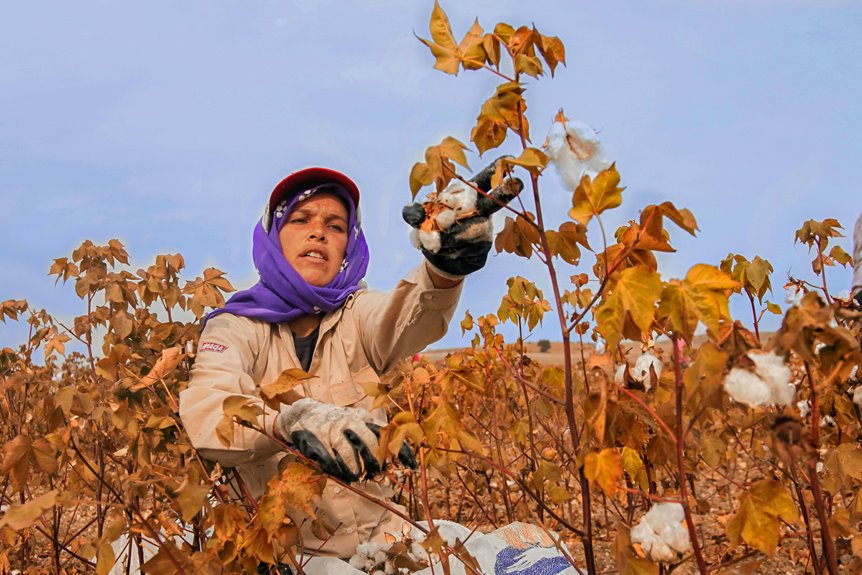
Cotton farming plays an essential role in many economies, but its social impact often raises concerns. You may not realize how prevalent child labor is in this industry or the health risks faced by workers. Fair labor practices can change this narrative, but what does that look like in reality? As we explore the complexities of labor rights in cotton production, you’ll discover both challenges and promising initiatives that aim to create a more equitable future.
Key Takeaways
- Fairtrade initiatives promote equitable wages, improving the livelihoods of cotton farmers and reducing child labor dependency in impoverished families.
- Mechanization in cotton farming decreases reliance on manual labor, leading to better working conditions and reduced exploitation of vulnerable populations.
- Access to education and training empowers workers with knowledge of their rights, fostering better labor practices within the cotton industry.
- Certification programs help consumers choose ethically produced cotton, encouraging brands to adopt fair labor practices and transparency in supply chains.
- Collaborations between NGOs and unions strengthen advocacy for labor rights, ensuring better protection and support for cotton workers globally.
The Prevalence of Child Labor in Cotton Production
In many cotton-producing countries, child labor remains a troubling reality. You mightn’t realize that countless children work long hours in harsh conditions, often sacrificing their education and childhood.
Families facing poverty feel pressured to rely on their children’s wages, pushing them into fields instead of classrooms. You’ll find that these children often engage in backbreaking tasks, including picking cotton under the scorching sun.
This exploitation not only robs them of a proper upbringing but also perpetuates a cycle of poverty. By being aware of this issue, you can advocate for fair labor practices and support initiatives aimed at eradicating child labor in cotton production.
Every small action you take can contribute to a brighter future for these children.
Health Risks Associated With Cotton Farming
Child labor in cotton production isn’t the only pressing issue; the health risks associated with cotton farming are equally alarming.
If you’re involved in cotton farming, you might be exposed to harmful pesticides and chemicals. These substances can lead to skin irritations, respiratory problems, and long-term health issues.
Exposure to harmful pesticides and chemicals in cotton farming can result in serious health issues, including skin irritations and respiratory problems.
You may also face injuries from using heavy machinery or working in extreme weather conditions. Additionally, the physical demands of cotton farming can strain your body, causing chronic pain or fatigue.
It’s essential to recognize these risks and take action to protect yourself. Implementing safety measures and using protective gear can make a significant difference in reducing health hazards.
Prioritizing your well-being guarantees a sustainable future for both you and the cotton industry.
Fairtrade Initiatives and Their Impact on Labor Conditions
While many cotton farmers face challenges related to labor conditions, Fairtrade initiatives offer a promising solution to improve their circumstances. By promoting fair wages and safe working environments, these initiatives empower you as a farmer to advocate for your rights.
You benefit from better prices for your cotton, which helps create a more sustainable livelihood for you and your community. Fairtrade certification also encourages transparency in the supply chain, ensuring that consumers are aware of the ethical practices behind their purchases.
Additionally, these initiatives often provide access to training and resources, enhancing your skills and productivity. Ultimately, Fairtrade initiatives not only uplift your working conditions but also foster a sense of community and shared responsibility among farmers, creating lasting change.
The Role of Mechanization in Reducing Labor Exploitation
As mechanization continues to evolve in the cotton farming industry, it presents a powerful tool to reduce labor exploitation and improve working conditions for farmers like you.
By adopting automated processes, you can greatly decrease the reliance on manual labor, which often leads to exploitation and unsafe working environments.
Mechanized equipment not only speeds up planting and harvesting but also allows you to manage larger areas with fewer workers. This shift can lead to fairer wages and better labor conditions, as fewer workers are needed, minimizing the risk of exploitation.
In addition, mechanization can enhance productivity, allowing you to focus on sustainable practices that benefit both your livelihood and the environment, ultimately leading to a more equitable cotton industry.
Strategies for Improving Labor Rights in the Cotton Industry
To create a fair and just cotton industry, implementing effective strategies for improving labor rights is crucial. You can start by promoting fair wages and affirming transparency in supply chains. Educating farmers about workers’ rights and encouraging them to adopt ethical practices can make a significant difference. Collaborating with NGOs and labor unions can strengthen advocacy efforts for better working conditions. Finally, implementing certification programs can help consumers make informed choices.
| Strategy | Description |
|---|---|
| Fair Wage Initiatives | Ascertain all workers receive a living wage. |
| Education and Training | Provide resources about labor rights and practices. |
| NGO and Union Collaborations | Partner with organizations to advocate for change. |
| Certification Programs | Allow consumers to identify ethically produced cotton. |
Frequently Asked Questions
What Are the Economic Benefits of Fair Labor Practices in Cotton Farming?
Fair labor practices in cotton farming boost productivity and employee morale. You’ll see increased quality and sustainability, leading to better market prices. Ultimately, this creates a more stable economy for everyone involved in the supply chain.
How Does Consumer Demand Affect Labor Conditions in the Cotton Industry?
Imagine wearing a shirt that carries a story. Your demand for ethically sourced cotton directly influences labor conditions, encouraging brands to prioritize fair practices, improve worker well-being, and ultimately reshape the industry for the better.
What Role Do NGOS Play in Improving Cotton Labor Practices?
NGOs play an essential role in improving cotton labor practices by advocating for fair wages, raising awareness about exploitation, and collaborating with local communities. They help create sustainable practices that benefit workers and promote ethical consumer choices.
How Can Consumers Support Ethical Cotton Production?
While some buy cheap, others prioritize ethics. You can support ethical cotton production by choosing certified brands, advocating for fair labor practices, and educating yourself about the impact of your purchases on workers’ lives.
What Future Trends Could Impact Labor Practices in the Cotton Sector?
Future trends like increased automation, stricter regulations, and consumer demand for sustainability will shape labor practices in cotton farming. You’ll see more transparency, fair wages, and improved working conditions as companies adapt to these changes.